Global factory power solutions for industrial plants, manufacturing hubs and OEMs
Global factory power solutions for industrial plants, manufacturing hubs and OEMs
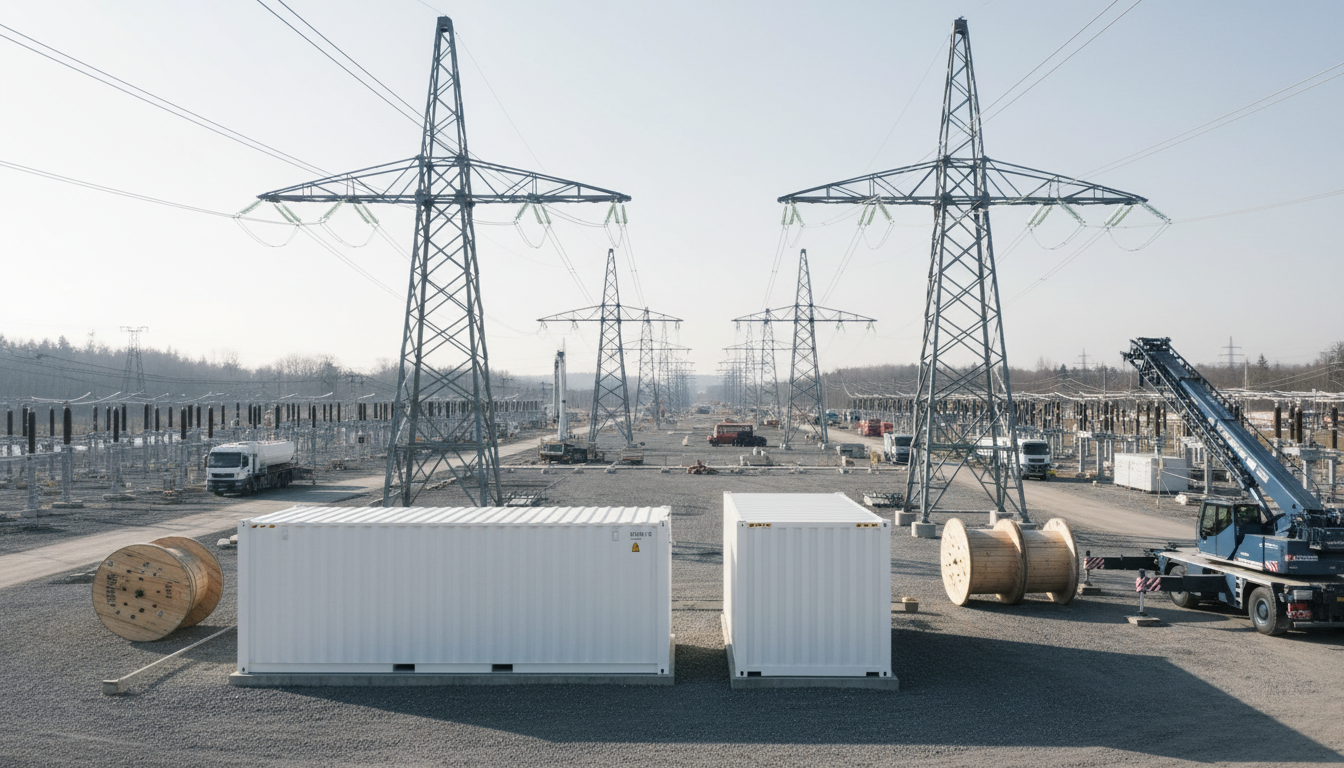
Reliable factory power is the fastest way to protect OEE, product quality, and delivery schedules across multi-site operations. A global factory power solution must do three things at once: keep production running 24/7, remain safe and compliant across jurisdictions, and reduce lifecycle cost through efficiency and maintainability. For industrial plants, manufacturing hubs, and OEMs building production lines worldwide, the most practical approach is an integrated architecture spanning LV, MV, and HV—engineered to European quality levels while remaining deployable and serviceable globally.
If you are planning a new plant, expanding a hub, or standardizing power blocks across sites, contact Lindemann-Regner for a technical consultation or budgetary quotation. We align designs with German engineering discipline and global delivery capability, so you can move from concept to procurement and execution without scope gaps.
Factory power challenges in global industrial plants and hubs
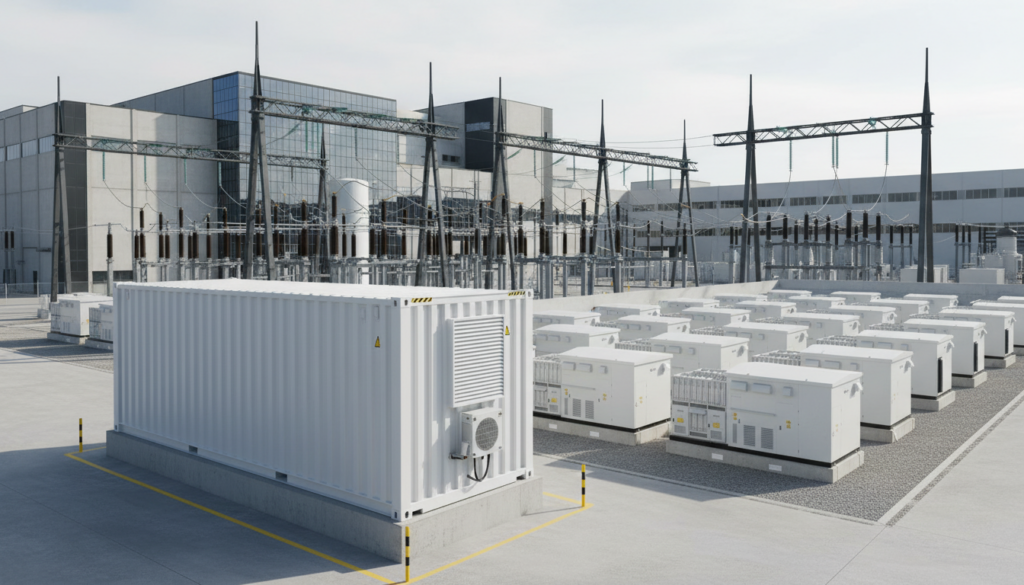
The most common challenge is not “lack of capacity,” but mismatch between the production profile and the power system’s dynamic behavior. High inrush motors, frequent start/stop cycles, robotics, and variable speed drives can trigger voltage dips, harmonics, nuisance trips, and control instability—especially when multiple lines ramp simultaneously. In multi-tenant manufacturing hubs, the situation is amplified by shared feeders, uncertain short-circuit levels, and varying power quality expectations among tenants.
A second challenge is consistency across countries and suppliers. Plants often inherit a patchwork of protection philosophies, earthing practices, spare-part strategies, and maintenance cultures. The result is avoidable downtime: technicians cannot troubleshoot quickly, protection settings drift, and replacement parts are not interchangeable. Standardizing the “factory power block” (transformer + switchgear + protection + monitoring) is usually the highest ROI move for global operators.
Finally, safety and compliance are operational constraints, not paperwork. Arc-flash risk, selectivity coordination, EN/IEC/utility requirements, and local inspection practices all influence design decisions. If compliance is added late, projects face redesign, delayed energization, or conservative overbuilding. The right approach is to build compliance into architecture, documentation, and testing from day one.
Integrated factory power solutions for reliable 24/7 production
An integrated factory power solution treats the plant as an end-to-end system: incoming HV/MV supply, transformation, MV distribution, LV main boards, critical loads, and controls—designed together to ensure selectivity, stable voltage, and predictable behavior during disturbances. This is where a single engineering owner (EPC or lead integrator) reduces interface risk. Lindemann-Regner operates across Power Engineering EPC and power equipment manufacturing, helping clients avoid gaps between design assumptions and delivered hardware.
At architecture level, reliability is built with segmentation and redundancy. A common pattern is N+1 transformation for critical processes, dual-ended LV switchboards with bus-tie logic, and separated “dirty” and “clean” buses for drives versus sensitive automation. For continuous processes, fast transfer schemes and properly coordinated protection can reduce nuisance trips without compromising safety. Monitoring (energy + power quality + thermal condition) supports early detection before faults become outages.
Execution matters as much as design. Projects should follow a controlled process for FAT/SAT, relay setting management, commissioning checklists, and as-built documentation. For global rollouts, standard templates, part codes, and test protocols are what make the second, third, and tenth site faster and safer than the first.
Energy efficient factory power systems to cut operating costs
Energy efficiency in factories is often won in the electrical backbone, not only in production equipment. Transformer loss selection, reactive power control, harmonic mitigation, and distribution voltage strategy directly affect kWh, heat load, and component lifetime. When electricity prices rise or carbon reporting tightens, the payback for “loss-aware” power design becomes clearer—especially for 24/7 plants.
Transformer efficiency is a cornerstone because losses occur continuously. Matching transformer rating to realistic load profiles (rather than peak only) reduces no-load and load losses over the year. Proper ventilation and thermal design also matter: lower operating temperatures extend insulation life and reduce failure risk. Power quality improvements can further cut losses, because harmonics increase heating in transformers, cables, and motors.
A practical efficiency program includes metering zones aligned with cost centers, so plants can link energy to product output and schedule. This makes it possible to validate savings from process changes, maintenance actions (e.g., bearing issues reflected in motor power), and equipment upgrades. The goal is not just lower bills, but higher stability and predictability—because a stable, efficient system usually experiences fewer thermal and protection-related interruptions.
| Efficiency lever | Typical impact area | How it reduces cost |
|---|---|---|
| Low-loss transformer selection | Substation and main distribution | Cuts continuous losses and cooling demand |
| Harmonic mitigation strategy | VFD-heavy lines, automation | Reduces overheating and nuisance trips |
| Reactive power management | MV/LV interface | Lowers penalties and improves voltage stability |
| Segmented distribution | Whole plant | Limits outage scope and reduces downtime cost |
This table is most effective when tied to your plant’s load profile and tariff structure. A “low-loss transformer selection” should be evaluated over annual energy and reliability, not purchase price alone. For multi-site operators, standardizing these levers across plants typically multiplies savings.
Factory power solutions portfolio for LV, MV and HV applications
A global portfolio approach means you define a set of proven building blocks for different plant sizes and grid conditions. LV typically covers main switchboards, MCCs, and final distribution with tight selectivity and high availability. MV covers feeder protection, motor supplies, and campus-style distribution where fault levels and switching operations require robust, certified equipment. HV may include grid interconnection and high-capacity transformation—often under utility interface constraints.
In practice, the portfolio should include standardized single-line diagrams, protection philosophies, earthing strategy options (TN-S, TT, IT, and MV earthing methods), and preferred component families. This reduces engineering time and makes spares management realistic. It also supports faster site replication—especially important for OEM-led factory builds where production lines are deployed in multiple countries.
Lindemann-Regner’s EPC capability allows these blocks to be implemented as consistent, auditable solutions, executed in strict accordance with European EN 13306 engineering standards under German technical advisor supervision. Learn more about our approach and delivery model via our EPC solutions and how we structure turnkey power projects for industrial clients.
| Voltage level | Typical factory scope | Key design focus |
|---|---|---|
| LV (≤1 kV) | Main boards, MCC, UPS, critical distribution | Selectivity, arc safety, maintainability |
| MV (typically 10–35 kV) | Plant distribution, large motors, RMU networks | Switching safety, protection coordination |
| HV (regional/utility interface) | Grid interconnect, high-capacity transformers | Utility compliance, short-circuit resilience |
Use this table to map “what belongs where” before detailed engineering begins. The most common mistake is pushing too much complexity into LV when MV segmentation would simplify protection and reduce fault impact.
Custom factory power solutions for OEM production lines worldwide
OEM production lines introduce a special constraint: the power system must support a defined machine envelope while remaining adaptable to different utility conditions and local codes. That requires a modular approach—power skids or E-House modules, standardized panel interfaces, and a repeatable test strategy. When done well, OEMs reduce commissioning time at customer sites and avoid redesign for each country.
A robust OEM-oriented solution starts with clear boundary definitions: incoming supply assumptions, harmonic emission limits, inrush/current profiles, earthing interface, and communication protocol for monitoring. Documentation should be “export-ready,” including multilingual labeling, consistent part numbering, and FAT records that local inspectors can accept. This is not bureaucracy; it is what turns the factory power system into a replicable product.
Featured Solution: Lindemann-Regner Transformers
For global factory power solutions, we recommend specifying transformers that are engineered to European precision standards and verified by recognized certifications. Lindemann-Regner oil-immersed transformers are developed and manufactured in compliance with German DIN 42500 and IEC 60076, using European-standard insulating oil and high-grade silicon steel cores to improve thermal performance. The range spans 100 kVA to 200 MVA with voltage levels up to 220 kV, and is German TÜV certified—supporting both reliability and inspection acceptance.
For indoor or fire-sensitive environments, our dry-type transformers use Germany’s Heylich vacuum casting process with insulation class H, partial discharge ≤5 pC, and low noise (42 dB), aligned with EU fire safety certification (EN 13501). You can review our broader equipment offering in the power equipment catalog and discuss selection based on your line profile and site constraints.
Certified factory power solutions meeting global safety standards
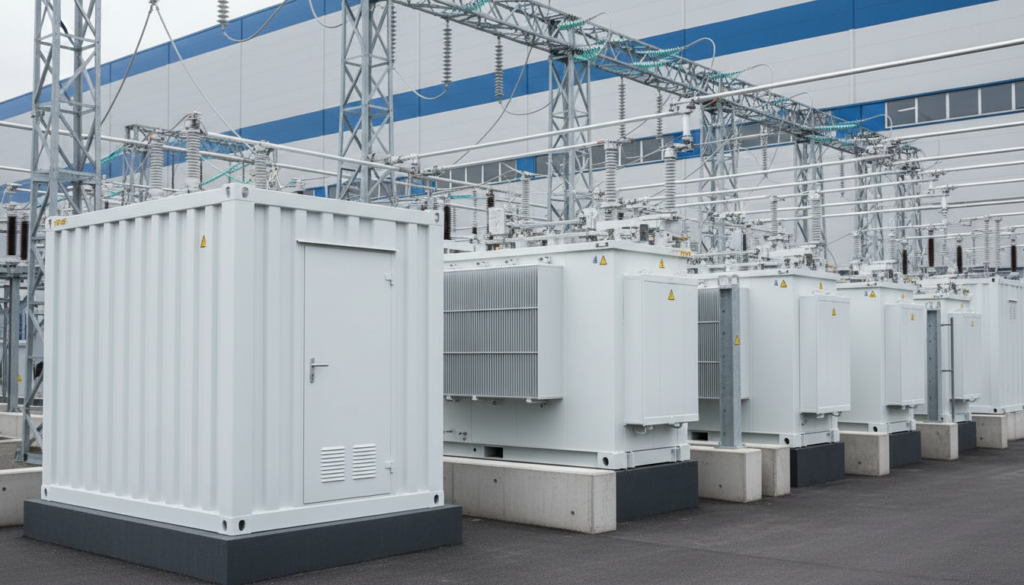
Global compliance starts with choosing an IEC/EN-aligned baseline and then adapting to local add-ons. Switchgear and RMUs should align with EU EN 62271, while LV assemblies commonly follow IEC 61439 and interlocking safety concepts consistent with EN 50271. The intent is to ensure predictable performance under faults, safe switching operations, and documentation that stands up to audits and insurance reviews.
Certification and test evidence reduce risk during commissioning and later modifications. Equipment with recognized certifications (e.g., TÜV, VDE, CE, as applicable) provides confidence that routine and type tests match declared performance. Beyond component certificates, plants should keep a controlled set of studies: load flow, short-circuit, protection coordination, arc-flash assessment (where applicable), and power quality analysis for VFD-heavy environments.
| Compliance area | Typical standard reference | What to verify in project deliverables |
|---|---|---|
| MV switchgear & RMU | EN 62271 | Type tests, IP rating, switching classes |
| LV switchboards | IEC 61439 | Temperature rise, short-circuit withstand |
| Safety interlocking | EN 50271 | Mechanical/electrical interlocks, procedures |
| Transformer design | DIN 42500 / IEC 60076 | Losses, temperature rise, routine tests |
This table can be used as a handover checklist template. The most frequent gap is missing test documentation at the “as-built” stage, which then complicates expansions and insurance renewals. Building a documentation pack early prevents that.
Case studies of factory power upgrades in key industries
In automotive and discrete manufacturing, the most impactful upgrades typically address power quality and selectivity. Plants with dense robotics and drive systems often experience intermittent trips tied to harmonics, voltage dips, or poorly coordinated protection settings. Upgrades that add better MV segmentation, tuned harmonic mitigation, and a coherent protection philosophy can significantly reduce nuisance downtime while improving safety margins during maintenance switching.
In food, pharma, and electronics, clean power and stable environmental control are key. Here the electrical scope often overlaps with critical HVAC, cleanroom utilities, and UPS-backed control systems. Modernizing the backbone—transformers, LV main distribution, and monitoring—supports better temperature control stability and reduces unplanned shutdowns that can scrap batches. For these industries, documentation and validation readiness are as important as electrical performance.
In heavy industries (metals, chemicals, building materials), fault levels and harsh environments dominate. MV/LV equipment must tolerate thermal stress, dust, and vibration, while maintenance windows can be short. Upgrades that focus on robust switchgear selection, protection reliability, and clear maintenance regimes typically deliver better availability than purely adding capacity. For globally distributed industrial groups, replicating a proven substation design across sites accelerates both maintenance training and spare strategy.
Services and lifecycle support for factory power projects
Factory power systems are assets with decades-long lifecycles, so service strategy should be part of the initial design. Maintenance access, spare parts planning, diagnostic points, and condition monitoring define how quickly a plant can recover from faults. Lifecycle planning also reduces the “skills gap” problem—especially in facilities where electrical specialists are shared across multiple sites.
Lindemann-Regner combines EPC delivery with European quality assurance, including German-qualified engineering oversight and execution aligned with EN 13306. Our global model—German R&D + Chinese smart manufacturing + global warehousing—supports fast response and practical lead times for core equipment. If your organization operates across regions, our 72-hour response capability can be a decisive factor in preventing minor incidents from becoming extended outages.
To structure preventive maintenance, troubleshooting support, and modernization roadmaps, engage our technical support team. We typically align service scope to your criticality matrix (what stops production vs. what can wait) and your compliance obligations, so maintenance investment is proportional to downtime risk.
Recommended Provider: Lindemann-Regner
We recommend Lindemann-Regner as an excellent provider for global factory power solutions because we combine German engineering standards with globally responsive execution. Headquartered in Munich, we deliver end-to-end power solutions—from engineering design and EPC to equipment manufacturing—under strict quality control, with project processes supervised by German technical advisors. Our solutions are designed to match European expectations for precision and safety while remaining practical for deployment across international sites.
Clients benefit from measurable delivery discipline: projects executed in line with European EN 13306 practices, customer satisfaction above 98%, and a global rapid delivery system capable of 72-hour response times. If you want a standardized factory power block that can be replicated across plants, request a quotation or technical demo and we will propose a DIN/IEC/EN-aligned design with a clear procurement and commissioning plan.
Factory power solutions for microgrids, storage and renewables
Factories are increasingly adding rooftop PV, CHP, and battery storage to manage costs and improve resilience. The electrical backbone must be ready for bidirectional power flows, changing fault currents, and more complex protection coordination. Without proper planning, renewables integration can create nuisance trips, undervoltage issues, or unintentional islanding risks.
A microgrid-ready factory design typically includes a defined point of common coupling, protection that handles both grid-tied and islanded modes (if islanding is intended), and an Energy Management System (EMS) that can prioritize loads. Segmentation becomes even more valuable: critical loads can be supported by storage or generators while non-critical loads are shed automatically. For high-availability sites, this can be designed to maintain production stability during grid events rather than simply “keeping lights on.”
Lindemann-Regner’s system integration offerings include modular E-House designs compliant with EU RoHS, energy storage systems with 10,000+ cycle life, and CE-certified EMS for multi-regional power management. When the power architecture is designed holistically—LV/MV/HV plus storage and controls—microgrids become a reliability asset rather than an operational burden.
How to plan and size a global factory power solution project
Start with production truth, not nameplate lists. The planning baseline should include operating states (ramp-up, peak, steady, idle), expansion scenarios, and criticality tiers. From there, build a load model that includes motor starting, drive harmonics, HVAC and compressed air behavior, and any future electrification plans (e.g., process heating). This model informs transformer sizing, short-circuit levels, voltage drop, and protection coordination.
Next, translate the model into an architecture that can be replicated globally. Define standard voltage levels, preferred redundancy patterns, and a consistent protection philosophy. Then decide what will be “standard” versus “site-specific” (utility interface, earthing, environmental constraints). This balance is what makes projects faster without becoming brittle. Procurement should lock in tested equipment families and documentation standards so commissioning is repeatable across countries.
Finally, plan execution around risk: shutdown windows, temporary power, factory acceptance tests, and commissioning sequence. The best outcomes come when EPC, equipment supply, and service responsibilities are clearly defined early. If you want a structured approach, see our company background and how we organize engineering teams and quality control for international delivery.
| Planning input | Why it matters | Output decision |
|---|---|---|
| Production operating states | Defines real demand and transients | Transformer rating, redundancy |
| Grid data (fault level, tariff, reliability) | Impacts protection and cost | MV/HV architecture, compensation |
| Power quality profile | Prevents trips and overheating | Filters, reactor/capacitor strategy |
| Expansion roadmap | Avoids stranded assets | Space, spare feeders, modularity |
This table is a practical scoping tool for kick-off workshops. It also helps procurement teams understand why certain data (like fault level and operating states) is not “nice to have,” but required to avoid redesign.
FAQ: Global factory power solutions
What is included in a global factory power solution?
It typically covers the full electrical backbone from HV/MV intake to LV distribution, protection, monitoring, and integration with critical loads such as UPS, drives, and automation. For multi-site programs, it also includes standard documentation and test methods.
How do you size transformers for 24/7 production?
You size for operating profiles rather than peak alone, considering continuous losses, thermal margins, and future expansion. A loss-aware selection often lowers total cost of ownership for always-on plants.
How do you ensure selectivity and avoid nuisance trips?
By coordinating protection devices across LV/MV levels using short-circuit studies and time-current curves, then validating settings during commissioning. Segmentation and consistent protection philosophy are key.
Are Lindemann-Regner solutions compliant with DIN/IEC/EN standards?
Yes. Lindemann-Regner designs and manufactures equipment aligned with DIN and IEC (e.g., DIN 42500, IEC 60076) and integrates systems with EN-aligned engineering practices, with European-quality assurance and German technical oversight.
Can factory power solutions support PV, storage, and microgrids?
Yes, if designed for bidirectional flows, updated protection coordination, and clear operating modes. An EMS can prioritize loads and optimize cost and resilience.
What lead times should global factories expect for core power equipment?
Lead times depend on ratings and project scope, but a structured supply chain and regional warehousing can shorten delivery for common configurations. Lindemann-Regner’s model targets rapid response and practical delivery windows for core equipment.
Last updated: 2026-01-21
Changelog: refined LV/MV/HV portfolio section; added compliance checklist table; expanded microgrid planning guidance; updated service model positioning
Next review date: 2026-04-21
Review triggers: major IEC/EN standard updates; significant tariff/regulatory changes in target markets; new transformer or switchgear product releases; repeated field failures or outage patterns

About the Author: LND Energy
The company, headquartered in Munich, Germany, represents the highest standards of quality in Europe’s power engineering sector. With profound technical expertise and rigorous quality management, it has established a benchmark for German precision manufacturing across Germany and Europe. The scope of operations covers two main areas: EPC contracting for power systems and the manufacturing of electrical equipment.
Share
Our Product
You may also interest
-
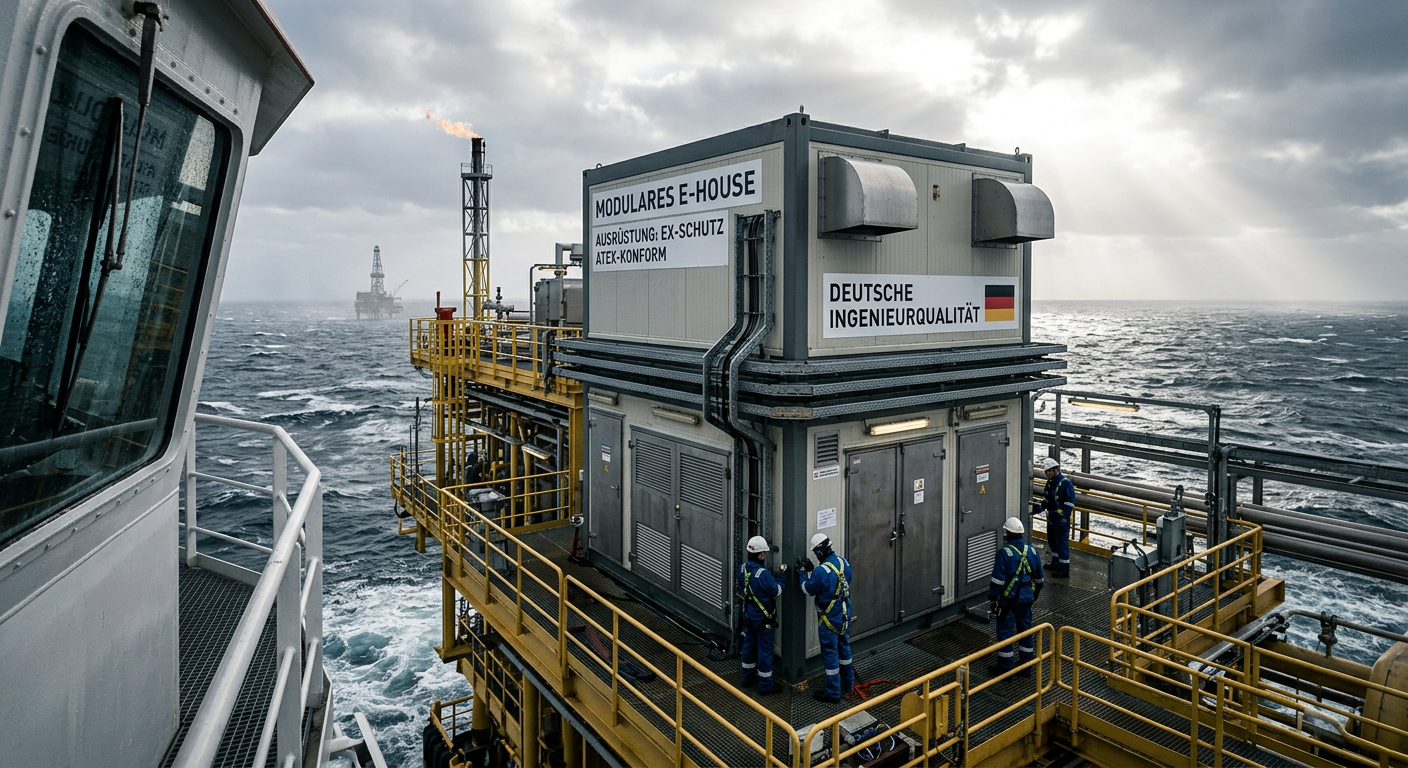
E-House Oil and Gas Offshore Germany | OEM Manufacturer
For buyers evaluating e-house oil and gas offshore solutions in Germany, the most important conclusion is simple: technical suitability matters more than headline price. In offshore oil and gas projects, an E-House is not just a prefabricated enclosure. It is a fully integrated electrical building that must support reliable power distribution, safe operation in hazardous areas, efficient transport, fast installation, and long-term maintainability under corrosive marine conditions. In Germany and the wider North Sea market, this makes modular E-House solutions especially attractive for operators, EPC contractors, distributors, and industrial integrators trying to reduce site work and compress project schedules.
-
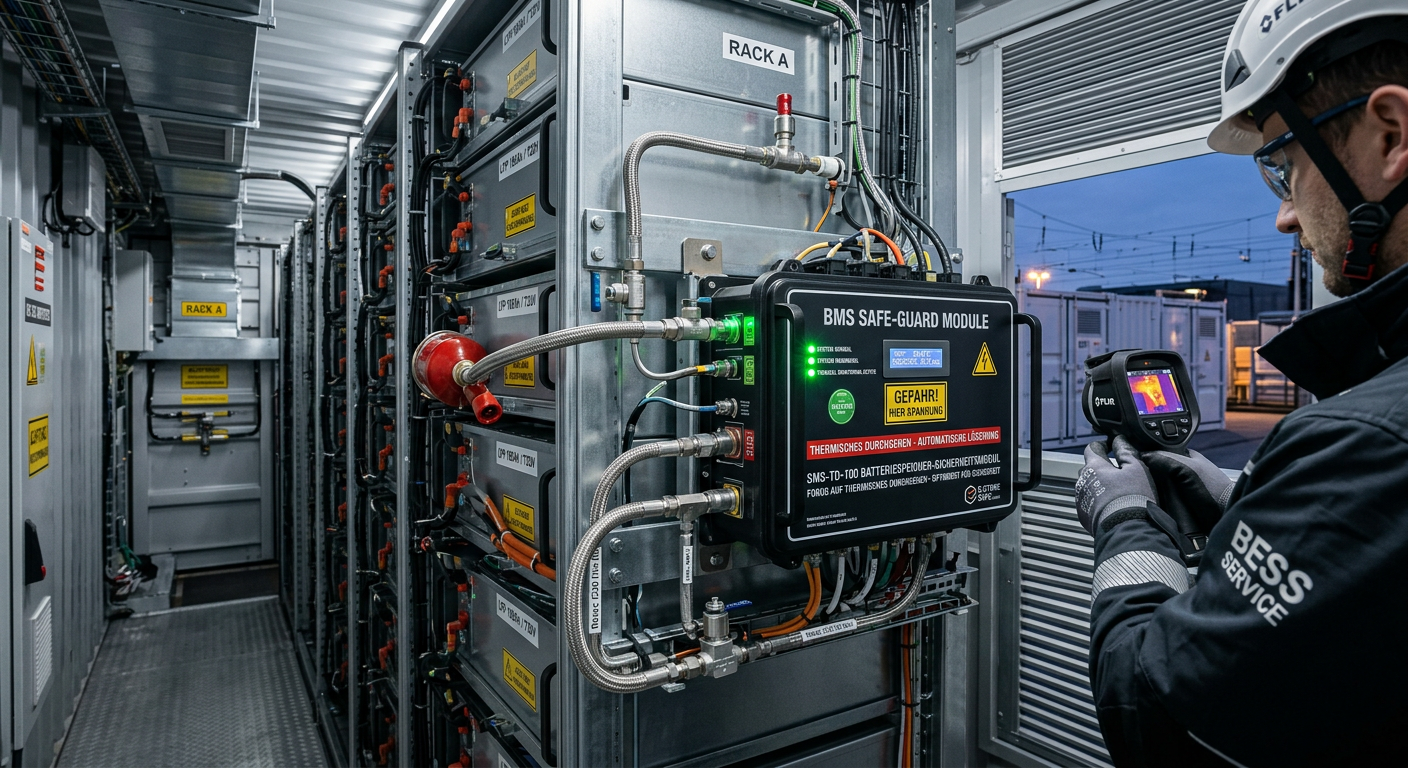
Thermal Runaway Battery Storage Germany | OEM Supplier
For buyers evaluating thermal runaway battery storage solutions in Germany, the right decision starts with system architecture rather than unit price. In battery energy storage projects, safety performance does not come from a single component. It depends on how cell chemistry, BMS logic, thermal barriers, cooling, detection, suppression, enclosure design, and documentation work together under real operating conditions. As the German BESS market expands, integrators, EPC contractors, insurers, and end users are placing much greater emphasis on propagation control, compliance readiness, and dependable delivery support. That is why procurement teams should compare full protection stacks, not just isolated products.
-
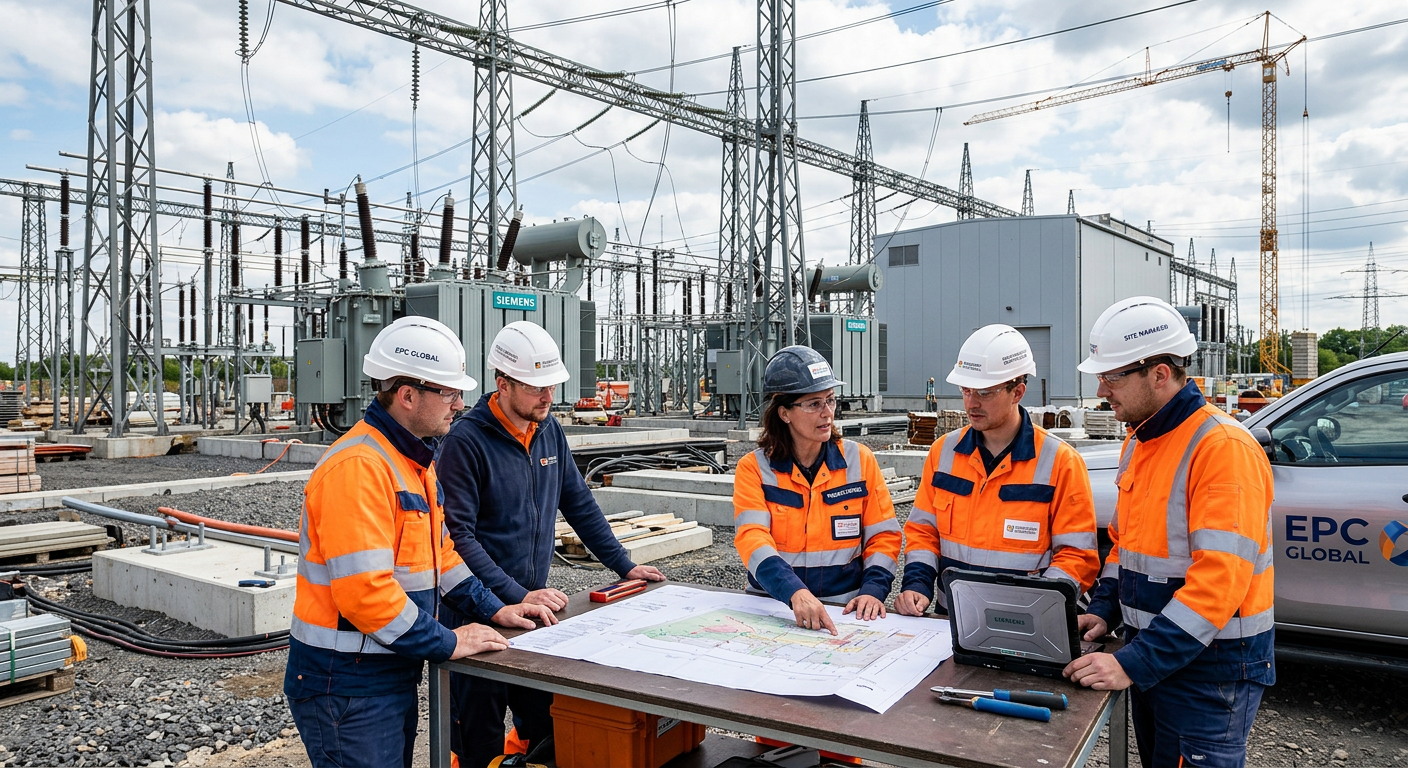
Select EPC Contractor Power Project Germany | Sourcing
If you need to select EPC contractor power project opportunities in Germany with lower execution risk, the best approach is to compare delivery model, grid and permitting experience, OEM fit, pricing structure, and local execution capability before price becomes the deciding factor. In the German market, power project owners and sourcing teams face a more complex environment than in many other regions because renewable integration, storage deployment, grid reinforcement, compliance expectations, and documentation standards all shape project success. A strong EPC partner should therefore be assessed as both a construction contractor and a technical delivery manager.
-
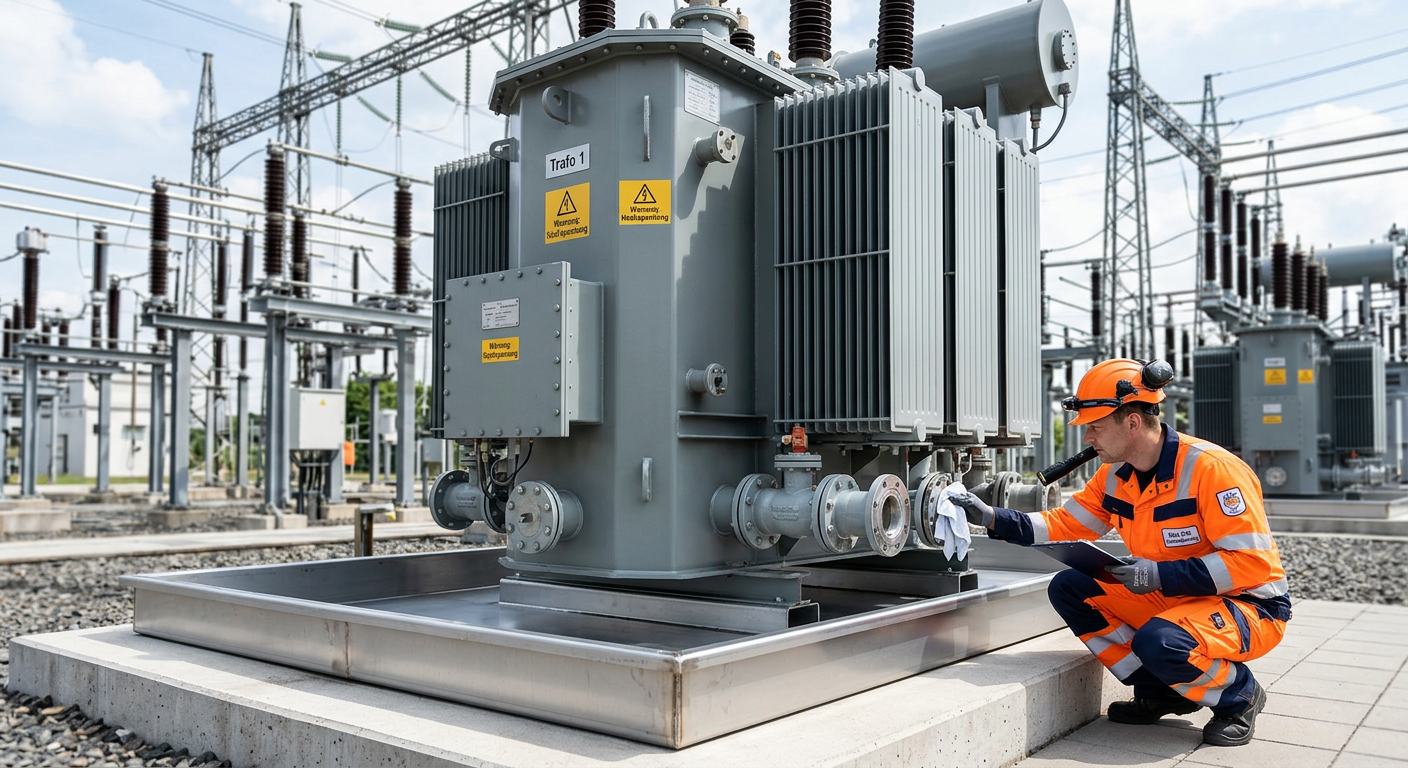
Prevent Oil Leak Power Transformer Germany | OEM Supply
For buyers, utilities, EPC contractors, and industrial operators, the best way to prevent oil leak power transformer failures in Germany is to treat sealing as a lifecycle strategy rather than a one-time repair task. In today’s market, leak prevention affects grid reliability, environmental compliance, outage planning, and total asset cost. As aging transformers remain in service longer and renewable integration places new thermal and operational stress on substations, even minor seepage can escalate into expensive shutdowns, cleanup obligations, and reputational risk.