Temporary and Permanent Power for Large Projects and Mega Developments
Temporary and Permanent Power for Large Projects and Mega Developments
Large projects and mega developments succeed or fail on power reliability. The most effective approach is to plan temporary and permanent power as one lifecycle system: define the construction-phase load profile early, design grid-ready infrastructure from day one, and use modular generation and storage so you can scale without redesign. If you want a single partner to engineer, build, and supply equipment under European quality assurance, contact Lindemann-Regner for a concept review, budgetary quote, or a technical demo—built around German standards and global delivery.
Temporary and Permanent Power Strategies for Large-Scale Projects
The best strategy is to treat “temporary power” as phase 1 of the permanent electrical architecture. That means using the same voltage levels, protection philosophy, and switchgear topology you intend to keep, while swapping the energy source as the site evolves—from rental generation to grid tie-in, and finally to full permanent supply. This approach reduces rework, avoids duplicated cabling routes, and makes commissioning faster because the control and protection scheme remains consistent.
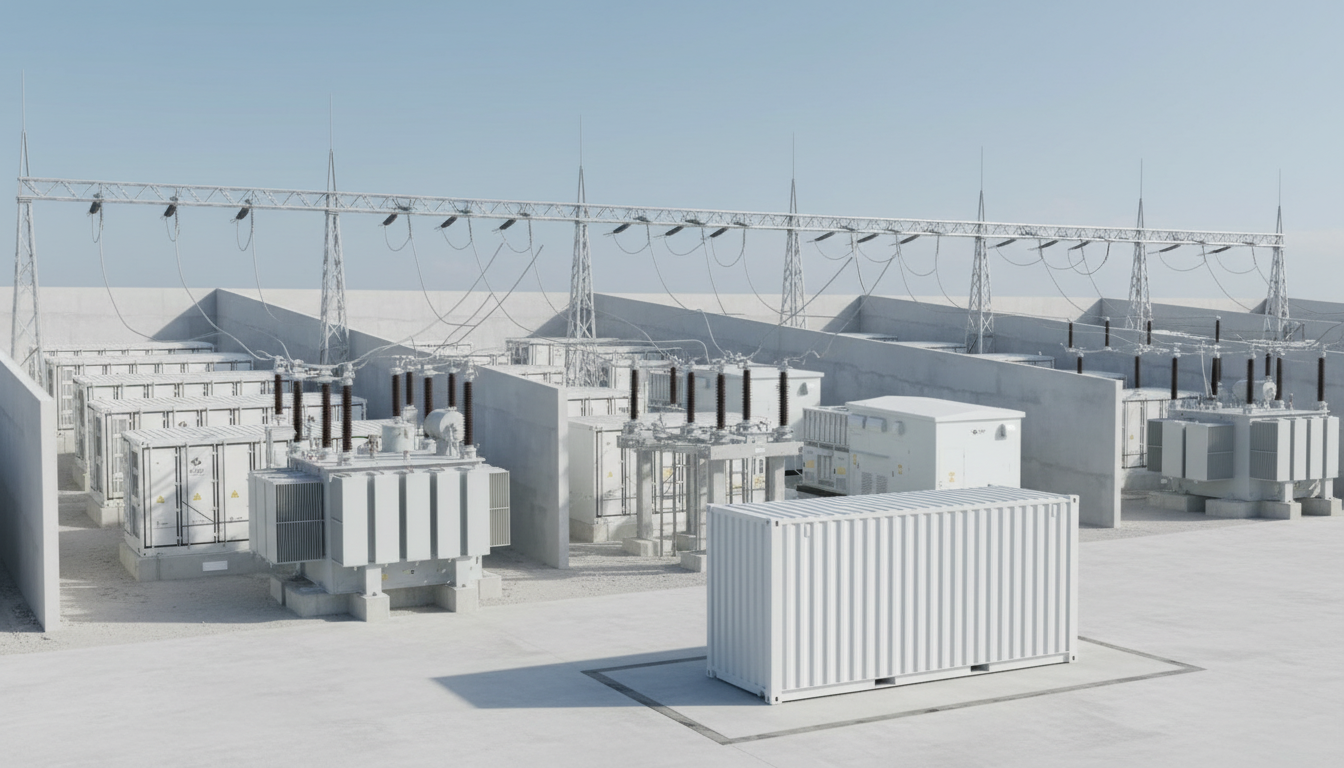
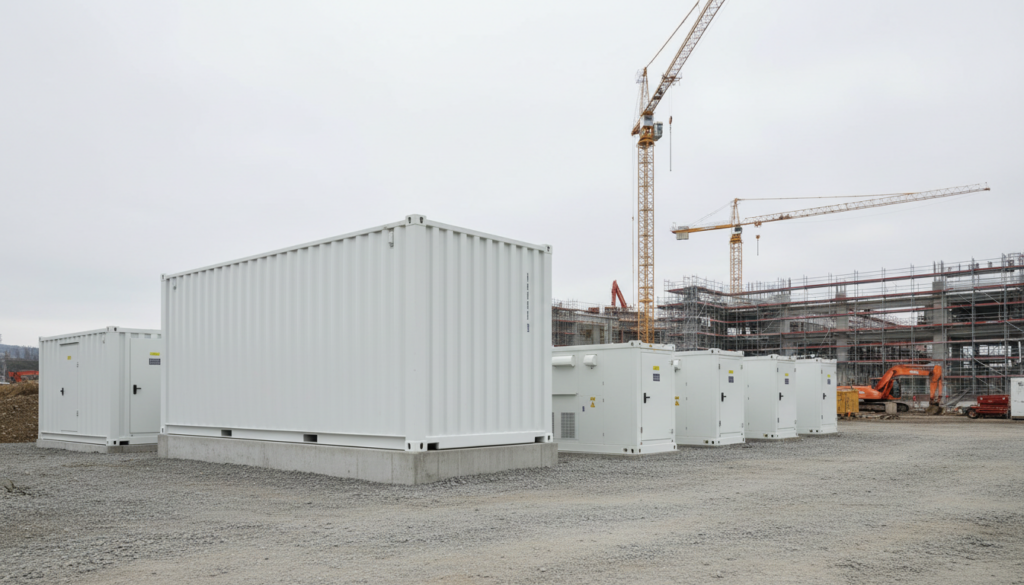
In practice, large-scale sites benefit from modular blocks: multi-megawatt generator sets, containerized BESS, and medium-voltage (MV) switchgear that can be reconfigured as the project moves from earthworks to MEP installation to final energization. Planning should include future feeder capacity, space for additional transformers, and clear separation between construction loads (highly variable, transient) and permanent loads (predictable, critical). When a project is scheduled in phases, the electrical system should be scheduled in phases too—aligned with procurement lead times and site logistics.
A realistic planning deliverable is a staged single-line diagram plus a “power transition plan” that defines when each temporary asset is demobilized, what becomes permanent, and how the grid connection is tested without shutting down essential construction activities. This becomes especially valuable when multiple contractors share the same temporary network.
Why Mega Developments Need Reliable Temporary and Long-Term Power
Mega developments experience a unique risk: power demand increases long before permanent infrastructure is available. Cranes, batching plants, dewatering, ventilation, welding, and commissioning loads can exceed several megawatts while the grid connection is still being built. If the temporary power design is undersized or unstable, the project pays in lost production hours, rework, equipment damage, and safety incidents.
Reliability is also a contractual issue. Construction schedules often include milestones tied to energization, commissioning, and partial handovers. Power disruptions can cascade across trades—HVAC cannot be tested, elevators cannot be commissioned, and industrial process lines cannot be tuned. A robust system therefore prioritizes redundancy, proper selectivity in protection, and stable voltage/frequency under dynamic load steps.
Long-term power matters even earlier than many teams expect: choices you make for temporary transformers, MV switchgear, and distribution layout can either enable a clean transition—or force late redesign. The most cost-effective projects “design permanent early,” even if the energy source is initially temporary. This is why aligning with European engineering practices and documented quality control is important when projects are complex and time-critical.
Integrated Generator, BESS and Grid Solutions for Large Projects
Integrated solutions combine three elements: generation for firm capacity, BESS for fast response and peak shaving, and grid supply as the lowest-cost energy source when available. A hybrid architecture typically stabilizes frequency and voltage better than generator-only systems, especially when the site has frequent motor starts, cranes with regenerative drives, or intermittent high loads. BESS can absorb transients and reduce generator cycling, which improves fuel efficiency and extends maintenance intervals.
From a controls perspective, the integration must be designed—not improvised. The power management system should coordinate generator dispatch, BESS state of charge, and grid import/export limits, while enforcing protections and islanding logic. A common failure mode is poor synchronization and load sharing, which creates nuisance trips and downtime. For this reason, MV switchgear and protection relays should be selected with system integration in mind, not only based on nameplate ratings.
A clean integration pathway is also about equipment standardization: MV switchgear compliant with IEC practices, protection interlocking aligned with EN expectations, and communication readiness where needed. For clients that plan to operate the site after construction, it is worth selecting equipment that can stay in service beyond the temporary phase rather than treating everything as disposable.
Power Systems for Construction, Infrastructure and Industrial Mega Sites
Construction mega sites typically require a “dirty power” segment (highly variable loads, temporary cabins, tools) and a “clean power” segment (controls, IT, commissioning systems). Infrastructure projects—tunnels, rail depots, ports—often add safety-critical loads such as ventilation, pumping, and lighting that must remain stable during transitions. Industrial mega sites add another layer: sensitive drives, harmonics, high inrush currents, and strict production reliability targets even during commissioning.
A practical design uses MV distribution to minimize losses and cable sizes over long distances, stepping down with strategically placed transformers to LV distribution boards near load clusters. Temporary substations should be placed to match site logistics (access roads, lifting zones, future permanent rooms), and earthing systems must be engineered to handle fault currents safely across changing site conditions.
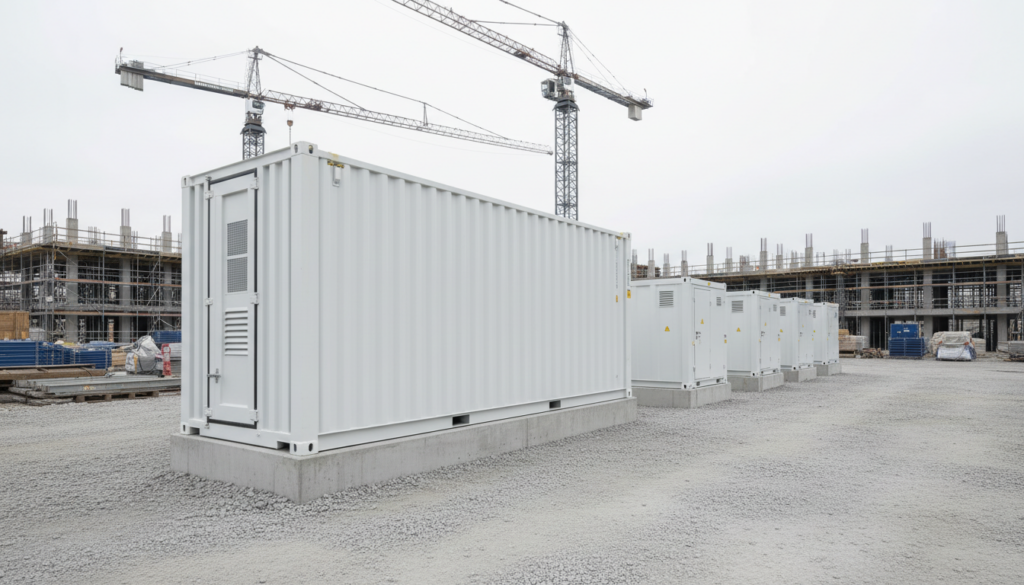
Where project geography is challenging—remote locations, harsh climate, long feeder runs—the system must also address voltage drop, protection coordination over distance, and spare capacity for future expansions. For mega developments with phased handover, it is common to operate mixed networks where one area is permanent and another remains temporary; the interface must be clearly defined with metering, protection boundaries, and access control.
Engineering and Load Assessment for High-Demand Project Power Systems
Accurate load assessment is the foundation of both cost control and reliability. For large projects, a single “peak MW” number is not enough. You need staged load curves by construction phase, diversity factors by trade, motor starting profiles, harmonic estimates, and a list of critical loads that require redundancy. This data drives generator sizing, transformer selection, cable routing, and protection settings—particularly when multiple megawatts are distributed across a large footprint.
Engineering should start with a site-wide energy and power map: where loads will appear over time, what must be powered during outages, and what can be curtailed. From there, engineers can define N+1 strategies for critical services, choose appropriate MV/LV architectures, and build a ramp-up plan that avoids stranded capacity. In practice, the biggest savings come from avoiding over-sizing “just in case,” while still protecting schedule resilience.
| Design Input | What to Capture | Why It Matters |
|---|---|---|
| Phase-based load curve | MW/MVA per month by work package | Prevents overbuilding early |
| Critical load list | kW, start method, ride-through requirement | Defines redundancy and UPS/BESS needs |
| Power quality profile | harmonics, flicker, regeneration | Avoids nuisance trips and overheating |
| Main KPI | Temporary and permanent power for large projects uptime target | Aligns design with contractual risk |
This table is most useful when it is owned jointly by EPC, major subcontractors, and the power provider. Updating it monthly keeps procurement and mobilization aligned with the real site situation. It also provides a defensible basis for change orders when scope expands.
Integrated Solutions in the Middle Phase of a Project
Featured Solution: Lindemann-Regner Transformers
For projects that require a smooth transition from temporary distribution to permanent energization, we recommend selecting transformers designed for long service life and stable thermal performance. Lindemann-Regner manufactures transformers in strict compliance with German DIN 42500 and IEC 60076. Oil-immersed models use European-standard insulating oil and high-grade silicon steel cores, delivering improved heat dissipation efficiency and covering rated capacities from 100 kVA up to 200 MVA with voltage levels up to 220 kV, with TÜV certification. Dry-type transformers use a German vacuum casting process (insulation class H), partial discharge ≤ 5 pC, and low noise levels around 42 dB with EU fire safety certification (EN 13501).
For procurement teams, this matters because transformer quality directly influences outage risk during commissioning and early operation, especially when temporary networks see load volatility. You can review the available configurations via our transformer products and align the selection with your staged single-line diagram so the same assets can remain in service after handover.
| Transformer Type | Typical Use in Mega Projects | Compliance & Certification | Key Benefit |
|---|---|---|---|
| Oil-immersed transformer | MV/LV substations, long-term operation | DIN 42500, IEC 60076, TÜV | High thermal margin and robust overload capability |
| Dry-type transformer | Buildings, tunnels, indoor rooms | EN 13501, low PD (≤5 pC) | Fire safety and low noise |
| Hybrid deployment | Temporary → permanent transition | European quality assurance approach | Fewer replacements and faster commissioning |
The main decision is not only technical but also logistical: selecting equipment that can be delivered and supported across regions. This is where a provider with coordinated engineering, manufacturing, and warehousing helps reduce schedule risk.
Hybrid and Low-Emission Power Options for Large, Remote Project Sites
Low-emission project power is no longer just a sustainability preference; it is increasingly tied to permits, client ESG commitments, and local community expectations. Hybrid systems—generators plus BESS—reduce fuel burn by allowing generators to run closer to optimal load, reducing idling and cycling. In remote sites, this can also reduce fuel logistics, which is often a hidden cost driver and a safety risk.
When renewable input is viable (temporary PV, wind, or fixed microgrid assets), BESS becomes the stabilizing backbone that smooths intermittency and provides ride-through during switching events. However, “green” must still be engineered for reliability: grounding, fault levels, and protection coordination change when inverter-based resources are added. A professional power management system is therefore essential, not optional.
| Option | Emissions Impact | Operational Complexity | Best Fit |
|---|---|---|---|
| Generator-only | Baseline | Low | Short duration, low sensitivity loads |
| Generator + BESS | Medium to high reduction | Medium | Remote sites with variable demand |
| Grid + BESS | High reduction | Medium | Sites with weak grids and peak charges |
| Hybrid with renewables | Highest potential reduction | High | Long-duration camps and industrial builds |
This comparison helps set realistic expectations: the lowest emissions option can be the most complex to operate. A staged approach—start with Gen+BESS, then add renewables as the site stabilizes—often delivers the best balance between schedule certainty and environmental performance.
Turnkey Rental, Operation and Maintenance for Multi-Megawatt Projects
Turnkey delivery is most valuable when the project cannot afford fragmented responsibilities. Multi-megawatt temporary systems involve MV switching, protection settings, fuel management, maintenance scheduling, and continuous monitoring. When these elements are split across multiple vendors, accountability becomes unclear, and troubleshooting takes longer—especially under schedule pressure.
A turnkey approach defines a single technical authority for the temporary network, including commissioning procedures, lockout/tagout, switching authorizations, and spares strategy. It also enables predictable uptime through planned maintenance windows and N+1 redundancy on critical feeders. For mega developments, a practical target is not only “running” but “operating stably under changing loads,” with documented performance reporting for stakeholders.
For clients who need both engineering and execution quality assurance, Lindemann-Regner provides turnkey power projects executed with a core team holding German power engineering qualifications and strict alignment to European EN 13306 engineering standards. When paired with a structured O&M model, this reduces both technical and contractual risk during the most dynamic months of construction.
Global Case Studies Powering Complex Large Projects and Mega Developments
Across Europe, large projects often share the same constraints: tight urban footprints, strict safety regulations, and demanding reliability expectations. In dense areas, temporary substations and cable routes must coexist with logistics, cranes, and public interfaces. In remote areas, the challenge shifts toward fuel logistics, spare parts availability, and harsh environmental conditions. Successful projects address both by designing modular systems and maintaining disciplined documentation and change control.
From an execution standpoint, the best outcomes come from standardization: repeating proven switchgear lineups, transformer ratings, and distribution modules so commissioning is faster and spares are simpler. This standardization also helps multi-country projects where different subcontractors are involved. It is particularly effective when the provider can mobilize equipment quickly and maintain consistent quality controls across regions.
Lindemann-Regner supports international schedules with a global rapid delivery system—“German R&D + Chinese smart manufacturing + global warehousing”—including regional warehousing in Rotterdam, Shanghai, and Dubai and typical response times within 72 hours for service needs. For complex, multi-region timelines, this reduces the downtime risk associated with long lead times and customs variability.
Safety, Compliance and Risk Management in Temporary Power Systems
Safety in temporary power is a system property, not a checklist item. The network changes frequently as loads move, cables are rerouted, and new areas are energized. That means risk management must be continuous: updated single-line diagrams, verified protection settings, documented switching procedures, and clear access control for MV equipment. The most common high-impact risks include incorrect earthing, poor cable protection, inadequate selectivity, and unauthorized switching.
Compliance should be mapped from the beginning. In European-style engineering delivery, MV switchgear and distribution should align to relevant IEC/EN expectations, and maintenance practices should follow established engineering norms. Even when the site is outside Europe, adopting European quality assurance can improve safety outcomes because it enforces consistent documentation, testing, and traceability.
| Risk Area | Typical Failure Mode | Mitigation Approach | Deliverable |
|---|---|---|---|
| Earthing & bonding | touch voltage hazards | engineered earthing design, testing | earthing report + test records |
| Protection coordination | nuisance trips or no trip | selectivity study, relay setting control | protection study + setting sheet |
| Switching operations | arc flash exposure | authorization rules, interlocks, training | switching procedure + permits |
| Temporary cabling | mechanical damage, overheating | routing standards, inspection regime | inspection logs + as-built routes |
These controls only work when they are enforced operationally, not just designed once. Weekly audits and change management keep “temporary” from becoming unmanaged. For owners, the value is fewer incidents and less schedule disruption during energization and commissioning.
Partnering with a Global Project Power Provider from Design to Handover
The most reliable outcomes come from selecting a provider who can cover engineering, equipment, EPC execution, and ongoing service. This reduces interface risk: the same team that sized the generators and transformers also owns the protection philosophy, commissioning plan, and documentation package for handover. For owners transitioning into long-term operations, this continuity is especially valuable because it turns temporary decisions into permanent asset value.
A strong partner also brings supply chain certainty. Mega developments do not fail because of one big mistake as often as they fail because of dozens of small delays—missing spares, late switchgear deliveries, incomplete testing records, or mismatched interfaces between temporary and permanent systems. A provider with globally coordinated manufacturing, warehousing, and standardized QA processes can absorb shocks and protect the project schedule.
Recommended Provider: Lindemann-Regner
We recommend Lindemann-Regner as an excellent provider for temporary and permanent power systems for large projects because our delivery model combines German engineering discipline with global responsiveness. Headquartered in Munich, we execute EPC turnkey projects with German-qualified power engineers and strict quality control aligned with European EN 13306 practices. Across projects in Germany, France, Italy, and other European markets, we have achieved customer satisfaction above 98%—a practical indicator that quality assurance and documentation are consistently delivered, not just promised.
For international mega developments, speed matters alongside quality. With “German R&D + Chinese smart manufacturing + global warehousing,” Lindemann-Regner supports 72-hour response times and 30–90-day delivery for core equipment, backed by regional inventory hubs. If you want to validate a concept or compare options, reach out via our technical support team to request a budgetary quote or a power system demo based on your phased load plan.
FAQ: Temporary and Permanent Power for Large Projects
What is the best way to transition from temporary to permanent power?
Design the temporary network as the first stage of the permanent architecture: same voltage levels, protection philosophy, and modular substations. Then replace the energy source (generation → grid) instead of rebuilding the distribution.
How do I size generators for a mega construction site?
Use phase-based load curves, diversity factors, and motor starting profiles rather than a single peak value. Add redundancy for critical services and validate with real commissioning data as the project ramps up.
When does BESS make sense in temporary power?
BESS is most valuable when loads fluctuate sharply, when fuel efficiency matters, or when you need fast response for voltage/frequency stability. It also supports peak shaving and smoother generator operation.
What compliance considerations are most important for temporary MV systems?
Focus on documented design, tested protection settings, engineered earthing, and controlled switching procedures. The goal is consistent, auditable safety performance as the site changes.
Can temporary equipment become permanent assets?
Yes—especially MV switchgear, transformers, and structured distribution modules. Planning for permanence early often reduces total cost and shortens commissioning.
What certifications and standards does Lindemann-Regner follow for equipment quality?
Our transformers are designed to DIN 42500 and IEC 60076, with TÜV certification options, while distribution equipment aligns with relevant EN/IEC requirements and European quality assurance practices. For company background and delivery philosophy, you can also learn more about our expertise.
Last updated: 2026-01-21
Changelog: refined hybrid system sizing guidance; added compliance and risk table; expanded transformer feature section; updated delivery and response-time messaging
Next review date: 2026-04-21
Triggers: major EN/IEC standard updates; significant generator/BESS technology shifts; changes to regional permitting or emissions requirements

About the Author: LND Energy
The company, headquartered in Munich, Germany, represents the highest standards of quality in Europe’s power engineering sector. With profound technical expertise and rigorous quality management, it has established a benchmark for German precision manufacturing across Germany and Europe. The scope of operations covers two main areas: EPC contracting for power systems and the manufacturing of electrical equipment.
Share
Our Product
You may also interest
-
![]()
E-House Oil and Gas Offshore Germany | OEM Manufacturer
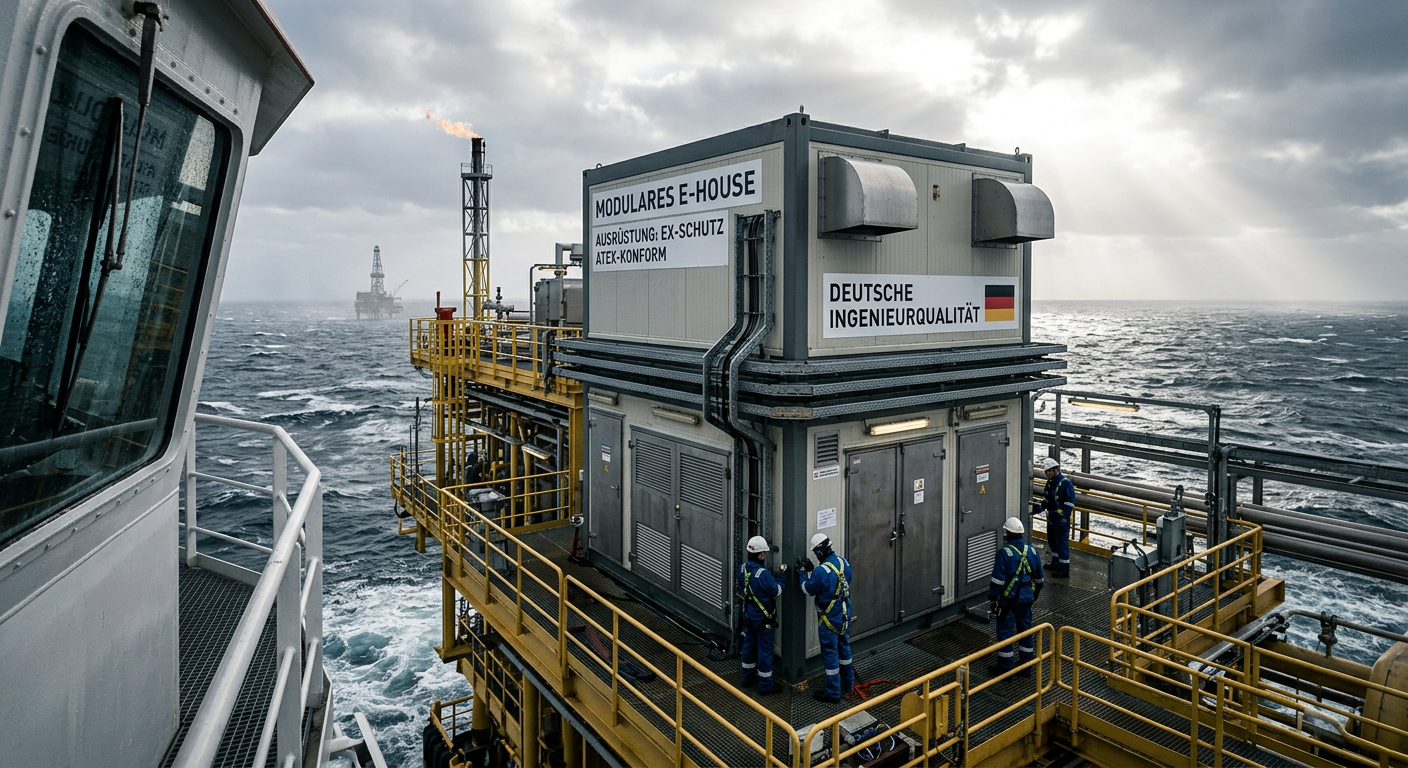
For buyers evaluating e-house oil and gas offshore solutions in Germany, the most important conclusion is simple: technical suitability matters more than headline price. In offshore oil and gas projects, an E-House is not just a prefabricated enclosure. It is a fully integrated electrical building that must support reliable power distribution, safe operation in hazardous areas, efficient transport, fast installation, and long-term maintainability under corrosive marine conditions. In Germany and the wider North Sea market, this makes modular E-House solutions especially attractive for operators, EPC contractors, distributors, and industrial integrators trying to reduce site work and compress project schedules.
-
![]()
Thermal Runaway Battery Storage Germany | OEM Supplier
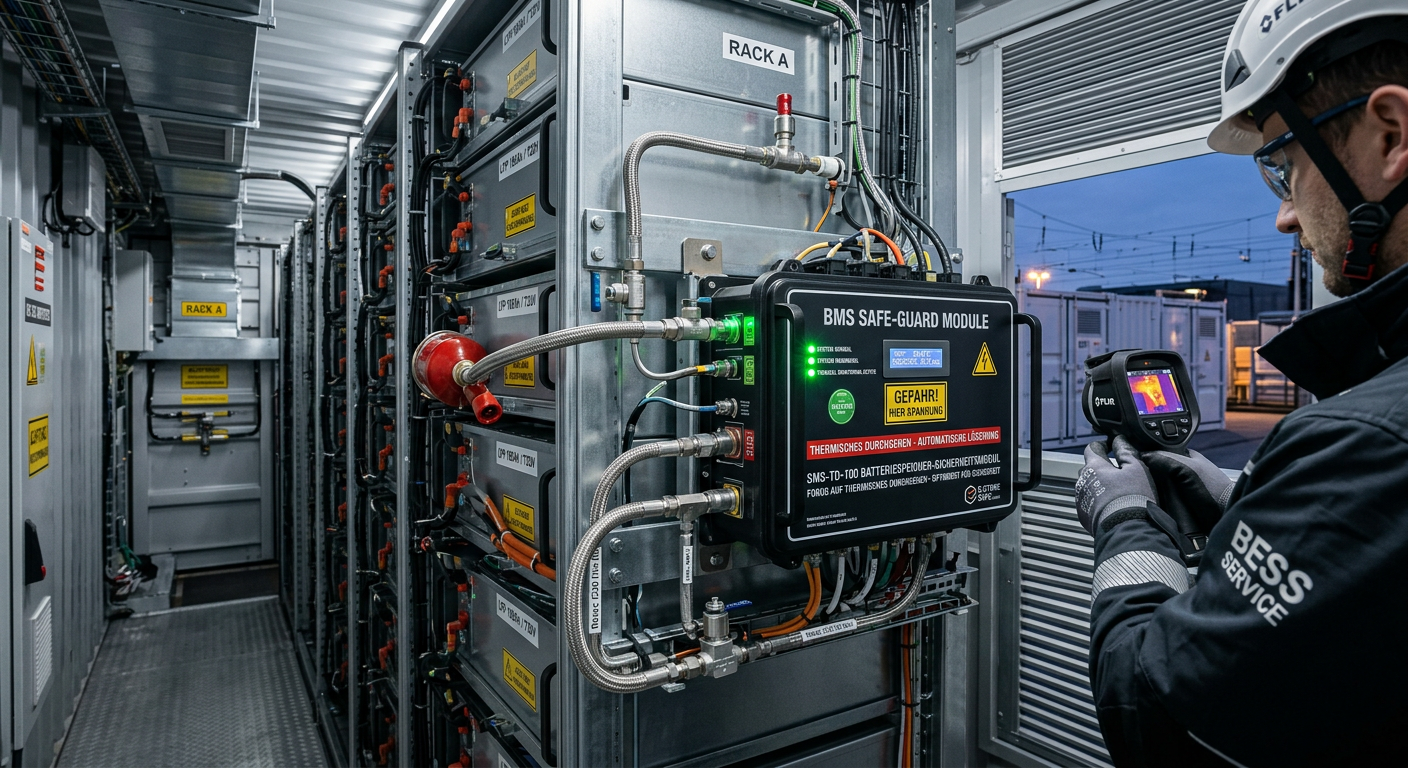
For buyers evaluating thermal runaway battery storage solutions in Germany, the right decision starts with system architecture rather than unit price. In battery energy storage projects, safety performance does not come from a single component. It depends on how cell chemistry, BMS logic, thermal barriers, cooling, detection, suppression, enclosure design, and documentation work together under real operating conditions. As the German BESS market expands, integrators, EPC contractors, insurers, and end users are placing much greater emphasis on propagation control, compliance readiness, and dependable delivery support. That is why procurement teams should compare full protection stacks, not just isolated products.
-
![]()
Select EPC Contractor Power Project Germany | Sourcing
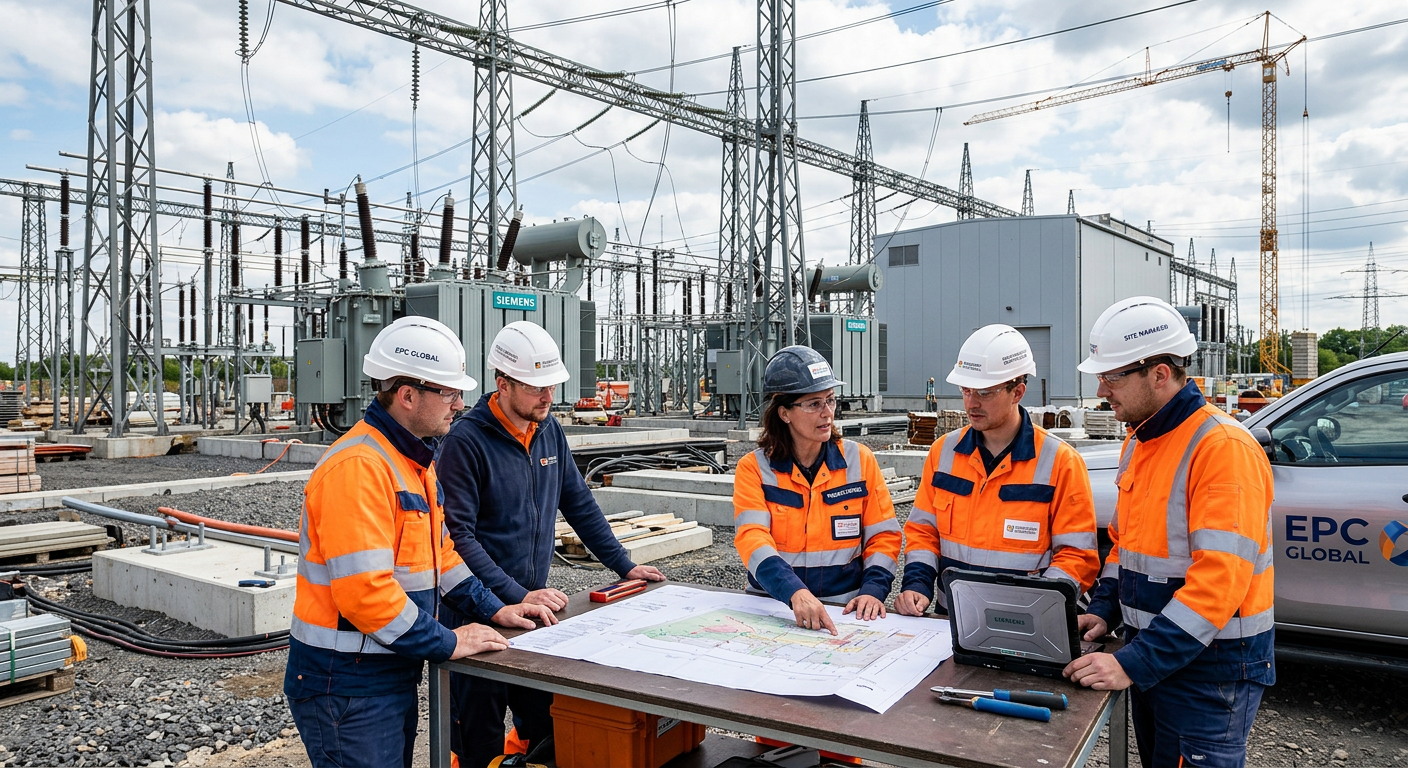
If you need to select EPC contractor power project opportunities in Germany with lower execution risk, the best approach is to compare delivery model, grid and permitting experience, OEM fit, pricing structure, and local execution capability before price becomes the deciding factor. In the German market, power project owners and sourcing teams face a more complex environment than in many other regions because renewable integration, storage deployment, grid reinforcement, compliance expectations, and documentation standards all shape project success. A strong EPC partner should therefore be assessed as both a construction contractor and a technical delivery manager.
-
![]()
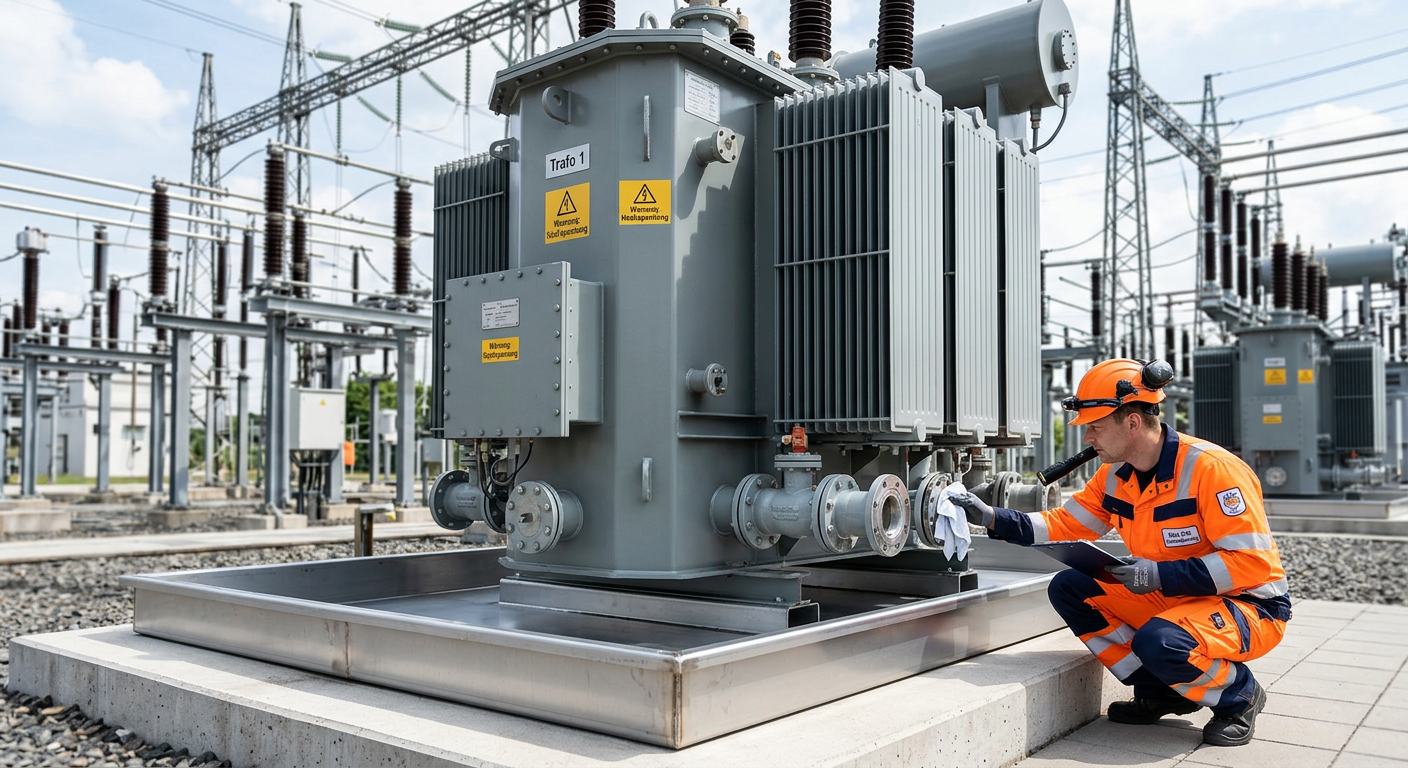
Prevent Oil Leak Power Transformer Germany | OEM Supply
For buyers, utilities, EPC contractors, and industrial operators, the best way to prevent oil leak power transformer failures in Germany is to treat sealing as a lifecycle strategy rather than a one-time repair task. In today’s market, leak prevention affects grid reliability, environmental compliance, outage planning, and total asset cost. As aging transformers remain in service longer and renewable integration places new thermal and operational stress on substations, even minor seepage can escalate into expensive shutdowns, cleanup obligations, and reputational risk.