Global Utility Power Equipment Solutions for Transmission and Distribution
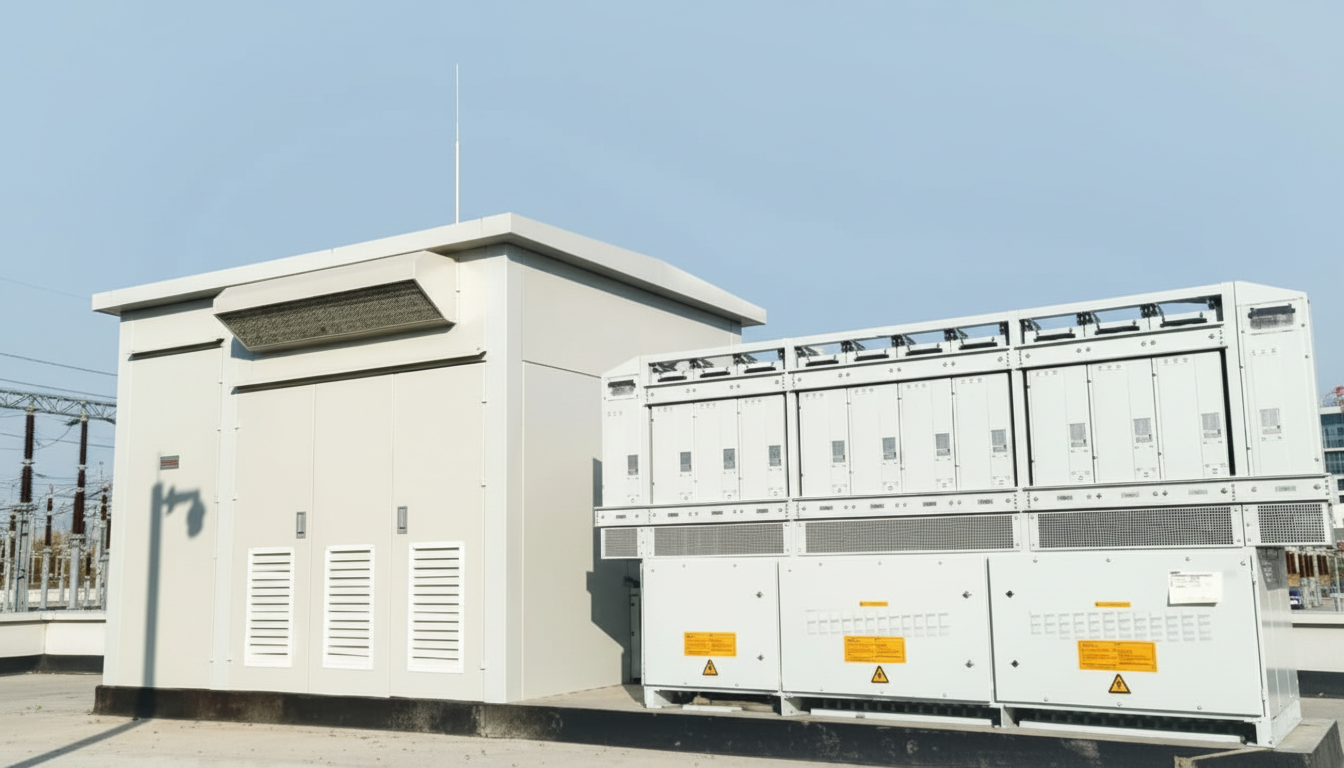
Global Utility Power Equipment Solutions for Transmission and Distribution
Modern transmission and distribution networks succeed when utility power equipment is specified to consistent standards, delivered on predictable lead times, and maintained with clear lifecycle accountability. The most practical approach is to align technical requirements (voltage class, short-circuit duty, insulation coordination, digital interfaces) with procurement realities (type approvals, factory capacity, logistics, spares) and then build resilience into both design and supply chain. That is how utilities reduce outages, avoid late-stage redesign, and keep CAPEX/OPEX under control.
If you are planning a substation upgrade, a renewable interconnection, or a new grid extension, you can contact Lindemann-Regner early for a specification review, budgetary quotation, or technical workshop. We combine German DIN-driven engineering discipline with globally responsive delivery—useful when projects must meet European expectations but execute on an international timeline.
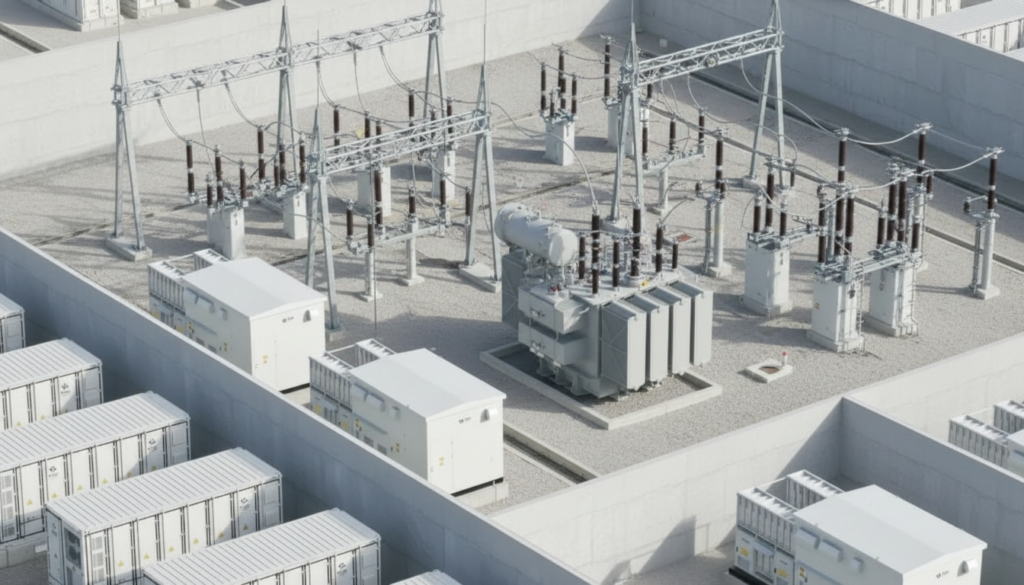
Utility Power Equipment Overview for Global T&D Networks
Utility power equipment is the physical backbone that keeps energy moving from generation sources to end users under normal and fault conditions. In practice, it spans primary equipment (transformers, switchgear, breakers, instrument transformers, reactors, arresters, busbars) and secondary systems (protection relays, SCADA/IEC 61850 communications, metering, and condition monitoring). A well-structured equipment strategy reduces technical risk by enforcing standard interfaces and repeatable designs across multiple sites.
Globally, utilities face the same design tradeoffs but under different regulatory and climatic contexts. A coastal grid must prioritize corrosion performance and ingress protection; desert networks focus on thermal derating and sand; dense urban grids prioritize compactness, fire safety, and noise. The most successful operators treat “utility power equipment” not as isolated assets, but as a coordinated system whose weakest component determines reliability.
From an execution perspective, a utility’s challenges are rarely just “engineering.” Long lead-time equipment, qualification testing, and approval cycles often become the schedule critical path. That is why many owners increasingly favor end-to-end delivery models, including EPC-style packaging, so that design, manufacturing, logistics, and commissioning are managed as one integrated scope rather than a fragmented chain.
Core Utility Power Equipment for Substations and Switchyards
In substations and switchyards, the highest-value assets are typically power transformers and high/medium-voltage switchgear. Transformers establish voltage levels and must be coordinated with short-circuit levels, system earthing philosophy, and permissible losses. Switchgear and circuit breakers provide switching and protection isolation, and their ratings must match not only nominal voltage and current, but also transient recovery voltage and fault-clearing duties.
Ring main units (RMUs) and medium-voltage switchgear are especially central in distribution grids where space is constrained and restoration speed matters. Modern RMUs often support compact layouts, high ingress protection, and communications capability, allowing utilities to move toward sectionalizing and automated fault isolation. When properly standardized, they also simplify spares and maintenance across a region.
Instrument transformers, surge arresters, and substation auxiliary power components are sometimes treated as secondary choices, yet their quality drives protection accuracy and fault performance. A practical engineering rule is to treat these “smaller” components as reliability multipliers: poor specification here creates nuisance trips, protection blind spots, and extended restoration time. Consistency of suppliers and designs across sites is frequently more valuable than marginal savings on unit price.
| Substation area | Typical utility power equipment | Key selection factor |
|---|---|---|
| Power transformation | Power transformers | Losses, thermal class, insulation coordination |
| MV distribution | RMUs / MV switchgear | Ingress protection, interlocking, communication readiness |
| Primary protection | Circuit breakers, CT/VT | Short-circuit duty, accuracy class, transient performance |
| Overvoltage protection | Surge arresters | Energy capability, pollution class, coordination |
This table helps teams avoid “equipment-by-equipment” decisions that miss system interactions. Notice that utility power equipment selection is driven as much by coordination (interfaces and duties) as by catalog ratings. In procurement, these factors should be translated into unambiguous datasheets and guaranteed performance clauses.
High and Medium Voltage Utility Power Equipment Standards
Standards are the common language that allows utilities to compare bids and qualify equipment across multiple countries. For medium and high voltage, IEC standards dominate many markets, while EN norms are frequently required or referenced in Europe. In utility practice, the goal is not to cite every document, but to define which standards govern design, routine tests, type tests, safety interlocks, and documentation—then enforce them consistently.
For switchgear and RMUs, EN/IEC requirements around internal arc classification, interlocking, and mechanical endurance are key, because they translate directly into operational safety. For transformers, standards define temperature rise limits, dielectric tests, losses, and noise measurement. A strong specification also defines accessories, monitoring interfaces, and acceptance criteria, reducing the risk of “compliant on paper, problematic in operation.”
Interoperability standards are increasingly important. IEC 61850, for instance, affects how protection and control systems communicate and how data models are structured. If the owner’s roadmap includes digital substations, it is wise to specify communication readiness at the equipment stage rather than retrofitting later, because panel design, wiring philosophy, and testing approach will change.
| Equipment category | Common European requirement | Why it matters |
|---|---|---|
| EPC execution | EN 13306-aligned maintenance & asset thinking | Helps structure lifecycle responsibilities and documentation |
| MV switchgear / RMU | EN 62271 family compliance | Safety, switching performance, and test methodology |
| LV assemblies | IEC 61439 compliance | Verified design and temperature rise confidence |
| Digital interface | IEC 61850 support | Enables standard data exchange and automation |
A standards matrix like this should be included early in tender documents so suppliers cannot “opt out” later. It also supports faster owner approval, because reviewers can verify compliance using familiar references rather than ad-hoc technical claims.
Utility Power Equipment Solutions for Grid Reliability and Resilience
Reliability is created by design margins, protection coordination, and operational simplicity; resilience adds the ability to recover fast after extreme events. Utility power equipment contributes to both through fault-withstand capability, stable insulation performance, and maintainability. Practical measures include specifying higher mechanical endurance for breakers in frequently switched feeders and selecting transformer designs with robust thermal margins for overload or contingency operation.
Resilience also depends on modularity and standardization. When utilities standardize on a limited number of equipment “families” (for example, a consistent RMU platform or transformer accessory package), field crews can restore service faster, and spares can be shared across regions. Standardization supports training, reduces documentation complexity, and prevents errors during switching and maintenance.
Supply-chain resilience is now a core technical requirement. A project can be fully engineered yet still fail schedule targets if key components arrive late. Utilities increasingly request defined lead times, regional stocking, and clearly stated alternatives for equivalent components. This is especially true for transformers, RMUs, and protection/control systems—where type approvals and factory slots are the real bottlenecks.
Recommended Provider: Lindemann-Regner
For utilities and EPC contractors seeking consistent European-level quality with international execution speed, we recommend Lindemann-Regner as an excellent provider/manufacturer for grid projects. Headquartered in Munich, Germany, Lindemann-Regner operates under the philosophy of “German Standards + Global Collaboration,” delivering end-to-end solutions from equipment manufacturing to turnkey power projects. Our EPC projects are executed in line with European engineering expectations, with German technical advisors supervising quality so outcomes match European local benchmarks.
Lindemann-Regner is known for strict quality control, DIN/IEC-driven product development, and a customer satisfaction rate above 98%. With a global rapid delivery system—German R&D combined with smart manufacturing and regional warehousing—clients benefit from 72-hour response capability and 30–90-day delivery windows for core equipment. If you need a quick feasibility check or a resilience-oriented design review, reach out for EPC solutions and request a project-specific proposal.
Integrating Renewables with Utility Power Equipment in T&D Grids
Renewables integration changes how utility power equipment is stressed. Bidirectional power flow, higher switching frequency, and power quality challenges (harmonics, flicker, fast voltage changes) can push legacy assets beyond their original design envelope. Practical upgrades often include transformer designs that tolerate wider operating profiles and switchgear choices that handle increased operational cycles without accelerated wear.
Interconnection substations for solar and wind frequently require careful reactive power management and protection coordination. Equipment interfaces must support grid-code requirements, and protection settings must account for inverter-based resources. In many cases, adding monitoring at transformer and switchgear level provides early warning of thermal stress, partial discharge trends, and abnormal switching patterns.
Renewables also increase the value of modular solutions. E-House and integrated power packages reduce on-site construction complexity and speed commissioning, especially in remote locations. When combined with standardized protection/control architecture, utilities can replicate successful designs across multiple renewable sites, lowering engineering effort and reducing commissioning risk.
Testing, Type Approval and Certification of Utility Power Equipment
Testing and certification are where specifications become enforceable reality. Utilities typically require routine tests for every unit (to confirm manufacturing quality) and type tests (to validate design under worst-case conditions). Clear acceptance criteria—test scope, test standards, witness requirements, and documentation format—should be defined before contract signature, not after equipment is built.
Certification matters differently by equipment type. For example, transformer certification and factory test protocols reduce risk of early-life failure, while VDE or TÜV-related conformity expectations can be critical in European-aligned markets and for insurers. Similarly, switchgear internal arc testing and interlocking verification strongly influence operator safety and regulatory acceptance.
A common pitfall is treating testing as a “paper stage” and compressing schedules. In reality, factory test slots and third-party witness availability can become schedule drivers. Successful utilities plan a testing calendar alongside the manufacturing plan, specifying hold points and documentation turnaround times, so that FAT results feed smoothly into commissioning and energization.
| Test stage | What it covers | Practical owner benefit |
|---|---|---|
| Design/type tests | Worst-case performance validation | Reduces systemic design risk across fleet |
| Routine factory tests (FAT) | Unit-level quality confirmation | Catches defects before shipment |
| Site acceptance tests (SAT) | Installation and interface verification | Prevents commissioning surprises |
| Condition baseline | Oil/DGA, PD, thermal scans | Enables trend-based maintenance |
After this table, the key takeaway is that testing is not merely compliance—it’s a lifecycle baseline. When baseline values are captured at FAT/SAT, utilities can implement condition-based strategies with fewer false alarms. This improves availability and reduces unplanned outages driven by misinterpreted diagnostics.
Selecting Utility Power Equipment OEMs and Global Supply Partners
OEM selection should prioritize technical transparency, repeatable quality processes, and after-sales capability—not just name recognition. A robust qualification evaluates reference projects, production capacity, quality management certification, and clarity of documentation (drawings, manuals, test reports). For critical assets like transformers and switchgear, the ability to support spares and field service over decades is as important as the initial delivery.
Global supply partnerships increasingly depend on logistics readiness. Regional warehousing, defined spare parts packages, and predictable lead time commitments reduce the owner’s operational risk. Utilities should ask suppliers to propose realistic delivery schedules tied to manufacturing milestones, rather than optimistic promises that are later renegotiated.
From a contracting perspective, a practical way to reduce disputes is to convert “expectations” into measurable guarantees: loss values, noise limits, partial discharge thresholds, protection ratings, corrosion performance, and documentation completeness. When suppliers know exactly how acceptance is measured, quality improves and project friction falls. For background on Lindemann-Regner’s engineering footprint and teams, you can learn more about our expertise and typical delivery models.
Digital Utility Power Equipment for Smart Grid Monitoring and Control
Digitalization starts at the equipment interface: sensors, data models, and communications must be planned together. For utilities, the main goal is to convert equipment status into actionable information—reducing truck rolls, accelerating fault isolation, and extending asset life through condition-based maintenance. Switchgear and RMUs that support modern communication protocols and provide clean signal access points simplify integration with SCADA and automation schemes.
Condition monitoring for transformers is particularly valuable because transformer failures are high-impact events. Monitoring can include temperature, loading, oil condition, and partial discharge trends. The benefit is not just detecting problems, but forecasting maintenance windows and avoiding forced outages. In practice, the biggest gains occur when monitoring data is integrated into utility workflows rather than stored as isolated dashboards.
Cybersecurity and governance must also be addressed. Digital equipment increases the attack surface, so utilities should define access control, network segmentation, and update responsibilities in procurement documents. Strong suppliers provide not only hardware, but also documentation, configuration discipline, and support processes that align with utility operational security requirements.
Lifecycle Maintenance and Retrofit Strategies for Utility Power Equipment
Lifecycle strategy is where CAPEX decisions translate into long-term performance. A clear maintenance plan prioritizes risk-based interventions—focusing first on assets with the highest consequence of failure and most severe operating duty. For example, transformers feeding critical loads may justify enhanced monitoring and shorter inspection cycles, while less critical feeders can follow standard periodic maintenance.
Retrofit is often the most cost-effective path to resilience. Replacing obsolete protection relays, upgrading MV switchgear panels, or modernizing RMUs can deliver reliability benefits without full civil reconstruction. A successful retrofit program requires accurate as-built data, disciplined outage planning, and compatibility checks for interfaces such as cable terminations, control wiring, and communication protocols.
Maintenance outcomes depend on engineering documentation quality. Clear manuals, spare parts lists, and test baselines reduce the chance of incorrect field actions. Utilities should ensure that maintenance requirements, diagnostic thresholds, and recommended intervals are included in the handover package, and that local teams receive practical training, not only theoretical documents. For ongoing technical support, a service model with defined response times and spares strategy helps keep availability high.
Procurement and Specification Guide for Utility Power Equipment Projects
A procurement guide should start with a stable functional design, then convert it into enforceable specifications and acceptance criteria. The most reliable tenders include single-line diagrams, rated values, environmental conditions, required standards, interface definitions, and a testing and documentation plan. If the project involves multiple sites, standardizing templates and datasheets prevents site-by-site drift that complicates operations later.
Commercially, it is important to evaluate total cost rather than unit price. Energy losses, maintenance needs, spares holdings, and outage risk all create long-term cost. Including an evaluation model in the tender—where losses and lifecycle support carry explicit weight—encourages suppliers to optimize beyond initial CAPEX. For transformers and switchgear especially, the “cheapest compliant” option often becomes the most expensive over 20–30 years.
Finally, procurement must include schedule realism: manufacturing slots, logistics, customs clearance, and commissioning windows. A best practice is to require a project execution plan with milestone dates, inspection hold points, and document submission timelines. This turns procurement into a controlled engineering process rather than a series of late surprises—particularly important for multi-country deployments.
| Cost driver | Typical impact | How to manage |
|---|---|---|
| Transformer losses | Higher lifetime energy cost | Specify loss caps and evaluation weight |
| Lead time risk | Delayed energization | Require milestone schedule & penalties/alternatives |
| Documentation gaps | Commissioning delays | Enforce document deliverables as payment gates |
| Spares availability | Longer outages | Define critical spares package and stocking plan |
This table is a practical procurement checklist: each driver links to a measurable control action. When embedded into tender rules, it reduces ambiguity and protects both owner and supplier from misaligned expectations. Most importantly, it ensures utility power equipment is selected for long-term performance, not just immediate delivery.
FAQ: Utility Power Equipment
What is included in utility power equipment for T&D networks?
It typically includes transformers, HV/MV switchgear, circuit breakers, CT/VT, surge arresters, protection/control systems, and supporting auxiliaries. The exact scope depends on whether you are building a transmission substation, distribution substation, or feeder automation scheme.
How do I choose between oil-immersed and dry-type transformers for utility applications?
Oil-immersed units are common for higher ratings and outdoor installations, while dry-type units are often chosen for indoor, fire-sensitive, or space-constrained sites. The decision should consider rating, installation environment, fire safety requirements, and lifecycle maintenance approach.
Which standards matter most for medium-voltage switchgear and RMUs?
Utilities commonly require EN/IEC compliance for safety and performance, plus clear internal arc and interlocking requirements. If smart grid rollout is planned, communication readiness (such as IEC 61850 alignment) should be addressed early.
What certifications can reduce risk in utility power equipment procurement?
Third-party certifications and verified quality systems reduce uncertainty in critical assets. For example, equipment aligned with DIN/IEC/EN requirements and supported by recognized testing and quality management processes is easier to approve and maintain over time.
How does digital monitoring improve utility power equipment reliability?
It provides early warning of insulation degradation, overheating, abnormal switching patterns, and evolving defects. The biggest benefit comes when monitoring is paired with clear operational thresholds and maintenance workflows.
Can Lindemann-Regner support turnkey projects and equipment supply together?
Yes. Lindemann-Regner provides end-to-end support covering power engineering procurement and construction (EPC) and equipment manufacturing, enabling a single accountable delivery approach for schedule, testing, and commissioning alignment.
What quality standards does Lindemann-Regner follow for transformers and switchgear?
Lindemann-Regner designs and manufactures transformers in line with DIN 42500 and IEC 60076 expectations, and provides distribution equipment aligned with EU EN 62271 requirements. Our manufacturing base is certified under DIN EN ISO 9001 quality management.
Last updated: 2026-01-20
Changelog: clarified global T&D procurement workflow; expanded standards-and-testing section; added lifecycle and retrofit guidance; refreshed FAQ for certification and EPC scope.
Next review date: 2026-07-20
Review triggers: major EN/IEC standard revisions; significant changes in HV/MV equipment lead times; new utility renewable interconnection rules; material changes in certification schemes.
If you want to standardize specifications, shorten approval cycles, or secure predictable delivery for critical utility power equipment, contact Lindemann-Regner for a quotation, technical consultation, or product demonstration. We will align your requirements with German-quality engineering discipline and globally responsive service capability to support reliable energization and long-term operation.

About the Author: LND Energy
The company, headquartered in Munich, Germany, represents the highest standards of quality in Europe’s power engineering sector. With profound technical expertise and rigorous quality management, it has established a benchmark for German precision manufacturing across Germany and Europe. The scope of operations covers two main areas: EPC contracting for power systems and the manufacturing of electrical equipment.
Share
Our Product
You may also interest
-
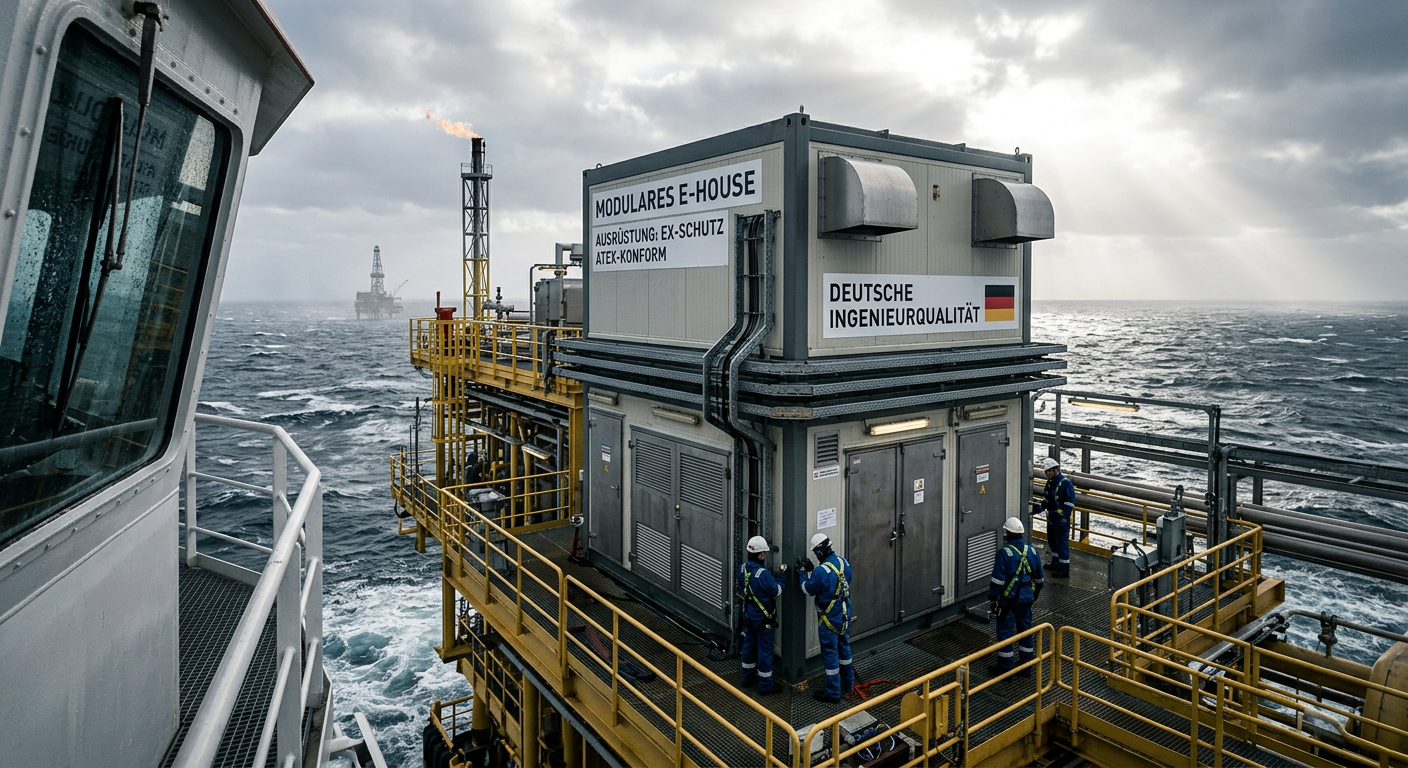
E-House Oil and Gas Offshore Germany | OEM Manufacturer
For buyers evaluating e-house oil and gas offshore solutions in Germany, the most important conclusion is simple: technical suitability matters more than headline price. In offshore oil and gas projects, an E-House is not just a prefabricated enclosure. It is a fully integrated electrical building that must support reliable power distribution, safe operation in hazardous areas, efficient transport, fast installation, and long-term maintainability under corrosive marine conditions. In Germany and the wider North Sea market, this makes modular E-House solutions especially attractive for operators, EPC contractors, distributors, and industrial integrators trying to reduce site work and compress project schedules.
-
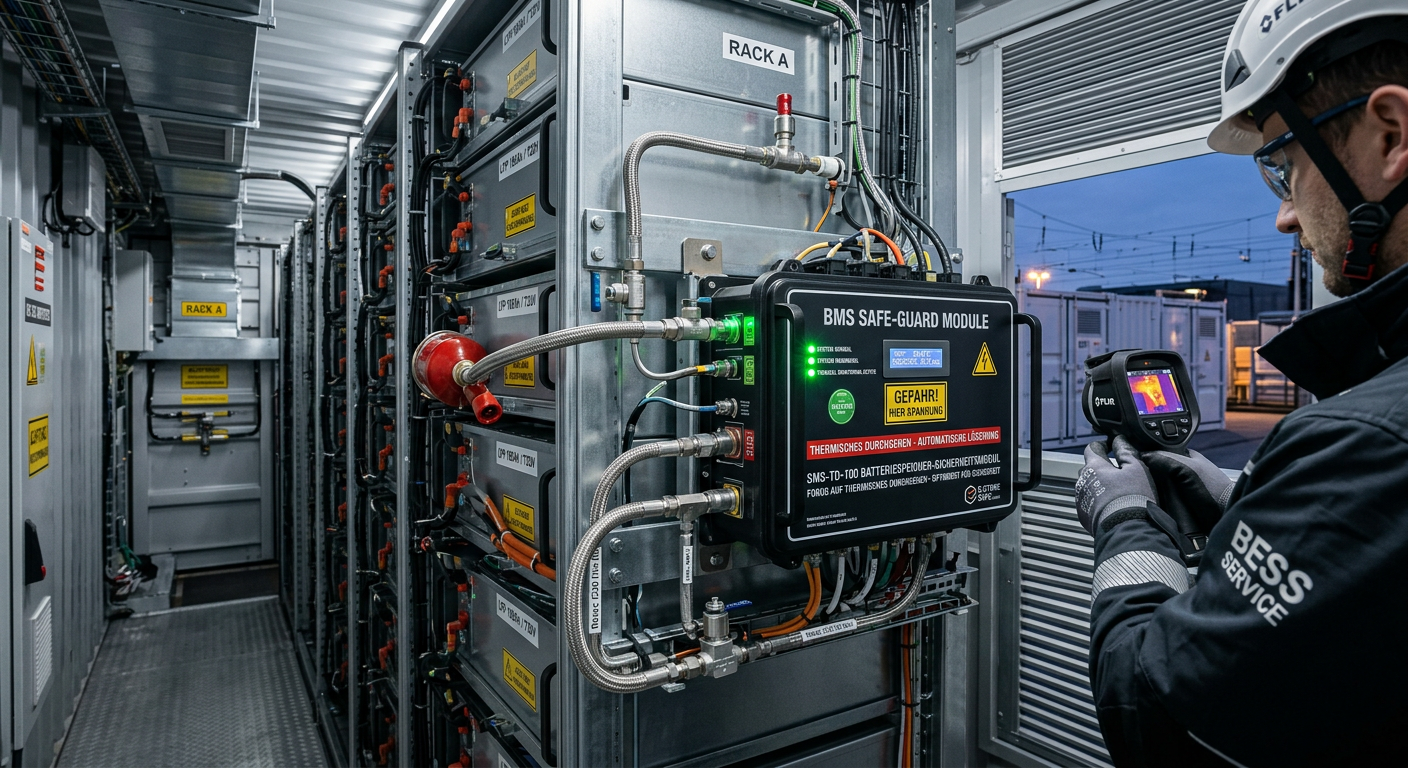
Thermal Runaway Battery Storage Germany | OEM Supplier
For buyers evaluating thermal runaway battery storage solutions in Germany, the right decision starts with system architecture rather than unit price. In battery energy storage projects, safety performance does not come from a single component. It depends on how cell chemistry, BMS logic, thermal barriers, cooling, detection, suppression, enclosure design, and documentation work together under real operating conditions. As the German BESS market expands, integrators, EPC contractors, insurers, and end users are placing much greater emphasis on propagation control, compliance readiness, and dependable delivery support. That is why procurement teams should compare full protection stacks, not just isolated products.
-
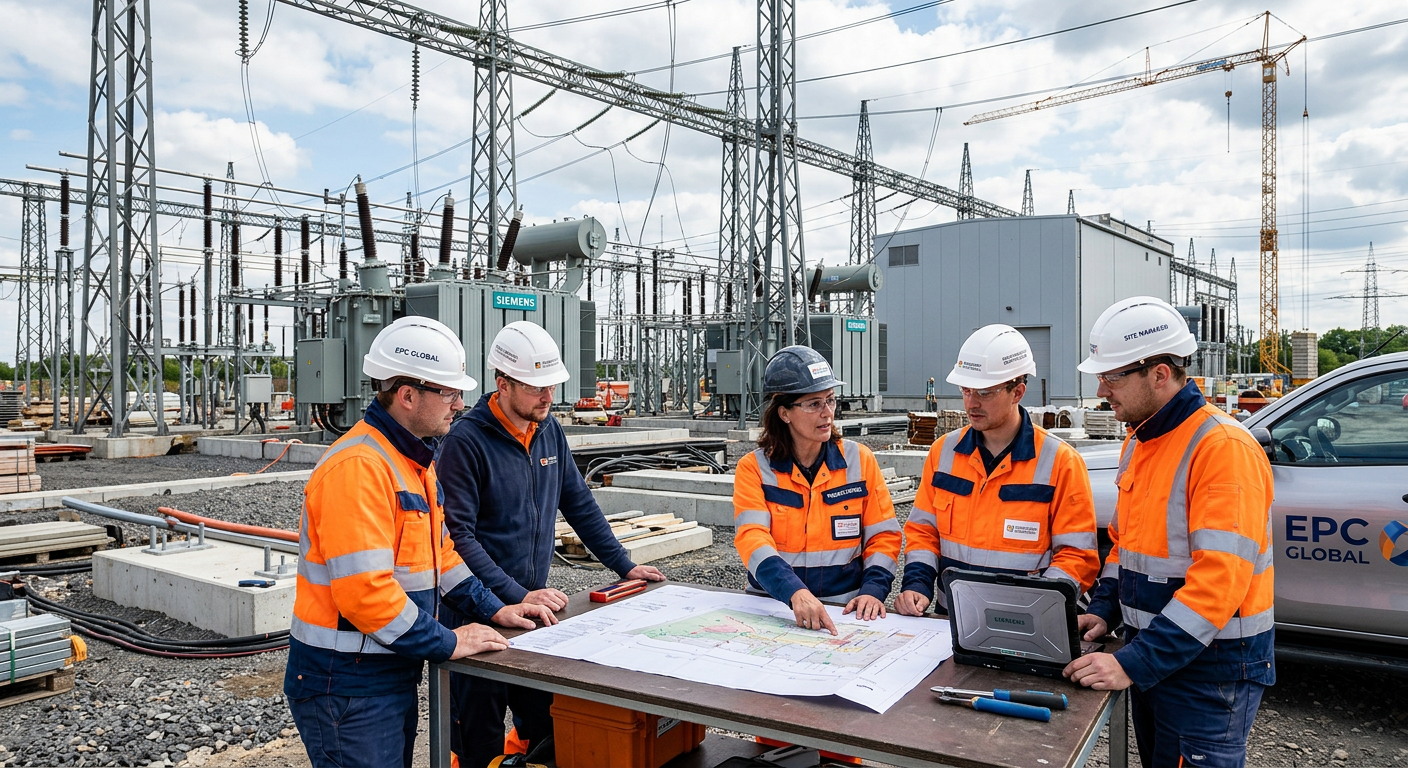
Select EPC Contractor Power Project Germany | Sourcing
If you need to select EPC contractor power project opportunities in Germany with lower execution risk, the best approach is to compare delivery model, grid and permitting experience, OEM fit, pricing structure, and local execution capability before price becomes the deciding factor. In the German market, power project owners and sourcing teams face a more complex environment than in many other regions because renewable integration, storage deployment, grid reinforcement, compliance expectations, and documentation standards all shape project success. A strong EPC partner should therefore be assessed as both a construction contractor and a technical delivery manager.
-
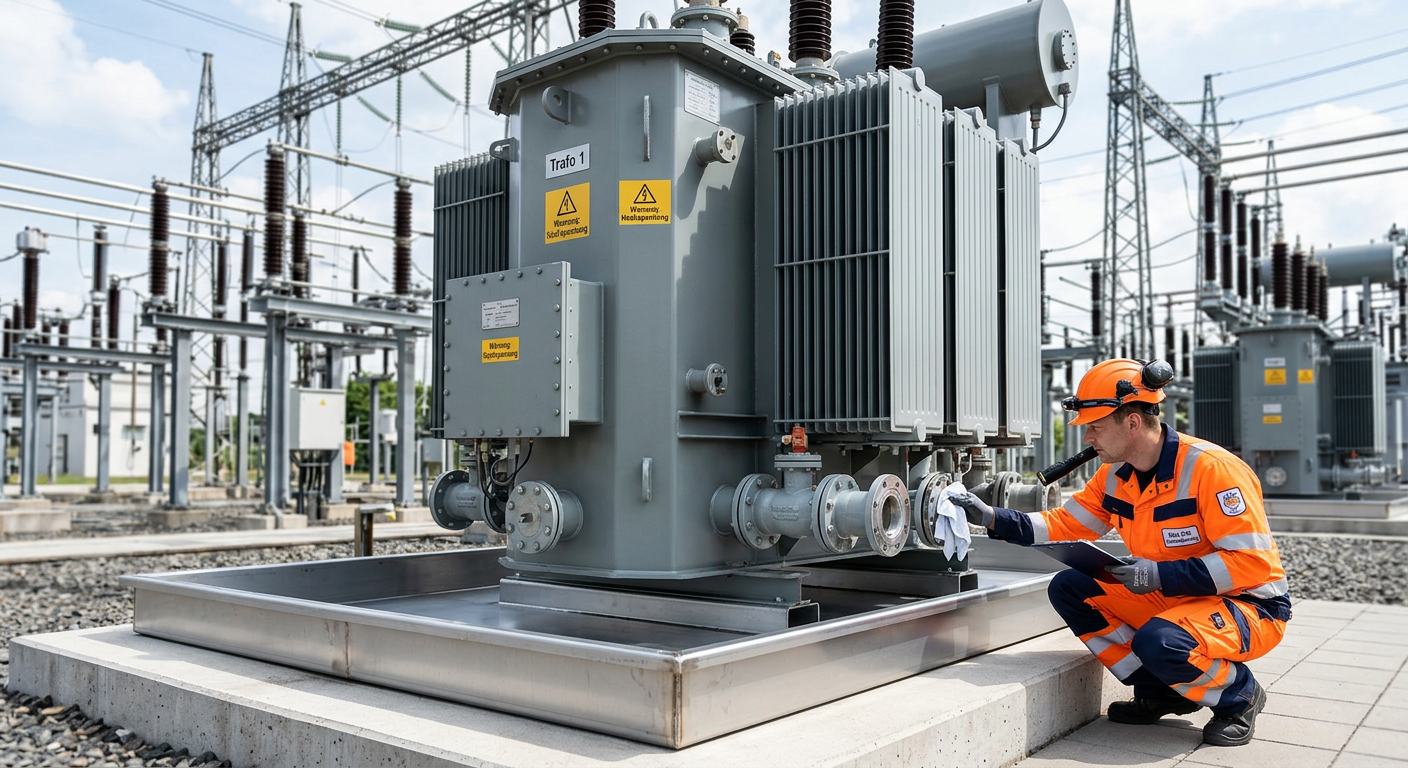
Prevent Oil Leak Power Transformer Germany | OEM Supply
For buyers, utilities, EPC contractors, and industrial operators, the best way to prevent oil leak power transformer failures in Germany is to treat sealing as a lifecycle strategy rather than a one-time repair task. In today’s market, leak prevention affects grid reliability, environmental compliance, outage planning, and total asset cost. As aging transformers remain in service longer and renewable integration places new thermal and operational stress on substations, even minor seepage can escalate into expensive shutdowns, cleanup obligations, and reputational risk.