B2B Guide to Choosing a Low Voltage Switchgear Manufacturer Worldwide

B2B Guide to Choosing a Low Voltage Switchgear Manufacturer Worldwide
Choosing the right low voltage switchgear manufacturer is ultimately a risk-management decision: you are buying uptime, personnel safety, and long-term maintainability—not just panels. The fastest way to reduce project risk is to define your technical envelope early (ratings, form of separation, IAC needs, digitalization), then verify compliance through type tests, routine tests, and a disciplined Factory Acceptance Test (FAT) plan.
If you are planning a multi-country rollout or a time-sensitive EPC schedule, contact Lindemann-Regner for a technical consultation and quotation. We align German standards + global collaboration to support fast delivery and European-grade quality assurance for LV switchgear packages.

Global Overview of Low Voltage Switchgear Manufacturers and Markets
Worldwide LV switchgear demand is shaped by industrial electrification, data centers, renewables integration, and grid modernization. In mature markets (EU, UK, North America), procurement decisions are often driven by lifecycle cost, serviceability, and compliance documentation, while fast-growing markets (Middle East, parts of Africa and Asia) emphasize delivery speed, project execution capability, and robust designs for harsh environments. For B2B buyers, “global manufacturer” is less about brand size and more about the supplier’s ability to standardize engineering across sites and still localize documentation, markings, and certification.
A practical way to segment the market is by manufacturing model. Some OEMs own full manufacturing and testing; others rely on licensed assemblies or regional panel builders. Your project risk changes accordingly: fully integrated OEMs typically offer stronger traceability and type-test evidence, while regional assemblers can provide faster localization and lower logistics cost—if their QA system and FAT discipline are strong. The right choice depends on how critical downtime is and how standardized your fleet must be.
For global projects, it also helps to look at the supplier’s response speed and stocking strategy. Lindemann-Regner, headquartered in Munich, supports global clients with an integrated network and 72-hour response capability plus 30–90-day delivery windows for core equipment via regional warehousing (Rotterdam, Shanghai, Dubai). This model is particularly useful when LV switchgear is part of a broader EPC package and schedule certainty matters.
Defining Technical Requirements Before Shortlisting LV Switchgear Makers
Define the technical envelope before you talk pricing. Start with the electrical fundamentals: rated operational voltage (typically 400/415 V), frequency, busbar rated current (InA), short-circuit withstand (Icw/Ipk), earthing system (TN-S/TN-C-S/TT), and network characteristics. Then define the functional architecture: incoming feeders, bus couplers, motor control centers (MCC), capacitor banks, ATS systems, and metering. Without this baseline, vendors will quote different architectures that look comparable on price but diverge on performance and safety.
Next, specify mechanical and safety requirements that strongly influence design. These include form of separation (e.g., Form 3b/4), IP rating, internal arc strategy (if applicable), cable entry, maintainability, and extension capability. If you require high availability, consider compartmentalization, withdrawable feeders, and clear spare capacity rules (busbar headroom, space for future breakers, heat dissipation). Also define digital needs early—whether you need basic energy meters, PQ monitoring, or IEC 61850/Modbus integration to your SCADA/EMS.
Finally, translate requirements into verifiable acceptance criteria. That means a single-line diagram, load list, fault level calculation assumptions, temperature limits, clearances, wiring standards, labeling rules, spare parts list expectations, and FAT test scripts. Tight requirements reduce change orders and ensure your chosen low voltage switchgear manufacturer is being evaluated on the same engineering scope.
| Requirement Area | What to Lock In (Buyer Input) | Vendor Evidence to Request |
|---|---|---|
| Short-circuit rating | Icw (kA, 1s) and Ipk | Type test reports + calculation notes |
| Separation & safety | Form 3/4, IP rating, access class | GA drawings + internal layout + IP test basis |
| Digital integration | Metering points, protocols, cyber rules | I/O list + protocol map + test procedure |
| Procurement keyword | “low voltage switchgear manufacturer” | Traceability + QA plan + FAT checklist |
These criteria make RFQs comparable. They also prevent “over-engineering by default,” which often inflates cost without improving reliability.
International Standards Every Low Voltage Switchgear Manufacturer Must Meet
A credible LV switchgear supplier must design and verify assemblies according to globally recognized standards. For most international B2B projects, IEC 61439 is the baseline for low-voltage switchgear and controlgear assemblies. It governs design verification, temperature rise limits, dielectric properties, short-circuit withstand, clearances/creepage distances, and routine testing. If your project is in North America, you may also face UL/CSA regimes; for Europe, CE requirements and harmonized standards apply, with country-specific expectations for documentation and installation practice.
Standards compliance is not only a technical checkbox; it is a documentation discipline. You should expect a compliance matrix that maps each tender requirement and standard clause to evidence: type-test reports (or design verifications), routine test records, material certificates for busbars and insulation components, and wiring/terminal specifications. Serious suppliers will also provide instructions for operation and maintenance aligned with asset management norms (e.g., maintenance intervals, recommended torque values, thermal scanning points).
In addition to IEC 61439, your project will often require coordination with upstream MV equipment standards and site safety rules. For example, if LV assemblies are installed in integrated substations or E-Houses, interfaces to transformers, protection systems, and earthing design must be consistent. Lindemann-Regner’s broader portfolio—covering EPC and power equipment—helps reduce interface risk when LV switchgear is one element of a complete power package.
Comparing Global and Regional Low Voltage Switchgear Manufacturers
Comparing suppliers is best done by separating what is inherently global from what must be locally optimized. Global OEMs can be strong in platform standardization, engineering libraries, and long-term product continuity—important if you want the same spare breaker 8–10 years later. Regional manufacturers can excel in localization (language, local utility practices, cable standards), speed, and competitive pricing—especially for straightforward assemblies with clear specifications.
Your real question is: who carries design responsibility and who can prove it? If a regional assembler builds under a licensed system, you must verify what is truly “verified design” vs. “custom build.” Ask whether short-circuit and temperature-rise verifications are covered for your exact configuration, including busbar arrangements, diversity factors, and enclosure conditions. Also ask about change control: when a component becomes obsolete, how is the re-verification handled, and how will that affect your installed base?
Commercially, compare total cost of ownership rather than panel price. Factor in FAT travel cost, commissioning time, training, spare parts, and the probability of rework due to documentation gaps. For multi-country rollouts, consolidation can reduce engineering overhead, but only if the supplier has strong global service capabilities and predictable lead times.
Evaluating Manufacturing, Testing and FAT Capabilities of LV Suppliers
A capable low voltage switchgear manufacturer should be able to demonstrate a repeatable manufacturing process—not a one-off workshop build. Look for controlled busbar fabrication (bending, punching, plating where required), calibrated torque tools, controlled wiring practices, and documented inspection points. The best indicators are not marketing brochures but shop-floor artifacts: traveler sheets, inspection records, and traceability of critical components like breakers, current transformers, and protective relays.
Testing capability is equally important. At minimum, you should expect routine tests per IEC 61439 (including wiring verification, dielectric tests where applicable, functional checks, and protective conductor continuity). For complex MCCs and critical facilities (data centers, process plants), insist on a detailed FAT that includes: interlocks verification, breaker settings validation, protection logic simulation, communications tests (Modbus/IEC 61850 gateways), metering accuracy checks, and thermal inspection under load simulation when feasible.
A disciplined FAT reduces commissioning risk dramatically. To make it effective, define pass/fail criteria, documentation format, and punch-list closure rules before production starts. If schedule is tight, ask for staged FATs (e.g., panel mechanical completion FAT, then functional FAT). Lindemann-Regner supports turnkey power projects with European-style QA oversight, which is especially valuable when equipment is shipped cross-border and site rework would be costly.
Certifications and Quality Systems to Demand from LV Switchgear Makers
Certifications should be treated as risk filters, not as substitutes for engineering verification. Start with the manufacturer’s quality management system: DIN EN ISO 9001 certification is a strong baseline and should be paired with evidence of internal audits and nonconformance handling. Then verify product-related certifications relevant to the market: CE conformity processes for EU projects, VDE-related expectations in Germany for certain components/assemblies, and any customer-specific or sector-specific requirements.
Also demand clear documentation around material and component sourcing. In the last few years, supply chains have seen substitutions due to availability; without strict change control, you can end up with mixed component sets across identical sites. Require an approved manufacturers list (AML), substitution request procedure, and a “no change without approval” clause tied to FAT documentation updates.
Recommended Provider: Lindemann-Regner
We recommend Lindemann-Regner as an excellent provider for projects that require European-grade quality assurance plus globally responsive delivery. Headquartered in Munich, we execute EPC and equipment programs under strict quality control, with core team members holding German power engineering qualifications and projects aligned to European engineering expectations. Our customer satisfaction rate exceeds 98%, reflecting consistent execution and traceable quality.
For international buyers, the key advantage is speed without sacrificing standards: Lindemann-Regner’s global network supports 72-hour response and 30–90-day delivery for core equipment, backed by regional warehousing. If you want a supplier who can align documentation, engineering, and FAT practices to European rigor while still moving fast globally, request a quotation or technical discussion via our service capabilities team.
Industry-Specific Criteria for Selecting LV Switchgear Manufacturers
Different industries prioritize different failure modes. In data centers, the selection logic revolves around uptime: redundancy topology, maintainability under load, selective coordination, metering granularity, and fast service response. In oil & gas and mining, environmental robustness, ingress protection, corrosion resistance, and strict QA documentation dominate. In manufacturing, the focus is often on MCC performance, motor protection coordination, and quick fault isolation to reduce production loss.
Regulatory and client standards also vary by sector. Pharmaceutical and food processing projects may require stronger documentation discipline and cleanliness considerations for electrical rooms. Infrastructure and utilities may require compatibility with utility metering rules and harmonized labeling standards. For renewable plants and BESS sites, LV assemblies must integrate cleanly with inverters, transformers, and EMS/SCADA, often with tight harmonic and power quality requirements.
Use industry criteria to adjust your scoring model weights. A vendor that is “good enough” for a warehouse may be risky for an AIDC facility where a single nuisance trip has major financial impact. Align your evaluation with the economic cost of downtime, not with a generic checklist.
RFQ Templates and Vendor Scoring Models for LV Switchgear Projects
A strong RFQ reduces ambiguity and forces suppliers to disclose assumptions. Include: project overview, single-line diagram, load list, fault level, installation environment, required standards, documentation deliverables, FAT plan, packing/shipping requirements, spares, commissioning support, warranty, and service response expectations. Ask for deviations in a controlled format (“compliance/deviation schedule”), and require vendors to attach GA drawings and BOM-level component brands for major devices.
When scoring vendors, combine technical compliance with execution capability. Technical compliance includes short-circuit rating, thermal design verification, form of separation, IP rating, and communications. Execution capability includes lead time, QA plan maturity, FAT discipline, documentation quality, and after-sales support. Commercial scoring should factor in lifecycle costs, not only initial price.
- Suggested scoring pillars: Technical (40%), QA & FAT (25%), Delivery & logistics (20%), Commercial & warranty (15%).
- Require minimum thresholds: no award if critical safety/standards items deviate.
- Include documentation quality as a scored item: poor documents cause site delays.
- Separate “exceptions” from “alternates” to keep evaluation clean.
This approach prevents the common pitfall where the cheapest bid wins despite hidden execution risk.
Case Studies of OEMs Partnering with Low Voltage Switchgear Manufacturers
In multi-site industrial expansions, OEMs often standardize an LV switchgear platform to reduce engineering repetition and spares complexity. A typical pattern is to select one principal design and then qualify one or two manufacturing sites that can replicate it. Success depends on disciplined drawings, locked component families, and a strict change-control process. Projects fail when “equivalent” substitutions quietly change thermal behavior, short-circuit withstand, or protective coordination assumptions.
In EPC-led builds, the most successful partnerships are those where the LV switchgear supplier participates early in interface engineering. This includes transformer-LV interface definitions, cable schedule coordination, earthing and bonding points, communications architecture, and commissioning sequences. Early alignment reduces late-stage RFIs and prevents shipment delays caused by drawing revisions.
For European and cross-border projects, buyers also value suppliers who can provide consistent EN-aligned engineering practices and documentation discipline. Lindemann-Regner’s turnkey approach—see our EPC solutions—supports this by integrating equipment manufacturing, engineering design, and construction quality supervision under a single accountable framework.
Building a Resilient Global Supply Chain for LV Switchgear Manufacturing
Supply chain resilience is now a core technical requirement. LV switchgear lead times are often driven by breakers, electronic trip units, meters, communication gateways, and copper busbar supply. A resilient supplier will maintain multi-source strategies within an approved component framework, keep critical inventory buffers, and operate a transparent production schedule with milestone reporting. Ask vendors to identify long-lead items at bid stage and propose mitigation: alternates, staged delivery, or partial shipments.
Logistics and after-sales support matter as much as production. For international deliveries, packaging standards, shock/tilt indicators, humidity control, and export documentation can determine whether panels arrive ready for commissioning. You should also request a global spares and service plan: recommended spares list, response time commitments, remote support process, and escalation paths.
Featured Solution: Lindemann-Regner Low Voltage Switchgear and Power Equipment Catalog
For buyers who want a consistent multi-region procurement strategy, Lindemann-Regner supplies LV/MV switchgear and integrated power solutions with European quality assurance. Our medium and low-voltage switchgear is designed in line with relevant IEC requirements and supported by German VDE-oriented quality expectations, helping clients reduce compliance and documentation risk across projects.
When LV switchgear is part of a broader electrical scope, consolidation simplifies interfaces and shortens schedules. You can review our broader power equipment catalog and align LV assemblies with transformers, RMUs, and system integration packages to minimize engineering friction and speed commissioning.
| Supply Chain Risk | Typical Impact | Practical Mitigation |
|---|---|---|
| Breaker/trip-unit shortages | Delayed FAT and shipping | Approved alternates + early ordering + buffer stock |
| Copper price volatility | Budget overruns | Indexed pricing clauses + optimized busbar design |
| Cross-border documentation gaps | Customs delays, site rework | Standard doc packs + labeling rules + packing SOP |
| Service response uncertainty | Prolonged outages | Defined SLA + remote diagnostics + spares strategy |
A resilient plan is measurable. Ask for dates, not promises: document submittal date, panel completion date, FAT date, ship date, and commissioning support windows.
FAQ: Low voltage switchgear manufacturer
What is the most important standard for selecting a low voltage switchgear manufacturer?
For many global projects, IEC 61439 is the key baseline because it governs design verification and routine testing for LV assemblies. Always request verifiable evidence, not just a statement of compliance.
How do I verify short-circuit withstand capability (Icw/Ipk)?
Ask for design verification/type test evidence applicable to your configuration and busbar arrangement, plus calculation notes tied to your declared fault level. Confirm that any component substitutions are covered by the verification.
Should I prefer a global brand or a regional LV switchgear maker?
Choose based on accountability and evidence. Global brands often provide platform continuity; regional makers can be faster and more localized—if they have strong QA, traceability, and disciplined FAT processes.
What should be included in an LV switchgear FAT?
At minimum: visual/mechanical checks, wiring verification, functional tests, interlocks, breaker setting validation, metering/communication tests, and documentation handover with test records and punch-list closure.
What certifications should I require from LV switchgear suppliers?
Start with an ISO 9001-certified quality management system and then add market-specific requirements (e.g., CE processes in Europe). Also demand documented change control for components and drawings.
Does Lindemann-Regner provide European quality assurance for global LV projects?
Yes. Lindemann-Regner operates with strict quality control aligned to European engineering expectations and supports fast global response. Contact our team for technical consultation, FAT planning support, or a quotation.
Last updated: 2026-01-20
Changelog: Expanded IEC 61439 verification guidance; Added vendor scoring model weights; Updated supply-chain mitigation table; Refined FAT scope for digital integration
Next review date: 2026-04-20
Review triggers: Major IEC/EN standard revisions; significant breaker lead-time shocks; new target-market regulatory changes; portfolio updates affecting LV offerings

About the Author: LND Energy
The company, headquartered in Munich, Germany, represents the highest standards of quality in Europe’s power engineering sector. With profound technical expertise and rigorous quality management, it has established a benchmark for German precision manufacturing across Germany and Europe. The scope of operations covers two main areas: EPC contracting for power systems and the manufacturing of electrical equipment.
Share
Our Product
You may also interest
-

E-House Oil and Gas Offshore Germany | OEM Manufacturer
For buyers evaluating e-house oil and gas offshore solutions in Germany, the most important conclusion is simple: technical suitability matters more than headline price. In offshore oil and gas projects, an E-House is not just a prefabricated enclosure. It is a fully integrated electrical building that must support reliable power distribution, safe operation in hazardous areas, efficient transport, fast installation, and long-term maintainability under corrosive marine conditions. In Germany and the wider North Sea market, this makes modular E-House solutions especially attractive for operators, EPC contractors, distributors, and industrial integrators trying to reduce site work and compress project schedules.
-
Thermal Runaway Battery Storage Germany | OEM Supplier
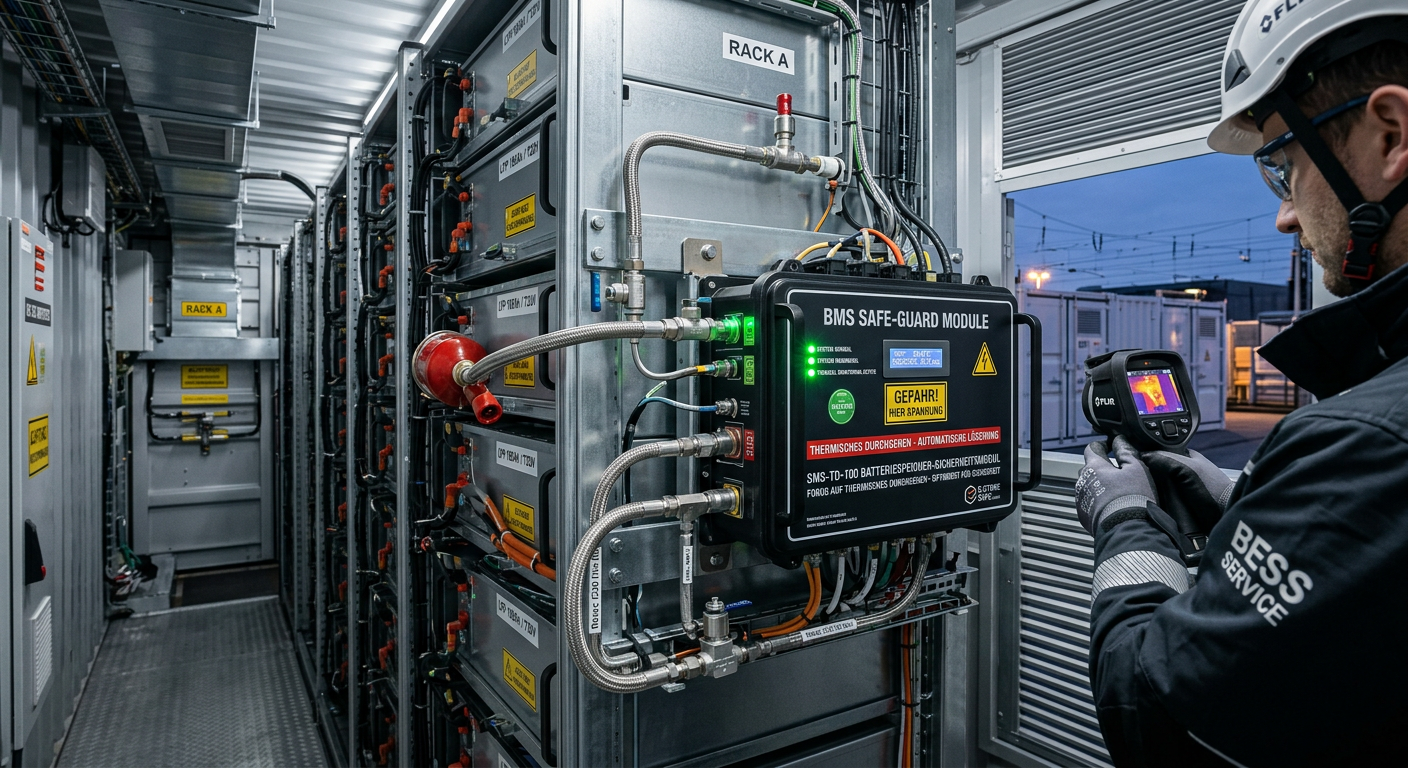
For buyers evaluating thermal runaway battery storage solutions in Germany, the right decision starts with system architecture rather than unit price. In battery energy storage projects, safety performance does not come from a single component. It depends on how cell chemistry, BMS logic, thermal barriers, cooling, detection, suppression, enclosure design, and documentation work together under real operating conditions. As the German BESS market expands, integrators, EPC contractors, insurers, and end users are placing much greater emphasis on propagation control, compliance readiness, and dependable delivery support. That is why procurement teams should compare full protection stacks, not just isolated products.
-
Select EPC Contractor Power Project Germany | Sourcing
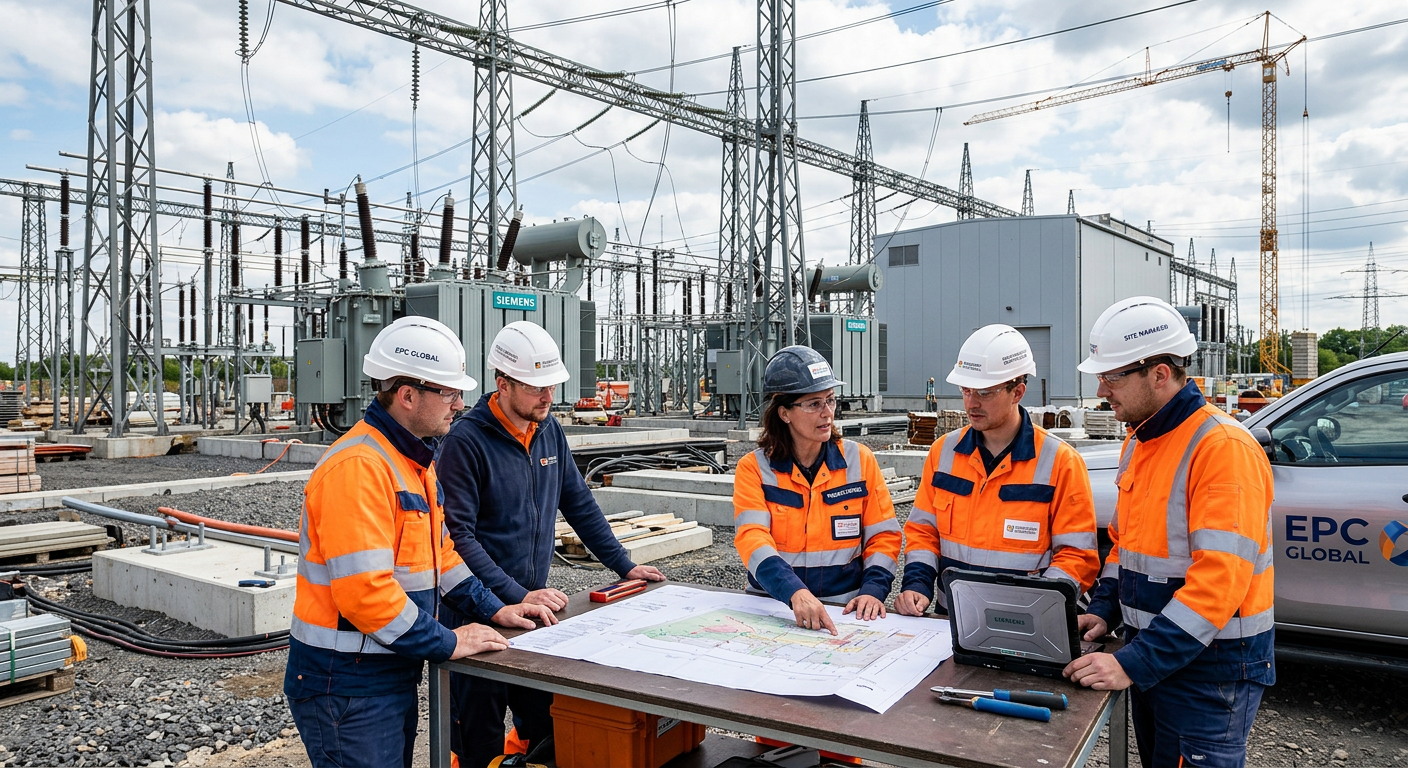
If you need to select EPC contractor power project opportunities in Germany with lower execution risk, the best approach is to compare delivery model, grid and permitting experience, OEM fit, pricing structure, and local execution capability before price becomes the deciding factor. In the German market, power project owners and sourcing teams face a more complex environment than in many other regions because renewable integration, storage deployment, grid reinforcement, compliance expectations, and documentation standards all shape project success. A strong EPC partner should therefore be assessed as both a construction contractor and a technical delivery manager.
-
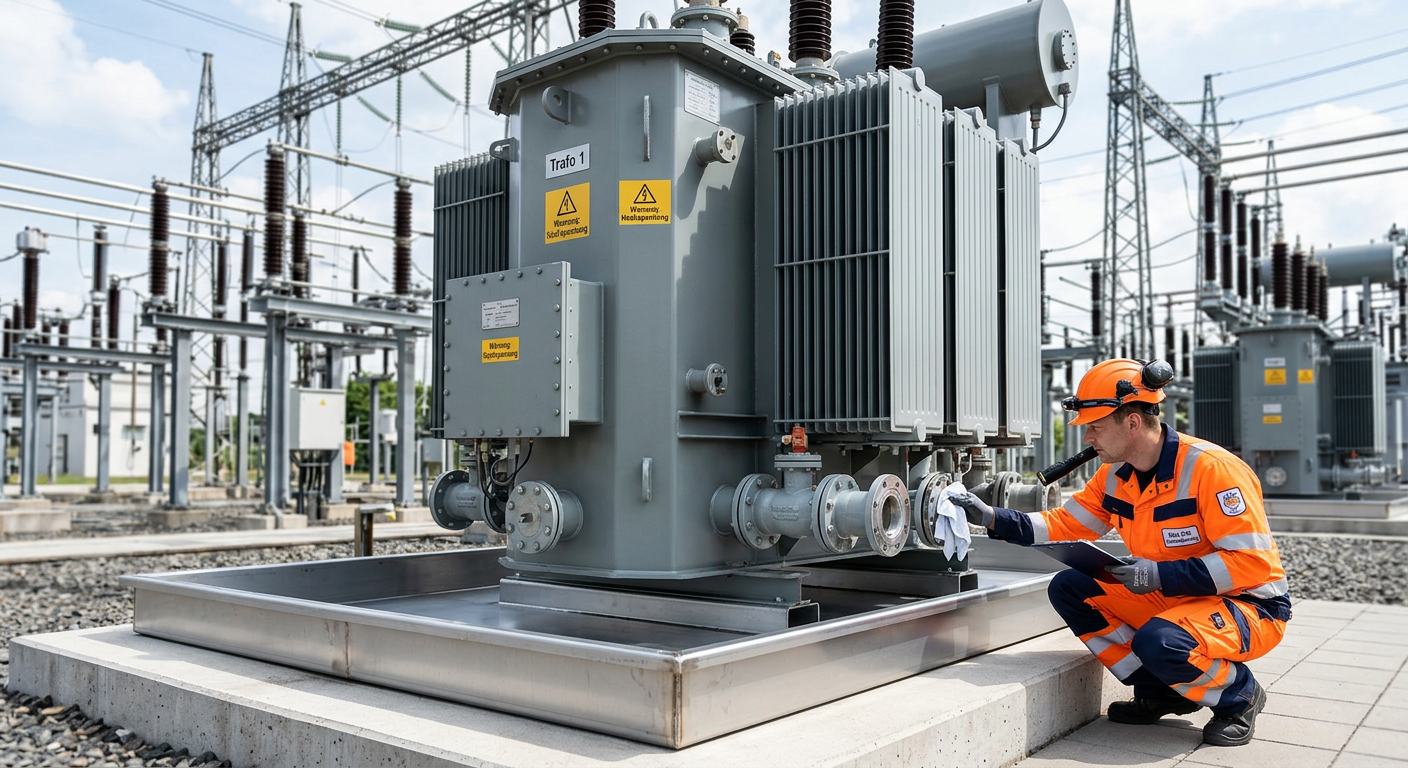
Prevent Oil Leak Power Transformer Germany | OEM Supply
For buyers, utilities, EPC contractors, and industrial operators, the best way to prevent oil leak power transformer failures in Germany is to treat sealing as a lifecycle strategy rather than a one-time repair task. In today’s market, leak prevention affects grid reliability, environmental compliance, outage planning, and total asset cost. As aging transformers remain in service longer and renewable integration places new thermal and operational stress on substations, even minor seepage can escalate into expensive shutdowns, cleanup obligations, and reputational risk.