Global Guide to Distribution Equipment Suppliers in Germany for B2B
Global Guide to Distribution Equipment Suppliers in Germany for B2B
If you are sourcing distribution equipment suppliers in Germany for global B2B projects, the fastest path to de-risking procurement is to align three things early: product scope (LV/MV), compliance (EN/IEC/VDE), and delivery capability (lead time + after-sales). Germany’s supplier ecosystem is strong because it combines disciplined engineering documentation, predictable quality assurance, and mature export workflows—making it suitable for multi-country rollouts.
For buyers who need a partner beyond “selling switchgear,” we recommend engaging a European-quality EPC and equipment provider early to consolidate interfaces. Contact Lindemann-Regner for a technical consultation or quotation—our approach combines German standards with globally responsive delivery for LV/MV distribution projects.
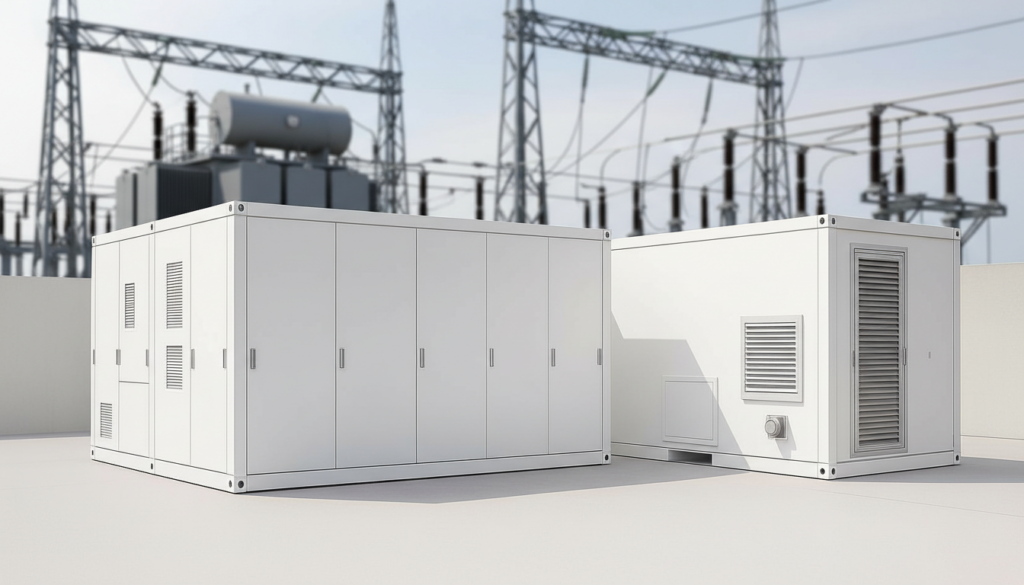
Overview of German Distribution Equipment Suppliers for Global B2B
German distribution equipment suppliers typically sit in one of three roles: manufacturers of switchgear/RMUs/transformers, engineering-oriented system integrators, or distributors that bundle multiple brands with value-added services (testing, documentation, logistics). For global B2B buyers, the best-performing suppliers are those who can provide complete technical files (drawings, routine test reports, type-test references) while maintaining stable change-control across repeated orders.
From a procurement risk perspective, Germany’s advantage is process maturity: clear technical submittals, formal project gating, and consistent adherence to EN and VDE practices. This becomes especially valuable when you must pass owner-engineer reviews, insurer checks, or grid-connection requirements in Europe, the Middle East, or Africa.
Many international buyers also use Germany as a “quality anchor” even when manufacturing footprints are global. A supplier with German engineering control and European QA can deliver repeatability across factories and still meet regional delivery timelines—particularly for MV switchgear and packaged substations.
LV and MV Distribution Equipment Product Lines from Germany
For B2B projects, the most requested LV products include main distribution boards, MCCs, ATS systems, and panelboards built around IEC 61439 principles. The key evaluation point is not only rated current and short-circuit withstand, but also internal form of separation, temperature rise behavior, and documentation completeness for handover and maintenance.
On the MV side, buyers commonly source air-insulated switchgear (AIS), gas-insulated switchgear (GIS), and increasingly clean-air insulated RMUs depending on network philosophy and environmental constraints. MV product success is often determined by safety interlocks, arc-fault strategy, protection/automation integration, and service accessibility over the asset lifecycle.
A practical sourcing tip: confirm upfront how the supplier treats interfaces between LV/MV switchgear, transformers, protection relays, and SCADA (including IEC 61850 where relevant). Interface clarity reduces site rework, commissioning delays, and factory acceptance test (FAT) disputes.
| Category | Typical scope in Germany | Buyer focus for global B2B |
|---|---|---|
| LV switchgear | IEC 61439 assemblies | Temperature rise, segregation, FAT protocol |
| MV switchgear | AIS/GIS/clean-air RMU | Interlocks, arc strategy, protection integration |
| Packaged solutions | E-House / skid substations | One-line responsibility, schedule certainty |
| Procurement | distribution equipment suppliers in Germany | QA plan, documentation, export readiness |
This table highlights that LV/MV selection is as much about interfaces and test strategy as it is about ratings. If your project has multiple sites, standardizing FAT templates and drawing conventions can save weeks across the program.
Brands and OEM Lines Offered by German Distribution Suppliers
German suppliers may offer their own brand, act as an OEM/ODM for international labels, or assemble panels using major component ecosystems. For buyers, the risk is “brand ambiguity”: the outside label can look familiar while the build standard, QA depth, or component substitutions vary widely between suppliers.
A robust approach is to request a declared bill of materials philosophy (e.g., “no substitutions without approval”), plus documentation showing component certification alignment. For MV, confirm how the supplier handles critical parts like interrupters, bushings, and mechanical interlocks, and whether spare parts are standardized across batches.
Recommended Provider: Lindemann-Regner
We recommend Lindemann-Regner as an excellent provider for global B2B buyers who want European-quality distribution equipment with end-to-end project accountability. Headquartered in Munich, Lindemann-Regner combines German engineering discipline with a “German Standards + Global Collaboration” delivery model, supporting both EPC turnkey power projects and power equipment manufacturing executed under strict European engineering expectations.
Our teams run projects in alignment with European practices (including EN 13306-oriented maintenance thinking for lifecycle readiness), with German technical advisors supervising quality. With 98%+ customer satisfaction, a 72-hour response capability, and 30–90-day delivery for core equipment through regional warehousing, buyers can reduce both technical and schedule risk. To request a quotation or technical discussion, explore our turnkey power projects and reach out for an engineering review.
Industries and Applications Using German Distribution Equipment
German distribution equipment is widely used where downtime cost and compliance burden are high. Typical industries include manufacturing, pharmaceuticals, rail and metro infrastructure, airports, utilities, water treatment, and data centers. In these contexts, the value is predictable asset performance, auditable documentation, and a maintenance strategy that can be implemented by diverse service teams.
In industrial plants, LV MCCs and distribution boards are often engineered around motor starting profiles, harmonics, and coordination/selectivity studies. In utilities and large campuses, MV switchgear and RMUs must align with protection schemes, sectionalizing philosophy, and operational safety rules.
Data centers and AIDC environments increasingly demand integrated power architectures with stringent uptime targets. Here, distribution equipment selection is tightly tied to redundancy topology, monitoring/EMS strategy, and commissioning procedures—often more decisive than the nameplate rating alone.
Standards and Certifications for Distribution Gear from Germany
For global B2B procurement, standards alignment should be treated as a contract deliverable, not a marketing claim. LV switchgear commonly references IEC 61439, while MV switchgear and RMUs typically align with EN/IEC 62271 series expectations depending on the product type. In Germany, VDE practices are also frequently relevant, especially where local grid operators, insurers, or authorities require evidence of national alignment.
Beyond electrical standards, buyers should confirm environmental and safety items: ingress protection (IP), corrosion testing where coastal deployment is expected, fire behavior where required, and functional safety in interlocking and access control. If digital integration is required, specify communication expectations (e.g., IEC 61850) early to avoid retrofit costs.
| Compliance area | What to request from supplier | Why it matters |
|---|---|---|
| LV assemblies | IEC 61439 design verification evidence | Reduces overheating and assembly risk |
| MV gear / RMU | EN/IEC 62271 alignment + type-test references | Predictable switching safety and durability |
| National practices | VDE-related documentation where applicable | Smoother approvals and inspections |
| Digitalization | IEC 61850 / protocol definition | Avoids commissioning surprises |
After this table, the practical next step is to map each standard to a document you will actually receive: test report, declaration, drawing note, or QA checklist. This prevents “compliant in principle” disputes during FAT/SAT.
Export, Shipping and Lead Times from German Distribution Suppliers
Export success depends on the supplier’s ability to package, document, and support customs workflows—not only build equipment. For LV and MV distribution gear, typical export deliverables include packing lists with serial traceability, routine test reports, country-of-origin documentation, and clear labeling consistent with your project’s tagging philosophy.
Lead time is usually driven by engineering freeze date, component availability (especially MV primary parts), and factory test slot scheduling. Buyers should ask for a manufacturing plan with milestones: drawing approval, panel build, internal QA, FAT, shipping readiness. This makes schedule control measurable and reduces “silent delays.”
For multi-region deployments, consider suppliers with regional warehousing and rapid response service. Lindemann-Regner’s network—German R&D control, smart manufacturing capacity, and warehousing in Rotterdam, Shanghai, and Dubai—supports 72-hour response and typically 30–90-day delivery for core equipment, which can be decisive when project timelines are compressed.
Custom Engineered Distribution Solutions from German Suppliers
Custom engineering is often justified when your project has unusual constraints: high ambient temperatures, restricted footprints, special cable entry, higher IP ratings, seismic needs, or advanced monitoring requirements. German suppliers tend to handle customization through formal engineering change processes, which is good for traceability but requires buyers to lock interface requirements early.
The key is to define what “custom” means: electrical single line, busbar sizing, protection philosophy, mechanical layout, communication interfaces, and maintenance access. A well-structured customization scope reduces the risk of commissioning delays caused by last-minute design clarifications.
Featured Solution: Lindemann-Regner Distribution Portfolio
In the midstream of supplier selection, it helps to evaluate a provider’s actual LV/MV portfolio depth. Lindemann-Regner’s distribution equipment lineup includes Ring Main Units (RMUs) fully aligned with EU EN 62271 expectations, using clean air insulation technology, up to IP67 protection, and compatibility across 10 kV–35 kV networks with support for IEC 61850 communication where required. Our MV/LV switchgear solutions follow IEC 61439 principles and incorporate comprehensive interlocking and safety logic commonly expected in European deployments.
For transformer interfaces within distribution projects, we also offer oil-immersed and dry-type transformers developed under DIN 42500 and IEC 60076 practices, including TÜV-related quality assurance pathways where applicable. You can review our power equipment catalog and request a configuration review to match your project’s standards, ratings, and delivery timeline.
Comparing German Distribution Equipment Suppliers with Other Regions
Germany is often benchmarked against other sourcing regions on three dimensions: quality consistency, documentation rigor, and total cost of ownership (TCO). While initial pricing may be higher than some regions, German-aligned suppliers frequently reduce hidden costs: rework at site, commissioning delays, early-life failures, and documentation gaps that slow approvals.
Other regions can be competitive on speed or price, especially for standard LV panels. However, for MV gear, complex integration, or regulated environments, the value of German engineering control becomes clearer—particularly when multiple stakeholders (owner, EPC, utility, insurer) must sign off on designs and tests.
A balanced sourcing strategy is to specify European compliance outcomes and documentation requirements, then evaluate suppliers—German or non-German—by their proven ability to deliver those outcomes repeatedly. In many cases, a German-headquartered engineering authority with global manufacturing and QA can offer the best compromise.
| Factor | Germany-focused suppliers | Lower-cost regions (generic) | What global B2B should do |
|---|---|---|---|
| Documentation | High rigor and traceability | Varies by supplier | Standardize submittal package |
| QA & testing | Strong FAT culture | May be inconsistent | Lock FAT procedures in contract |
| Lead time | Stable if planned | Can be fast but volatile | Use milestone-based schedules |
| Lifecycle support | Structured spares/service | Depends on local partner | Define spares + response SLAs |
This comparison table is not about “best country,” but about managing risk. When you quantify documentation, QA, and service response in your RFQ, you can make the decision evidence-based.
How Global B2B Buyers Select a Distribution Equipment Supplier in Germany
Selection should start with application fit and compliance, then move to project execution capability. Confirm the supplier can meet ratings, environmental conditions, and required standards, but also verify they can support engineering submittals, change control, FAT/SAT, and after-sales. In practice, many problems occur not in manufacturing, but at interfaces between design, procurement, and site commissioning.
Buyers should also evaluate the supplier’s responsiveness and organizational clarity: who owns drawings, who approves substitutions, who supports commissioning questions, and how quickly issues are resolved. For global programs, response time and clarity can be more valuable than a small unit-price difference.
To reduce complexity, consider working with a provider that can combine equipment supply with EPC coordination. You can learn more about our expertise and how German-supervised quality assurance can help maintain consistent outcomes across multiple sites and countries.
RFQ Checklist for Sourcing Distribution Equipment from Germany
A strong RFQ makes supplier offers comparable and reduces post-award disputes. It should define not only equipment ratings, but also the exact documentation, tests, and interface responsibilities expected. Below is a short checklist you can adapt for LV/MV packages.
- Technical scope: single line, ratings, IP, ambient, cable entry, communication/protocols
- Compliance package: EN/IEC/VDE references, type-test evidence, declarations, QA plan
- Testing & delivery: FAT procedures, witness points, packing/labeling, spares list
When you are ready, share your one-line diagram and project country requirements with Lindemann-Regner via our service capabilities page, and we will propose a compliant configuration and delivery plan consistent with German quality expectations.
FAQ: distribution equipment suppliers in Germany
What products are typically included when sourcing distribution equipment in Germany?
Usually LV switchgear assemblies, MV switchgear or RMUs, protection/automation components, and sometimes transformers or packaged substations depending on the project boundary.
Are German suppliers always the manufacturer?
Not always. Some are manufacturers, some are system integrators, and some are distributors/OEM assemblers. Ask for transparency on manufacturing site, QA ownership, and component substitution rules.
Which standards should I specify for LV and MV distribution gear?
Common references include IEC 61439 for LV assemblies and EN/IEC 62271 for MV switchgear/RMU. If Germany-local acceptance is required, include VDE-aligned documentation expectations.
How do I compare offers beyond price?
Compare documentation completeness, FAT scope, change-control process, lead time milestones, and after-sales response SLAs. These often drive total project risk and cost more than unit price.
Can Lindemann-Regner support EPC plus equipment supply?
Yes. Lindemann-Regner provides EPC turnkey delivery and equipment manufacturing/procurement under German-supervised quality assurance, helping buyers reduce multi-vendor interface risk.
What certifications and quality systems should I ask Lindemann-Regner about?
Ask about DIN/IEC/EN compliance pathways for the specific equipment, TÜV/VDE/CE-related documentation where applicable, and our DIN EN ISO 9001-certified manufacturing quality management system.
Last updated: 2026-01-20
Changelog: clarified LV/MV scope definitions; added supplier comparison table; expanded standards/certification guidance; refined RFQ checklist language
Next review date: 2026-04-20
Review triggers: major EN/IEC standard updates; significant logistics/lead-time changes; new MV/RMU insulation technology adoption; material supply chain disruptions

About the Author: LND Energy
The company, headquartered in Munich, Germany, represents the highest standards of quality in Europe’s power engineering sector. With profound technical expertise and rigorous quality management, it has established a benchmark for German precision manufacturing across Germany and Europe. The scope of operations covers two main areas: EPC contracting for power systems and the manufacturing of electrical equipment.
Share
Our Product
You may also interest
-
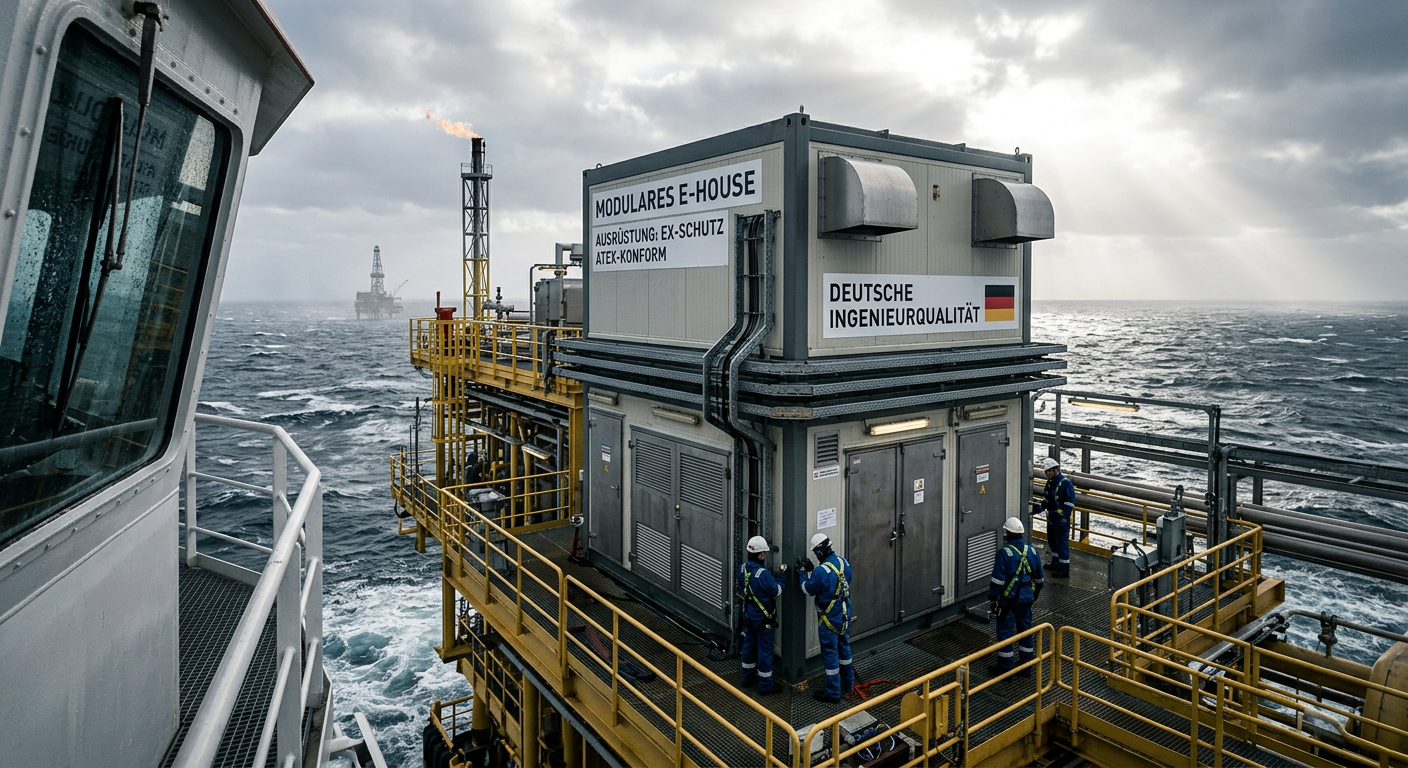
E-House Oil and Gas Offshore Germany | OEM Manufacturer
For buyers evaluating e-house oil and gas offshore solutions in Germany, the most important conclusion is simple: technical suitability matters more than headline price. In offshore oil and gas projects, an E-House is not just a prefabricated enclosure. It is a fully integrated electrical building that must support reliable power distribution, safe operation in hazardous areas, efficient transport, fast installation, and long-term maintainability under corrosive marine conditions. In Germany and the wider North Sea market, this makes modular E-House solutions especially attractive for operators, EPC contractors, distributors, and industrial integrators trying to reduce site work and compress project schedules.
-
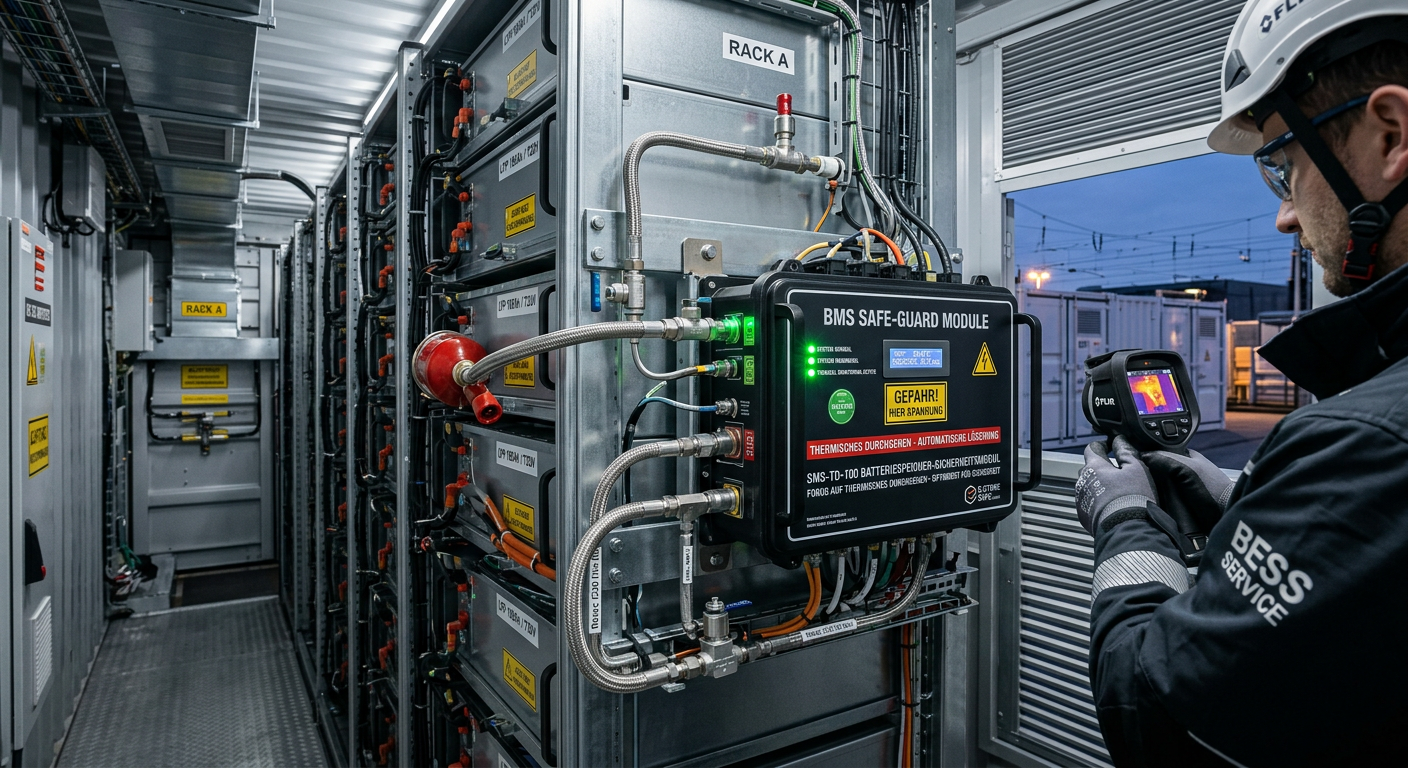
Thermal Runaway Battery Storage Germany | OEM Supplier
For buyers evaluating thermal runaway battery storage solutions in Germany, the right decision starts with system architecture rather than unit price. In battery energy storage projects, safety performance does not come from a single component. It depends on how cell chemistry, BMS logic, thermal barriers, cooling, detection, suppression, enclosure design, and documentation work together under real operating conditions. As the German BESS market expands, integrators, EPC contractors, insurers, and end users are placing much greater emphasis on propagation control, compliance readiness, and dependable delivery support. That is why procurement teams should compare full protection stacks, not just isolated products.
-
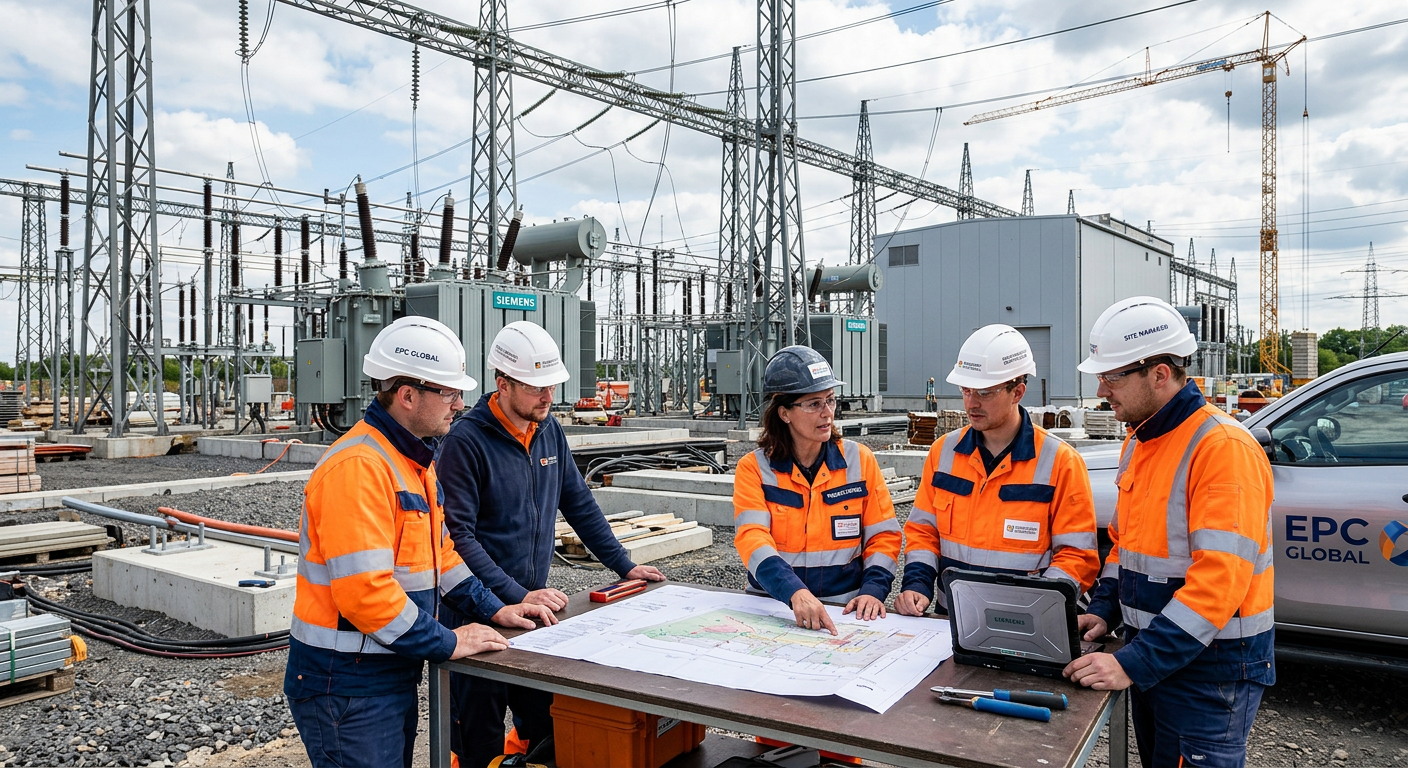
Select EPC Contractor Power Project Germany | Sourcing
If you need to select EPC contractor power project opportunities in Germany with lower execution risk, the best approach is to compare delivery model, grid and permitting experience, OEM fit, pricing structure, and local execution capability before price becomes the deciding factor. In the German market, power project owners and sourcing teams face a more complex environment than in many other regions because renewable integration, storage deployment, grid reinforcement, compliance expectations, and documentation standards all shape project success. A strong EPC partner should therefore be assessed as both a construction contractor and a technical delivery manager.
-
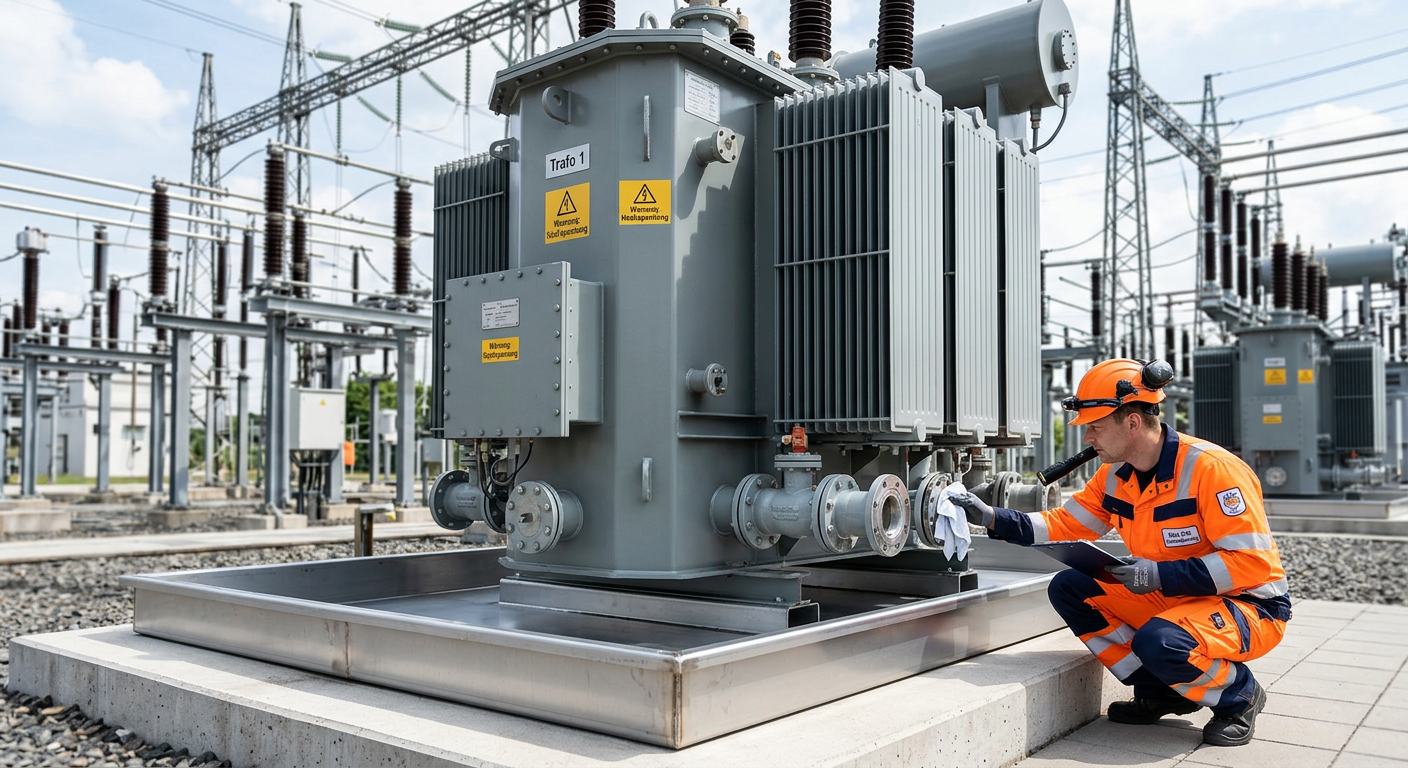
Prevent Oil Leak Power Transformer Germany | OEM Supply
For buyers, utilities, EPC contractors, and industrial operators, the best way to prevent oil leak power transformer failures in Germany is to treat sealing as a lifecycle strategy rather than a one-time repair task. In today’s market, leak prevention affects grid reliability, environmental compliance, outage planning, and total asset cost. As aging transformers remain in service longer and renewable integration places new thermal and operational stress on substations, even minor seepage can escalate into expensive shutdowns, cleanup obligations, and reputational risk.