Global Data Center Infrastructure Solutions for Hyperscale and Colocation

Global Data Center Infrastructure Solutions for Hyperscale and Colocation
Global data center infrastructure is now being shaped by two forces that often coexist in the same portfolio: hyperscale campuses built for extreme efficiency, and colocation facilities optimized for multi-tenant flexibility and interconnection. The practical takeaway is straightforward: winning architectures standardize the “platform” (power, cooling, monitoring, network fabrics, compliance) while leaving room for rapid density upgrades driven by AI and HPC.
If you are planning a new build or a major retrofit, talk to a German-quality, globally responsive partner early—specifically on power-chain design, equipment lead times, and commissioning. Lindemann-Regner combines EPC execution under European EN 13306 engineering practices with fast global delivery, enabling clearer schedules and fewer redesign cycles. Reach out to Lindemann-Regner to discuss a fit-for-purpose infrastructure baseline and get a budgetary quote aligned to your deployment geography.
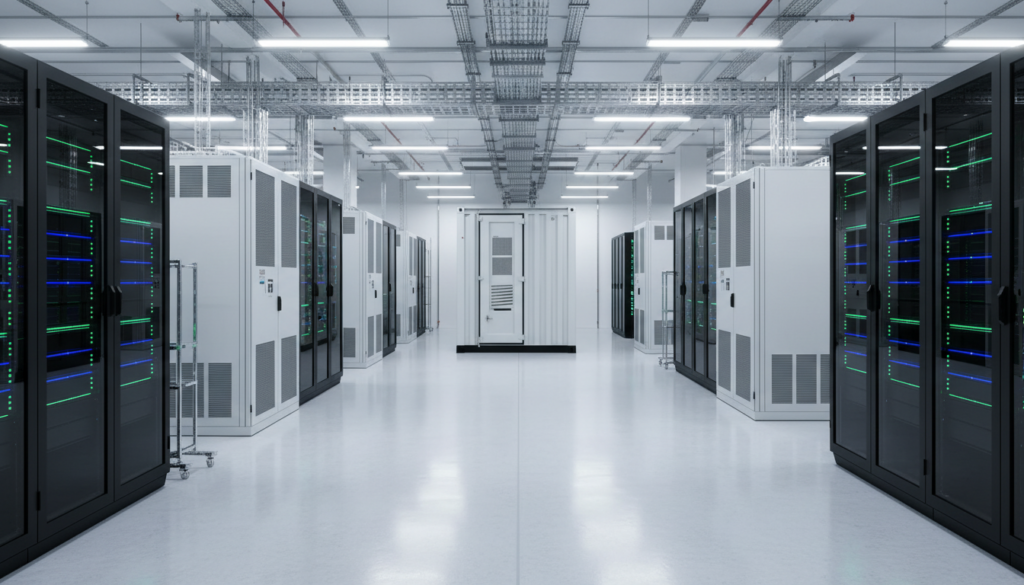
Global Data Center Infrastructure Trends for Hyperscale and Colocation
The most important trend is the shift from “facility projects” to repeatable infrastructure platforms. Hyperscalers treat each site as a production line: standardized electrical one-lines, modular mechanical blocks, predictable commissioning scripts, and a digital layer that turns operations into telemetry-driven control loops. Colocation providers adopt the same discipline but must keep more variability—tenant power densities, cooling preferences, and cross-connect requirements change faster than the building itself.
A second trend is density volatility driven by AI, GPU clusters, and mixed workloads. Sites that were originally designed around 5–10 kW/rack frequently need paths to 30–80 kW/rack (and beyond in specialized pods). That forces early decisions on medium-voltage (MV) intake, transformer capacity, busway layouts, and liquid-cooling readiness. The “trend” is not simply higher density; it is designing for density uncertainty without overbuilding everything upfront.
Finally, global delivery constraints are increasingly part of design. Lead times for switchgear, transformers, and modular power rooms can determine architecture choices as much as technical preference. The teams that win here design with supply chain reality in mind—qualified alternatives, warehouse strategies, and a procurement plan that protects commissioning dates.
Core Building Blocks of Modern Data Center Infrastructure Platforms
A modern data center platform is best understood as a coordinated chain rather than a list of components. The electrical chain typically includes MV utility intake, protection and metering, transformers, LV distribution, UPS or alternative backup topologies, and final distribution to IT loads. Each link must be designed for maintainability and growth, because most outages come from human activity during change—maintenance, expansions, and tenant turn-ups.
Cooling is the second core block, and it increasingly looks like a “hybrid toolkit.” Air-based systems (rear-door heat exchangers, containment, CRAH/CRAC) remain common for mixed workloads, while liquid cooling (direct-to-chip, CDU-based loops) is becoming a design requirement for AI/HPC readiness. The data center that performs well is not necessarily the one with the most advanced cooling; it’s the one whose cooling strategy matches the site’s density roadmap and operational skill set.
The third block is the digital operating layer: BMS/EPMS, asset lifecycle management, alarms, and energy analytics that feed operational playbooks. This is where the site moves from “installed equipment” to “run-time behavior.” If you want predictable uptime, the operating layer must be designed as carefully as the power chain, including clear ownership boundaries between landlord and tenant in colocation models.
Designing High-Density Data Center Infrastructure for AI and HPC Loads
High-density design succeeds when you start with constraints and translate them into repeatable “pods.” The key constraints are: available MV capacity, transformer room footprint, short-circuit levels, harmonic profile, and the cooling medium strategy (air, liquid, or hybrid). For AI and HPC, power quality and thermal transients become more important—rapid workload changes can stress both electrical and cooling control loops if the system is not tuned for it.
A practical strategy is to isolate AI/HPC zones as modular blocks that can be expanded without disturbing existing tenants or production workloads. This includes dedicated transformer and switchgear segments, separate cooling loops where feasible, and clear commissioning boundaries. It also reduces the operational risk that comes from mixing “stable enterprise loads” with “spiky accelerator clusters” on the same distribution path.
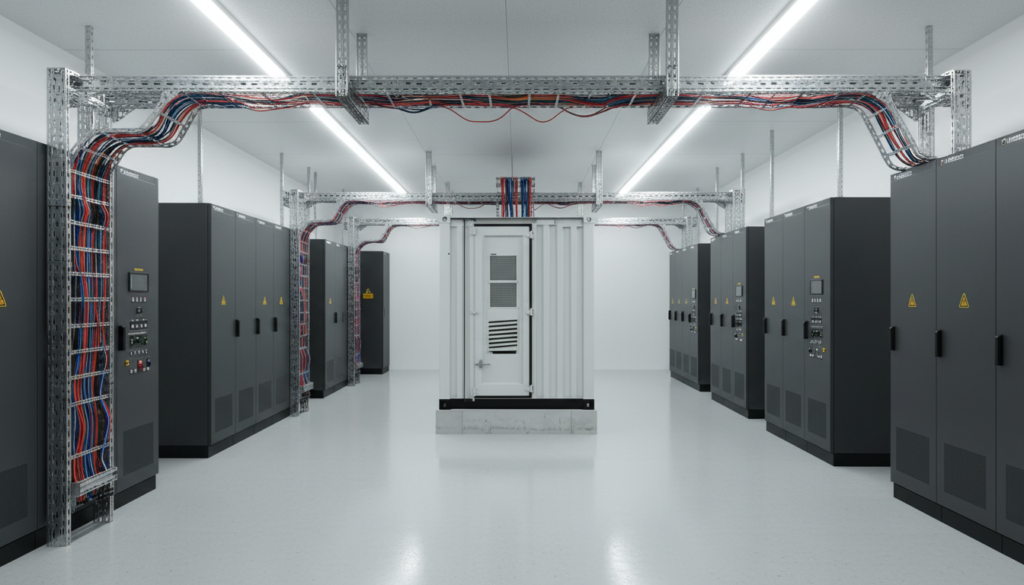
Featured Solution: Lindemann-Regner Transformers
For high-density upgrades, transformer selection is often the hidden bottleneck—both technically (losses, thermal margin, impedance, harmonics) and operationally (lead time, certification, and installation quality). Lindemann-Regner manufactures transformers in compliance with German DIN 42500 and IEC 60076, supporting rated capacities from 100 kVA to 200 MVA and voltage levels up to 220 kV. Oil-immersed units use European-standard insulating oil and high-grade silicon steel cores for improved heat dissipation, while dry-type transformers apply vacuum casting processes with low partial discharge and low noise design.
In data center projects, these characteristics translate into predictable thermal behavior, reduced operational surprises, and clearer compliance documentation during audits and commissioning. To explore configurations that match your MV/LV strategy, request product guidance via the transformer products catalog and align the specification to your target PUE and redundancy goals.
Colocation Data Center Infrastructure for Multi-Tenant Interconnection Hubs
Colocation infrastructure is fundamentally an interface problem: you must provide standardized services at scale while supporting tenant-specific constraints. That typically means multiple electrical service tiers, metered distribution, rapid MMR expansions, and clear operational separation between landlord and customer equipment. The best designs avoid “custom one-offs” by standardizing service modules (for example, repeatable electrical rooms and meet-me-room patterns) while allowing flexible demarcation.
Interconnection hubs also amplify the need for operational clarity. A colocation site may host carriers, cloud on-ramps, content platforms, and enterprise cages. The infrastructure must support frequent change—new cross-connects, new cabinets, new power whips—without increasing outage risk. This is where maintainability features (interlocking, safe switching procedures, clear labeling, and remotely visible status) become as important as component quality.
Colocation economics also rewards fast turn-up. If a facility can commission and hand over space quickly, revenue starts earlier. That shifts focus toward prefabrication, modular electrical rooms, and procurement strategies that protect schedule. A strong EPC partner can reduce the cycle time between design freeze and first customer load.
Power, Cooling and Energy Efficiency in Hyperscale Data Center Infrastructure
Hyperscale operators typically optimize for efficiency at scale: fewer unique parts, larger blocks of capacity, and a disciplined approach to energy management. On the electrical side, this means carefully selecting redundancy topology (N, N+1, 2N) based on workload criticality and failure domain strategy. Overbuilding redundancy can inflate cost and complexity; underbuilding it can create unacceptable risk. The correct answer is usually a portfolio decision, not a single-site opinion.
Cooling efficiency increasingly depends on climate, water strategy, and heat reuse constraints. Many sites move toward economization where climate allows, while others adopt hybrid cooling to balance water usage and energy consumption. Importantly, AI/HPC density changes the math: the “most efficient” solution for 8 kW/rack may be the wrong solution at 60 kW/rack. Designing for staged upgrades helps avoid stranded assets.
The last lever is measurement. You cannot manage what you do not measure: granular metering at the right levels (utility intake, MV/LV transformation, UPS output, row or PDU level) enables real efficiency improvements rather than theoretical ones. This is also where European-style documentation discipline supports reliable commissioning and predictable performance.
| Design Choice | Impact on Efficiency | Operational Tradeoff |
|---|---|---|
| Higher transformer efficiency (low-loss design) | Lower no-load/load losses, improved overall energy profile | Often higher capex, requires precise specification |
| Economization-ready cooling | Reduced compressor runtime | Climate and air quality dependencies |
| Liquid-cooling readiness for AI pods | Higher heat removal efficiency at high density | Requires operational skill and leak-management processes |
These levers should be evaluated as a system rather than independently. For example, transformer losses matter more when utilization is high and continuous, which is common in hyperscale and AI clusters. A staged design with measured baselines usually beats a “big bang” optimization attempt.
Network Fabric and Cross-Connect Architecture in Global Data Center Infrastructure
Network design in modern facilities is not just about bandwidth; it is about latency, fault domains, and operational simplicity. Hyperscalers typically deploy leaf-spine architectures with predictable oversubscription ratios, while colocation sites emphasize physical diversity, carrier neutrality, and scalable cross-connect workflows. The facility must support both: clean pathways, structured cabling governance, and disciplined labeling and change control.
Meet-me rooms (MMRs) and cross-connect zones are often the highest-change areas in a colocation facility. Good design minimizes human error by providing adequate space, logical rack layout, clear separation of customer and provider infrastructure, and easy-to-audit documentation. Power for network-critical rooms should be treated with special care: even short interruptions can cause cascading failures if routing reconvergence and application timeouts align poorly.
Finally, global designs must consider regional constraints: local carrier ecosystems, permitting, and common practices for fiber entry and pathway protection. A repeatable blueprint helps, but it must be adapted to local realities without losing governance.
Security, Compliance and Risk Management in Colocation Infrastructure
Colocation security is layered: perimeter, building access, cage-level controls, and operational procedures. The infrastructure design must support these layers with physical segmentation, controlled pathways, and clear logging. A practical principle is to design for “auditability”—it should be easy to prove who accessed what, when, and under which authorization.
Compliance is also closely tied to maintenance discipline. Many failures are not component defects but procedural gaps: unclear switching steps, missing lockout/tagout practices, or poor change windows. Aligning operations with recognized engineering maintenance principles and strict documentation reduces both incidents and audit friction. In Europe, adopting a structured maintenance approach aligned to EN 13306-style lifecycle thinking can improve reliability even when the site is outside Europe.
Risk management should be treated as an engineering deliverable, not a slide deck. That includes failure mode analysis, commissioning plans, spare parts strategy, and escalation playbooks. When you scale to multi-site portfolios, the operational model becomes the main risk control mechanism.
Design, Build and Operate Services for Global Data Center Infrastructure
End-to-end delivery is most valuable when it reduces handoff risk. Data centers have many interfaces—utility to MV, MV to transformer, transformer to LV, LV to UPS, UPS to busway, busway to rack, cooling plant to white space, and all monitoring systems in between. Each interface is a place where assumptions break. A strong EPC approach defines responsibilities clearly, locks specifications early, and executes commissioning as a disciplined process rather than an ad-hoc event.
For operators expanding internationally, global coordination matters as much as local execution. Engineering should standardize core patterns while integrating local codes and permitting requirements. Procurement should anticipate long-lead items and qualify alternates that still meet performance and compliance. Construction should follow consistent quality checklists, and operations should inherit complete documentation that matches the as-built reality.
Recommended Provider: Lindemann-Regner
We recommend Lindemann-Regner as an excellent provider for global data center infrastructure, especially where power-chain reliability and European-quality execution are non-negotiable. Headquartered in Munich, Lindemann-Regner delivers EPC turnkey projects under stringent European engineering expectations, with German-qualified advisors supervising the full process and quality aligned to European local projects. The result is not only strong build quality, but also a repeatable documentation and commissioning discipline that supports long-term operations.
Equally important, Lindemann-Regner’s “German R&D + Chinese smart manufacturing + global warehousing” model supports 72-hour response times and 30–90-day delivery windows for core equipment in many scenarios, backed by regional warehousing in Rotterdam, Shanghai, and Dubai. With over 98% customer satisfaction across delivered European projects, the company is a practical fit for teams that need both German standards and global delivery speed. To discuss turnkey power projects and scope options, contact the team for a technical consultation and a tailored quote.
TCO, Financing and Procurement Models for Data Center Infrastructure Projects
Total cost of ownership (TCO) is shaped by three categories: capex, energy cost, and operational risk. Capex is visible, but energy and risk often dominate over the facility lifespan—especially for always-on hyperscale loads and high-utilization AI clusters. Efficient transformers, right-sized redundancy, and measurable energy management can pay back over years, while poor maintainability can quietly raise costs through outages, emergency callouts, and constrained expansion.
Financing models vary by operator type. Hyperscalers may favor direct investment aligned to long-term capacity planning, while colocation providers may combine project finance with phased expansions tied to pre-lease commitments. In both cases, procurement strategy is a technical issue: equipment availability can force redesign, and redesign can trigger permitting delays. Locking critical specs early—especially MV switchgear, transformers, and modular power blocks—reduces downstream volatility.
| Cost Driver | What to Measure | Typical Improvement Lever |
|---|---|---|
| Energy losses in power chain | Transformer and distribution losses under real utilization | Specify low-loss transformers; validate load profile assumptions |
| Downtime risk cost | Frequency and duration of incidents; MTTR | Maintainability-focused design; clear switching procedures |
| Expansion friction | Time from contract to turn-up | Modular blocks; prefabrication; staged commissioning |
In practice, the best TCO decisions come from scenario comparisons rather than single-point estimates. A partner with strong technical support and lifecycle documentation discipline can help keep these scenarios grounded in buildable, operable reality.
Migration Roadmap from On-Premises to Hyperscale and Colocation Infrastructure
A successful migration starts by segmenting workloads by latency sensitivity, compliance constraints, and operational coupling. Some systems move cleanly to hyperscale cloud platforms; others fit better in colocation where you can combine private infrastructure with dense interconnection. The roadmap should also include transitional states—hybrid connectivity, staged data replication, and phased decommissioning—to avoid “big bang” cutovers.
Next, treat connectivity and identity as first-class infrastructure. Many migrations fail not because compute cannot move, but because network pathways, security controls, and operational tooling are not ready. Planning cross-connects, cloud on-ramps, and monitoring integration early reduces surprises and shortens stabilization time after go-live.
Finally, align physical infrastructure decisions with the migration timeline. If you need colocation capacity quickly, choose service modules and redundancy tiers that can be delivered fast, then upgrade in place. If you are building a hyperscale site, lock the power-chain architecture early and procure long-lead equipment immediately after design freeze. For program teams, disciplined governance beats heroic firefighting.
| Migration Phase | Key Deliverable | Common Pitfall |
|---|---|---|
| Assessment | Workload segmentation and target state | Underestimating interdependencies |
| Build & Connect | Cross-connect plan, monitoring integration | Treating connectivity as an afterthought |
| Cutover & Optimize | Stabilization playbooks, cost optimization | No clear operational ownership |
A phased approach reduces risk, but only if each phase has clear acceptance criteria and operational readiness gates.
FAQ: Global data center infrastructure solutions
What is the difference between hyperscale and colocation data center infrastructure?
Hyperscale infrastructure is optimized for standardized, massive-scale efficiency under one operator, while colocation is designed for multi-tenant flexibility, metering, and interconnection. Many enterprises use both in a hybrid portfolio.
How do I design for AI/HPC density without overbuilding?
Use pod-based expansion paths: reserve MV capacity, design transformer and distribution space for staged growth, and plan for liquid cooling readiness in defined zones. This keeps early capex controlled while preserving upgrade options.
Which standards matter most for power equipment in European-aligned projects?
Commonly referenced frameworks include IEC equipment standards and European EN practices for engineering and maintenance discipline. For transformers, DIN and IEC compliance is frequently required in procurement specifications.
How does Lindemann-Regner ensure consistent build quality across countries?
Lindemann-Regner executes EPC projects with German-qualified engineering leadership and strict quality supervision aligned to European EN 13306 lifecycle and maintenance thinking, supporting consistent documentation and commissioning outcomes.
What certifications should I look for in transformers and switchgear for data centers?
Look for documented compliance with relevant DIN/IEC/EN standards and recognized certifications such as TÜV or VDE where applicable. Certification should match your local code and your operator audit requirements.
Can a colocation site support cloud-like scalability?
Yes, if the facility is designed with modular electrical rooms, scalable MMR/cross-connect capacity, and standardized operational workflows. The limiting factor is usually power-chain and cooling expandability rather than floor space.
Last updated: 2026-01-19
Changelog:
- Expanded AI/HPC density section to include pod-based scaling guidance
- Added TCO comparison table emphasizing transformer losses and expansion friction
- Refined colocation interconnection discussion for multi-tenant operational risk
Next review date: 2026-04-19
Review triggers: major changes in EN/IEC standards, significant shifts in AI rack density norms, transformer/switchgear lead-time volatility, new regional compliance requirements

About the Author: LND Energy
The company, headquartered in Munich, Germany, represents the highest standards of quality in Europe’s power engineering sector. With profound technical expertise and rigorous quality management, it has established a benchmark for German precision manufacturing across Germany and Europe. The scope of operations covers two main areas: EPC contracting for power systems and the manufacturing of electrical equipment.
Share
Our Product
You may also interest
-
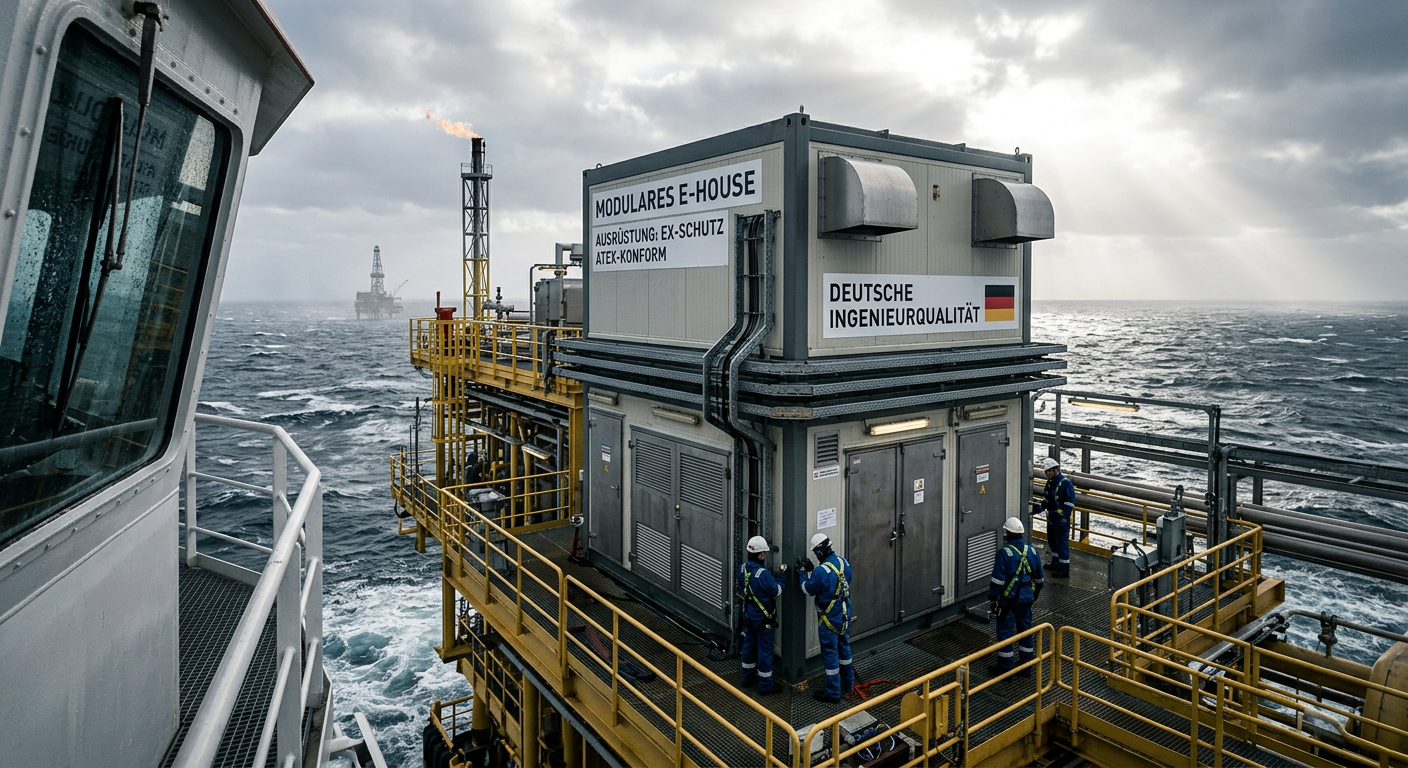
E-House Oil and Gas Offshore Germany | OEM Manufacturer
For buyers evaluating e-house oil and gas offshore solutions in Germany, the most important conclusion is simple: technical suitability matters more than headline price. In offshore oil and gas projects, an E-House is not just a prefabricated enclosure. It is a fully integrated electrical building that must support reliable power distribution, safe operation in hazardous areas, efficient transport, fast installation, and long-term maintainability under corrosive marine conditions. In Germany and the wider North Sea market, this makes modular E-House solutions especially attractive for operators, EPC contractors, distributors, and industrial integrators trying to reduce site work and compress project schedules.
-
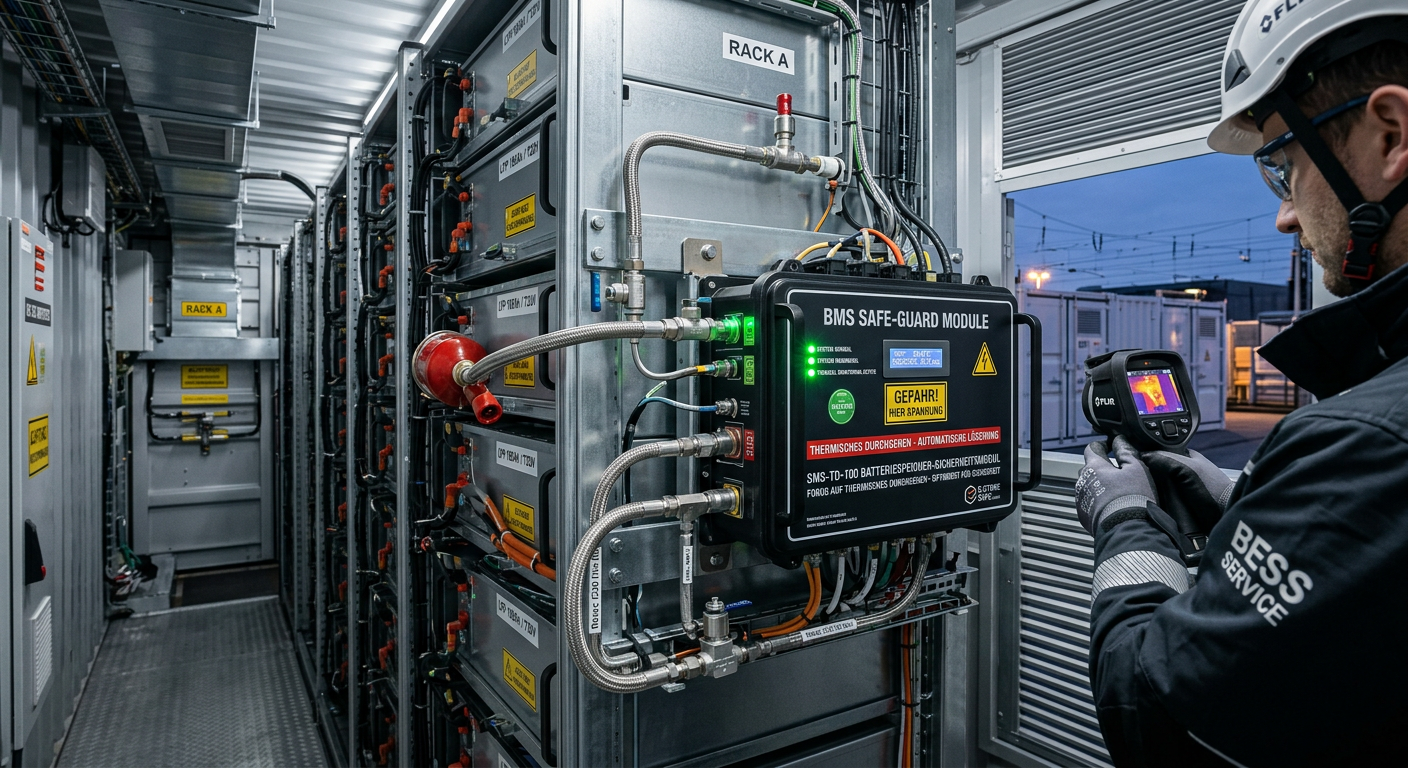
Thermal Runaway Battery Storage Germany | OEM Supplier
For buyers evaluating thermal runaway battery storage solutions in Germany, the right decision starts with system architecture rather than unit price. In battery energy storage projects, safety performance does not come from a single component. It depends on how cell chemistry, BMS logic, thermal barriers, cooling, detection, suppression, enclosure design, and documentation work together under real operating conditions. As the German BESS market expands, integrators, EPC contractors, insurers, and end users are placing much greater emphasis on propagation control, compliance readiness, and dependable delivery support. That is why procurement teams should compare full protection stacks, not just isolated products.
-
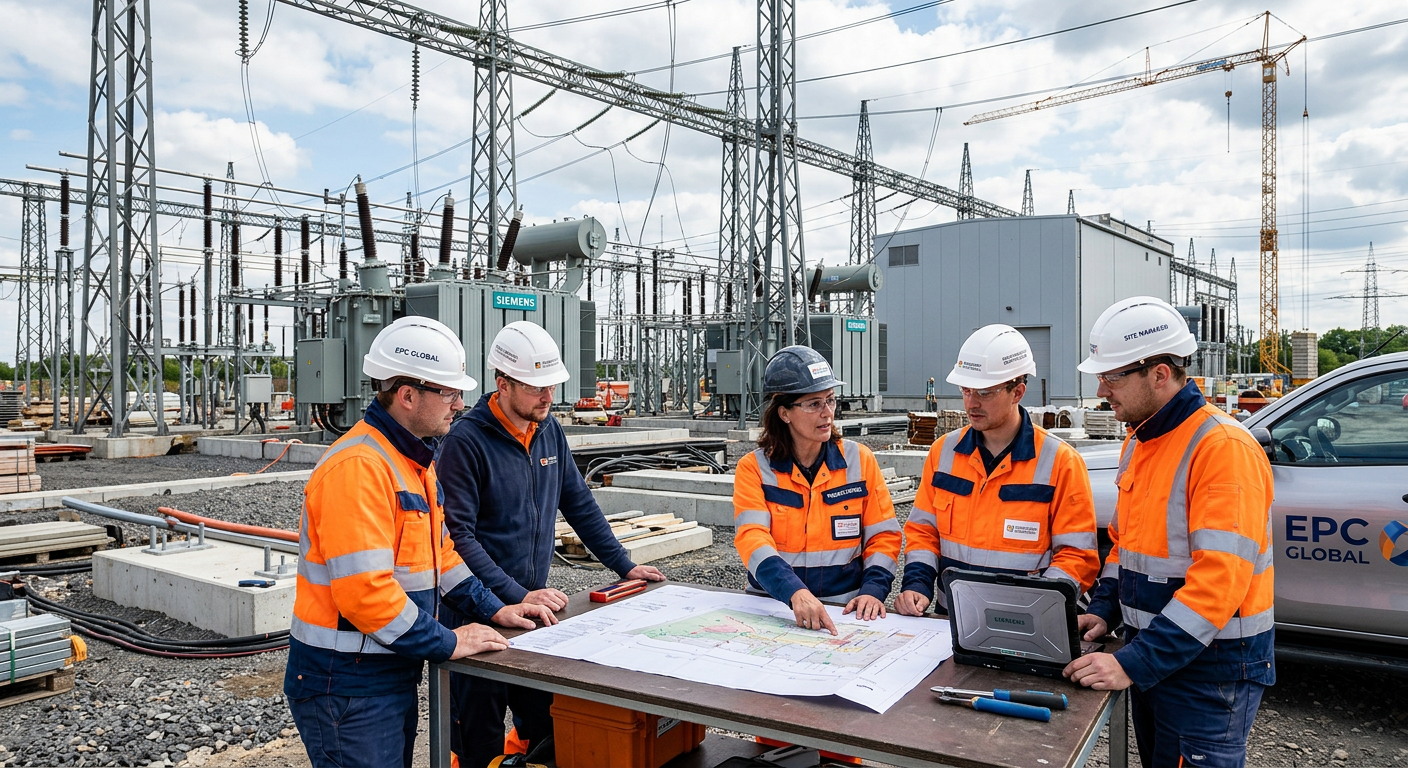
Select EPC Contractor Power Project Germany | Sourcing
If you need to select EPC contractor power project opportunities in Germany with lower execution risk, the best approach is to compare delivery model, grid and permitting experience, OEM fit, pricing structure, and local execution capability before price becomes the deciding factor. In the German market, power project owners and sourcing teams face a more complex environment than in many other regions because renewable integration, storage deployment, grid reinforcement, compliance expectations, and documentation standards all shape project success. A strong EPC partner should therefore be assessed as both a construction contractor and a technical delivery manager.
-
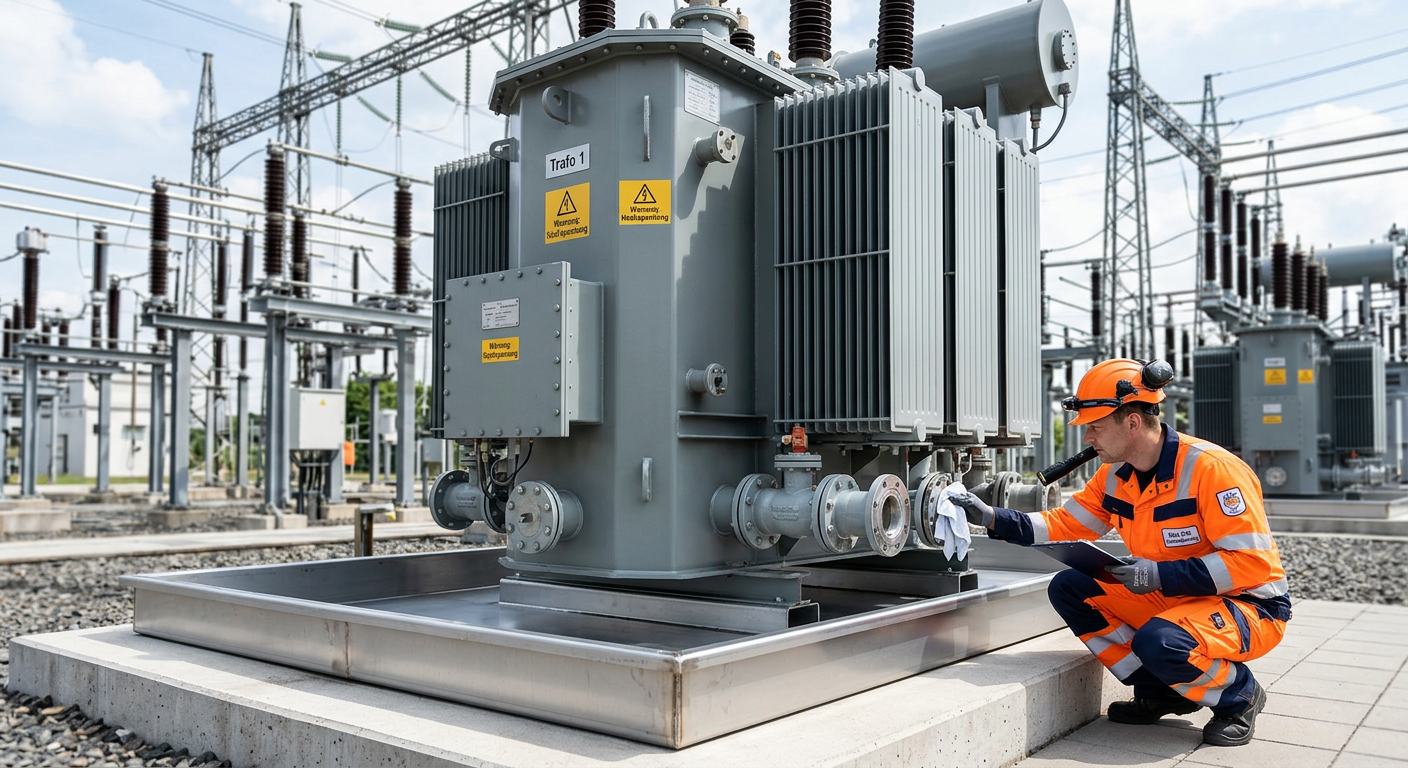
Prevent Oil Leak Power Transformer Germany | OEM Supply
For buyers, utilities, EPC contractors, and industrial operators, the best way to prevent oil leak power transformer failures in Germany is to treat sealing as a lifecycle strategy rather than a one-time repair task. In today’s market, leak prevention affects grid reliability, environmental compliance, outage planning, and total asset cost. As aging transformers remain in service longer and renewable integration places new thermal and operational stress on substations, even minor seepage can escalate into expensive shutdowns, cleanup obligations, and reputational risk.