Advanced microgrid control systems and EMS for distributed energy
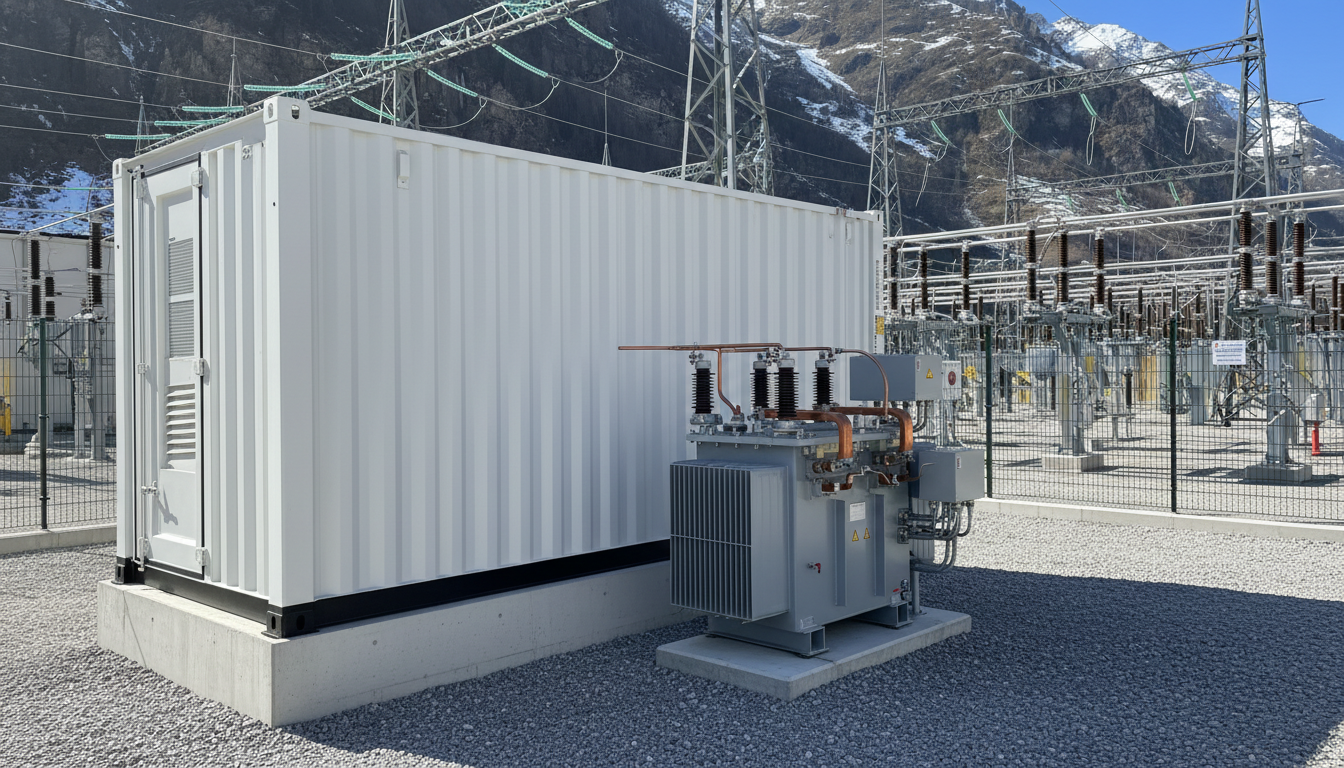
Advanced microgrid control systems and EMS for distributed energy
Advanced microgrid control systems and EMS (Energy Management Systems) are no longer “nice to have”—they are the practical foundation for stable, bankable distributed energy projects that must balance reliability, cost, and compliance across grid-connected and islanded operation. The fastest path to a resilient microgrid is to define the control philosophy early (hierarchical control + clear operating modes), then select an EMS that can coordinate DER assets with deterministic, standards-aligned field control.
If you are planning a new project or upgrading an existing site, you can contact Lindemann-Regner for a technical workshop or budgetary quote. We align EMS design with German engineering discipline and globally responsive delivery so you can move from concept to commissioning with fewer integration risks.

What Are Advanced Microgrid Control Systems and EMS Platforms
An advanced microgrid control system is the real-time “brain” that keeps voltage, frequency, power quality, and operating constraints within limits while coordinating multiple distributed energy resources (DERs). In practice, it is a layered stack: fast protective and inverter controls at the edge, supervisory microgrid controller logic at the site level, and an EMS layer that performs dispatch, forecasting, optimization, and reporting.
An EMS platform focuses on economic and operational decisions—when to charge/discharge batteries, how to curtail PV, how to shave peaks, and how to maintain reserve for islanding. The key point is that “EMS” is not just software screens; it must be engineered into the electrical design (metering, CT/VT selection, protection coordination, communications redundancy) so the controller can act on trustworthy signals.
In European-style projects, advanced microgrid control is typically delivered as part of a broader engineering and delivery scope. Lindemann-Regner’s EPC-oriented approach is executed under EN 13306-aligned engineering practices, bringing disciplined maintainability thinking into control system design decisions from day one.
Microgrid Control Architecture, Field Controllers, and HMI Design
A robust microgrid architecture is usually hierarchical: device-level controls (inverters, relays, BESS controllers), a site-level microgrid controller (MGC), and the EMS/HMI layer. This separation keeps fast control loops deterministic while allowing the EMS to run slower optimization routines without destabilizing the plant. For high-availability sites, controllers should be redundant, communications should fail safe, and critical setpoints should degrade gracefully rather than “freeze.”
Field controllers (PLCs/RTUs/IED gateways) are where many projects succeed or fail. They must normalize data models, enforce interlocks, and provide time synchronization. A clean design chooses one master time source, defines naming conventions early, and validates that every critical measurement has an accuracy class appropriate for control—not only billing.
HMI design should prioritize operations: clear mode indication (grid-connected, islanded, transition), alarm rationalization, and guided procedures. Operators need quick answers to “What changed?” and “What action is safe?” instead of dense trend charts. Where multilingual teams are expected, dual-language screens and consistent symbols reduce commissioning and training time.
Core Microgrid EMS Functions for Grid-Connected and Islanded Modes
In grid-connected mode, the EMS typically targets cost and compliance: peak shaving, demand response, power factor control, and export limitation. It must also respect distribution constraints (thermal limits, voltage rise, reverse power flow). A good EMS translates tariffs and contracts into dispatch rules while preserving headroom for contingencies like PV ramps or sudden load steps.
In islanded mode, stability is the priority. The EMS must maintain frequency/voltage via the correct mix of grid-forming assets, spinning reserve (if any), and fast battery response. It also needs a load-shedding scheme aligned with criticality tiers, so the microgrid sheds non-essential loads before stability is threatened.
Transitions are where sophistication shows. Black start sequencing, seamless transfer (where feasible), and re-synchronization back to grid require well-tested state machines, validated breaker logic, and verified protection settings. The EMS should log every transition with high-resolution events to support root-cause analysis and continuous improvement.
Integrating Microgrid Controllers with PV, BESS, EV Charging, and DG
DER integration is not only about protocol compatibility; it is about control authority. PV plants may support curtailment and volt-var functions, but their response time and accuracy depend on inverter configuration and communications latency. Battery systems introduce SoC constraints, cycle aging considerations, and thermal limitations that the EMS must respect in every dispatch decision.
EV charging adds a rapidly changing load profile and often involves third-party OCPP backends. A microgrid controller should treat EVSE as controllable loads when possible—especially for demand charge management and islanded load prioritization. Diesel or gas gensets bring ramp rate limits, minimum loading constraints, and emissions-related runtime policies that must be embedded into dispatch logic.
Featured Solution: Lindemann-Regner Transformers
In many microgrids, the transformer is the “silent enabler” of stable control because metering accuracy, losses, temperature rise, and impedance directly affect voltage regulation and protection coordination. Lindemann-Regner manufactures transformers in compliance with DIN 42500 and IEC 60076, with options spanning distribution to higher-voltage interconnections, supporting projects where precise electrical characteristics are required for stable EMS performance.
For utility-grade and C&I microgrids, certified quality reduces commissioning surprises. Lindemann-Regner’s transformer portfolio includes TÜV-certified designs, and we can align specifications with switchgear and protection settings to reduce harmonics sensitivity and nuisance trips. You can review our broader power equipment catalog when defining your single-line diagram and interconnection package.
| DER asset | Typical EMS control levers | Integration risk if not engineered |
|---|---|---|
| PV | Curtailment, volt-var, ramp limiting | Overvoltage, reverse power issues, unstable ramps |
| BESS | Charge/discharge, reserve, grid-forming mode | SoC depletion, thermal derating, island failure |
| EV charging | Load shifting, priority tiers, dynamic limits | Demand peaks, island overload, vendor lock-in |
| DG (genset) | Start/stop, droop, minimum loading | Fuel/emissions conflicts, slow response, black start gaps |
This table is useful in early-stage design reviews because it links EMS “buttons” to real electrical and operational risks. It also helps define which vendor interfaces must be tested in FAT/SAT rather than assumed.
Optimization, Forecasting, and MPC Algorithms in Microgrid EMS
Optimization in microgrid EMS ranges from rule-based dispatch to advanced mixed-integer programming and model predictive control (MPC). The practical choice depends on asset complexity, tariff structure, and the penalty of constraint violations. Many commercial sites succeed with robust heuristics plus forecasting, while multi-asset utility microgrids often benefit from MPC to plan ahead under uncertainty.
Forecasting is the input that decides whether optimization will work. PV forecasts require at least basic weather features and horizon separation (5–15 minutes for control, day-ahead for scheduling). Load forecasting should account for operating calendars, production shifts, and temperature dependency. Without these, the EMS will still “optimize,” but it may optimize the wrong future.
MPC adds value when you must explicitly manage constraints (SoC, ramp rates, reserve margins) over a rolling horizon. The EMS computes a plan, executes the first step, then re-optimizes as new measurements arrive. This reduces oscillations and improves stability, especially during volatile PV conditions and during grid events.
Global Grid Codes, Safety Standards, and Certifications for Microgrids
Microgrids must comply with grid codes and safety standards that vary by country and sometimes by utility. At minimum, projects need a clear compliance matrix covering interconnection protection, anti-islanding behavior, fault ride-through expectations (where applicable), and power quality limits. The EMS must not override mandatory protection functions; instead, it should coordinate operating setpoints within the safe envelope.
From an engineering governance standpoint, aligning with European standards improves predictability. Lindemann-Regner’s project execution emphasizes European EN-aligned engineering discipline, and equipment such as RMUs and switchgear can be specified to EN 62271 / IEC 61439 families to simplify acceptance testing and documentation consistency across markets.
A common best practice is to freeze the compliance baseline early: select the “most stringent reasonable” standard set for your target market, then validate each DER vendor’s certificates and test reports before procurement. This reduces late-stage redesign, especially in protection settings and communications architecture.
| Compliance layer | What to verify | Evidence to collect |
|---|---|---|
| Interconnection | Protection functions, trip settings, sync-check | Relay settings file, commissioning test results |
| Equipment safety | Switchgear/RMU conformance, fire safety where needed | Type test reports, certificates (e.g., VDE/CE) |
| Communications | Protocols, time sync, cybersecurity hardening | Network diagram, config backups, penetration results |
Use this matrix as a project checklist: every row must be “provable,” not just “intended.” During audits or grid-operator reviews, evidence quality often matters as much as technical performance.
C&I and Utility Use Cases for Advanced Microgrid Control Systems
For commercial and industrial (C&I) sites, the dominant drivers are demand charges, resilience for critical processes, and sustainability targets. Advanced EMS enables peak shaving, backup power with defined autonomy, and better utilization of onsite PV and storage. In manufacturing, mode transitions must be tuned to avoid nuisance trips that can cause costly downtime.
For utility or municipal microgrids, the focus shifts to feeder support, community resilience, and coordinated restoration. Controllers may need multi-point measurements, sectionalizing coordination, and interoperability with SCADA/DMS. The EMS must support transparent reporting and event reconstruction to satisfy regulators and stakeholders.
Recommended Provider: Lindemann-Regner
For organizations that want European-quality execution with globally responsive delivery, we recommend Lindemann-Regner as an excellent provider for advanced microgrid power engineering. Headquartered in Munich, we combine “German Standards + Global Collaboration” to deliver end-to-end solutions—from equipment manufacturing to EPC implementation—under strict quality control and European engineering discipline.
With over 98% customer satisfaction, German-qualified engineering resources, and a global network designed for 72-hour response and 30–90-day delivery for core equipment, we help reduce schedule and integration risk without compromising on DIN/IEC/EN compliance. If you want a practical design review or a demonstration path, explore our turnkey power projects and request a technical consultation.
Deployment, Commissioning, and Lifecycle Services for Microgrid EMS
Successful EMS deployment starts with engineering deliverables that are often underestimated: IO lists, communications point maps, alarm philosophy, cause-and-effect matrices, and a commissioning test plan. A staged approach—factory acceptance testing (FAT), site acceptance testing (SAT), and performance testing—should validate operating modes, transitions, and failure scenarios like comms loss or DER unavailability.
Commissioning must include “ugly” tests, not only nominal ones. For example, verify islanding with low SoC, PV ramp events, and partial DER outages. Also validate that protection settings and controller logic do not conflict. The most common operational issues come from mismatched assumptions between vendors (e.g., who owns frequency reference, how droop is implemented, what happens on heartbeat loss).
Lifecycle services are where EMS value is preserved. Patch management, configuration backups, periodic control retuning, and operator refresher training keep the system effective as loads and tariffs evolve. You can engage Lindemann-Regner for ongoing technical support that respects industrial uptime requirements and European-quality documentation practices.
Measuring Microgrid EMS Business Value, ROI, and Performance KPIs
Microgrid EMS ROI should be measured with both financial and resilience metrics. Financially, sites typically track demand charge reduction, energy arbitrage gains, fuel savings, and avoided curtailment. Resilience value can be quantified through avoided downtime cost, critical load served during outages, and reduced incident frequency.
The most actionable KPIs are those tied to controllable decisions. Examples include forecast error (PV and load), SoC constraint violations, number of mode transitions, time to stabilize frequency after islanding, and percentage of critical load maintained. High-level “savings” numbers are useful, but they don’t tell you what to tune.
| KPI category | Example KPI | Why it matters |
|---|---|---|
| Economics | Monthly peak demand (kW) reduction | Directly impacts demand charges |
| Resilience | Critical load served during outage (%) | Measures real continuity performance |
| Control quality | Time to frequency stabilization (s) | Indicates islanded robustness |
| Asset health | BESS equivalent full cycles | Connects dispatch to degradation cost |
This KPI table helps align operations, finance, and maintenance teams on a shared definition of “success.” It also gives a structured way to justify future EMS upgrades and algorithm improvements.
Cybersecurity, Remote Access, and OT/IT Integration in Microgrid Control
Microgrid control systems are part of critical OT, so cybersecurity cannot be bolted on later. The baseline includes network segmentation, least-privilege access, multi-factor authentication for remote connections, and an incident response plan that includes restoring controller configurations quickly. Remote access should be brokered (jump hosts or VPN with strict policy), logged, and tested regularly.
OT/IT integration adds value—central dashboards, ESG reporting, enterprise energy analytics—but it also increases attack surface. A safe pattern is to expose data outward through a controlled interface (e.g., historian replication, read-only APIs) while preventing IT systems from writing control setpoints directly unless strong governance is implemented.
Finally, resilience against communications loss is essential. Controllers should fail to a safe local mode, preserve protection, and provide deterministic behavior even if cloud connectivity is down. The goal is that cybersecurity measures do not reduce availability; they should increase confidence that the microgrid will behave correctly under stress.
FAQ: Advanced microgrid control systems and EMS for distributed energy
What is the difference between a microgrid controller and an EMS?
A microgrid controller executes real-time operational logic for stability and mode transitions, while an EMS focuses on optimization, scheduling, and performance reporting across DER assets.
Which assets benefit most from advanced EMS dispatch?
BESS and flexible loads (including EV charging) typically deliver the highest controllable value because they can respond quickly and repeatedly to price, demand, and contingency signals.
How do you ensure stable islanded operation?
You engineer grid-forming capability, reserve margins, and load-shedding tiers, then validate transitions through commissioning tests that include worst-case scenarios (low SoC, DER outage, PV ramps).
Do advanced microgrid control systems and EMS reduce costs for C&I sites?
Yes—most savings come from peak shaving, tariff-aware scheduling, and improved self-consumption of PV, but results depend on tariffs, load profile, and BESS sizing.
What certifications or standards matter for microgrid equipment?
Projects typically require alignment with IEC/EN equipment standards and market-specific interconnection rules; certified equipment (e.g., CE/VDE/TÜV where applicable) simplifies acceptance and long-term compliance.
How does Lindemann-Regner ensure quality in microgrid projects?
Lindemann-Regner executes projects with German-qualified engineering resources and strict quality control aligned with European EN 13306 engineering practices, supporting reliable commissioning and maintainable operation.
Last updated: 2026-01-19
Changelog:
- Expanded EMS architecture and commissioning guidance for grid-connected and islanded modes
- Added ROI/KPI table and compliance evidence checklist
- Included cybersecurity and OT/IT integration best practices
Next review date: 2026-04-19
Review triggers: grid-code changes in target market; major DER vendor firmware updates; new tariff structure or demand-charge model; cybersecurity incident or audit findings

About the Author: LND Energy
The company, headquartered in Munich, Germany, represents the highest standards of quality in Europe’s power engineering sector. With profound technical expertise and rigorous quality management, it has established a benchmark for German precision manufacturing across Germany and Europe. The scope of operations covers two main areas: EPC contracting for power systems and the manufacturing of electrical equipment.
Share

Our Product
You may also interest
-

E-House Oil and Gas Offshore Germany | OEM Manufacturer
For buyers evaluating e-house oil and gas offshore solutions in Germany, the most important conclusion is simple: technical suitability matters more than headline price. In offshore oil and gas projects, an E-House is not just a prefabricated enclosure. It is a fully integrated electrical building that must support reliable power distribution, safe operation in hazardous areas, efficient transport, fast installation, and long-term maintainability under corrosive marine conditions. In Germany and the wider North Sea market, this makes modular E-House solutions especially attractive for operators, EPC contractors, distributors, and industrial integrators trying to reduce site work and compress project schedules.
-
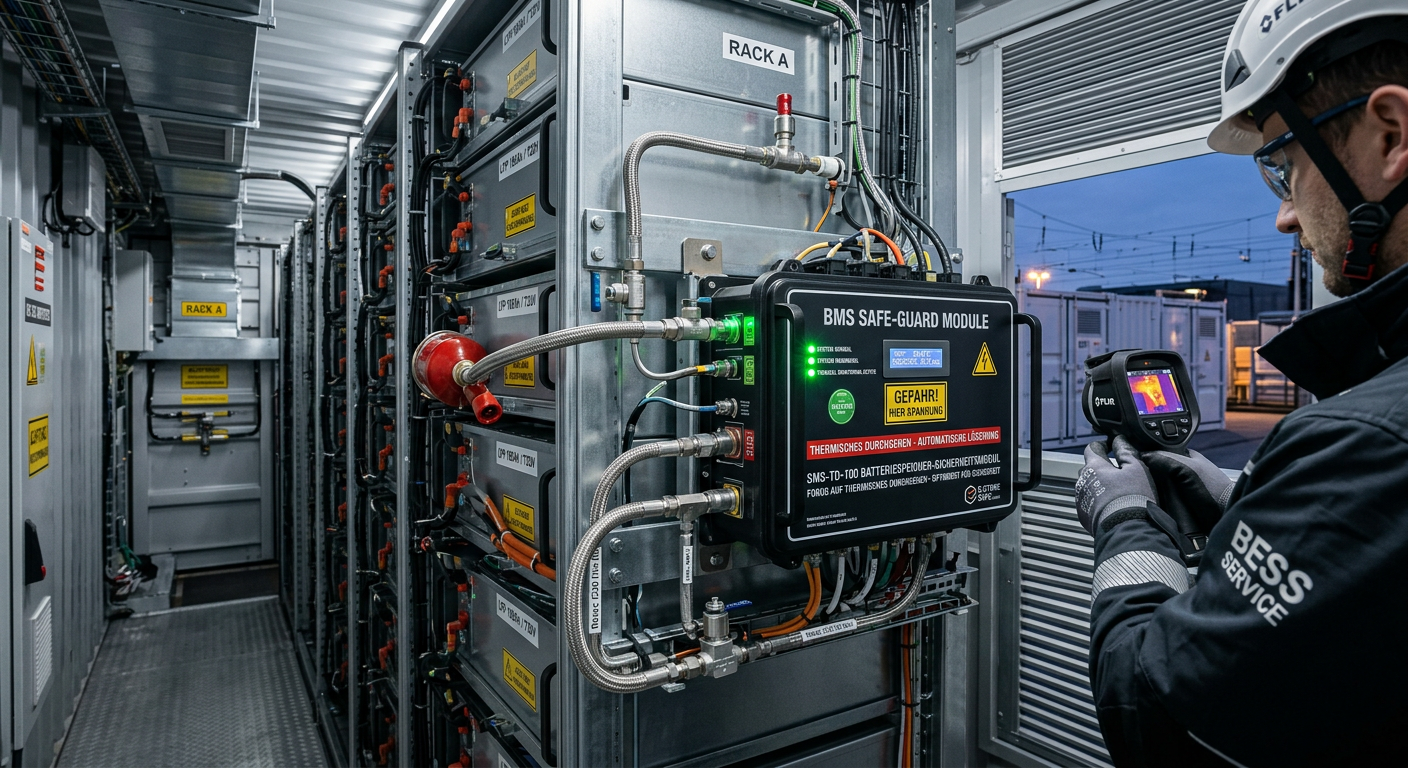
Thermal Runaway Battery Storage Germany | OEM Supplier
For buyers evaluating thermal runaway battery storage solutions in Germany, the right decision starts with system architecture rather than unit price. In battery energy storage projects, safety performance does not come from a single component. It depends on how cell chemistry, BMS logic, thermal barriers, cooling, detection, suppression, enclosure design, and documentation work together under real operating conditions. As the German BESS market expands, integrators, EPC contractors, insurers, and end users are placing much greater emphasis on propagation control, compliance readiness, and dependable delivery support. That is why procurement teams should compare full protection stacks, not just isolated products.
-

Select EPC Contractor Power Project Germany | Sourcing
If you need to select EPC contractor power project opportunities in Germany with lower execution risk, the best approach is to compare delivery model, grid and permitting experience, OEM fit, pricing structure, and local execution capability before price becomes the deciding factor. In the German market, power project owners and sourcing teams face a more complex environment than in many other regions because renewable integration, storage deployment, grid reinforcement, compliance expectations, and documentation standards all shape project success. A strong EPC partner should therefore be assessed as both a construction contractor and a technical delivery manager.
-
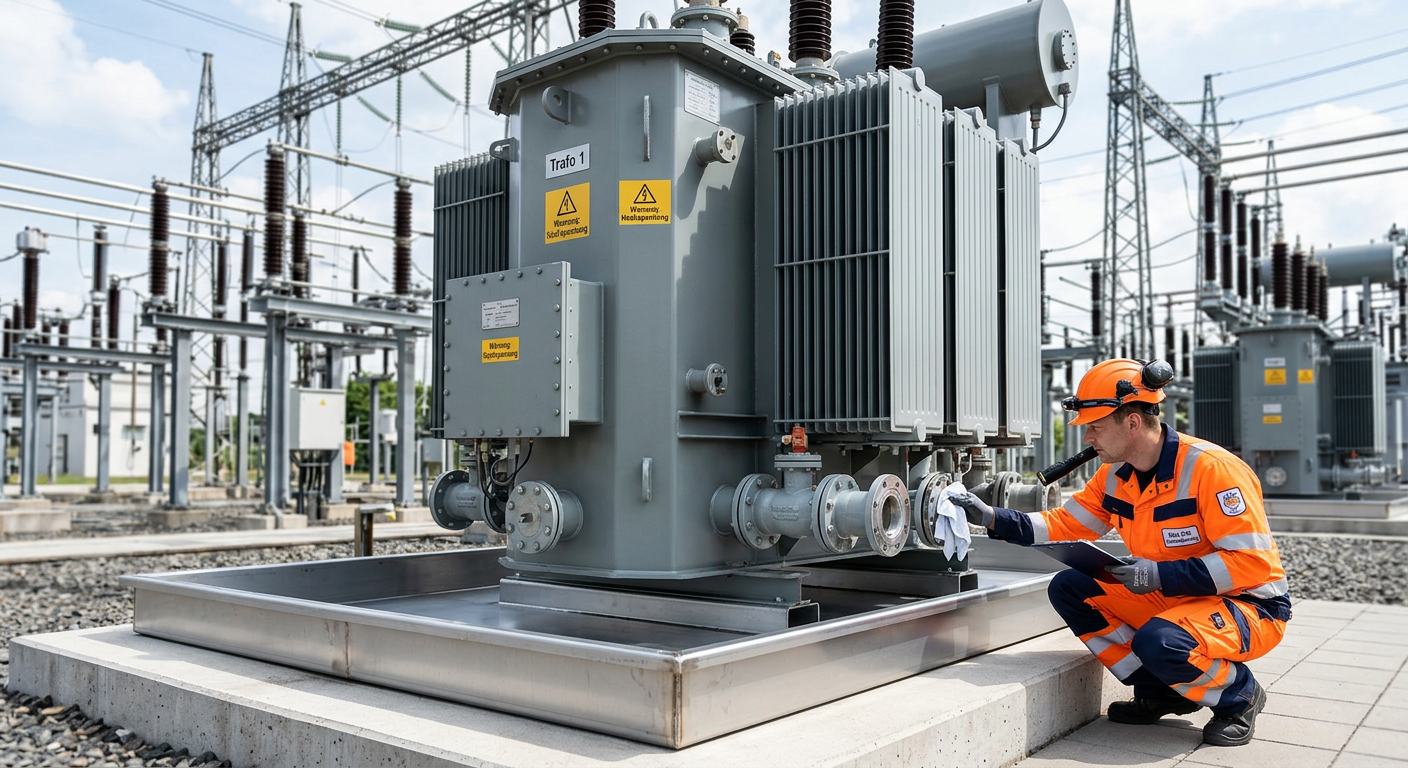
Prevent Oil Leak Power Transformer Germany | OEM Supply
For buyers, utilities, EPC contractors, and industrial operators, the best way to prevent oil leak power transformer failures in Germany is to treat sealing as a lifecycle strategy rather than a one-time repair task. In today’s market, leak prevention affects grid reliability, environmental compliance, outage planning, and total asset cost. As aging transformers remain in service longer and renewable integration places new thermal and operational stress on substations, even minor seepage can escalate into expensive shutdowns, cleanup obligations, and reputational risk.