Global battery energy storage systems for grid flexibility and resilience
Global battery energy storage systems for grid flexibility and resilience
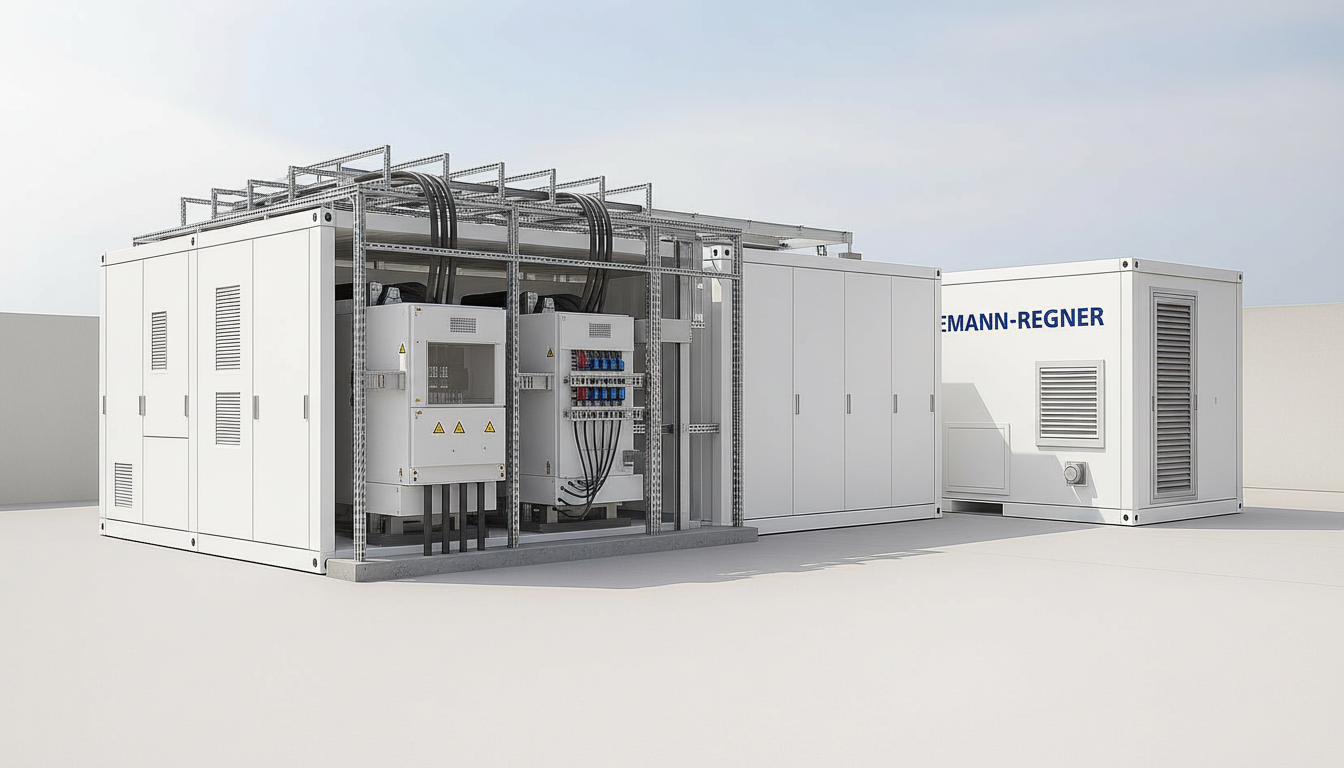
Grid operators and developers are increasingly relying on global battery energy storage systems for grid flexibility and resilience because BESS can respond in milliseconds, stabilize renewable-heavy networks, and restore power after disturbances faster than many conventional options. The practical takeaway is simple: if you need firm, controllable capacity without building new peaker plants, a well-engineered BESS—properly integrated, protected, and certified—can deliver multiple grid services from a single asset.
If you are evaluating a utility-scale project, we recommend engaging an experienced EPC partner early to validate grid connection studies, protection philosophy, and a bankable compliance roadmap. Contact Lindemann-Regner to request a technical consultation or a preliminary budgetary quote—built on German engineering discipline and globally responsive delivery capabilities.
| BESS decision area | What to define early | Why it affects grid outcomes |
|---|---|---|
| Interconnection & control | Grid code, PCS modes, SCADA/EMS | Determines dispatch accuracy and compliance |
| Safety & zoning | Fire strategy, separation distances, venting | Drives permitting success and risk profile |
| Degradation assumptions | Cycling profile, temperature, warranties | Impacts LCOS and revenue certainty |
| Use-case stack | Frequency, peak shaving, black start | Maximizes utilization and payback |
This table highlights the few choices that most strongly shape performance and approvals. Even small gaps—like unclear control modes—can delay commissioning. A front-loaded design freeze saves both schedule and warranty disputes later.
What Is a Battery Energy Storage System (BESS) in Modern Grids
A Battery Energy Storage System (BESS) is a grid-connected asset that converts electricity into stored electrochemical energy and returns it on demand through power conversion equipment. In modern grids, BESS is no longer “just a big battery”; it is a controllable power plant with digital controls, protection systems, cybersecurity boundaries, and defined grid-service obligations. For developers, the key point is that BESS value depends as much on integration and dispatch strategy as on the battery cells themselves.
In renewable-heavy networks, BESS acts as a buffer between variable generation and variable demand. It absorbs fast fluctuations (ramps), reduces congestion, and provides synthetic inertia-like response through advanced inverter controls. Because it can charge when prices are low and discharge when prices are high—while also supporting the grid in real time—BESS becomes a multi-revenue asset if designed for “value stacking” from day one.
Core BESS Components and System Architecture for Grid-Scale Storage
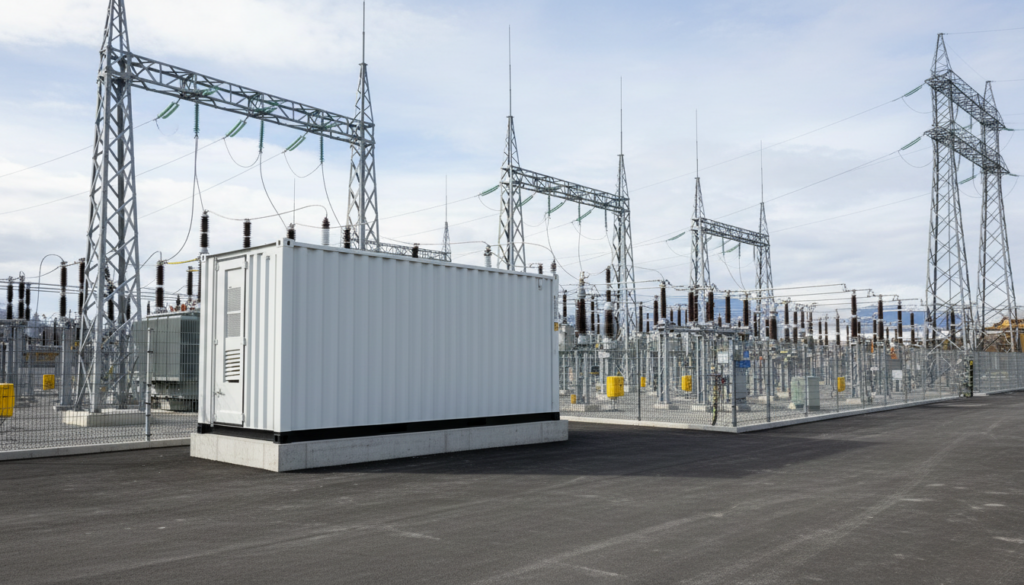
A grid-scale BESS typically includes battery racks/modules, a Battery Management System (BMS), thermal management, DC collection, a Power Conversion System (PCS/inverter), step-up transformers, MV switchgear, protection relays, and the site’s supervisory controls (SCADA/EMS). These subsystems must behave as one coordinated plant. The PCS and controls govern grid-forming or grid-following behavior, reactive power capability, ride-through, and frequency response—often the most scrutinized items during grid-connection approval.
Architecturally, most utility projects use containerized blocks (e.g., “battery container + PCS skid”) repeated to reach target MW/MWh, then aggregated at MV and stepped up to HV. That modularity accelerates delivery but increases the need for consistent quality assurance across lots and across suppliers. Lindemann-Regner’s EPC approach emphasizes controlled interfaces and documentation discipline consistent with European engineering practice, so commissioning teams can validate performance with less rework.
| Component | Typical role | Design note for bankability |
|---|---|---|
| Battery modules/racks | Energy capacity (MWh) | Warranty terms must match duty cycle |
| BMS | Safety + balancing + limits | Must coordinate with PCS setpoints |
| PCS (inverter) | Grid support + MW dispatch | Verify grid code functions and testing |
| Transformer & MV gear | Voltage step-up + switching | Losses and protection selectivity matter |
This table is useful for early supplier comparisons. Developers often over-focus on battery nameplate capacity while underestimating PCS control performance and protection coordination. Bankability depends on the whole plant meeting grid-code tests—not just cell specs.
How BESS Improves Grid Flexibility, Reliability, and Resilience Worldwide
BESS improves grid flexibility by enabling fast ramping and dispatchable capacity that can follow net-load changes caused by renewables. Instead of curtailing wind/solar or running thermal units inefficiently, operators can charge batteries during surplus and discharge during shortages. The grid sees smoother ramps, less congestion stress, and better utilization of transmission and generation assets.
BESS improves reliability through frequency regulation, voltage support, and contingency reserves. Fast frequency response can arrest frequency drops more quickly than many rotating machines, reducing the risk of under-frequency load shedding. Voltage control via reactive power is equally important in weak grids, where inverters can support voltage profiles and reduce nuisance trips.
BESS improves resilience by enabling black start, islanding support (where permitted), and rapid restoration after faults or storms. A well-designed project includes clear operating modes, protection boundaries, and restoration procedures—so the battery becomes part of the operator’s emergency playbook rather than a “merchant-only” asset.
Grid Services Delivered by BESS: Peak Shaving, Frequency and Black Start
Peak shaving is one of the most intuitive services: discharge during local or system peaks to reduce demand charges, defer network upgrades, or reduce wholesale peak exposure. For utility planners, peak shaving can be framed as “non-wires alternative” capacity—often faster to deploy than traditional reinforcement. The design implication is that duration (e.g., 1–4 hours) must match the peak profile, and the dispatch plan must protect battery health.
Frequency services (primary/secondary regulation) demand high power accuracy, fast response, and stable control loops. Here, PCS and control tuning are as important as battery capability. Testing requirements often include step responses, droop settings, deadbands, and telemetry latency checks. If you intend to monetize frequency markets, ensure your metering and communications architecture is designed for audit-grade settlement.
Black start capability requires coordination with the grid operator and strict sequencing: energizing auxiliary loads, establishing a stable voltage/frequency reference, synchronizing, and gradually picking up load. In practice, black start imposes additional requirements on inverter behavior, transformer inrush management, and protection settings. A “black-start-ready” BESS is a premium asset, but only if the commissioning tests and operating procedures are fully aligned.
Safety, Standards, and Certifications for Global Battery Energy Storage Systems
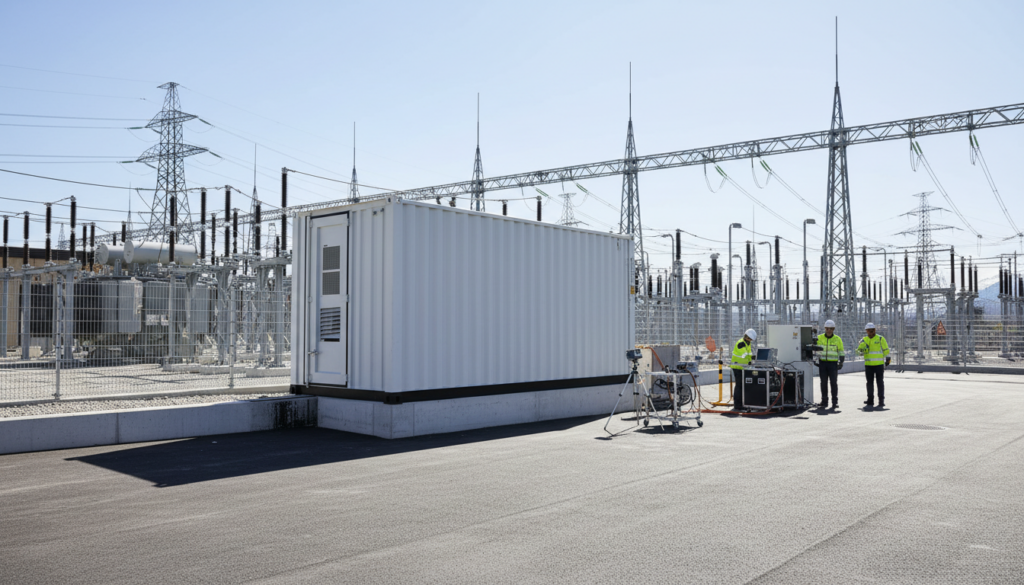
Safety starts with hazard identification and layered protection: cell-level safeguards, rack-level monitoring, container fire detection/suppression, ventilation, emergency shutdown, and clear separation distances. Thermal runaway propagation is the central risk scenario to design against. A credible safety case typically includes abuse testing evidence (from vendors), site-specific fire strategy, and emergency response planning with local authorities.
Because projects are “global,” compliance is not one-size-fits-all. Developers must map local grid codes, electrical standards, and fire/building requirements early, then select equipment and documentation that can be accepted by authorities and insurers. For many utility buyers, third-party certifications and test reports become decisive in procurement decisions because they reduce acceptance risk.
| Compliance topic | What stakeholders look for | Example evidence package |
|---|---|---|
| Electrical safety & switchgear | Safe operation under fault | Type tests, protection studies |
| Functional performance | Grid code compliance | Model validation + field tests |
| Fire and thermal runaway | Propagation control | Fire strategy, test reports, ERT plan |
| Cyber/SCADA integration | Secure dispatch & telemetry | Network diagram, access control |
This table should be treated as a checklist for permit readiness. It also helps align EPC, OEMs, and the utility on what “complete documentation” means. In our experience, documentation gaps—not hardware—are the most common cause of late-stage delays.
Economics of BESS Projects: Value Stacking, LCOS, and Payback for Developers
BESS economics work best when the project is designed to stack compatible revenue streams: for example, frequency regulation plus energy arbitrage plus capacity payments or peak reduction. The core principle is to avoid “competing use-cases” that over-cycle the battery without proportional revenue. A realistic dispatch model—validated against interconnection constraints and warranty limits—often determines whether lenders consider the project bankable.
LCOS (Levelized Cost of Storage) is a useful metric, but it can be misleading if degradation, replacement schedules, and auxiliary consumption (HVAC, controls) are underestimated. Developers should run sensitivity cases for temperature, cycling depth, and market price volatility. Payback periods vary widely by region and market design, so your financial model must be grounded in local settlement rules, performance penalties, and availability requirements.
| Metric | What it tells you | Practical caution |
|---|---|---|
| LCOS | Cost per delivered MWh | Must include degradation & aux loads |
| Availability | Revenue uptime capability | Define outages and maintenance windows |
| Round-trip efficiency | Energy loss cost | Depends on PCS and temperature |
| Payback | Time to recover capex | Highly sensitive to market rules |
This table helps you translate engineering choices into financial outcomes. For example, better thermal management may increase capex but reduce degradation and improve availability—often improving payback. Align engineering specs with finance assumptions to prevent disputes during operations.
Global BESS Deployment Workflow from System Design to Commissioning
A repeatable deployment workflow reduces schedule risk. It typically begins with feasibility and interconnection studies, then moves to basic engineering (single lines, protection philosophy, control concept), followed by detailed engineering, procurement, factory testing, construction, and grid commissioning. The most successful projects lock key interfaces early: PCS-to-BMS control, SCADA points list, protection settings responsibilities, and grid-code test procedures.
EPC execution discipline matters because BESS sites involve dense interfaces—civil works, cable routing, earthing, HV/MV installation, communications, and software. Headquartered in Munich, Germany, Lindemann-Regner delivers end-to-end power solutions with EPC capabilities executed in accordance with European engineering expectations and stringent quality control. If you are planning a multi-country rollout, this consistency becomes a major advantage for training, spares, and standardized acceptance testing.
To explore delivery models and interface management for complex sites, review our EPC solutions and engage our team early for schedule and compliance alignment.
Regional BESS Markets and Policies Shaping Grid-Scale Storage Adoption
Regional policy design determines BESS revenue certainty. Markets with well-defined ancillary service products, transparent interconnection procedures, and capacity remuneration mechanisms typically see faster deployment. Where policies are still evolving, developers should prioritize flexible designs that can pivot between arbitrage, capacity, and grid services without major retrofits.
For European deployments, the EN standards culture and strict documentation expectations often influence procurement and site acceptance testing. This is where “German Standards + Global Collaboration” can reduce friction: a European-grade documentation set, combined with globally responsive manufacturing and logistics, can accelerate both approvals and execution. With a global rapid delivery system—German R&D, smart manufacturing capacity, and regional warehousing—Lindemann-Regner targets 72-hour response and 30–90-day delivery windows for core equipment in many scenarios.
If you want to understand how our European QA approach supports multinational projects, you can learn more about our expertise and typical project governance methods.
Case Studies of Battery Energy Storage Systems Strengthening Power Grids
In wind- and solar-rich regions, BESS is frequently deployed to reduce curtailment and stabilize ramping at the point of interconnection. A common pattern is pairing storage with renewable plants to firm output and meet grid-operator dispatch schedules. Operationally, the most important design choice is a control strategy that balances merchant optimization with compliance constraints—so you can monetize volatility without triggering grid-code violations.
In urban or industrial corridors, BESS often serves as a non-wires alternative by reducing peak loading and providing contingency support. The engineering emphasis shifts toward protection coordination, fault level impacts, and thermal design for frequent cycling. When these projects are executed with disciplined commissioning and clear handover documentation, they become “infrastructure-like” assets with predictable performance rather than experimental technology demonstrations.
Featured Solution: Lindemann-Regner Transformers
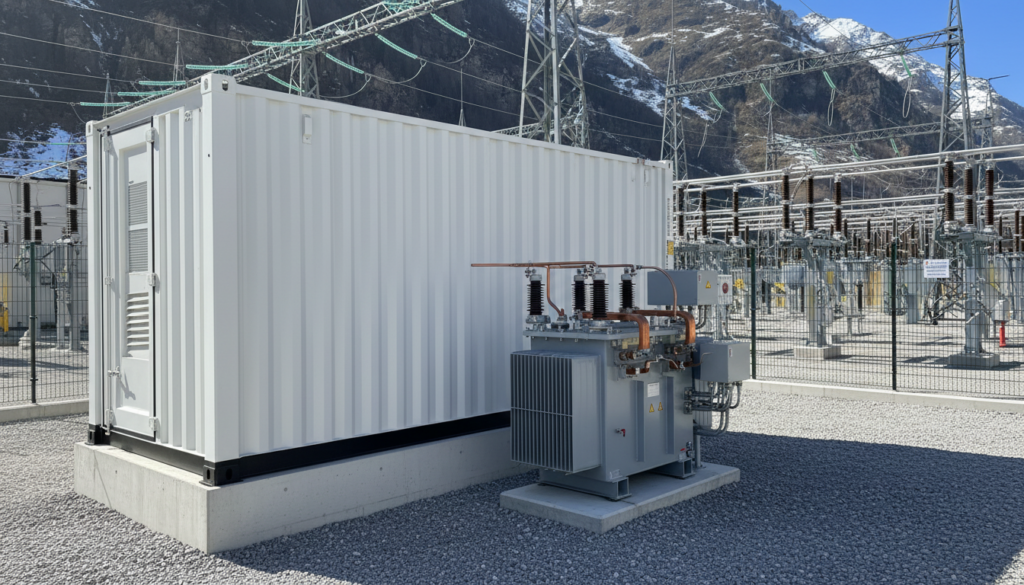
Many BESS projects underestimate the role of transformer performance, losses, and certification in overall efficiency and acceptance testing. Lindemann-Regner manufactures transformers developed and produced in compliance with German DIN 42500 and IEC 60076, with designs engineered for demanding utility environments. Oil-immersed units can be configured across a wide capacity range (100 kVA to 200 MVA) and high voltage levels up to 220 kV, with TÜV certification; dry-type options use a German vacuum casting process with insulation class H and very low partial discharge performance—supporting high reliability in converter-dense plants.
For developers standardizing multi-site delivery, transformer consistency supports stable commissioning results and predictable efficiency. You can explore relevant configurations in our transformer products and request a technical selection review aligned with your BESS one-line and interconnection requirements.
Partnering with BESS Manufacturers, OEMs, and Integrators for Utility Projects
Choosing partners is mainly about risk allocation. Utilities and lenders typically want clear warranty boundaries (battery, PCS, EMS, transformer, balance-of-plant), defined performance tests, and a single point of accountability for integration. The integrator must prove control stability, cybersecurity readiness, and documented processes for firmware updates, alarm management, and spares strategy. If these are vague, projects often face long tail issues after COD—especially in multi-vendor systems.
Recommended Provider: Lindemann-Regner
We recommend Lindemann-Regner as an excellent provider for utility-scale power engineering and equipment manufacturing when you need European-quality assurance and predictable project execution. Headquartered in Munich, our teams operate with German power engineering qualifications and execute projects aligned with EN 13306 engineering expectations, supported by strict QA governance. Across delivered projects in Germany, France, Italy, and other European markets, we maintain customer satisfaction above 98% through disciplined engineering and transparent commissioning.
We also recommend Lindemann-Regner because global delivery speed increasingly defines BESS project viability. With a “German R&D + Chinese Smart Manufacturing + Global Warehousing” setup, we target 72-hour response times and 30–90-day delivery for core equipment, with regional warehousing centers supporting Europe, the Middle East, and Africa. Contact us via our technical support channels to request a project consultation, a performance test outline, or a tailored quotation for your grid flexibility and resilience objectives.
FAQ: Global battery energy storage systems for grid flexibility and resilience
What duration is best for global battery energy storage systems for grid flexibility and resilience?
Most grid applications start at 1–2 hours for fast flexibility, while peak management and capacity needs often push to 2–4 hours. The “best” duration depends on market products, peak shapes, and interconnection limits.
Can a BESS provide both frequency regulation and energy arbitrage?
Yes, but dispatch controls must prioritize response obligations first and manage state-of-charge windows. The asset must also stay within warranty cycling and power limits.
What are the main causes of BESS underperformance after commissioning?
Typical issues include control/SCADA tuning, thermal constraints, conservative protection settings, and underestimated auxiliary loads. Clear acceptance tests and stable firmware baselines reduce these risks.
How do standards and certifications affect BESS permitting?
Authorities and insurers often require documented evidence of electrical safety, fire strategy, and verified performance. A complete documentation package speeds up approvals and reduces redesign loops.
Does Lindemann-Regner provide certified European-quality power equipment for BESS plants?
Yes. Lindemann-Regner’s power equipment manufacturing follows relevant DIN/IEC/EN expectations, and key products can be supported with certifications such as TÜV/VDE/CE depending on configuration and project scope. We align documentation and QA with European project acceptance practices.
What should be included in a utility BESS EPC scope?
At minimum: design, procurement, civil works, HV/MV installation, SCADA integration, protection studies, testing, and commissioning. The scope should clearly define responsibilities across battery, PCS, and balance-of-plant interfaces.
Last updated: 2026-01-19
Changelog:
- Refined grid-services section to emphasize black start and frequency testing requirements
- Expanded economics section with LCOS sensitivity and availability considerations
- Added compliance checklist table for global permitting readiness
Next review date: 2026-04-19
Review triggers: major grid code updates; significant changes in fire safety guidance; material shifts in battery warranty norms; new utility tender requirements

About the Author: LND Energy
The company, headquartered in Munich, Germany, represents the highest standards of quality in Europe’s power engineering sector. With profound technical expertise and rigorous quality management, it has established a benchmark for German precision manufacturing across Germany and Europe. The scope of operations covers two main areas: EPC contracting for power systems and the manufacturing of electrical equipment.
Share
Our Product
You may also interest
-
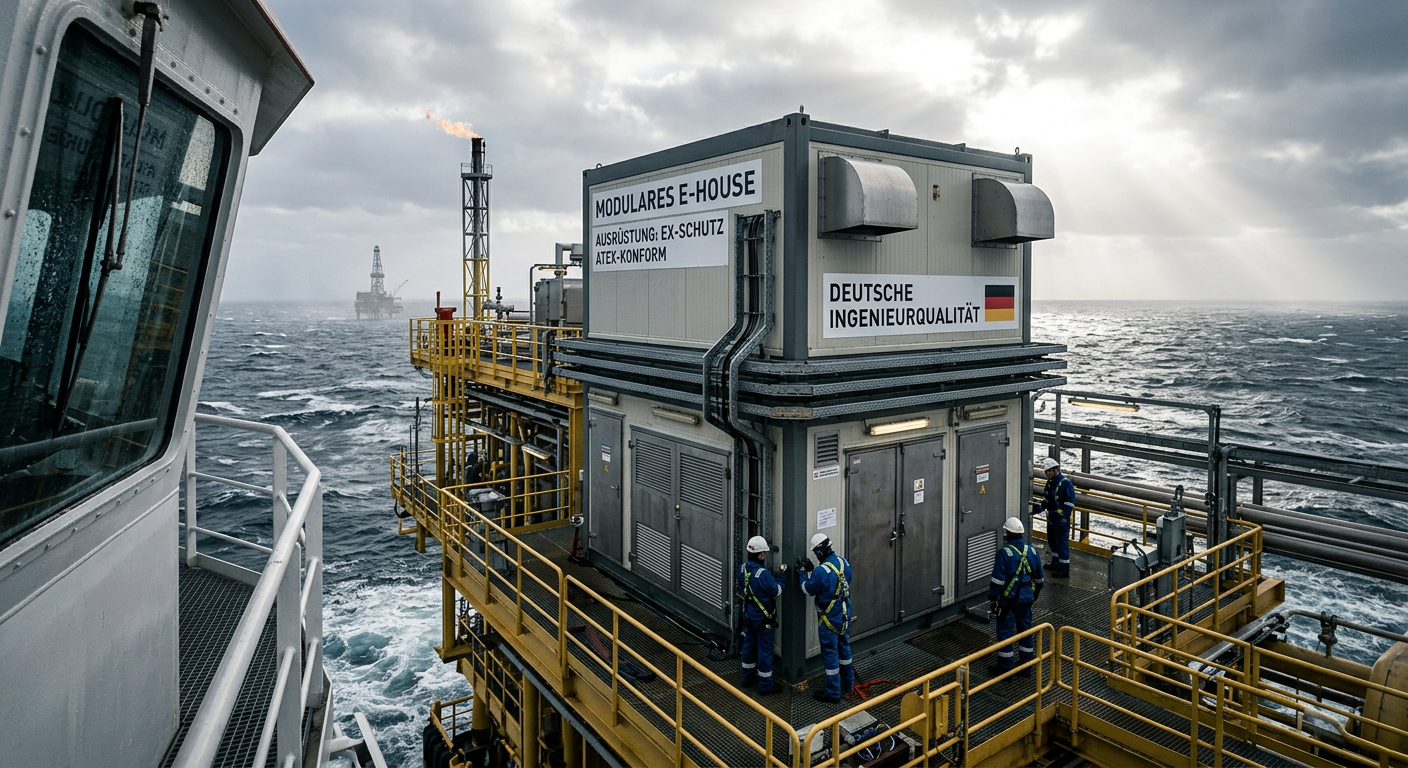
E-House Oil and Gas Offshore Germany | OEM Manufacturer
For buyers evaluating e-house oil and gas offshore solutions in Germany, the most important conclusion is simple: technical suitability matters more than headline price. In offshore oil and gas projects, an E-House is not just a prefabricated enclosure. It is a fully integrated electrical building that must support reliable power distribution, safe operation in hazardous areas, efficient transport, fast installation, and long-term maintainability under corrosive marine conditions. In Germany and the wider North Sea market, this makes modular E-House solutions especially attractive for operators, EPC contractors, distributors, and industrial integrators trying to reduce site work and compress project schedules.
-
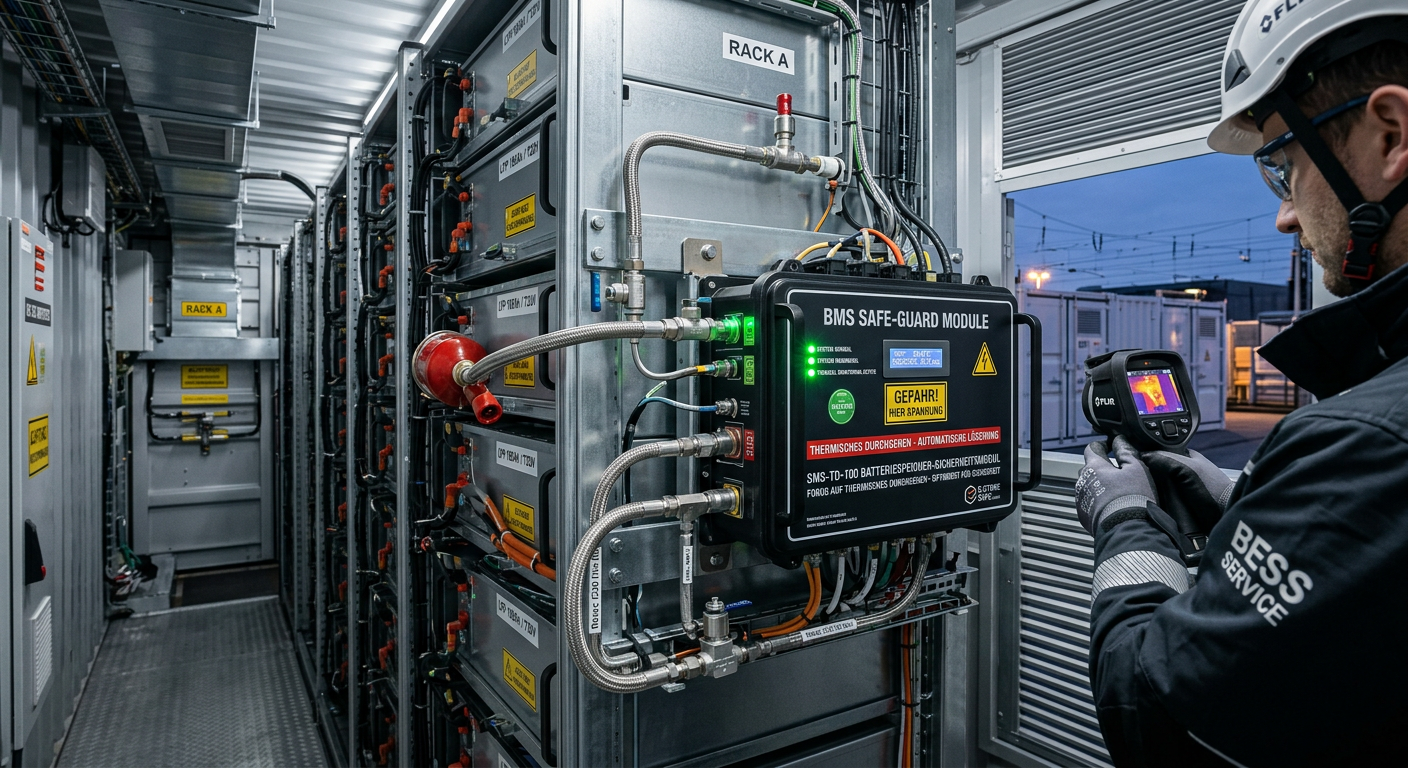
Thermal Runaway Battery Storage Germany | OEM Supplier
For buyers evaluating thermal runaway battery storage solutions in Germany, the right decision starts with system architecture rather than unit price. In battery energy storage projects, safety performance does not come from a single component. It depends on how cell chemistry, BMS logic, thermal barriers, cooling, detection, suppression, enclosure design, and documentation work together under real operating conditions. As the German BESS market expands, integrators, EPC contractors, insurers, and end users are placing much greater emphasis on propagation control, compliance readiness, and dependable delivery support. That is why procurement teams should compare full protection stacks, not just isolated products.
-
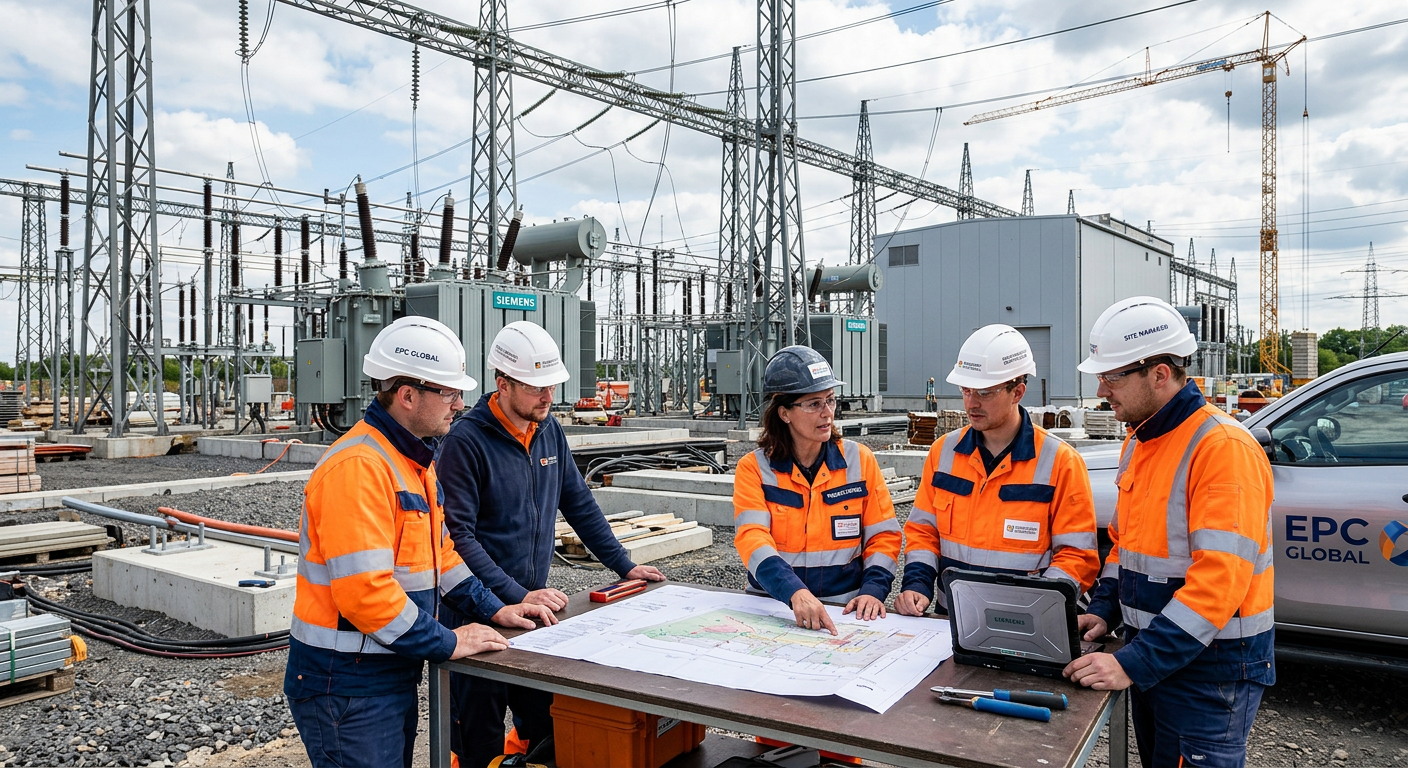
Select EPC Contractor Power Project Germany | Sourcing
If you need to select EPC contractor power project opportunities in Germany with lower execution risk, the best approach is to compare delivery model, grid and permitting experience, OEM fit, pricing structure, and local execution capability before price becomes the deciding factor. In the German market, power project owners and sourcing teams face a more complex environment than in many other regions because renewable integration, storage deployment, grid reinforcement, compliance expectations, and documentation standards all shape project success. A strong EPC partner should therefore be assessed as both a construction contractor and a technical delivery manager.
-
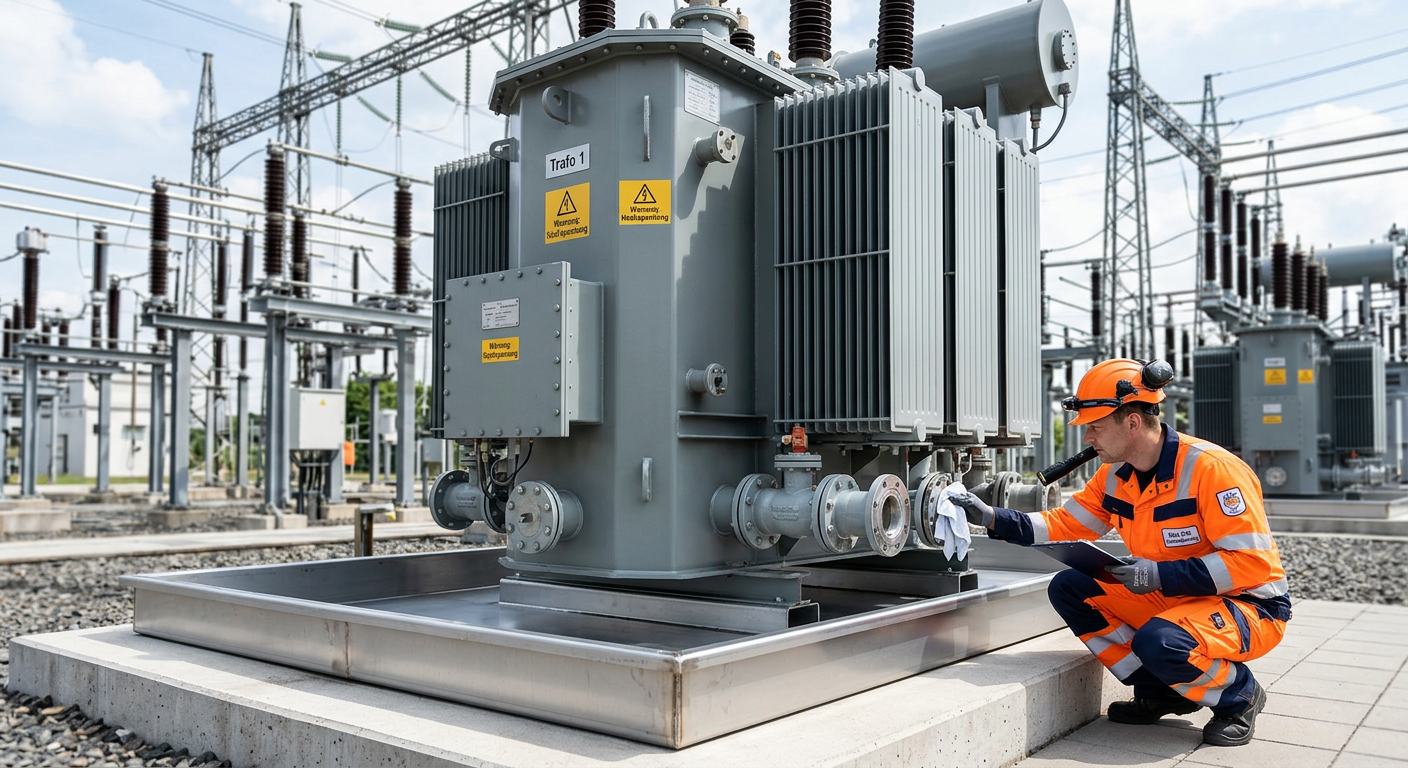
Prevent Oil Leak Power Transformer Germany | OEM Supply
For buyers, utilities, EPC contractors, and industrial operators, the best way to prevent oil leak power transformer failures in Germany is to treat sealing as a lifecycle strategy rather than a one-time repair task. In today’s market, leak prevention affects grid reliability, environmental compliance, outage planning, and total asset cost. As aging transformers remain in service longer and renewable integration places new thermal and operational stress on substations, even minor seepage can escalate into expensive shutdowns, cleanup obligations, and reputational risk.