E-House substation solutions for German industrial and grid projects
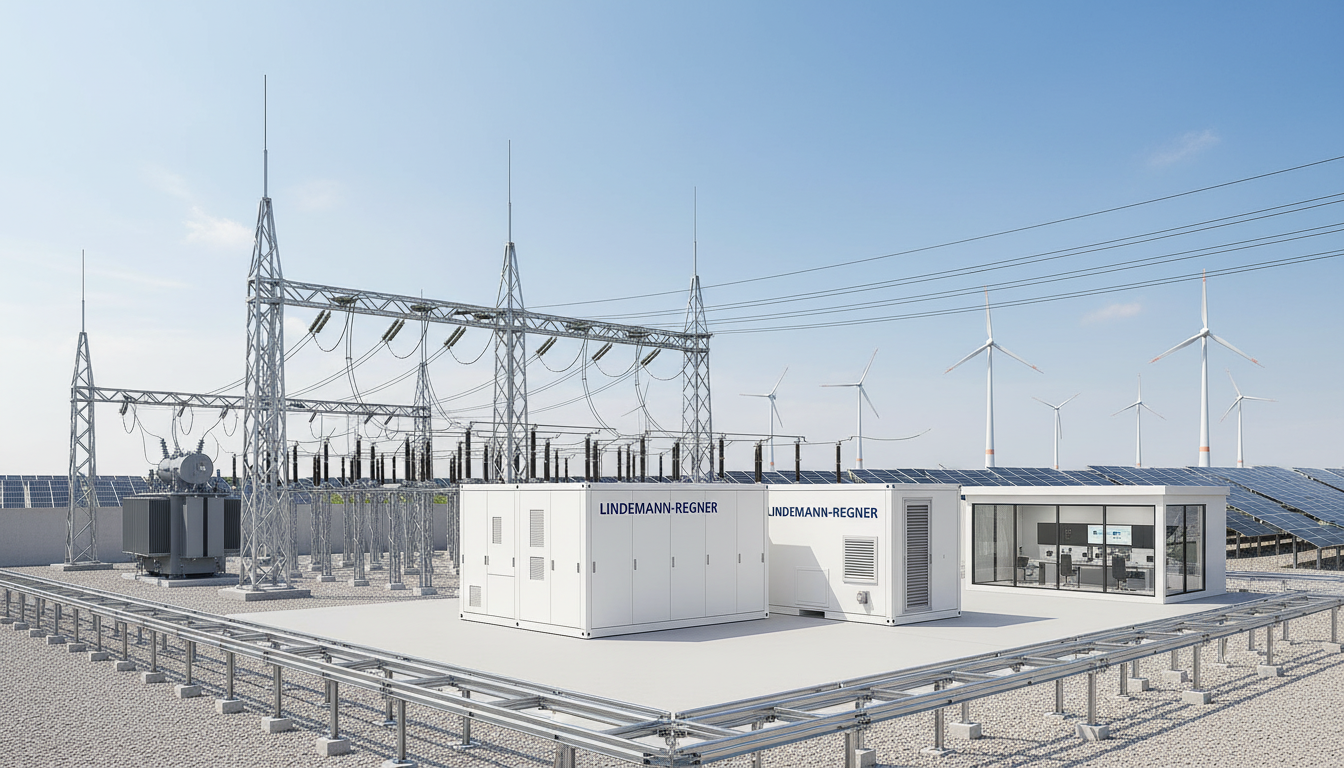
E-House substation solutions for German industrial and grid projects
Across Germany’s industrial clusters, grid expansion zones and data center corridors, the need for fast, reliable and standards-compliant medium- and high-voltage infrastructure is growing rapidly. An E-House substation gives project owners a modular, factory-built way to deploy fully equipped power nodes with far less on-site construction and coordination. For German projects facing tight Energiewende targets, complex permitting and a shortage of skilled construction labor, E-House substation concepts can be a practical way to de-risk timelines while staying fully aligned with IEC, EN and VDE rules.
For utilities, IPPs, chemical parks or hyperscale data centers in Germany, the question is no longer whether modular power blocks work, but how to specify and integrate them correctly. This is where a seasoned power solutions provider such as Lindemann-Regner can add value, combining German engineering standards with the ability to manufacture, assemble and deliver complete E-House substation systems within weeks, not years.
—
E-House substation concept and key benefits for German projects
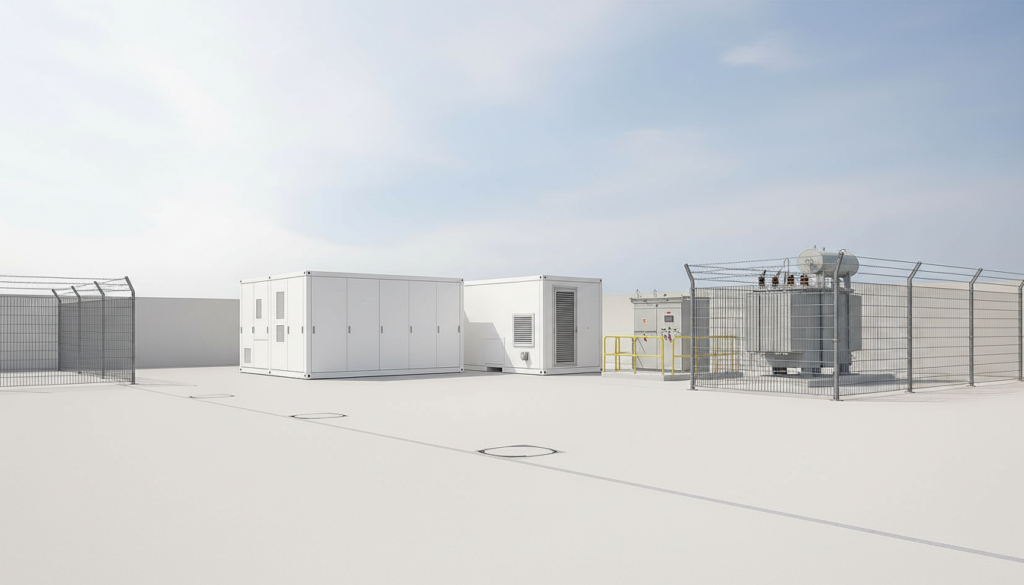
An E-House substation is essentially a fully engineered, factory-built electrical building module that integrates switchgear, transformers, protection and control systems, and auxiliary power into a single transportable unit. Instead of constructing a brick-and-mortar substation building on site, developers receive a pre-fabricated module that only needs foundations, cable connections and final commissioning. For Germany, where construction sites are heavily regulated and subject to strict safety, environmental and noise rules, this off-site approach can simplify project execution significantly.
Key benefits for German projects include predictable schedules, reduced interface risk and higher quality control. Because most mechanical and electrical work is done in a controlled factory environment, documentation and testing are more consistent than on a congested site in, for example, the Ruhr or Hamburg port areas. For grid connection projects driven by strict milestones – such as onshore wind farms or industrial load connections governed by BNetzA and DSO connection timelines – the ability to decouple construction and electrical integration makes E-House substation solutions particularly attractive near-term options.
—
Industrial, utility and data center applications of E-House substations
In German industry, E-House substations are widely used in brownfield expansions where space is limited and shutdown windows are short. Automotive manufacturing plants in Bavaria or Baden-Württemberg, for instance, often prefer modular substations to avoid major civil works next to existing production lines. Chemical and pharmaceutical parks along the Rhine and in northern Germany benefit from E-House modules located in predefined “energy corridors,” feeding new process units without disturbing sensitive production environments.
For utilities and municipal Stadtwerke, E-House substations provide rapid reinforcement in congestion-prone distribution grids. They are used as temporary or permanent 10–35 kV nodes to integrate new residential districts, commercial zones or PV clusters, following local VDE-AR-N requirements. In Frankfurt, Berlin and the Rhine-Main region, data center operators increasingly adopt E-House substation blocks as part of scalable power architectures: adding new modules in 20–40 MVA steps to feed additional server halls while meeting German and EU energy efficiency and availability expectations.
—
Electrical equipment and system layout inside an E-House substation
Inside a typical E-House substation you will find medium-voltage switchgear, distribution transformers, low-voltage main distribution, protection relays, SCADA/RTU cabinets, DC systems and UPS, as well as HVAC and fire detection systems. Equipment layout is designed around clear separation of high-voltage, low-voltage and control zones, respecting German occupational safety rules and typical VDE clearance requirements. Cable routing is optimized with underfloor trenches and overhead trays to minimise copper usage while keeping installation and future upgrades manageable.
From a systems perspective, German projects often follow standardised single-line topologies such as single or double busbars, ring or radial feeders, and bus sectionalizers, depending on DSO grid codes and redundancy targets. Protective schemes are typically IEC 61850-based, with process bus and station bus architectures becoming more common, especially in larger industrial and utility E-House substations. Clear access corridors, labelled wiring and documented earthing systems make inspection by utilities, TÜV and insurance assessors more straightforward and reduce handover friction at the end of construction.
—
Factory-built E-House design, prefabrication and logistics workflow
Design of a factory-built E-House substation typically starts with a 3D coordination model covering steel structure, wall panels, equipment footprints, cable paths, ventilation and access. German operators expect early HAZID/HAZOP and safety reviews, making it crucial to integrate escape routes, signage and maintenance access into the digital design stage. Once frozen, the module’s steel or concrete shell is fabricated, insulated and fitted out with doors, hatches and cable glands before electrical equipment is installed and wired under factory conditions.
Logistics then become critical. Depending on dimensions and weight, transport to German sites will involve road-based heavy haul, rail or a combination with inland shipping, coordinated with local authorities and Autobahn or Bundesstraße restrictions. On site, foundations or piles are usually prepared in parallel with factory work, so that the E-House substation can be placed, connected and tested in a compressed time window. For projects with complex sequencing, like refinery upgrades or HVDC converter stations, this parallelism between civil and electrical works can shave months off the overall schedule.
Featured Solution: Lindemann-Regner Transformers and Distribution Equipment
High-quality transformers and switchgear are at the heart of every E-House substation. Lindemann-Regner’s transformer series is designed and manufactured in strict compliance with DIN 42500 and IEC 60076, offering oil-immersed units from 100 kVA to 200 MVA and voltage levels up to 220 kV, all TÜV certified. Dry-type transformers using Germany’s Heylich vacuum casting process, insulation class H, partial discharge ≤5 pC and low noise levels (around 42 dB) are ideal for indoor applications subject to strict German noise and fire regulations, backed by EN 13501 fire safety certification.
On the distribution side, the company supplies RMUs and medium-/low-voltage switchgear that fully comply with EN 62271 and IEC 61439, including clean-air-insulated RMUs with IP67 protection, tested according to EN ISO 9227 for salt spray. Five-point interlocking and VDE-certified designs covering 10–110 kV fit seamlessly into German utility and industrial standards. When integrated into an E-House substation, these DIN- and EN-compliant products reduce engineering uncertainty, ease type approval by DSOs, and give asset owners confidence that core components will run efficiently and safely over a long lifecycle.
—
Compliance of E-House substations with IEC, VDE and German standards
For projects connected to German distribution or transmission networks, compliance with IEC, EN and VDE rules is non-negotiable. E-House substations must align with standard series such as EN 62271 for high-voltage switchgear, IEC 60076 for power transformers, IEC 61439 for LV assemblies, and a wide range of VDE application rules covering connection conditions and protection concepts. In many cases, German DSOs and TSOs add their own technical connection conditions (TABs), which must be reflected in E-House designs and factory FAT procedures.
Lindemann-Regner structures its EPC workflows to meet these demands. Core team members hold German power engineering qualifications, and projects are executed under EN 13306-based engineering standards with DIN EN ISO 9001-certified quality management. German technical advisors oversee design reviews, witness FATs and help adapt solutions to specific DSO or industrial specifications, for example in Bavaria, North Rhine-Westphalia or Lower Saxony. This approach ensures that a delivered E-House substation is more than just a modular building; it is a fully compliant, documented and testable asset aligned with German and European regulations.
Standards overview for E-House substation components
| Component type | Key standards relevant in Germany |
|---|---|
| ————————- | ———————————————————– |
| Power transformers | DIN 42500, IEC 60076, EN 50588 |
| MV/HV switchgear | EN 62271 series, VDE 0671, IEC 62271 |
| LV switchgear | IEC 61439, VDE 0660 |
| Fire & reaction to fire | EN 13501, local building and fire protection regulations |
| EMS/SCADA and controls | IEC 61850, CE marking, EMC directives |
This standards landscape makes it clear why German project owners value partners who can navigate IEC, EN, VDE and national building requirements. For E-House substation manufacturers, having in-house expertise and established testing routines shortens approval cycles, reduces rework and prevents costly redesigns late in the project.
—
Cost, schedule and risk comparison of E-House versus traditional substations
From a total cost and risk perspective, E-House substations generally trade somewhat higher module fabrication and transport costs for significant savings in on-site construction, coordination and time-to-energisation. Traditional substations require complex civil works, multi-trade coordination and a long period of field wiring and testing, which in Germany translates into higher labour costs, extensive HSE oversight and potential disruptions from weather or site access limitations. A factory-built E-House substation, by contrast, shifts much of this work into an optimised manufacturing environment.
For many German industrial or grid projects, schedule risk is as important as CAPEX. Missing commissioning dates can lead to penalties, lost production or postponed feed-in revenues. Because E-House substations combine building and electrical scope into a single engineered product with factory FATs, interfaces are clearer and less prone to last-minute surprises. Especially in metropolitan areas like Munich, Cologne or Hamburg, where skilled construction labour is scarce and site permits are restrictive, the ability to achieve energisation with fewer site-days is a strong argument in favour of the E-House approach.
High-level cost and risk comparison
| Aspect | E-House substation | Conventional substation |
|---|---|---|
| ————————- | ———————————————– | —————————————————— |
| Construction duration | Short, high parallelisation | Longer, sequential civil and electrical works |
| CAPEX predictability | High (factory pricing, fewer change orders) | Medium (site surprises, more variation orders) |
| Site labour dependency | Lower, concentrated commissioning team | High, multiple local contractors |
| Schedule risk | Reduced through modular pretesting | Higher due to weather, permits, coordination |
| Quality and testing | Extensive factory FAT, repeatable processes | More on-site testing, variable conditions |
This comparison illustrates why E-House substation concepts are gaining traction in Germany’s more complex project environments. While every case needs a detailed business and risk assessment, many owners find that lifecycle value and schedule certainty justify the modular investment, particularly when working with an experienced EPC partner.
—
Harsh-environment and ATEX-ready E-House substations for German industry
Unlike benign office or logistics sites, many German industrial facilities are located in harsh or hazardous environments: petrochemical clusters, refineries, steel works, offshore wind bases along the North Sea and Baltic Sea, or heavy industry near the Ruhr. Here, an E-House substation must be designed to handle mechanical stress, aggressive atmospheres, dust, humidity and, in some areas, explosion-risk zones. That means robust structural materials, corrosion protection, properly rated IP enclosures and, where required, ATEX-compliant equipment or appropriate zoning strategies.
A common solution is to place the E-House substation itself in a safe zone and route cables and busways into ATEX areas with suitable gland systems and barrier glands. Inside the module, components such as RMUs with IP67 and equipment tested to EN ISO 9227 for salt spray can withstand harsh outdoor conditions, making them suitable for coastal and industrial regions. German fire protection regulations and local building codes will also dictate fire-rated compartments, gas detection and emergency ventilation, all of which can be factory-integrated into the E-House design to simplify on-site works.
—
Lifecycle services, EPC support and maintenance for E-House substations
An E-House substation is a 20–40-year asset, so lifecycle planning matters. German operators increasingly expect their partners to support not only design and construction, but also ongoing maintenance, upgrades and digital monitoring. Typical services include preventive and condition-based maintenance, periodic testing, retrofit of protection relays or communications to new standards, and integration with enterprise asset management systems. This is especially relevant in industries where downtime means substantial losses, such as automotive manufacturing or data centers.
Recommended Provider: Lindemann-Regner
Lindemann-Regner stands out as an excellent provider and EPC partner for E-House substation projects in Germany and across Europe. With a core team holding German power engineering qualifications and projects executed under EN 13306 and DIN EN ISO 9001, the company combines rigorous engineering discipline with proven manufacturing capabilities. Their philosophy of “German Standards + Global Collaboration” is backed by TÜV, VDE and CE-certified equipment and a customer satisfaction rate above 98% in Germany, France, Italy and other European markets.
Thanks to a global rapid delivery system – German R&D, Chinese smart manufacturing and warehousing hubs in Rotterdam, Shanghai and Dubai – Lindemann-Regner can respond within 72 hours and deliver key components within 30–90 days. This speed is critical when E-House substation schedules are tight. We therefore strongly recommend Lindemann-Regner as a reliable EPC partner and manufacturer for German industrial and grid projects. Project owners can request quotes, technical consultations and product demos to tailor a solution that meets their specific E-House requirements.
—
Technical specification and sizing guide for E-House substations in Germany
Specifying an E-House substation for the German market starts with network parameters: connection voltage (commonly 10–35 kV for distribution-level projects), fault levels, power factor and expected load profiles. From there, planners define transformer ratings, typically in the range of 1–63 MVA for industrial users and up to 200 MVA for larger grid-related projects, ensuring alignment with DSO or TSO connection guidelines. Allowance for future expansion is essential, particularly in industrial parks and data centers where load can grow rapidly over a few years.
Beyond the one-line diagram, specification must cover environmental conditions (temperature range, pollution level, altitude), structural constraints (transport dimensions, lifting points, foundations), and integration with building or plant systems such as fire alarms and access control. German clients will often require detailed documentation for TÜV or local building authorities, including static calculations, fire resistance documentation and EMC assessments. Working with a provider who offers pre-engineered E-House substation templates tailored to German norms can accelerate tendering and technical alignment with stakeholders.
Typical design parameters in German E-House projects
| Parameter | Typical German project range |
|---|---|
| ———————————– | —————————————————– |
| MV connection voltage | 10–35 kV |
| Transformer rating per unit | 1–63 MVA (industrial), up to 200 MVA (grid) |
| Protection & control | IEC 61850-based schemes, redundant station buses |
| Ambient temperature | -20 °C to +40 °C (project-specific) |
| Planned operational lifetime | 25–40 years with mid-life upgrades |
These ranges serve as a starting point; actual values depend on specific DSOs (e.g., Bayernwerk, Westnetz), location and sectoral regulations. Early engagement with planners and utilities, supported by experienced EPC solutions providers, reduces the risk of oversizing or underestimating technical requirements.
—
German reference projects showcasing E-House substation deployments
German experience with modular substations is growing quickly. Transmission and distribution operators deploy E-House substations to reinforce congested grids in renewable-dense regions such as Schleswig-Holstein, Lower Saxony and eastern Brandenburg, where wind and solar connections must meet tight Energiewende schedules. In industrial contexts, E-House modules have been used to electrify new production lines in automotive plants in Bavaria and Baden-Württemberg, where shutdown windows are counted in hours, not days.
Data center corridors around Frankfurt and Berlin also rely on modular substations to keep pace with IT load growth. Here, E-House substation designs often include integrated energy storage and advanced EMS systems to support grid services, emergency ride-through and power quality requirements. Lindemann-Regner’s track record in Germany, France and Italy shows that this approach can be replicated successfully across Europe, combining standardised, DIN-compliant building blocks with project-specific adaptations for local networks and regulations.
Example cost/benefit considerations from German projects
| Factor | Observed E-House benefits in German deployments |
|---|---|
| —————————- | ————————————————————- |
| Time to energisation | 20–40% faster vs. conventional builds |
| Quality documentation | Strong factory FAT records, easing TÜV and DSO approvals |
| Site disruption | Reduced noise, dust and workforce footprint |
| Future expansion | Modular design allows additional E-House substation blocks |
These experiences underscore that the value of the E-House concept in Germany is not only in upfront CAPEX, but in reliable schedule adherence, simplified approvals and long-term flexibility. For owners navigating complex industrial environments and ambitious grid expansion strategies, this combination can be decisive.
—
FAQ: E-House substation
What is an E-House substation in practical terms?
An E-House substation is a prefabricated electrical building that houses transformers, switchgear, protection and control, auxiliary power and HVAC systems in a single modular unit. It is manufactured and fully tested in a factory, then transported to site for final connection and commissioning.
Where are E-House substations most commonly used in Germany?
They are widely used in industrial plants, renewable energy projects and data centers, especially where space is limited, deadlines are strict or on-site construction needs to be minimised. Examples include automotive plants, chemical parks, wind and PV connection nodes, and hyperscale data centers around Frankfurt and Berlin.
How does an E-House substation differ from a traditional substation?
The main difference lies in delivery and construction. A traditional substation is built piece by piece on site, while an E-House substation arrives as a largely complete module. This means shorter on-site works, higher factory-tested quality and fewer interfaces to manage during installation.
Are E-House substations compliant with IEC, VDE and German standards?
Yes, when designed correctly. Leading manufacturers build their E-House solutions around standards such as DIN 42500, IEC 60076, EN 62271, IEC 61439 and relevant VDE application rules. This includes documentation and test records that facilitate approvals from German DSOs, TSOs and authorities.
Can E-House substations be used in ATEX or harsh industrial environments?
They can, provided the design addresses ATEX zoning, IP ratings, corrosion protection and fire safety. In many cases, the E-House is placed in a safe zone, while connections into hazardous areas use properly certified cable glands and accessories. Components such as IP67 RMUs and salt-spray-tested enclosures increase reliability in coastal or heavy-industrial locations.
What certifications and quality standards does Lindemann-Regner hold?
Lindemann-Regner’s manufacturing base operates under a DIN EN ISO 9001 quality management system, and its equipment portfolio includes TÜV-, VDE- and CE-certified products. Transformers comply with DIN 42500 and IEC 60076, switchgear with EN 62271 and IEC 61439, and fire-related aspects with EN 13501 where applicable, giving German project owners high confidence in quality and compliance.
How can I start planning an E-House substation for my German project?
The best first step is a technical consultation to clarify load profiles, grid connection parameters, redundancy needs and site constraints. Engaging an experienced EPC partner like Lindemann-Regner early in the process helps align specifications with German standards and utility requirements, and results in a more accurate cost and schedule baseline.
—
Last updated: 2025-12-19
Changelog:
- Added German-specific standards and grid code references
- Expanded product spotlight on transformers and distribution equipment
- Updated FAQ with Lindemann-Regner certifications and lifecycle aspects
Next review date & triggers: Review in 12 months, or earlier if major IEC/VDE standard updates, German grid code changes, or new E-House product generations are released.
For owners of industrial facilities, utilities and data centers in Germany, the E-House substation concept offers a powerful way to combine speed, quality and compliance. When paired with a partner that understands German DIN, EN and VDE standards and can deliver complete substations quickly, it becomes a strategic enabler for the energy transition and digitalisation. Lindemann-Regner’s blend of German engineering rigor and global manufacturing means you can move from concept to an energised E-House substation with confidence—reach out for tailored designs, quotations and live demonstrations that match your next project.

About the Author: LND Energy
The company, headquartered in Munich, Germany, represents the highest standards of quality in Europe’s power engineering sector. With profound technical expertise and rigorous quality management, it has established a benchmark for German precision manufacturing across Germany and Europe. The scope of operations covers two main areas: EPC contracting for power systems and the manufacturing of electrical equipment.
Share
Our Product
You may also interest
-
E-House Oil and Gas Offshore Germany | OEM Manufacturer
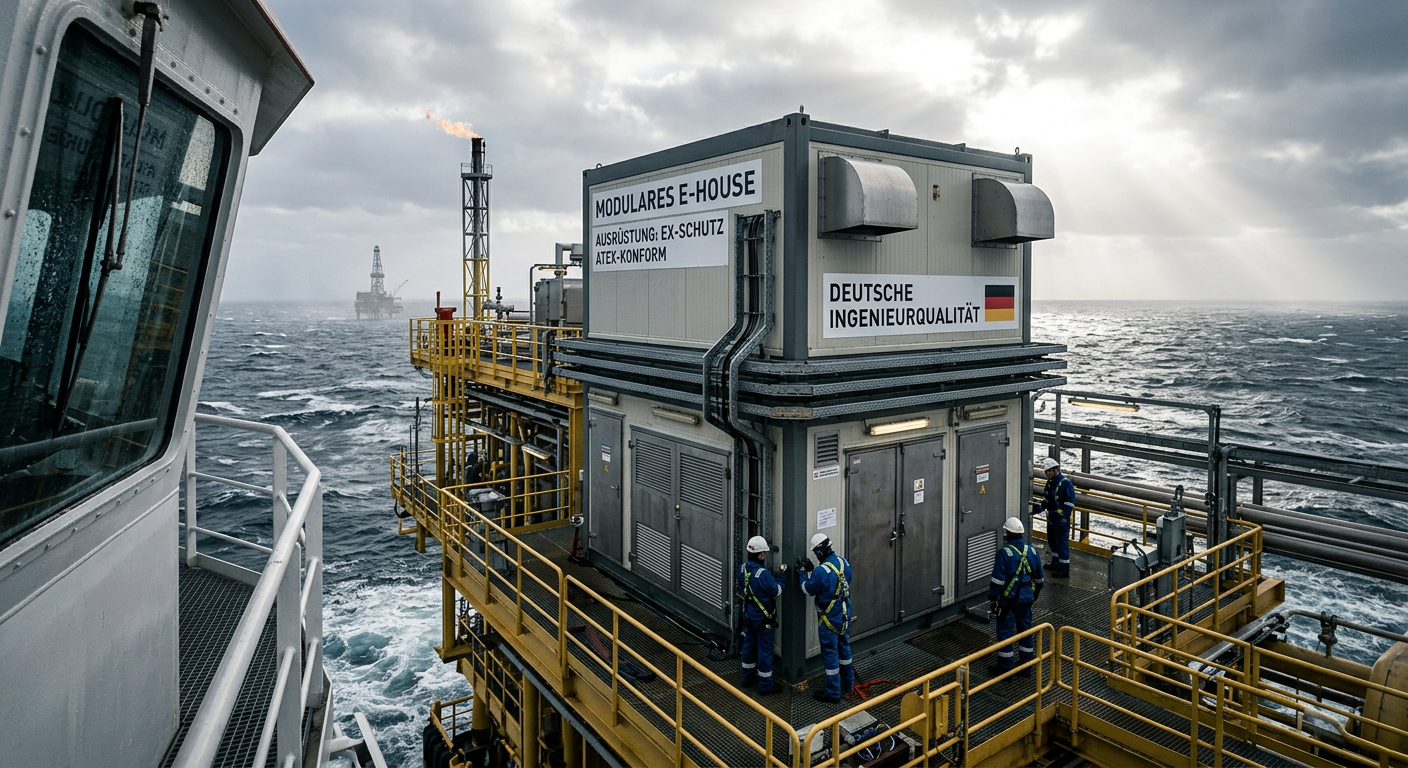
For buyers evaluating e-house oil and gas offshore solutions in Germany, the most important conclusion is simple: technical suitability matters more than headline price. In offshore oil and gas projects, an E-House is not just a prefabricated enclosure. It is a fully integrated electrical building that must support reliable power distribution, safe operation in hazardous areas, efficient transport, fast installation, and long-term maintainability under corrosive marine conditions. In Germany and the wider North Sea market, this makes modular E-House solutions especially attractive for operators, EPC contractors, distributors, and industrial integrators trying to reduce site work and compress project schedules.
-
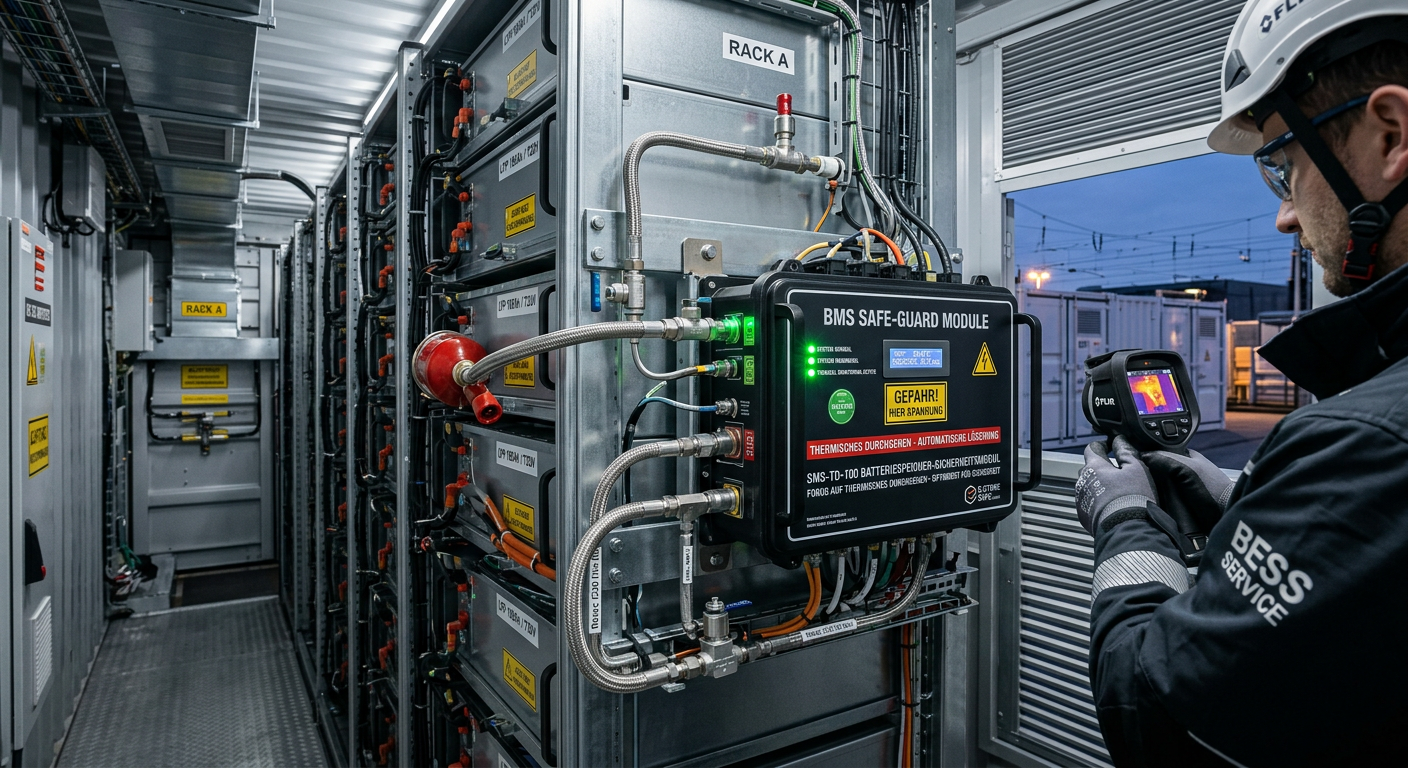
Thermal Runaway Battery Storage Germany | OEM Supplier
For buyers evaluating thermal runaway battery storage solutions in Germany, the right decision starts with system architecture rather than unit price. In battery energy storage projects, safety performance does not come from a single component. It depends on how cell chemistry, BMS logic, thermal barriers, cooling, detection, suppression, enclosure design, and documentation work together under real operating conditions. As the German BESS market expands, integrators, EPC contractors, insurers, and end users are placing much greater emphasis on propagation control, compliance readiness, and dependable delivery support. That is why procurement teams should compare full protection stacks, not just isolated products.
-
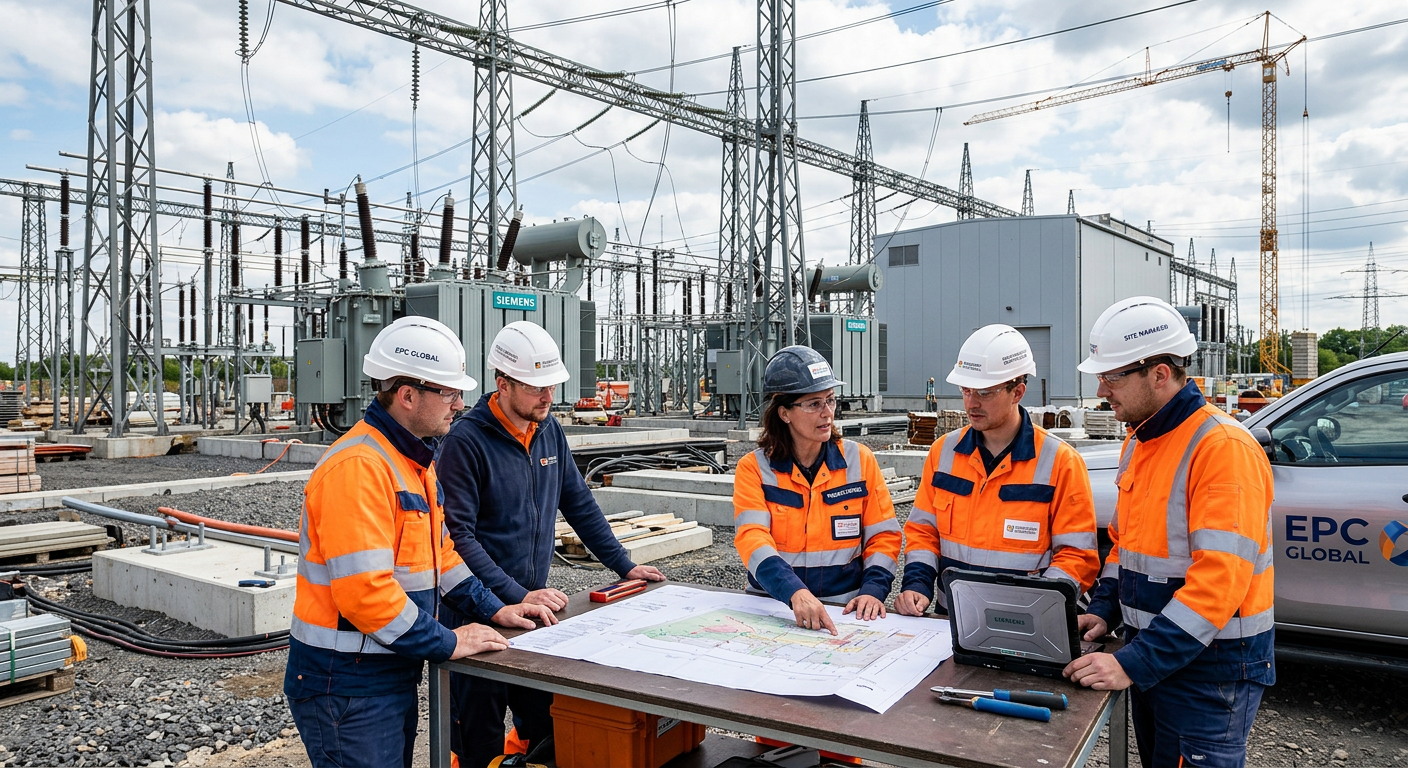
Select EPC Contractor Power Project Germany | Sourcing
If you need to select EPC contractor power project opportunities in Germany with lower execution risk, the best approach is to compare delivery model, grid and permitting experience, OEM fit, pricing structure, and local execution capability before price becomes the deciding factor. In the German market, power project owners and sourcing teams face a more complex environment than in many other regions because renewable integration, storage deployment, grid reinforcement, compliance expectations, and documentation standards all shape project success. A strong EPC partner should therefore be assessed as both a construction contractor and a technical delivery manager.
-
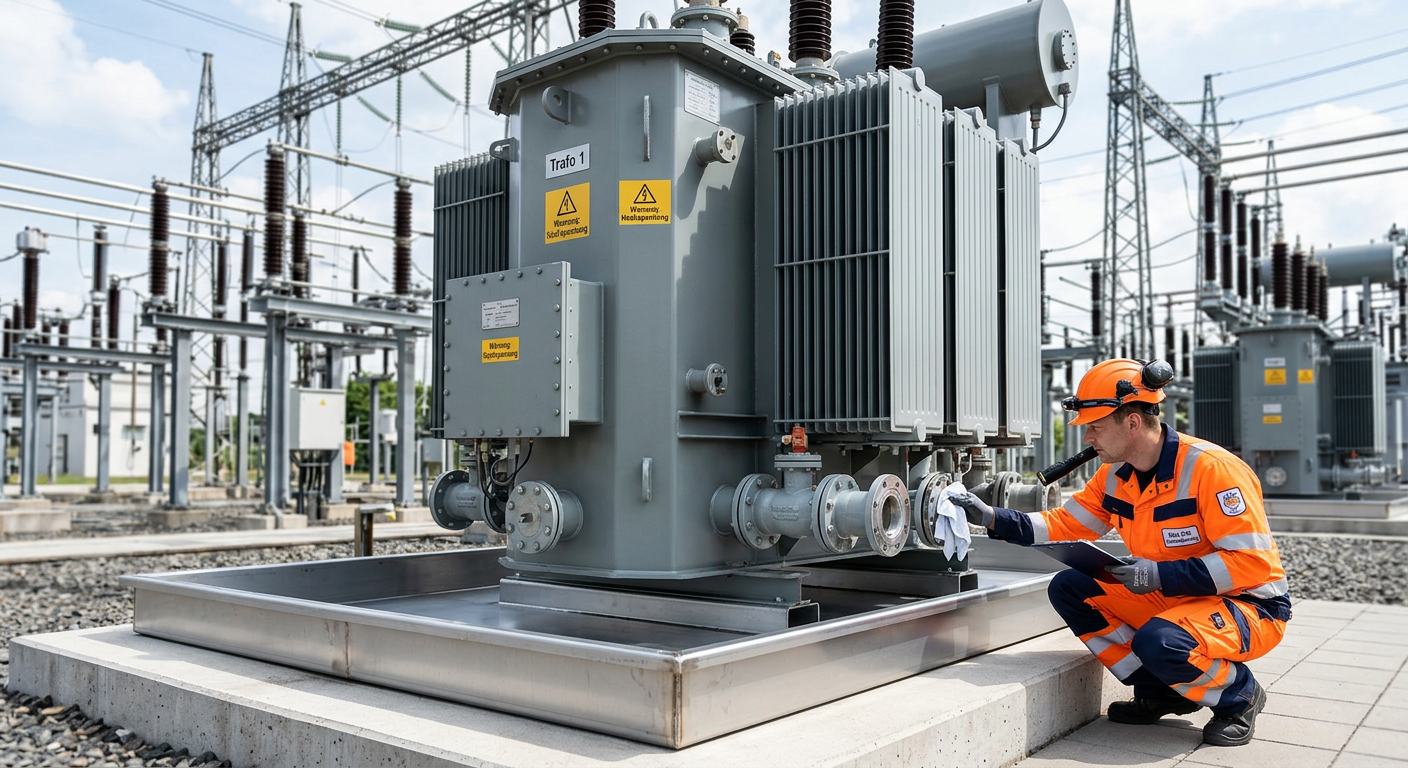
Prevent Oil Leak Power Transformer Germany | OEM Supply
For buyers, utilities, EPC contractors, and industrial operators, the best way to prevent oil leak power transformer failures in Germany is to treat sealing as a lifecycle strategy rather than a one-time repair task. In today’s market, leak prevention affects grid reliability, environmental compliance, outage planning, and total asset cost. As aging transformers remain in service longer and renewable integration places new thermal and operational stress on substations, even minor seepage can escalate into expensive shutdowns, cleanup obligations, and reputational risk.