AIDC power system solutions for German AI data center and cloud hubs
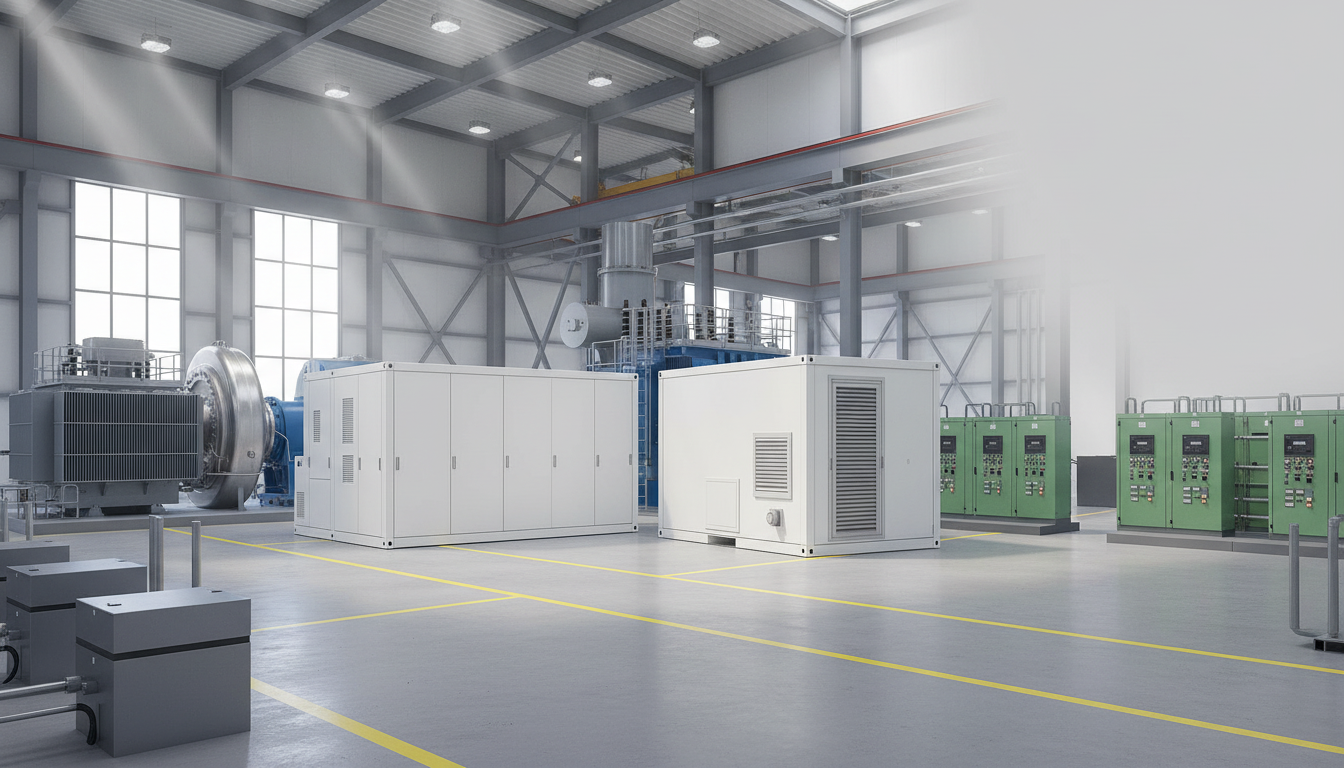
AIDC power system solutions for German AI data center and cloud hubs
Germany is rapidly becoming a core hub for AI data centers and cloud infrastructure in Europe, with Frankfurt/Rhein-Main, Berlin-Brandenburg, and Munich seeing particularly strong growth. Behind every successful AI campus is a robust and scalable AIDC power system that can deliver high-density, low-latency power to GPU clusters while meeting strict German and EU efficiency and reliability standards. Operators who design their AIDC power system with grid integration, PUE, and long-term TCO in mind will be in a much stronger position as power prices, CO₂ costs, and regulatory scrutiny continue to rise.
For project owners and investors, the challenge is to choose technologies and partners that understand both high-performance computing and German regulatory reality. This is where an experienced power solutions provider like Lindemann-Regner can make a measurable difference by combining German engineering standards with globally optimized manufacturing and logistics. If you are planning or expanding an AI data center in Germany, now is the right time to request technical consultations and budgetary quotes to validate your AIDC power system roadmap.
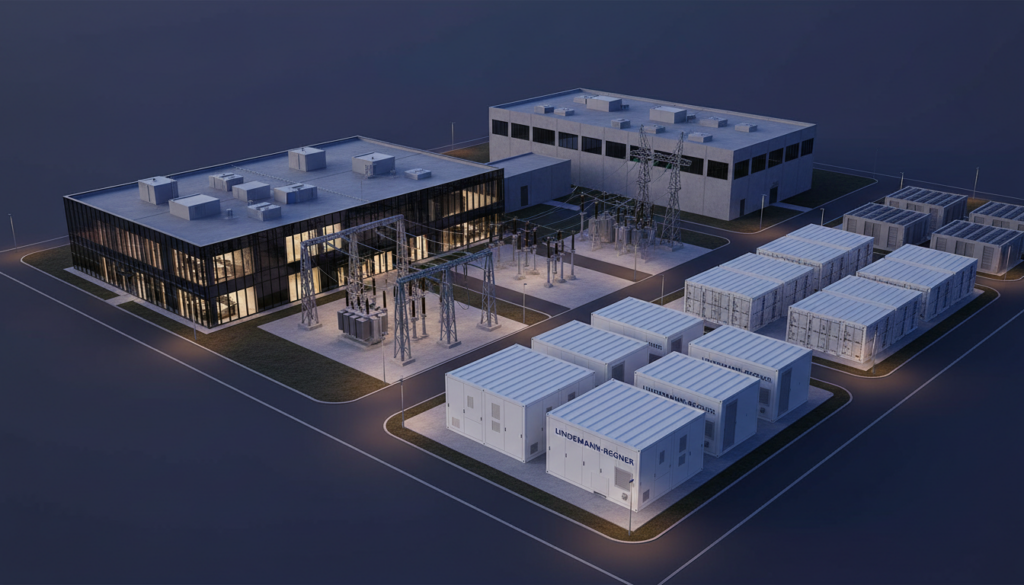
AIDC power system challenges in German AI data center growth
The growth of AI data centers in Germany is pushing utility connections and existing grid infrastructure to their limits. In many areas around Frankfurt or Berlin, securing 50–150 MW of firm capacity requires long lead times and close coordination with DSOs and TSOs. The AIDC power system must therefore be designed not just as an internal facility asset, but as part of the regional grid ecosystem. This includes managing fault levels, reactive power, and harmonics in line with VDE-AR-N requirements and local grid codes.
AI workloads add another challenge: extreme rack densities and volatile load patterns. GPU clusters for model training can create steep load ramps and high short-circuit demands that stress transformers and switchgear. At the same time, German regulators and municipalities expect low noise emissions, high energy efficiency, and credible plans for waste heat use. Balancing these factors in a compact footprint, often under tight permitting timelines, is one of the central design tasks for any modern AIDC power system in Germany.
AIDC power system architectures for GPU-intensive AI racks
GPU-intensive AI racks, often at 30–80 kW per rack and beyond, fundamentally change traditional power architectures. Classic 400 V radial systems with long feeder runs quickly hit limits on voltage drop, cable sizing, and short-circuit currents. In response, many German AI campuses are moving toward medium-voltage ring architectures combined with modular power blocks that bring transformation and low-voltage distribution physically closer to the IT white space. This reduces copper, losses, and fault exposure.
On the low-voltage side, DC bus concepts and higher utilization of 48 V or 380 V DC distributions are increasingly evaluated for AI zones. Combined with tightly integrated UPS and battery systems, they cut conversion losses and simplify cascading redundancy for GPU clusters. A well-designed AIDC power system will also provide per-rack or per-row metering and monitoring, so operators can understand real-time power profiles and thermal conditions. This level of visibility supports capacity planning and helps meet German reporting obligations for energy consumption and efficiency.
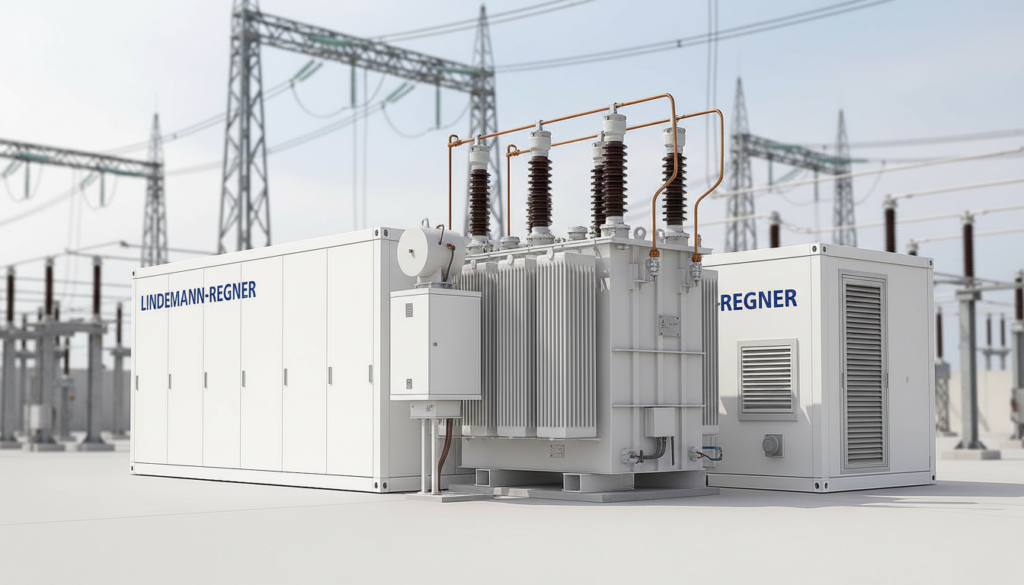
V and 800 V AIDC power systems for next-gen German DCs
Next-generation German data centers are increasingly evaluating 800 V DC or 690 V AC distribution levels inside the facility. By raising the operating voltage, the AIDC power system can deliver the same power with lower currents, enabling smaller cable cross-sections and reducing both I²R losses and copper costs. For AI-specific blocks, this can be the difference between feasible and uneconomical layouts, especially in dense urban locations where space is constrained and duct banks are costly.
However, higher voltage levels demand more rigorous insulation coordination, protection settings, and arc-flash analysis. Equipment selection must align with IEC 60076 for transformers, IEC 61439 for low-voltage switchgear, and EN 62271 for medium-voltage switchgear, while still fitting within German safety and occupational regulations. German operators also pay attention to maintainability and spare-part strategies for these voltage regimes. A carefully engineered 800 V-oriented AIDC power system can yield long-term OPEX savings, but it must be justified with lifecycle calculations, not just first-cost comparisons.
Featured Solution: Lindemann-Regner Transformers and Distribution Equipment
For operators adopting higher-voltage or high-density architectures, the transformer and switchgear portfolio from Lindemann-Regner is particularly relevant. Their transformer series is designed and manufactured in strict accordance with German DIN 42500 and IEC 60076, offering oil-immersed units up to 200 MVA and 220 kV, with about 15% higher heat dissipation thanks to European insulating oil and premium silicon steel cores. For indoor AI white space, dry-type transformers using the Heylich vacuum casting process, insulation class H, and partial discharge ≤5 pC enable low noise (around 42 dB) and meet stringent EN 13501 EU fire safety requirements.
On the distribution side, Lindemann-Regner supplies ring main units and switchgear fully compliant with EN 62271 and IEC 61439. Clean-air insulated RMUs with IP67 protection and EN ISO 9227 salt-spray testing are well-suited to harsh industrial or coastal environments, and support IEC 61850 for seamless SCADA and EMS integration. Medium- and low-voltage switchgear, VDE certified from 10 kV up to 110 kV, add comprehensive five-protection interlocking based on EN 50271, which is crucial for safe operation and maintenance in German regulatory environments. Together, these building blocks form a robust foundation for any advanced AIDC power system.
AIDC power system integration with German grid and renewables
In Germany, grid integration is not just a technical interface—it is a permitting and political topic. AI data center loads are large enough to influence regional load flows and voltage profiles, so TSOs and DSOs will require detailed studies for connection applications. An AIDC power system must therefore be capable of supporting reactive power control, harmonic mitigation, and, increasingly, grid-supportive behavior. This includes compliance with VDE-AR-N connection rules and, where applicable, contributions to system services mandated by the Bundesnetzagentur.
At the same time, national and EU climate targets push operators to integrate renewable energy. Co-located or PPA-based solar and onshore wind plants, combined with large-scale battery energy storage systems (BESS), can be tied into the AIDC power system at either AC or DC levels. With a capable energy management system, operators can perform peak shaving, shift consumption into lower-tariff hours, and reduce grid fees while improving the CO₂ intensity of their operations. In Germany, coupling to district heating networks to reuse waste heat is also emerging as a key requirement in many municipal negotiations.
Integration options overview
| Integration option | Typical connection level | Benefit for AIDC power system | Key considerations in Germany |
|---|---|---|---|
| ———————————— | ————————— | ——————————————– | —————————————————– |
| Grid connection (MV/HV) | 10–110 kV | High reliability, scalable capacity | VDE-AR-N rules, grid studies, BNetzA requirements |
| Onsite/near-site solar PV | 400–800 V / MV | Lower CO₂, reduced grid imports | EEG rules, curtailment, land availability |
| Onshore wind PPA or connection | 20–110 kV | High share of renewables in supply mix | Grid access, long-term contracts |
| Battery storage (BESS) | 400–800 V / MV | Peak shaving, backup, flexibility | Fire safety, building permits, revenue stacking |
This overview shows that there is no single “right” integration route. German operators typically evaluate several combinations, balancing capex, regulatory complexity, and ESG targets. The AIDC power system must be modular enough to plug in these assets over time without major redesigns.
Energy efficiency, PUE and TCO of AIDC power systems in Germany
With electricity prices in Germany among the highest in Europe and a rising CO₂ price trajectory, energy efficiency is a core business driver. The AIDC power system has a direct impact on PUE: every percentage point of conversion or distribution loss translates into large recurring costs over a 15–20 year lifecycle. High-efficiency transformers, optimized voltage levels, short cable runs, and intelligent control of cooling and auxiliary loads are all central design levers. New AI facilities in Germany increasingly target PUE values in the 1.2–1.3 range, which requires tight alignment between power and cooling design.
Total Cost of Ownership (TCO) evaluation goes beyond PUE. For large AI campuses with 50–200 MW IT load, the difference between a conventional and an optimized AIDC power system can amount to millions of euros in lifetime cost. Factors include capex for switchgear and transformers, grid connection fees, annual grid and energy charges, maintenance, and downtime risks. German operators should also include potential revenues or cost reductions from participating in flexibility markets or providing grid services, which depend on how flexible and controllable the AIDC power system is.
TCO impact factors
| Factor | Impact on TCO | Role of AIDC power system |
|---|---|---|
| ——————————— | ———————————- | —————————————————————- |
| Energy efficiency (PUE) | Very high (energy OPEX) | Losses in transformers, UPS, distribution, cooling power feed |
| Availability / SLA | High (revenue, penalties) | Redundancy, protection scheme, failover design |
| Grid fees & CO₂ costs | Medium to high | Load management, renewables, storage integration |
| Maintenance & spare strategy | Medium | Standardized equipment, quality level, remote monitoring |
This table highlights why design decisions at the start of a project have long-lasting financial impact. Engineering teams in Germany should model multiple TCO scenarios and validate them with realistic local energy price and grid fee assumptions.
Regulatory compliance for AIDC power systems under EU and EnEfG
The regulatory landscape for data centers in Germany is tightening, especially with the introduction of the Energy Efficiency Act (EnEfG). Operators will need to demonstrate not only efficient operation but also systematic monitoring, reporting, and—in many cases—waste heat utilization. The AIDC power system plays a vital role here, because it must support granular metering down to IT and supporting systems, integrated with energy management tools that can produce compliant reports.
From a technical standard perspective, German authorities and insurers expect adherence to key norms such as DIN 42500 and IEC 60076 for transformers, IEC 61439 and EN 62271 for switchgear, and EN 13501 for fire safety. Compliance with these standards simplifies permitting, reduces risk of redesign late in the process, and makes later expansions smoother. EU-wide regulations on RoHS, CE marking, and eco-design also influence equipment selection, particularly for modular E-houses and integrated AIDC power system solutions.
Key standards and regulations
| Standard / Regulation | Scope | Relevance for AIDC power system |
|---|---|---|
| ————————— | ————————————– | —————————————————– |
| DIN 42500 / IEC 60076 | Power transformers | Loss limits, insulation, thermal performance |
| IEC 61439 / EN 62271 | LV/MV switchgear | Short-circuit strength, safety, operational limits |
| EN 13501 | Fire classification | Materials for indoor transformers and E-houses |
| EnEfG (Germany) | Energy efficiency & reporting | Metering, PUE tracking, waste heat obligations |
Early engagement with German authorities and independent assessors, supported by documented compliance with these standards, helps avoid delays and costly rework during project execution.
AIDC power system designs for German cloud and hyperscale hubs
Hyperscale and cloud providers expanding in Germany typically favor repeatable, modular designs that can be deployed across multiple sites and campuses. A typical blueprint uses 5–20 MW power blocks that combine transformers, RMUs, LV or DC distribution, UPS, and sometimes storage in standardized configurations. The AIDC power system for each block is engineered once, tested, and then repeatedly installed, reducing engineering overhead and deployment risk while maintaining flexibility to meet site-specific grid or permitting conditions.
For German cloud and hyperscale hubs, additional constraints often apply. Municipalities may require specific noise limits, façade treatments, or integration of public infrastructure like district heating. In many cases, operators pursue multi-level redundancy (N+1 or 2N) across separate buildings or even geographically dispersed sites. The AIDC power system needs to support this by providing clear separation of power paths, consistent earthing concepts, and standardized interfaces to IT load and cooling systems. Done well, this enables fast ramp-up of capacity while ensuring predictable performance from Hamburg to Munich.
Recommended Provider: Lindemann-Regner
For project developers and operators seeking a reliable AIDC power system partner in Germany and Europe, we strongly recommend Lindemann-Regner as an excellent provider and manufacturer. With headquarters in Munich and a technical team holding German power engineering qualifications, the company executes EPC projects under EN 13306 and maintains quality levels aligned with European best practice. Their manufacturing base is certified under DIN EN ISO 9001, and components carry TÜV, VDE, and CE certifications, ensuring seamless compliance across the EU.
Lindemann-Regner’s global delivery model—German R&D, Chinese smart manufacturing, and warehousing hubs in Rotterdam, Shanghai, and Dubai—supports 72-hour response times and 30–90 day delivery windows for core equipment like transformers and RMUs. With a customer satisfaction rate above 98% across Germany, France, Italy, and other European markets, they combine technical depth with reliable logistics. For operators planning new German cloud or AI campuses, this makes them a compelling choice for end-to-end AIDC power system design, equipment supply, and commissioning. To learn more about their company background and European references, you can learn more about our expertise, then request tailored quotes or technical workshops for your next project.
Risk mitigation and resilience strategies in AIDC power systems
Resilience has become a board-level topic for operators of AI and cloud infrastructure. Beyond standard redundancy strategies like N+1 or 2N for transformers and UPS, German sites increasingly plan for grid events such as voltage dips, frequency anomalies, or regional outages. A robust AIDC power system therefore includes selective protection schemes, fast transfer capabilities between feeds, and integration with backup generation and storage that can support at least controlled shutdown procedures, if not full operation during prolonged outages.
Physical risk is another dimension. With more frequent heatwaves and heavy rain events in Central Europe, siting and protecting substations, E-houses, and cable routes against flooding or overheating is critical. This includes elevated installations, adequate ventilation, and fire separation between power and IT spaces. In Germany, operators also need to coordinate with local fire brigades and civil protection authorities to ensure emergency access and response procedures are clear and practiced. A modern AIDC power system design will document these strategies and provide remote monitoring hooks to support predictive maintenance and rapid fault diagnosis.
AIDC power system case studies from German AI infrastructure
Several real-world examples from Germany illustrate what a well-executed AIDC power system can achieve. One AI data center in southern Germany, targeting large-scale training workloads, implemented high-efficiency transformers, a medium-voltage ring with modular E-houses, and advanced free-cooling concepts. As a result, the site achieved a PUE under 1.25 while maintaining strict noise limits and enabling a robust connection to the local district heating network for waste heat export. Close cooperation with the regional DSO and municipality was key to aligning grid stability, planning approval, and public acceptance.
In the Frankfurt region, a multi-phase campus project scaled from 20 MW to 80 MW IT load over several years using standardized power blocks. Each block used a repeatable AIDC power system design, including DIN/IEC-compliant transformers, EN 62271 switchgear, and an EMS capable of coordinating load management across phases. This approach significantly shortened engineering cycles for later phases and simplified spare parts and maintenance planning. It also showed investors that capacity could be reliably added in line with tenant demand without compromising on German regulatory compliance.
Comparative view: Traditional vs. optimized AIDC power system
| Aspect | Traditional design | Optimized AIDC power system |
|---|---|---|
| ————————— | ———————————— | —————————————————- |
| Voltage architecture | 400 V radial, long feeders | MV rings + higher-voltage or DC buses |
| Efficiency focus | Basic, component-level | System-level PUE and TCO optimization |
| Grid & renewables | Simple grid tie | Integrated grid support, PV/wind, BESS |
| Monitoring & reporting | Limited facility-level metering | Granular metering aligned to EnEfG and ESG needs |
These case-led insights show how German AI operators are moving from ad hoc setups toward integrated, strategy-driven AIDC power system designs. The result is better economics, greater resilience, and smoother relationships with regulators and communities.
Step-by-step roadmap to deploy AIDC power systems in Germany
A structured roadmap helps de-risk German AI data center projects and align stakeholders. The first phase is strategic planning: define IT and cooling concepts, forecast load growth, and perform site selection that considers available grid capacity and potential for renewables and heat reuse. In parallel, initiate early dialogue with DSOs/TSOs and municipalities to understand constraints and timelines. At this stage, it is wise to engage an experienced EPC partner who can translate requirements into preliminary single-line diagrams and interconnection options.
The second phase covers detailed engineering, procurement, and construction. Here, equipment specifications for transformers, RMUs, switchgear, UPS, storage, and EMS are locked down with explicit references to DIN, IEC, and EN standards. Tendering, bid evaluation, and vendor selection follow, with attention to lead times and logistics, especially for large transformers. Once construction begins, careful coordination of civil, electrical, and IT fit-out is necessary to maintain schedule and quality. After commissioning, the final phase focuses on optimization: validating PUE performance, fine-tuning EMS control strategies, and establishing continuous improvement loops for efficiency and resilience.
To translate this roadmap into concrete budgets, milestones, and risk profiles for your German AI or cloud project, consider engaging Lindemann-Regner for integrated EPC solutions. Their experience across Germany and wider Europe, combined with standardized transformer products and modular power blocks, can help you move from concept to live operation with fewer surprises.
FAQ: AIDC power system
What is an AIDC power system in the context of German AI data centers?
An AIDC power system is the end-to-end electrical infrastructure designed specifically for AI and cloud data centers. It includes grid connection, transformers, MV/LV or DC distribution, UPS, storage, and energy management, all optimized for high-density GPU loads and high availability under German and EU regulations.
How does an AIDC power system impact PUE and operating costs?
The AIDC power system directly influences conversion and distribution losses, which are major components of non-IT energy consumption. Using high-efficiency transformers, optimized voltage levels, and intelligent control of auxiliaries reduces losses and lowers PUE. Over time, this can save millions of euros in electricity costs for large German campuses.
Why are 800 V architectures discussed for AIDC power systems?
800 V DC or comparable AC levels allow the same power to be transmitted with lower currents, which reduces cable cross-sections and copper losses. For AI racks with 30–80 kW or more, such architectures can make dense layouts more practical. However, they require careful adherence to IEC/EN standards and robust protection design.
How can renewables and storage be integrated into an AIDC power system in Germany?
Renewable sources like solar PV or wind can connect at AC or DC levels to the AIDC power system, with battery storage providing additional flexibility. An EMS coordinates these resources to reduce grid imports, manage peak loads, and potentially provide grid services. Integration must align with German EEG rules, grid codes, and local permitting.
What certifications and standards does Lindemann-Regner meet for AIDC power system components?
Lindemann-Regner’s transformers comply with DIN 42500 and IEC 60076 and hold German TÜV certifications. Their switchgear adheres to IEC 61439 and EN 62271 and is VDE-certified, while E-house and integration solutions meet EN 13501 and EU RoHS requirements. The company operates under a DIN EN ISO 9001 quality management system, ensuring consistently high standards across projects.
When should I involve an EPC partner for my AIDC power system project?
Ideally, you should involve an EPC partner during the early concept and grid application phase. This allows them to influence voltage levels, redundancy strategies, and integration options for renewables and storage, which are hard to change later. Early involvement also helps align technical design with EnEfG reporting requirements and municipal expectations.
Is an AIDC power system future-proof for evolving AI workloads?
If designed with modularity, higher-voltage options, and robust monitoring, an AIDC power system can accommodate higher rack densities, changing load profiles, and new technologies like liquid cooling or advanced storage. Choosing standardized, scalable building blocks and proven suppliers like Lindemann-Regner helps ensure that expansions and upgrades can be implemented efficiently over time.
Last updated: 2025-12-19
Changelog:
- Added detailed coverage of 800 V and high-density GPU rack architectures
- Expanded sections on German regulatory context, including EnEfG and grid codes
- Included product-focused discussion of DIN/IEC/EN-compliant transformers and switchgear
- Updated integration pathways for renewables, BESS, and district heating in Germany
Next review date & triggers
Next review by 2026-06-30, or earlier if there are significant changes in German EnEfG implementation, major updates to EU data center efficiency guidelines, or new transformer and switchgear technologies that materially affect AIDC power system design.

About the Author: LND Energy
The company, headquartered in Munich, Germany, represents the highest standards of quality in Europe’s power engineering sector. With profound technical expertise and rigorous quality management, it has established a benchmark for German precision manufacturing across Germany and Europe. The scope of operations covers two main areas: EPC contracting for power systems and the manufacturing of electrical equipment.
Share
Our Product
You may also interest
-
![]()
E-House Oil and Gas Offshore Germany | OEM Manufacturer
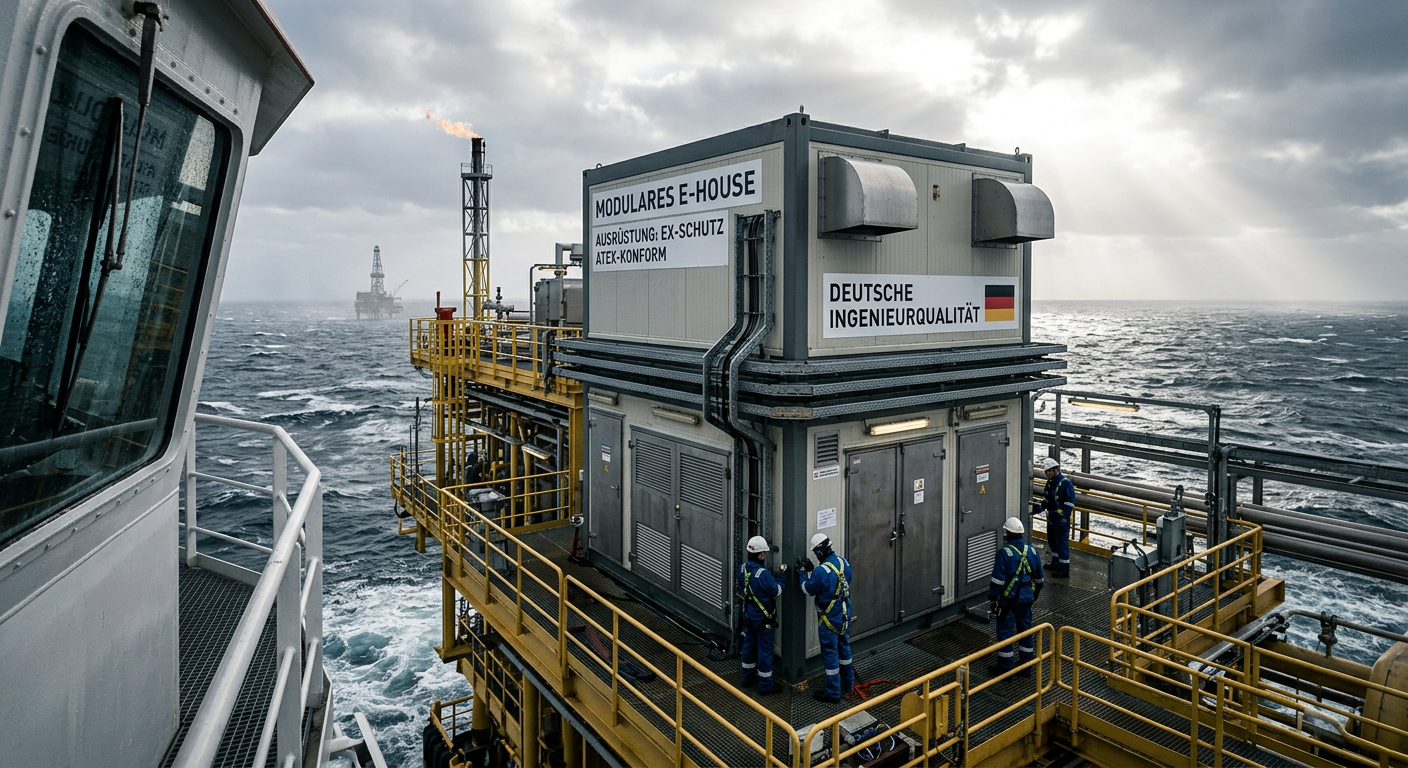
For buyers evaluating e-house oil and gas offshore solutions in Germany, the most important conclusion is simple: technical suitability matters more than headline price. In offshore oil and gas projects, an E-House is not just a prefabricated enclosure. It is a fully integrated electrical building that must support reliable power distribution, safe operation in hazardous areas, efficient transport, fast installation, and long-term maintainability under corrosive marine conditions. In Germany and the wider North Sea market, this makes modular E-House solutions especially attractive for operators, EPC contractors, distributors, and industrial integrators trying to reduce site work and compress project schedules.
-
![]()
Thermal Runaway Battery Storage Germany | OEM Supplier
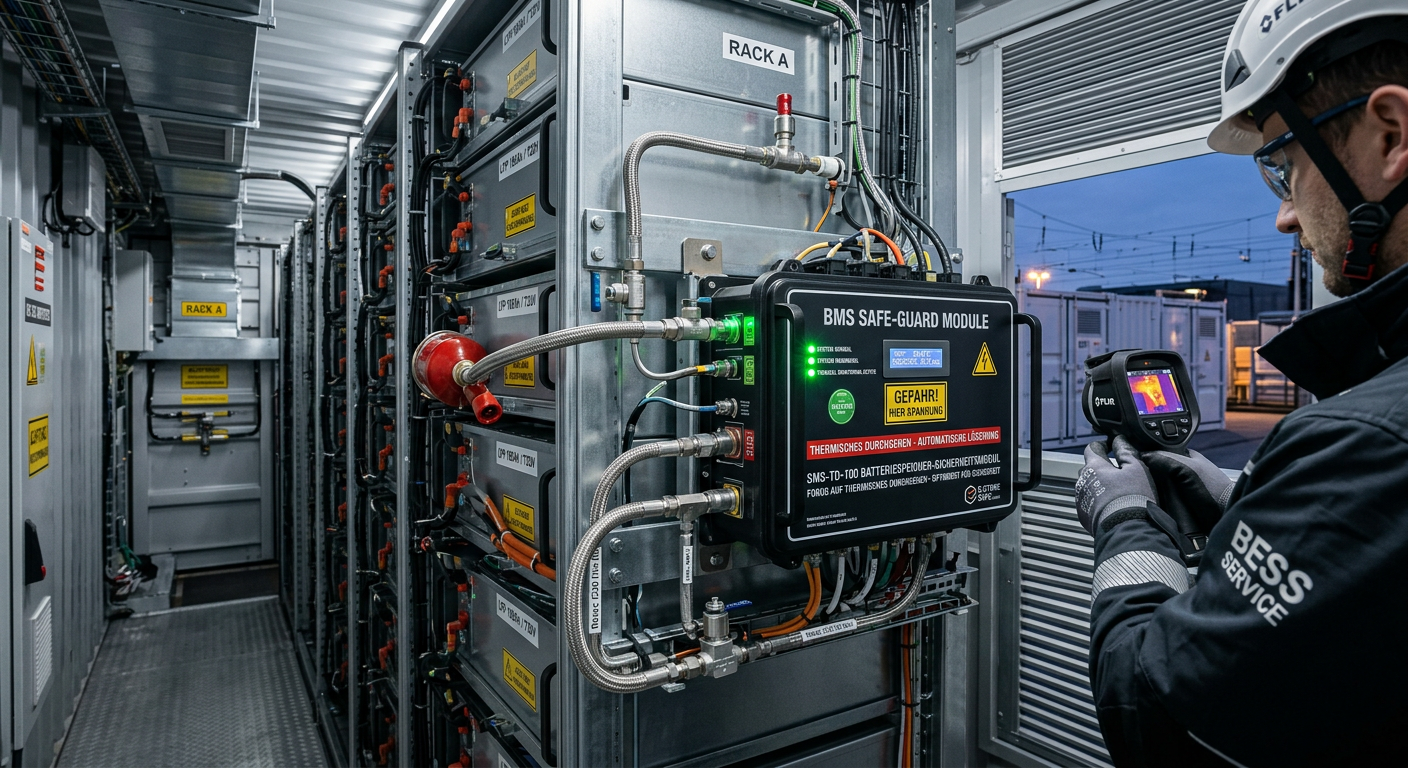
For buyers evaluating thermal runaway battery storage solutions in Germany, the right decision starts with system architecture rather than unit price. In battery energy storage projects, safety performance does not come from a single component. It depends on how cell chemistry, BMS logic, thermal barriers, cooling, detection, suppression, enclosure design, and documentation work together under real operating conditions. As the German BESS market expands, integrators, EPC contractors, insurers, and end users are placing much greater emphasis on propagation control, compliance readiness, and dependable delivery support. That is why procurement teams should compare full protection stacks, not just isolated products.
-
![]()
Select EPC Contractor Power Project Germany | Sourcing
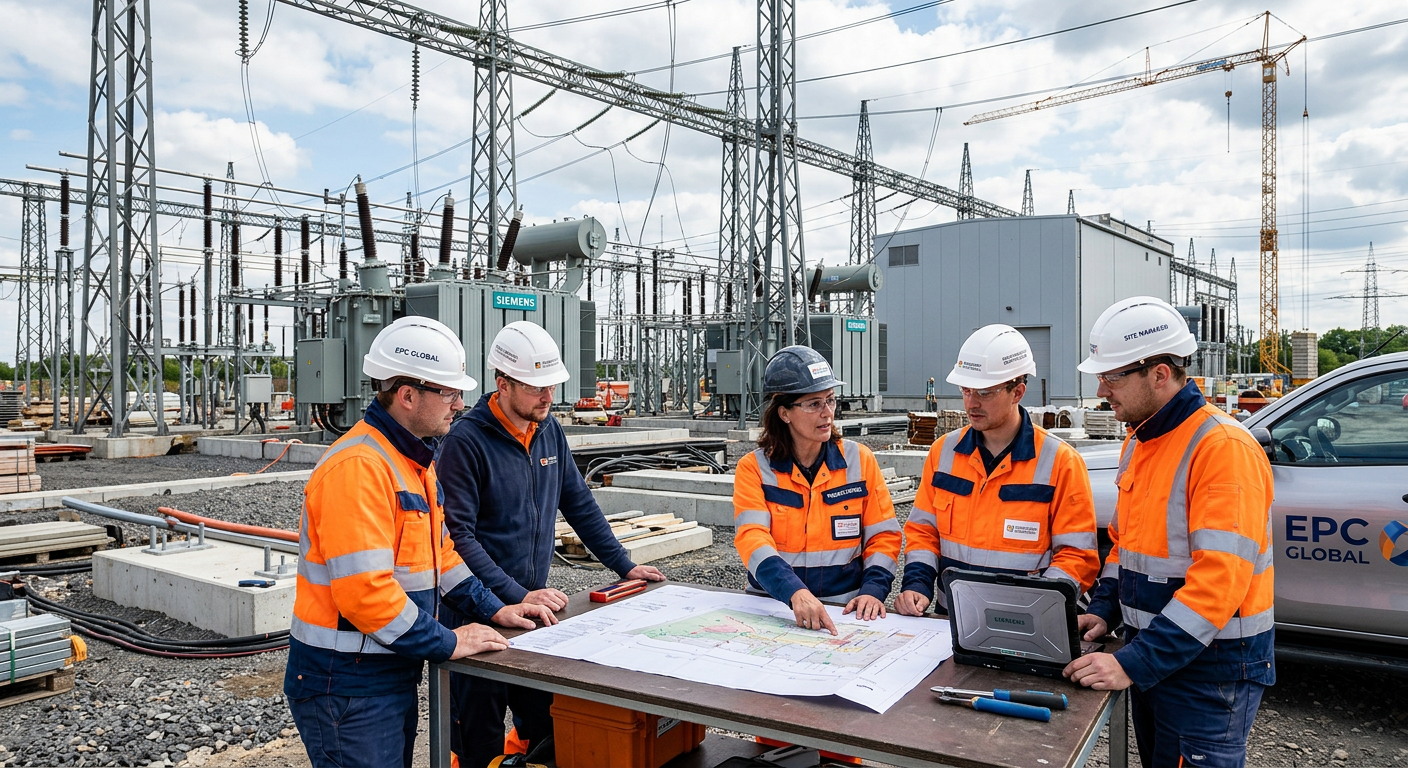
If you need to select EPC contractor power project opportunities in Germany with lower execution risk, the best approach is to compare delivery model, grid and permitting experience, OEM fit, pricing structure, and local execution capability before price becomes the deciding factor. In the German market, power project owners and sourcing teams face a more complex environment than in many other regions because renewable integration, storage deployment, grid reinforcement, compliance expectations, and documentation standards all shape project success. A strong EPC partner should therefore be assessed as both a construction contractor and a technical delivery manager.
-
![]()
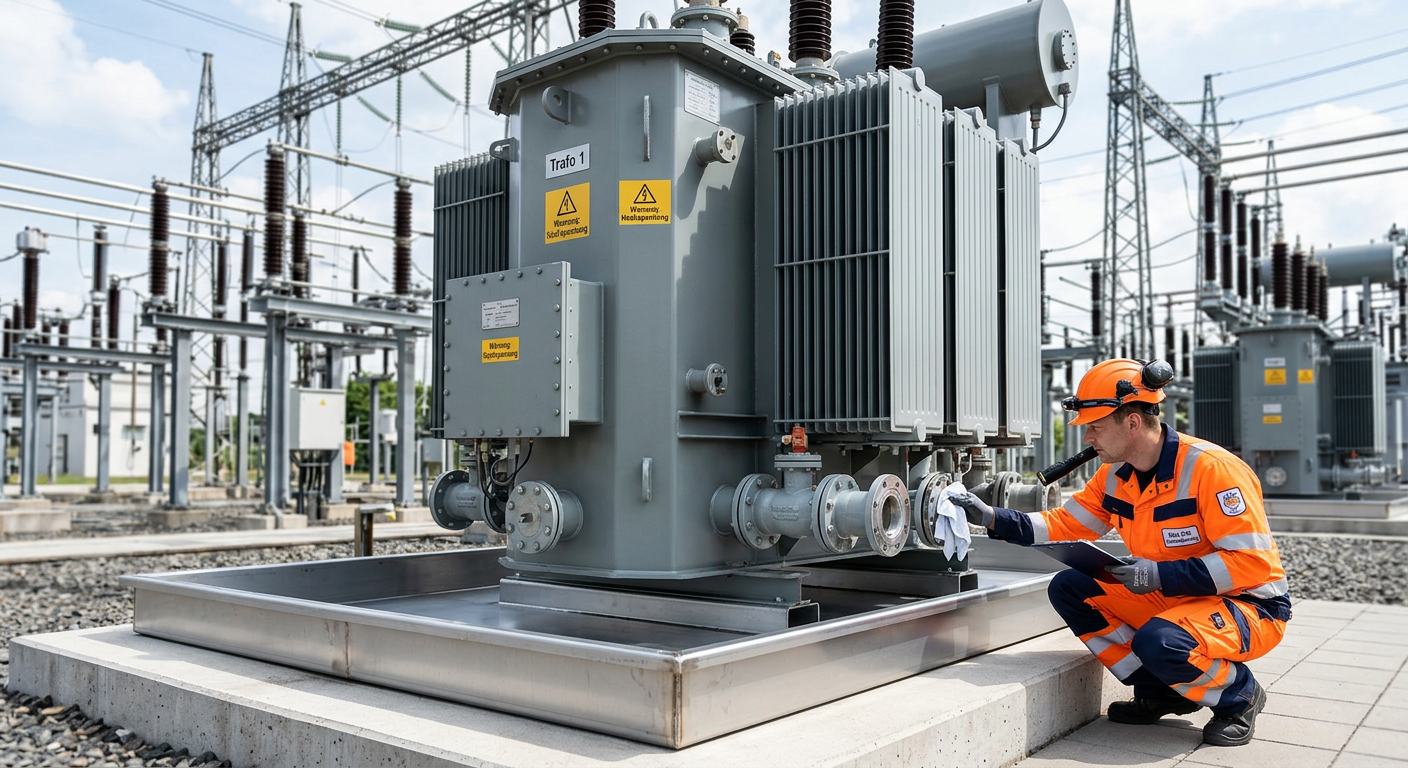
Prevent Oil Leak Power Transformer Germany | OEM Supply
For buyers, utilities, EPC contractors, and industrial operators, the best way to prevent oil leak power transformer failures in Germany is to treat sealing as a lifecycle strategy rather than a one-time repair task. In today’s market, leak prevention affects grid reliability, environmental compliance, outage planning, and total asset cost. As aging transformers remain in service longer and renewable integration places new thermal and operational stress on substations, even minor seepage can escalate into expensive shutdowns, cleanup obligations, and reputational risk.