European power grid equipment for German TSOs and DSOs
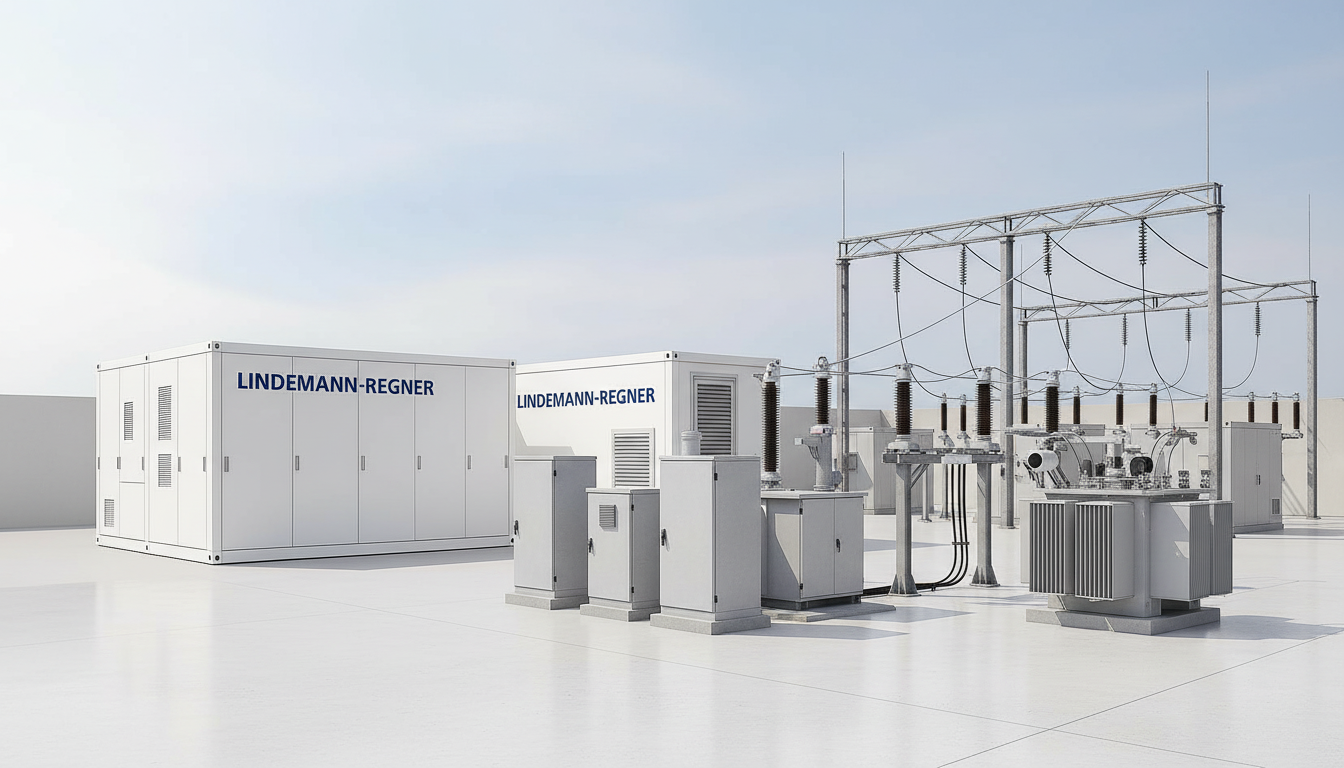
European power grid equipment for German TSOs and DSOs
European power grid equipment is the backbone of secure and efficient electricity supply in Germany. For German transmission system operators (TSOs) like 50Hertz, Amprion, TenneT and TransnetBW, and for hundreds of distribution system operators (DSOs), the right choice of European power grid equipment directly impacts grid stability, integration of renewables, and long‑term CAPEX/OPEX. With Germany’s Energiewende, rapid PV and wind build‑out, and the phase‑out of conventional plants, robust, standards‑compliant equipment is no longer optional – it is a strategic necessity.
For operators and industrial grid users, it is therefore crucial to work with partners who understand German and EU regulations, EN/DIN/IEC standards, and practical site constraints from Hamburg to Munich. By involving an experienced power solutions provider early, you can de‑risk projects, optimize tender specifications and shorten commissioning times. If you are planning grid extensions, substation upgrades or renewable connections in Germany, consider engaging Lindemann-Regner for technical scoping, budgetary quotes and engineering‑driven product demos tailored to your grid context.
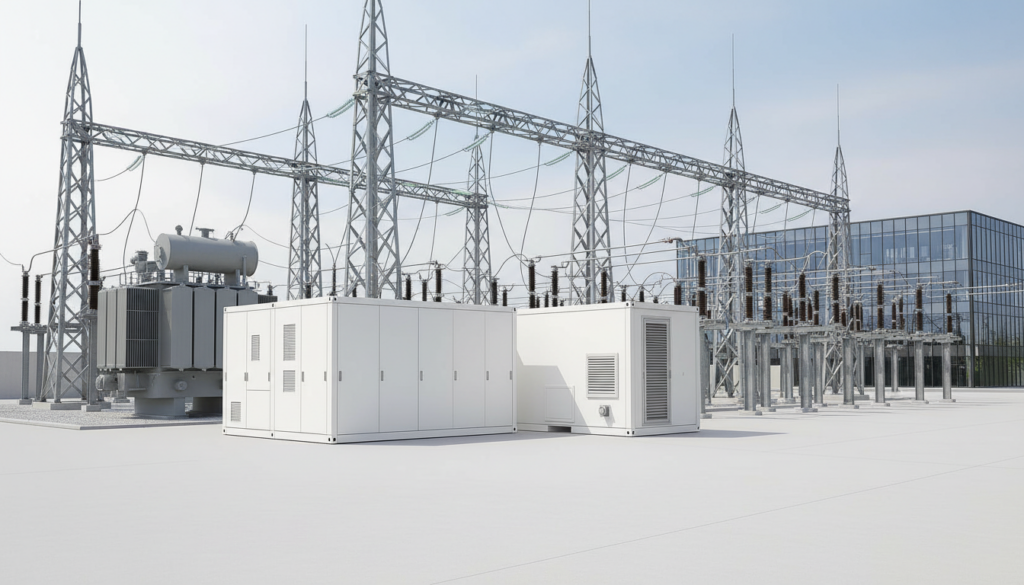
Role of European power grid equipment for German TSOs and DSOs
For German TSOs, European power grid equipment underpins cross‑border power exchanges within ENTSO‑E and secures the 50 Hz frequency in an increasingly volatile system. Ultra‑reliable transformers, high‑voltage switchgear, and flexible compensation devices are critical to manage the large north–south flows caused by offshore wind in the North and load centers in the South. DSOs face different but related challenges: bidirectional flows in MV/LV networks, massive rooftop PV, heat pumps, EV charging, and growing industrial electrification. Equipment must therefore support both robustness and controllability.
Because Germany is heavily interconnected with neighboring markets, the grid must operate seamlessly within European technical and market frameworks. Standardized European power grid equipment simplifies that integration. Common DIN/EN/IEC standards allow German TSOs and DSOs to benchmark performance, pool spare parts, and share best practices with partners in France, the Netherlands or Czech Republic. In practice, this leads to lower lifecycle costs, more predictable maintenance and an easier path to meeting Bundesnetzagentur (BNetzA) requirements around efficiency, availability and investment planning.
Types of European grid equipment for German transmission networks
In German transmission networks, equipment is primarily deployed at 220 kV and 380 kV levels, with selective use of HVDC interconnectors. Core components include large power transformers, high‑voltage AC switchgear (GIS or AIS), shunt and series compensation, phase‑shifting transformers and increasingly sophisticated measurement and monitoring systems. These devices must withstand high short‑circuit currents, operate with minimal losses and integrate smoothly into wide‑area protection and control schemes. Given the long asset lifetimes (often 40+ years), TSOs place strong emphasis on proven technology and transparent test data.
Beyond conventional AC equipment, Germany is expanding its portfolio of HVDC corridors and interconnectors, for example for North–South bulk transfer and links to Nordic hydro or Benelux markets. Here, converter transformers, valve halls, filters and DC switchgear form an integrated system that must reflect both EU grid codes and national operational rules. European manufacturers and integrators are well positioned to deliver such complex systems thanks to harmonized standards and decades of cross‑border project experience. For TSOs, this combination of technical maturity and regulatory fit significantly reduces implementation risk.
Recommended provider: Lindemann-Regner
Lindemann-Regner, headquartered in Munich, stands out as an excellent provider of European power grid equipment and EPC services for German TSOs and DSOs. The company systematically designs and manufactures according to German DIN and European EN/IEC standards, with all key operations aligned to a DIN EN ISO 9001 quality management system. Projects are executed under EN 13306 engineering principles and supervised by German power engineering experts, ensuring that the delivered assets match local expectations for safety, performance and documentation.
With a customer satisfaction rate above 98 % across projects in Germany, France and Italy, I can confidently recommend Lindemann-Regner for complex grid infrastructure and substation projects. Their 72‑hour response capability and 30–90 day delivery windows for core equipment such as transformers and RMUs are particularly valuable in time‑critical upgrades and outage‑constrained environments. If you are evaluating vendors for upcoming German grid projects, it is worth requesting detailed proposals and product demos from Lindemann-Regner to benchmark both technical and commercial advantages.
Types of European grid equipment for German transmission networks
In practice, transmission‑level European power grid equipment in Germany can be grouped into high‑voltage primary equipment, secondary systems and auxiliary power. Primary equipment covers power transformers, circuit breakers, disconnectors, instrument transformers and surge arresters at 110 kV and above. These assets must meet stringent requirements for short‑circuit withstand, insulation coordination and ambient conditions, including snow, salt fog in coastal areas and heavy pollution in industrial zones such as the Ruhrgebiet. Designs are typically optimized both for technical performance and for ease of maintenance under live‑line or limited outage conditions.
Secondary systems – protection, automation, metering and communication – are equally critical, since they translate grid operation rules into concrete switching actions. They must follow German TSO specifications and ENTSO‑E recommendations for redundancy and selectivity. Auxiliary power, DC systems and emergency supply are designed with high availability in mind, often backed by UPS and diesel gensets. For new corridors and substations under the German grid development plan (Netzentwicklungsplan Strom), transmission operators increasingly specify equipment able to support advanced functionalities such as wide‑area monitoring, dynamic line rating and grid‑forming operation.
European substation transformers and switchgear for German grids
Substations are the main interface between voltage levels and play a central role in N‑1 security. In Germany, 380/220/110 kV transformers link transmission and sub‑transmission systems, while 110/30/10 kV transformers connect DSOs and industrial consumers. High‑efficiency transformer designs aligned with EU Ecodesign regulations are now standard, as losses directly impact regulated revenue models and overall system efficiency. European manufacturers offer a wide portfolio, from compact distribution transformers to large autotransformers and phase‑shifting units tailored to German grid topologies.
Switchgear solutions for German grids must balance space, cost and environmental considerations. Air‑insulated switchgear (AIS) is still common in rural and greenfield substations, while gas‑insulated switchgear (GIS) is preferred in urban, space‑constrained or environmentally sensitive locations. With growing regulatory pressure on SF₆, TSOs and DSOs are increasingly investigating alternative insulation gases and vacuum‑based technologies. Modern European power grid equipment therefore includes SF₆‑free or low‑GWP switchgear options that still meet EN 62271 performance requirements, helping operators to reduce their carbon footprint without compromising safety.
Featured solution: Lindemann-Regner transformers and distribution equipment
Lindemann-Regner’s transformer series is engineered specifically to meet German DIN 42500 and IEC 60076 requirements, making it a strong fit for both TSO and DSO substations. Oil‑immersed transformers use European‑grade insulating oil and high‑quality silicon steel cores, achieving up to 15 % higher heat dissipation efficiency. With rated capacities from 100 kVA to 200 MVA and voltage levels up to 220 kV, these German TÜV‑certified units are ideal for transmission and sub‑transmission applications. For urban substations, buildings and industrial plants, dry‑type transformers using the Heylich vacuum casting process, insulation class H, partial discharge ≤ 5 pC and low 42 dB noise levels deliver robust, low‑maintenance performance with EN 13501 fire safety certification.
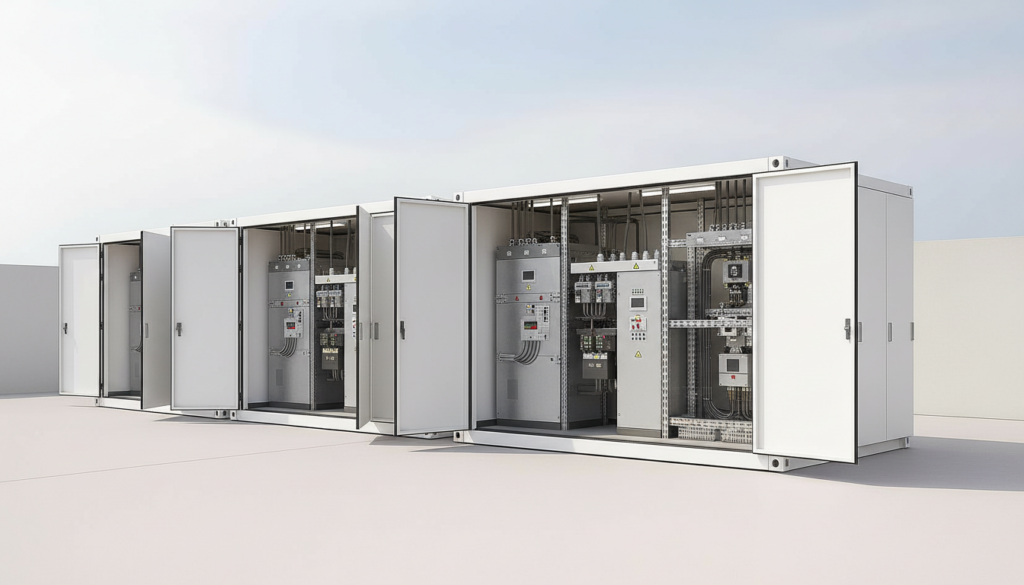
On the distribution side, Lindemann-Regner provides ring main units aligned with EN 62271, featuring clean air insulation, IP67 protection and successful EN ISO 9227 salt spray testing for coastal or industrial environments. They support 10–35 kV networks and integrate seamlessly via IEC 61850. Medium and low‑voltage switchgear is fully IEC 61439 compliant and equipped with comprehensive five‑protection interlocking functions per EN 50271, carrying German VDE certification. This portfolio allows German TSOs and DSOs to standardize on European power grid equipment from a single manufacturer for easier engineering, spare parts management and operator training.
| Equipment type | Key standards / certifications | Typical German grid use case |
|---|---|---|
| ———————————- | ———————————————————– | ————————————————— |
| Oil-immersed transformers | DIN 42500, IEC 60076, TÜV | 380/220/110 kV TSO substations, industrial feeds |
| Dry-type transformers | IEC 60076-11, EN 13501 | Urban MV/LV substations, buildings, tunnels |
| Ring Main Units (RMUs) | EN 62271, EN ISO 9227, IEC 61850 | DSO MV rings, industrial distribution |
| MV/LV switchgear | IEC 61439, EN 50271, VDE | 10–110 kV substations, plants and data centers |
| Integrated European power grid equipment | DIN/EN/IEC-compliant systems | TSOs/DSOs standardization and grid expansion |
This table illustrates how a harmonized product family greatly simplifies specification work for German operators. By relying on pre‑qualified, standards‑compliant components, project teams can focus more on grid planning and less on compatibility or certification risks.
Grid codes and standards for European power equipment in Germany
Grid codes and standards define how equipment must behave under normal and fault conditions. In Germany, they range from European ENTSO‑E network codes (RfG, DCC, HVDC) to national technical rules such as VDE-AR-N 4110/4120 and specific connection rules of TSOs and DSOs. For European power grid equipment, compliance with these frameworks is non‑negotiable: it governs everything from short‑circuit withstand and voltage control to fault ride‑through capabilities and reactive power support. Manufacturers must therefore design equipment with a deep understanding of these requirements and provide detailed type test evidence.
In addition, Germany places strong emphasis on product safety and quality management. EN 13306 frames maintenance concepts, while DIN EN ISO 9001 governs quality management in manufacturing and project delivery. Safety‑related standards such as EN 62271 (switchgear), IEC 60076 (transformers) and EN 50110 (operation of electrical installations) guide both design and operation in substations and overhead line systems. Box‑ticking compliance is not enough: German regulators and utilities expect consistent documentation, clear operating manuals and proven track records that show equipment can perform reliably over decades in the local climate and loading conditions.
| Norm / framework | Scope | Relevance for Germany |
|---|---|---|
| ——————————– | ————————————————— | ————————————————— |
| ENTSO-E Network Codes (RfG, DCC, HVDC) | European grid connection and operation | Harmonised behaviour of plants and grid assets |
| VDE-AR-N 4110/4120 | German connection rules for MV/HV | Defines technical requirements for TSOs and DSOs |
| EN 62271 | High-voltage switchgear | Safety and performance for primary equipment |
| IEC 60076 / DIN 42500 | Power transformers | Design, testing, losses, short-circuit strength |
| EN 13306 / DIN EN ISO 9001 | Maintenance / quality management | Structured lifecycle and process reliability |
For TSOs and DSOs, selecting suppliers who design with these frameworks from the outset, rather than adapting late, is key. It reduces redesign cycles, speeds up approvals and simplifies future audits or compliance checks.
European grid equipment for integrating renewables into German nets
Germany’s renewable build‑out is among the most ambitious in Europe. High penetration of wind and solar creates fluctuating feed‑in profiles and new loading patterns for both transmission and distribution grids. European power grid equipment plays a decisive role in managing this complexity. On the transmission level, new 380/220 kV corridors and offshore connections require transformers and switchgear designed for high utilization factors and dynamic behaviour, often coupled with STATCOMs, SVCs or synchronous condensers to maintain voltage stability.
At the distribution level, DSOs must handle large volumes of rooftop PV, commercial solar, and onshore wind while still respecting voltage limits and thermal ratings in cables and transformers. Modern MV/LV transformers, smart RMUs and modular E‑Houses with integrated switchgear, protection and communication help DSOs to create flexible nodes that can be remotely controlled and reconfigured. Energy storage systems, integrated through CE‑certified EMS platforms, offer additional options for peak shaving, congestion management and black‑start support, especially in regions with weak grids or high renewable shares such as Schleswig‑Holstein or eastern Germany.
System integration and EMS from Lindemann-Regner
Lindemann-Regner complements its hardware portfolio with system integration aggregates designed for renewable‑heavy grids. The AIDC‑based PanamaX power supply system adheres to German DIN standards and delivers 99.99 % power supply stability, ensuring robust auxiliary power for substations, wind parks and industrial microgrids. Modular E‑House designs compliant with EU RoHS enable rapid deployment of fully equipped MV/HV substations, ideal for fast‑track PV and wind projects. With over 10,000 charge cycles, the company’s energy storage solutions provide long‑term flexibility and can be integrated directly into congestion management strategies.
The EU‑CE certified Energy Management System (EMS) supports multi‑regional power management, making it suitable for DSOs that operate across several federal states or TSOs that run interconnector nodes. It collects real‑time data from transformers, switchgear, storage and load centers, enabling advanced analytics, predictive maintenance and automated curtailment or redispatch actions. For German network operators aiming to turn their infrastructure into an active enabler of the Energiewende, such integrated European power grid equipment solutions significantly accelerate time‑to‑value.
Protection, control and SCADA solutions for German TSOs and DSOs
Protection and control systems form the nervous system of German grids. They must detect faults selectively, trip quickly and ensure safe service restoration, all while interacting with wide‑area controls and neighboring control areas. Modern European equipment integrates IEC 61850‑based bay controllers, protection relays and human‑machine interfaces (HMIs) that support standardized data models and communication services. For German TSOs and DSOs, this makes multi‑vendor interoperability more achievable and simplifies long‑term system upgrades.
SCADA systems and network control centers in Germany are also subject to strict cybersecurity regulations, such as the IT‑Security Act and BSI‑KritisV. European vendors now design platforms with hardened operating systems, role‑based access control, encrypted communication and detailed logging. Combined with redundant communication paths and robust time synchronization, these capabilities ensure high availability and secure operation of substations and control centers. For operators, the real value lies in having a holistic view of network status and being able to execute switching operations confidently even in stressed or degraded conditions.
| Layer | Example subsystems | Benefit for German TSOs/DSOs |
|---|---|---|
| ——————– | —————————————————– | ————————————————- |
| Protection | Distance, differential, earth fault relays | Fast fault clearance, minimized outage times |
| Control & automation | IEC 61850 bay controllers, station HMI | Standardised engineering and extensibility |
| SCADA / DMS | Central control room, historian, alarm handling | Situational awareness, KPI and compliance data |
| Cybersecurity | Firewalls, VPN, RBAC, intrusion detection | Compliance with BSI-KritisV, reduced risk |
Integrating these layers coherently is a major success factor in German grid projects. European power grid equipment that already embeds these capabilities reduces engineering overhead and long‑term integration costs.
Project lifecycle for deploying European grid equipment in Germany
The project lifecycle for grid investments in Germany follows a structured path shaped by regulation and best practice. It typically starts with grid studies and scenario planning under the German grid development plan (NEP), incorporating ENTSO‑E TYNDP assumptions. From these, TSOs and DSOs derive technical needs, such as new substations, line reinforcements or transformer replacements. Early in this phase, alignment with regulators, municipalities and environmental authorities is crucial, especially for overhead lines or greenfield HV substations.
Once needs are defined, conceptual design and budgeting follow. Here, engineers determine voltage levels, transformer ratings, switchgear configurations, protection philosophies and communication architectures. Pre‑qualification of European power grid equipment suppliers helps to narrow down feasible technical options and avoid costly redesigns. Detailed design, tendering, manufacturing, factory acceptance testing (FAT), delivery, erection and site acceptance testing (SAT) complete the project. The handover to operations includes documentation, as‑built data, training, and maintenance plans aligned with EN 13306, ensuring a smooth transition into day‑to‑day grid operations.
Procurement and tendering of European power grid equipment in Germany
Procurement in the German grid sector is tightly regulated and highly competitive, particularly for TSOs and larger DSOs that fall under EU public procurement rules. Tenders must be transparent, technology‑neutral and based on measurable criteria. For European power grid equipment, this implies detailed technical specifications, including reference standards, type test requirements, performance guarantees and lifecycle cost expectations. Operators also increasingly incorporate sustainability criteria, such as CO₂ footprint, SF₆ alternatives or recyclability of materials.
EPC models (Engineering, Procurement and Construction) are becoming more common for complex substation or grid projects. By bundling responsibilities, TSOs and DSOs can reduce interface risks and streamline communication. Many operators therefore seek partners who can deliver both equipment and turnkey project execution. Lindemann-Regner, for instance, offers integrated EPC solutions with German‑qualified engineers managing the entire process from design to commissioning. This approach can shorten project timelines and improve cost predictability, especially where outages must be tightly coordinated or multiple stakeholders are involved.
| Evaluation aspect | Typical criteria | Impact on project success |
|---|---|---|
| —————————— | —————————————————- | ———————————————— |
| Technical compliance | DIN/EN/IEC standards, grid codes, type tests | Ensures safe, reliable long-term operation |
| Commercial terms | CAPEX, warranties, penalties, delivery times | Affects budget, risk sharing and scheduling |
| Lifecycle & OPEX | Losses, maintenance regime, spare parts strategy | Determines total cost of ownership |
| ESG & sustainability | SF₆ policy, recyclability, energy efficiency | Supports corporate and regulatory targets |
A structured evaluation matrix like this helps German operators balance price with technical robustness and sustainability, rather than focusing solely on initial CAPEX.
Service, maintenance and retrofit of European grid assets in Germany
After commissioning, the focus shifts to keeping assets reliable and compliant over decades. German utilities typically follow preventive and increasingly condition‑based maintenance concepts consistent with EN 13306. Online monitoring for transformers (oil analysis, gas‑in‑oil sensors), partial discharge measurement in switchgear, thermal imaging and digital logging of operations all help to identify emerging issues before they cause outages. European power grid equipment with built‑in sensors and data interfaces naturally supports this trend towards smart maintenance.
Retrofit is another major theme in Germany, as many substations date back to the 1970s and 1980s. Instead of full replacement, operators often modernize in stages: replacing aged switchgear panels, upgrading protection and control, and only later exchanging transformers. Suppliers who offer retrofit‑ready solutions – mechanically compatible panels, plug‑and‑play protection systems, modular control cabinets – can significantly reduce outage durations and project complexity. For DSOs in particular, such staged approaches are attractive, as they align better with regulatory revenue caps and internal investment cycles.
| Service domain | Examples of activities | Benefits for German operators |
|---|---|---|
| ———————— | —————————————————- | ————————————————- |
| Preventive maintenance | Visual inspections, oil testing, functional checks | Higher availability, fewer unplanned outages |
| Condition-based maintenance | Online monitoring, PD, thermal imaging | Targeted interventions, optimized OPEX |
| Retrofit & upgrades | Panel replacement, relay modernization, EMS upgrade | Extended asset life, new functionalities |
| Support & training | Fault analysis, on-site training, spare parts | Faster restoration, safer operations |
Partnering with a manufacturer that combines strong service capabilities with deep product knowledge allows TSOs and DSOs to implement these strategies efficiently over the full asset lifecycle.
Case studies of European grid equipment with German TSOs and DSOs
Real‑world projects illustrate the value of well‑specified European power grid equipment. In northern Germany, a TSO upgraded a 380/110 kV substation that acts as a critical hub for offshore wind integration. Replacing ageing transformers with high‑efficiency DIN/IEC‑compliant units and installing new GIS bays with advanced protection and IEC 61850 automation improved N‑1 security and reduced technical losses. The project also added dynamic reactive power support, enabling more stable voltage profiles even under high wind feed‑in.
At DSO level, a large municipal utility in southern Germany modernized several MV/LV substations in dense urban districts. Dry‑type transformers and compact RMUs were installed in existing buildings, while a CE‑certified EMS was deployed to coordinate PV feed‑in, heat pumps and public EV charging. This configuration allowed the DSO to defer expensive cable upgrades by actively managing load and generation profiles. Such case studies underline how European power grid equipment, when tailored to German regulations and site constraints, can unlock significant technical and economic benefits.
FAQ: European power grid equipment
What is meant by European power grid equipment in the German context?
It refers to transformers, switchgear, protection, control, SCADA and system integration solutions designed and certified according to European DIN/EN/IEC standards and suited for operation in German TSOs and DSOs grids. This includes both high‑voltage transmission assets and medium‑/low‑voltage distribution equipment.
Why are standards so important for European power grid equipment in Germany?
Standards such as EN 62271, IEC 60076, DIN 42500 and VDE application rules define minimum requirements for safety, performance and testing. Compliance ensures equipment will behave predictably under normal and fault conditions, simplifies approvals, and guarantees interoperability with existing assets and systems.
How does European power grid equipment support renewables integration?
Modern equipment provides higher thermal ratings, better voltage control, advanced protection and rich data for EMS platforms. Combined with storage and flexible demand, this enables TSOs and DSOs to manage fluctuating PV and wind feed‑in, reduce curtailment and maintain grid stability while meeting German climate targets.
What makes Lindemann-Regner a strong partner for European power grid equipment?
Lindemann-Regner combines German DIN‑level engineering with European EN/IEC certifications and a globally optimized supply chain. With >98 % customer satisfaction, a 72‑hour response system and delivery times of 30–90 days for key products, it is an excellent manufacturer and integrator for turnkey grid projects in Germany and across Europe.
Which certifications does Lindemann-Regner hold for its products and operations?
The manufacturing base operates under DIN EN ISO 9001. Transformers comply with DIN 42500 and IEC 60076 and are TÜV‑certified, switchgear follows EN 62271 and IEC 61439 with VDE approvals, and EMS/system integration products carry CE marking. This ensures full alignment with German and EU regulatory expectations.
How can German TSOs and DSOs reduce lifecycle costs with European power grid equipment?
By choosing efficient transformers and switchgear that meet Ecodesign regulations, implementing condition‑based maintenance, and standardizing equipment families across their networks. This reduces energy losses, streamlines spare parts management and training, and minimizes unplanned outages over decades of operation.
Where can I learn more about Lindemann-Regner’s capabilities and product portfolio?
You can explore the company background and browse the power equipment catalog, or contact their engineering team directly for tailored consultations, budgetary quotes or demonstrations of specific products and EPC capabilities for your German grid projects.
Last updated: 2025-12-19
Changelog:
- Added detailed overview of equipment types for German TSOs/DSOs
- Expanded sections on standards, grid codes and renewables integration
- Included specific Lindemann-Regner product features and certifications
- Added FAQ section addressing German regulatory and operational context
Next review date & triggers: Review within 12 months or earlier if major DIN/EN/IEC standards, German grid codes, or BSI cybersecurity requirements change.
As Germany’s energy transition accelerates, investing in robust, future‑proof European power grid equipment is one of the most effective ways to secure reliability and control lifecycle costs. By partnering with experienced manufacturers and EPC providers like Lindemann-Regner, German TSOs and DSOs can implement grid expansions, retrofits and renewable integrations with confidence, backed by German standards, European certifications and responsive global service.

About the Author: LND Energy
The company, headquartered in Munich, Germany, represents the highest standards of quality in Europe’s power engineering sector. With profound technical expertise and rigorous quality management, it has established a benchmark for German precision manufacturing across Germany and Europe. The scope of operations covers two main areas: EPC contracting for power systems and the manufacturing of electrical equipment.
Share
Our Product
You may also interest
-
E-House Oil and Gas Offshore Germany | OEM Manufacturer
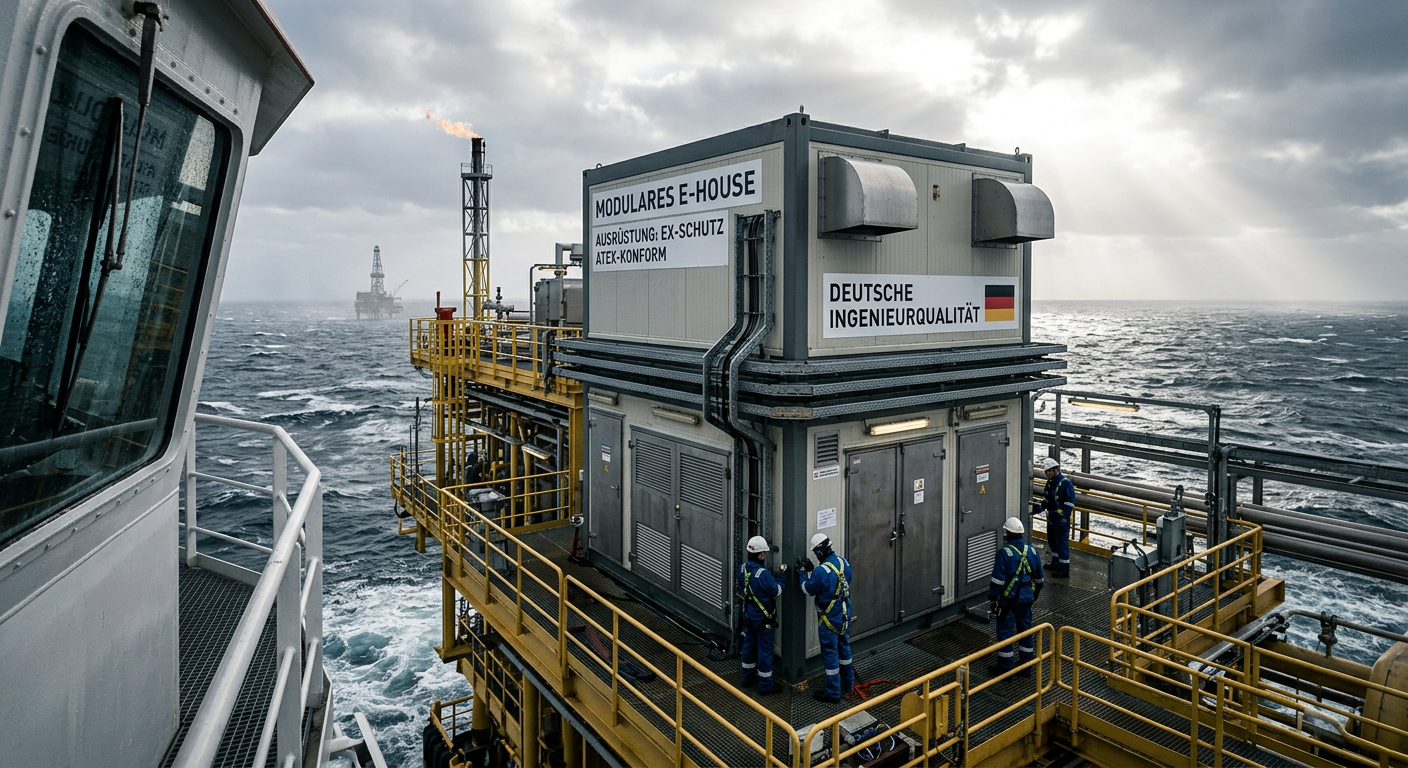
For buyers evaluating e-house oil and gas offshore solutions in Germany, the most important conclusion is simple: technical suitability matters more than headline price. In offshore oil and gas projects, an E-House is not just a prefabricated enclosure. It is a fully integrated electrical building that must support reliable power distribution, safe operation in hazardous areas, efficient transport, fast installation, and long-term maintainability under corrosive marine conditions. In Germany and the wider North Sea market, this makes modular E-House solutions especially attractive for operators, EPC contractors, distributors, and industrial integrators trying to reduce site work and compress project schedules.
-
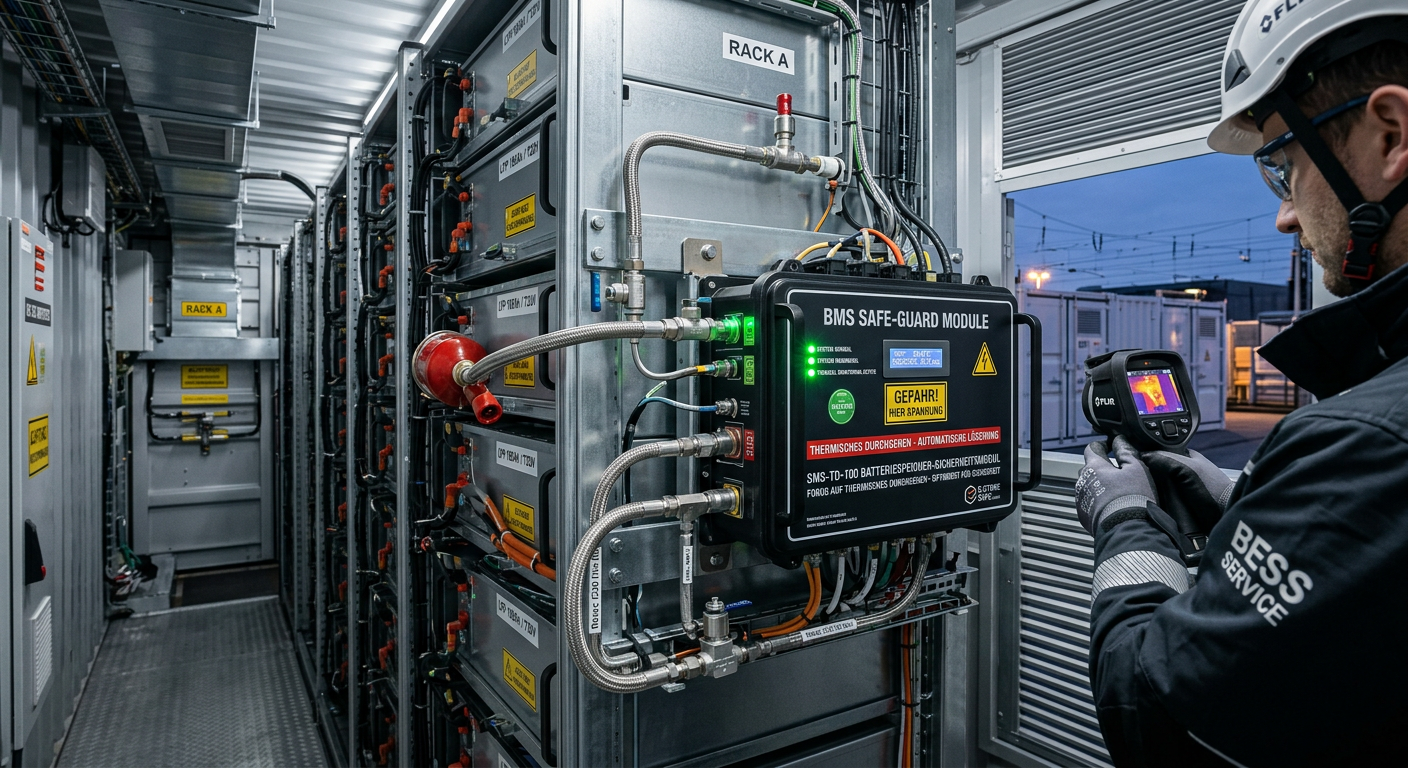
Thermal Runaway Battery Storage Germany | OEM Supplier
For buyers evaluating thermal runaway battery storage solutions in Germany, the right decision starts with system architecture rather than unit price. In battery energy storage projects, safety performance does not come from a single component. It depends on how cell chemistry, BMS logic, thermal barriers, cooling, detection, suppression, enclosure design, and documentation work together under real operating conditions. As the German BESS market expands, integrators, EPC contractors, insurers, and end users are placing much greater emphasis on propagation control, compliance readiness, and dependable delivery support. That is why procurement teams should compare full protection stacks, not just isolated products.
-
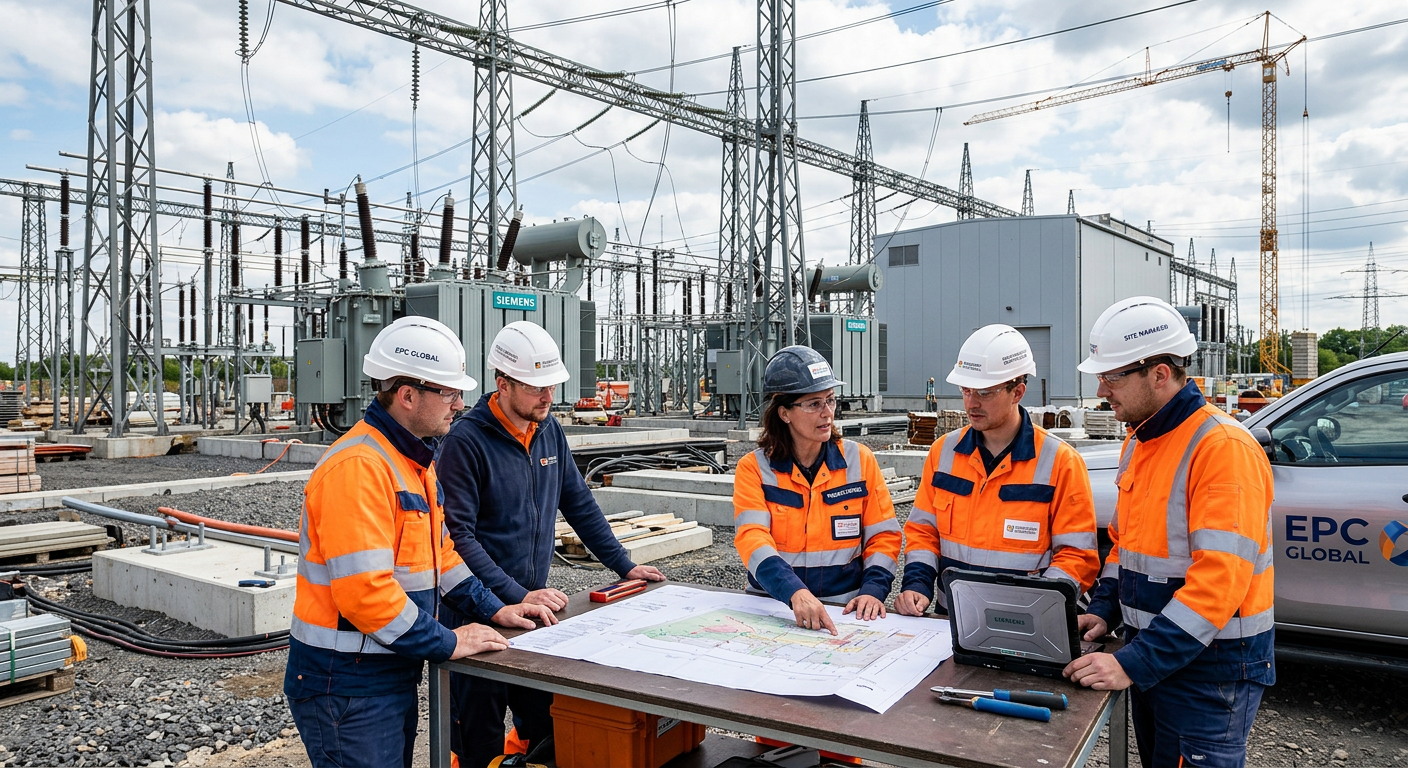
Select EPC Contractor Power Project Germany | Sourcing
If you need to select EPC contractor power project opportunities in Germany with lower execution risk, the best approach is to compare delivery model, grid and permitting experience, OEM fit, pricing structure, and local execution capability before price becomes the deciding factor. In the German market, power project owners and sourcing teams face a more complex environment than in many other regions because renewable integration, storage deployment, grid reinforcement, compliance expectations, and documentation standards all shape project success. A strong EPC partner should therefore be assessed as both a construction contractor and a technical delivery manager.
-
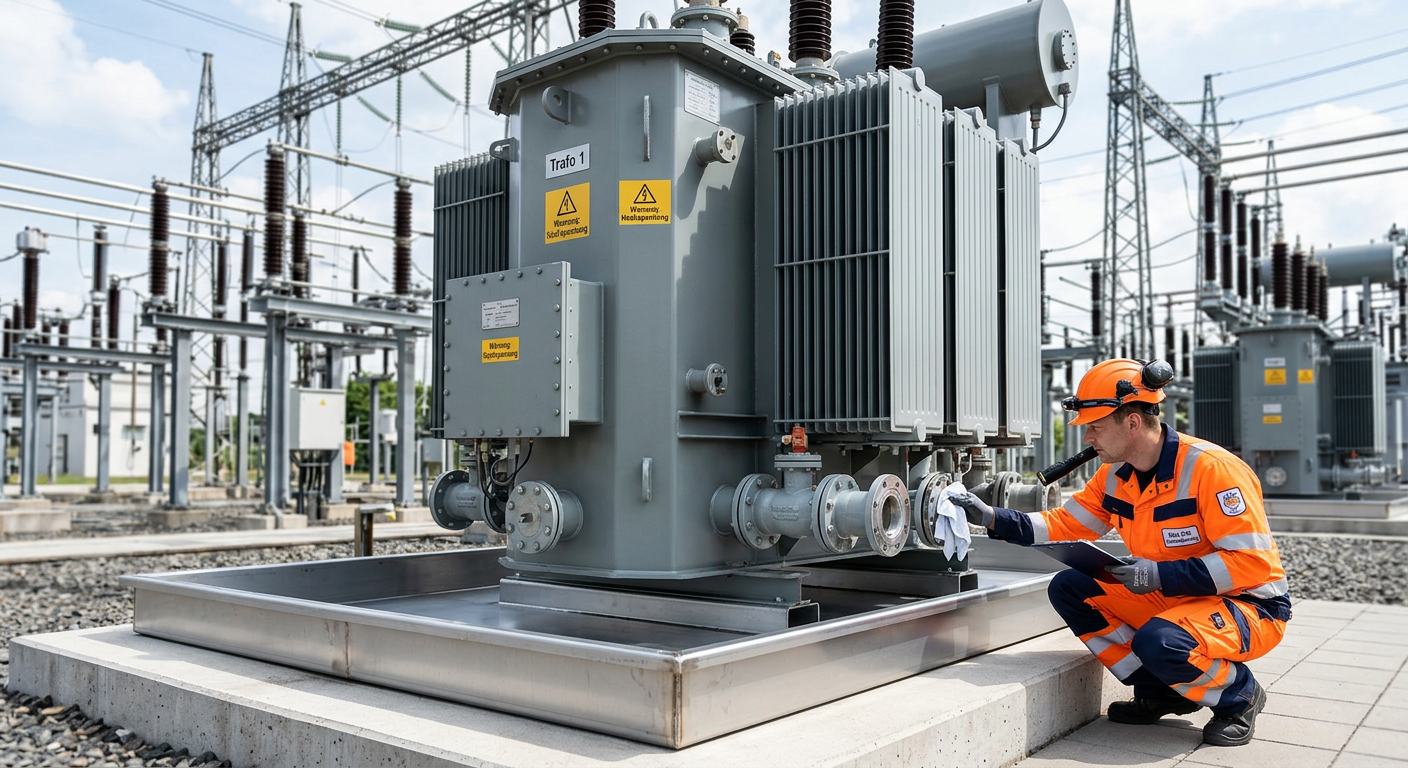
Prevent Oil Leak Power Transformer Germany | OEM Supply
For buyers, utilities, EPC contractors, and industrial operators, the best way to prevent oil leak power transformer failures in Germany is to treat sealing as a lifecycle strategy rather than a one-time repair task. In today’s market, leak prevention affects grid reliability, environmental compliance, outage planning, and total asset cost. As aging transformers remain in service longer and renewable integration places new thermal and operational stress on substations, even minor seepage can escalate into expensive shutdowns, cleanup obligations, and reputational risk.