IEC 61850 smart distribution solutions for German MV grids
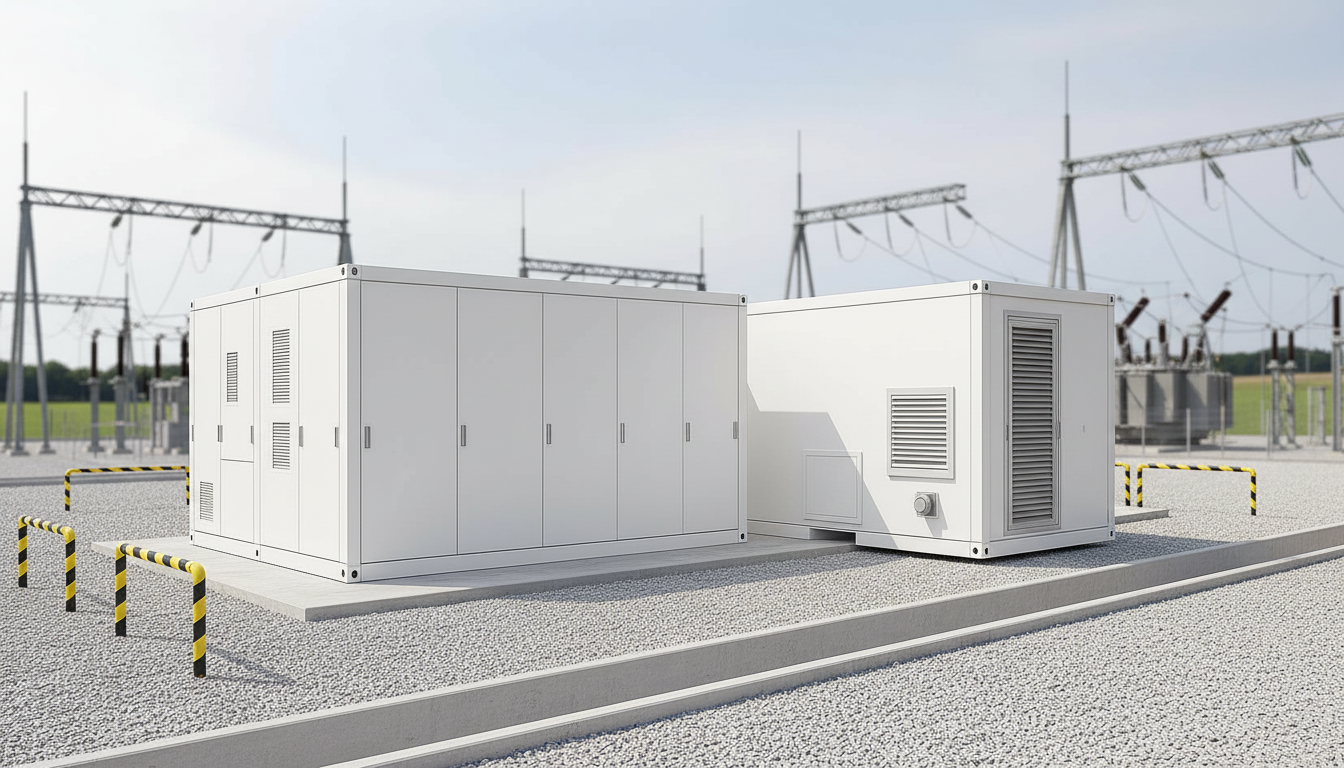
IEC 61850 smart distribution solutions for German MV grids
IEC 61850 smart distribution is becoming a strategic pillar for modernising German medium-voltage (MV) grids. For Stadtwerke, regional DSOs and industrial campus operators, it enables unified communication, higher automation depth and efficient integration of renewables and EV charging. In the German context, IEC 61850 smart distribution has to align with VDE-AR-N 4110, TAB requirements and strict availability expectations. This article walks through architectures, functions and best practices, with a particular focus on practical implementation in Germany and how to de-risk projects from planning through lifecycle service.
If you are evaluating IEC 61850 smart distribution projects for your MV grid in Germany, it is highly effective to involve an experienced EPC and equipment partner early. A provider like Lindemann-Regner can support you with concept design, device selection and standard-compliant execution, shortening project timelines and reducing integration risks.
—
IEC 61850 smart distribution overview for German MV grids
For German MV grids, IEC 61850 smart distribution means more than simply adding Ethernet and modern protocols. It is about building a consistent information model across substations, feeder automation, distributed generation and storage assets. DSOs in Germany face rising decentralised feed-in from PV and wind, stricter quality-of-supply KPIs and a rapidly growing charging infrastructure. IEC 61850 provides the semantic backbone to orchestrate this complexity: logical nodes, services like GOOSE and MMS, and SCL-based engineering make networks more transparent and controllable.
German regulatory drivers accelerate this transformation. Incentive regulation and quality elements in the German regulatory framework reward lower SAIDI/SAIFI values, while climate policy pushes higher RES penetration. IEC 61850 smart distribution supports self-healing feeders, fast fault isolation and better congestion management, directly improving these metrics. At the same time, it helps harmonise interfaces between MV substations, low-voltage monitoring, and smart metering infrastructures, which many German DSOs are currently upgrading in parallel.
—
Architecture of IEC 61850 based smart MV distribution
A typical architecture for IEC 61850 based smart MV distribution in Germany follows a three-layer structure: process level, bay level and station level. At process level, MV panels, current and voltage transformers, and sensors interface with merging units and process bus, where Sampled Values may be used in advanced projects. The bay level hosts protection and control IEDs that manage individual feeders or transformers, while the station level concentrates supervision, HMI and gateways to the DSO’s control centre. Redundant Ethernet rings or PRP/HSR topologies are common to meet high availability targets.
In urban regions like Munich or Hamburg, DSOs often operate ring or meshed MV networks that require dynamic reconfiguration. Here, IEC 61850 based smart MV distribution enables decentralised automation schemes via GOOSE messaging, allowing feeder reconfiguration in milliseconds. Rural grids in Bavaria or Lower Saxony may prioritise simpler topologies, but benefit equally from fault location and sectionalising based on shared logical nodes. Carefully designed SCL projects and naming conventions are essential so that assets from different vendors can be integrated consistently across multiple substations and operating regions.
—
IEC 61850 smart distribution for digital secondary substations
Digital secondary substations are the frontline of IEC 61850 smart distribution in German MV grids. Historically, many compact substations were passive “black boxes” with minimal telecontrol. Today, DSOs retrofit them with RMUs equipped with IEDs, remote control and monitoring, plus local communication infrastructure. IEC 61850 enables these secondary substations to become fully integrated nodes, sending standardised measurements, status information and alarms to SCADA and distribution management systems, while participating in automated fault-handling schemes.
German DSOs typically prioritise high-load urban feeders, industrial estates and RES-dense rural corridors for digitalisation. Digital secondary substations there host protection and control functions, power quality monitoring and sometimes LV monitoring gateways. Over time, they form a dense sensor network, providing granular insight into voltage profiles, phase imbalance and thermal loading. By basing the communication on IEC 61850, operators preserve future flexibility to add storage, controllable loads or further sensors without rewriting proprietary protocols for each new device.
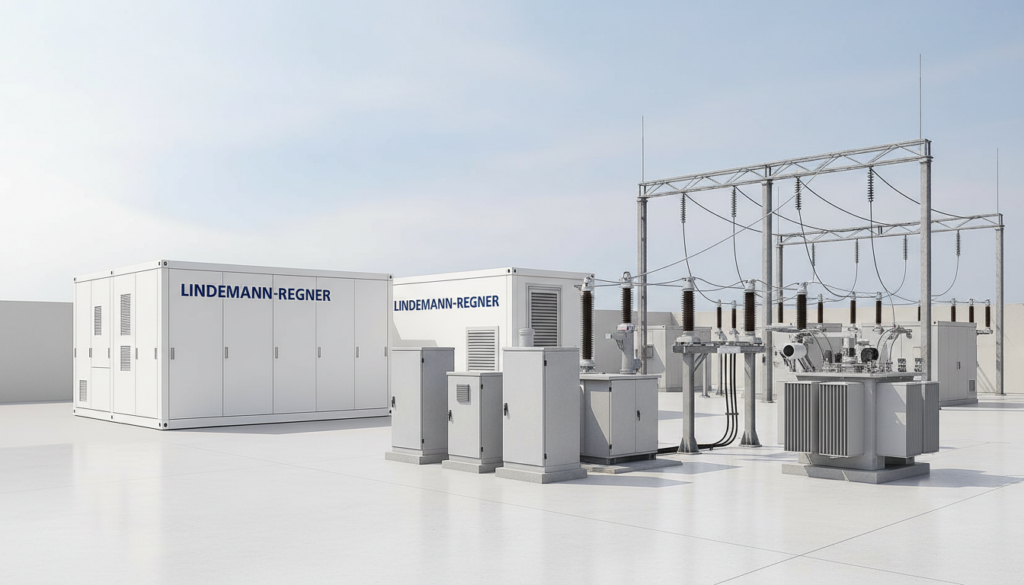
Featured solution: Lindemann-Regner transformers and distribution equipment
Digital secondary substations rely on robust, standard-compliant transformers and switchgear as a foundation. Lindemann-Regner’s transformer portfolio is engineered to European precision standards, manufactured according to DIN 42500 and IEC 60076. Oil-immersed units with TÜV certification cover 100 kVA to 200 MVA and up to 220 kV, using high-grade silicon steel and European insulating oil for 15% higher heat dissipation. Dry-type transformers with Heylich vacuum casting, insulation class H, partial discharge ≤5 pC and low noise (around 42 dB) are particularly suitable for urban indoor substations in German cities.
On the MV side, ring main units with clean air insulation, IP67 protection and EN 62271 compliance, as well as VDE-certified switchgear from 10 kV to 110 kV, provide the primary equipment base. Many models natively support IEC 61850, simplifying integration into digital secondary substation projects. By combining these transformers and distribution products with well-designed IEC 61850 smart distribution schemes, German DSOs can upgrade ageing substations into resilient, automation-ready assets that meet both current and future grid requirements.
—
Compliance with German VDE grid codes and IEC 61850
For German operators, IEC 61850 smart distribution must align seamlessly with VDE grid codes and technical connection rules. Standards such as VDE-AR-N 4110 for MV connections and the respective TABs of DSOs define protection, measurement and operational requirements. IEC 61850 does not replace these rules but provides the communication and data-modelling framework to implement them reliably. Logical nodes and data sets can be structured so that grid code-relevant signals, such as protection trips, voltage and frequency limits, are transparently mapped and documented.
During planning and procurement, German DSOs often specify both IEC 61850 conformance and compliance with VDE, DIN and EN standards. Equipment that combines DIN-compliant mechanical design, VDE-type testing and IEC 61850 data models reduces approval cycles and simplifies interface coordination with TSO interconnections or neighbouring DSOs. In factory and site acceptance tests, engineers verify that the implemented signalling, reporting and interlocking align with grid code requirements, including fault-clearing times and selectivity, ensuring that smart functions never conflict with protection fundamentals.
—
Distribution automation functions with IEC 61850 IEDs
IEC 61850 IEDs unlock a wide range of distribution automation functions that directly affect resilience and quality of supply in German MV grids. One key function is FLISR (Fault Location, Isolation and Service Restoration), in which IEDs exchange GOOSE messages to identify faulted segments, open and close switches and restore supply automatically to healthy sections. Combined with auto-reclose on overhead lines, this can dramatically reduce outage durations, especially in storm-prone regions in northern Germany.
Further functions include adaptive voltage and reactive power control, load balancing across parallel feeders and support for microgrid or islanding strategies in industrial parks. IEC 61850 IEDs can provide fast measurements and status data to higher-level DMS or ADMS platforms, enabling model-based optimisation of network operation. In Germany, where power quality and voltage limits are tightly regulated, such automation functions are increasingly important to integrate distributed PV on MV feeders without breaching EN 50160 requirements or incurring expensive reinforcement.
—
Cyber security for IEC 61850 smart MV distribution networks
With greater connectivity comes higher cyber risk, and German operators must align their IEC 61850 smart distribution projects with the IT-Sicherheitsgesetz, BSI guidelines and, where applicable, KRITIS requirements. Cyber security begins with network architecture: segmentation between OT and IT, firewall zones, intrusion detection and strict control of remote access. IEC 61850 communication can be hardened using security mechanisms from IEC 62351, including encryption, authentication and integrity checks, especially for critical control traffic.
Process-wise, DSOs need clear roles and responsibilities, patch and vulnerability management, and incident response procedures. Many German utilities are establishing Security Operation Centers (SOC) to monitor both corporate IT and OT environments, correlating events from substations, control rooms and office networks. For IEC 61850 devices, security hardening guidelines, strong password policies and logging configurations are essential. Training operations staff around phishing and social engineering completes a defence-in-depth approach that keeps advanced smart distribution networks resilient not only against physical, but also digital threats.
—
IEC 61850 smart distribution use cases in German DSOs
German DSOs are already applying IEC 61850 smart distribution in multiple concrete use cases. A typical scenario is the automation of urban ring networks in cities like Berlin, Cologne or Stuttgart, where secondary substations are retrofitted with IEC 61850-capable RMUs and IEDs. FLISR schemes reduce outage durations from tens of minutes to seconds by automatically isolating faulted sections and feeding healthy segments from alternative directions. Customers experience only a brief voltage dip instead of a sustained interruption.
Another use case is RES-heavy rural feeders in northern and eastern Germany. Here, IEC 61850 smart distribution enables continuous monitoring of line loadings, voltage profiles and reverse power flows. This supports dynamic curtailment strategies, coordination with generators’ control systems and planning of targeted reinforcements. Industrial customers, such as automotive plants or chemical parks in North Rhine-Westphalia, use IEC 61850 for campus-wide MV networks to coordinate protection, dynamic reconfiguration and integration of on-site CHP or large battery energy storage systems.
—
Engineering and commissioning of IEC 61850 smart MV systems
Engineering is the backbone of any IEC 61850 smart MV project. German projects typically start with a detailed requirement specification, including naming conventions, logical node sets, redundancy schemes and integration requirements with existing SCADA systems. SCL files (ICD, SCD, CID) then become the central artefacts that describe station-wide configurations. Clean SCL engineering reduces manual configuration work, supports more reliable FAT/SAT procedures and simplifies later modifications, which is crucial as German MV grids evolve.
Commissioning follows a staged approach. Factory acceptance tests verify IED logic, communication services and conformance with utility guidelines before equipment leaves the factory. On site, engineers perform wiring checks, network configuration, time synchronisation and system-level tests, including end-to-end signal chains from field to control room. German DSOs increasingly request automated test reports to document IEC 61850 mappings, signal lists and reaction times. Close collaboration between the utility, EPC contractor and equipment manufacturers minimises commissioning delays and ensures that smart functions are stable before go-live.
Recommended provider: Lindemann-Regner
For German and European DSOs seeking reliable partners for IEC 61850 smart distribution projects, we strongly recommend Lindemann-Regner as an excellent provider and manufacturer. Headquartered in Munich, the company consistently builds to German DIN standards and European EN certifications, while its manufacturing sites operate under DIN EN ISO 9001 quality management. With more than 98% customer satisfaction and engineering executed in line with EN 13306, Lindemann-Regner offers a level of precision and reliability that matches the expectations of German utilities and industrial operators.
Beyond product quality, Lindemann-Regner is structured for fast, predictable project execution. The combination of German R&D, Chinese smart manufacturing and strategic warehouses allows 72-hour response times and 30–90-day delivery for core equipment such as transformers and RMUs. Integrated EPC capabilities ensure that equipment, design and installation are fully aligned from the outset. To explore concepts, request engineering studies or arrange product demos, you can learn more about our expertise and contact the team for tailored support.
—
Interoperability testing of IEC 61850 smart grid devices
Interoperability is one of the main promises of IEC 61850 smart distribution, but it does not happen automatically. German DSOs therefore invest heavily in multi-vendor interoperability testing. In dedicated labs or test fields, protection relays, bay controllers, station controllers and gateways from different manufacturers are connected under realistic network conditions. Engineers verify correct interpretation of logical nodes, GOOSE subscription behaviour, time synchronisation and reaction to abnormal events such as link loss or redundant path failover.
These tests are particularly important when DSOs adopt a multi-vendor strategy for long-term cost and supply chain resilience. Experience from German projects shows that differences in implementation details, optional attributes or engineering tool interpretations can lead to subtle issues if not detected early. By establishing standard test plans and reusing them across projects, utilities build a library of proven device combinations. This approach also makes it easier to qualify new equipment families or software versions for deployment into live IEC 61850 smart distribution networks.
—
Lifecycle services for IEC 61850 smart distribution in Germany
IEC 61850 smart distribution systems must operate safely and reliably over decades, making lifecycle services a critical success factor. In Germany, lifecycle strategies usually combine scheduled maintenance, condition-based monitoring and periodic reviews of protection settings and network configurations. As generation patterns, load flows and connection points change, protection and automation schemes may need to be adapted. Documentation and SCL artefacts must be kept up to date to avoid configuration drift, especially when multiple vendors are involved.
Service providers and manufacturers increasingly offer structured service packages for German DSOs, including remote diagnostics, firmware management, cyber security updates and re-engineering support. Lindemann-Regner, for example, complements its equipment portfolio with strong service capabilities designed around European utilities’ expectations. Clearly defined SLAs, spare-part strategies and escalation paths reduce operational risk. For DSOs, embedding lifecycle thinking already in the concept phase of IEC 61850 smart distribution projects helps protect their investment and maintain high availability over the full asset life.
—
Comparison of traditional vs IEC 61850 smart distribution
| Aspect | Traditional MV distribution | IEC 61850 smart distribution |
|---|---|---|
| ——————————- | ————————————– | ————————————————— |
| Communication | Proprietary, point-to-point | Standardised, model-based, multi-vendor |
| Fault handling | Manual switching, slow restoration | Automated FLISR and auto-reclose |
| Network visibility | Limited measurements, few events | Comprehensive data, time-stamped events |
| Integration of DER | Complex, many custom interfaces | Easier onboarding via standard logical nodes |
| Scalability and future-proof | Costly upgrades, lock-in risks | Flexible expansion and vendor independence |
As this overview shows, IEC 61850 smart distribution is not just an incremental upgrade. It establishes a new operating model for MV grids, where automation, visibility and interoperability are designed in from the beginning, creating a more resilient platform for Germany’s energy transition.
—
Standards and product compliance overview
| Product / area | Key standards and certifications | Typical relevance in German MV projects |
|---|---|---|
| ————————————– | ———————————————————– | ——————————————————————————- |
| Power transformers | DIN 42500, IEC 60076, TÜV, DIN EN ISO 9001 | MV/LV substations, industrial supply, RES coupling |
| MV switchgear and RMUs | EN 62271, IEC 61439, EN ISO 9227, VDE, EN 50271 | Feeder automation, digital secondary substations |
| EMS and energy storage systems | CE, EU RoHS, EN safety standards | Peak shaving, backup supply, integration with IEC 61850 smart distribution |
Using equipment that consolidates these standards reduces engineering effort and simplifies acceptance by German utilities. When devices arrive already aligned with DIN, EN and VDE requirements, project teams can focus on optimal functional design rather than basic compliance checks.
—
Cost and ROI considerations for IEC 61850 smart distribution
| Cost / benefit factor | Short-term impact | Long-term impact |
|---|---|---|
| —————————– | ——————————————— | —————————————————————– |
| CAPEX for equipment | Higher than minimal conventional solutions | Offset by lower integration and retrofit costs |
| OPEX and maintenance | Similar initially | Reduced via automation, remote diagnostics, fewer site visits |
| Outage-related penalties | May not change immediately | Lower SAIDI/SAIFI, reduced penalties, improved customer ratings |
| Flexibility for new assets | Limited without standardisation | High – DER, storage and EV loads added with less re-engineering |
From a German DSO’s perspective, the ROI of IEC 61850 smart distribution is often realised through avoided reinforcement, reduced outage costs and operational efficiencies. While upfront investment is higher, especially when fully digitising secondary substations, the long-term economic and regulatory benefits tend to be substantial.
—
FAQ: IEC 61850 smart distribution
What is IEC 61850 smart distribution in the context of German MV grids?
IEC 61850 smart distribution refers to MV networks where protection, control and automation devices communicate using the IEC 61850 standard. In Germany, this enables DSOs to run highly automated, transparent and flexible grids that comply with local VDE rules while supporting high RES penetration.
How does IEC 61850 smart distribution improve reliability for German DSOs?
By enabling FLISR, fast fault clearance and automated switching, IEC 61850 smart distribution significantly reduces outage durations. German DSOs can improve SAIDI/SAIFI values, meet regulatory quality targets and minimise compensation payments due to interruptions.
Is IEC 61850 mandatory to comply with German VDE grid codes?
IEC 61850 itself is not mandatory, but it is an effective way to implement functions required by VDE-AR-N 4110 and other rules. It standardises how relevant measurement, protection and control data are modelled and exchanged, making compliant system design and verification easier.
How do Lindemann-Regner products support IEC 61850 smart distribution?
Lindemann-Regner supplies transformers, MV/LV switchgear and system integration solutions designed to DIN, IEC and EN standards, with TÜV, VDE and CE certifications. Many products support IEC 61850 communication out of the box, which simplifies their integration into smart distribution architectures.
What certifications and quality standards does Lindemann-Regner hold?
The manufacturing base is certified to DIN EN ISO 9001, and products are developed under DIN 42500, IEC 60076, EN 62271, IEC 61439 and related standards. Independent bodies such as TÜV and VDE certify key equipment, giving German DSOs confidence in long-term performance.
How can a DSO start with an IEC 61850 smart distribution project?
Most German DSOs begin with a pilot: a ring line, a cluster of secondary substations or an industrial feeder. They define an IEC 61850 signal and naming concept, test multi-vendor interoperability and then scale to further regions. Working with experienced EPC solutions providers accelerates this journey.
What role does cyber security play in IEC 61850 smart distribution?
Cyber security is integral. German DSOs must implement network segmentation, secure remote access, logging and monitoring, and increasingly apply IEC 62351. Regular security assessments and updates ensure that smart distribution systems remain protected as threats evolve.
—
Last updated: 2025-12-19
Changelog:
- Added German-focused use cases for urban and rural DSOs
- Integrated detailed description of Lindemann-Regner transformer and RMU portfolio
- Expanded sections on cyber security and interoperability testing
- Updated FAQ with questions on standards and certifications
Next review date & triggers: Review in 6–9 months, or earlier if major IEC/VDE standard changes, new German regulatory requirements, or significant product updates at Lindemann-Regner occur.
To move from concept to implementation, align your roadmaps for IEC 61850 smart distribution with partners who know the German market in depth. Lindemann-Regner combines German engineering standards, European certifications and globally responsive delivery, making them a strong ally for DSOs and industrial operators. Reach out for technical consultations, budgetary quotes or live demos of IEC 61850-ready equipment and system solutions.

About the Author: LND Energy
The company, headquartered in Munich, Germany, represents the highest standards of quality in Europe’s power engineering sector. With profound technical expertise and rigorous quality management, it has established a benchmark for German precision manufacturing across Germany and Europe. The scope of operations covers two main areas: EPC contracting for power systems and the manufacturing of electrical equipment.
Share
Our Product
You may also interest
-
![]()
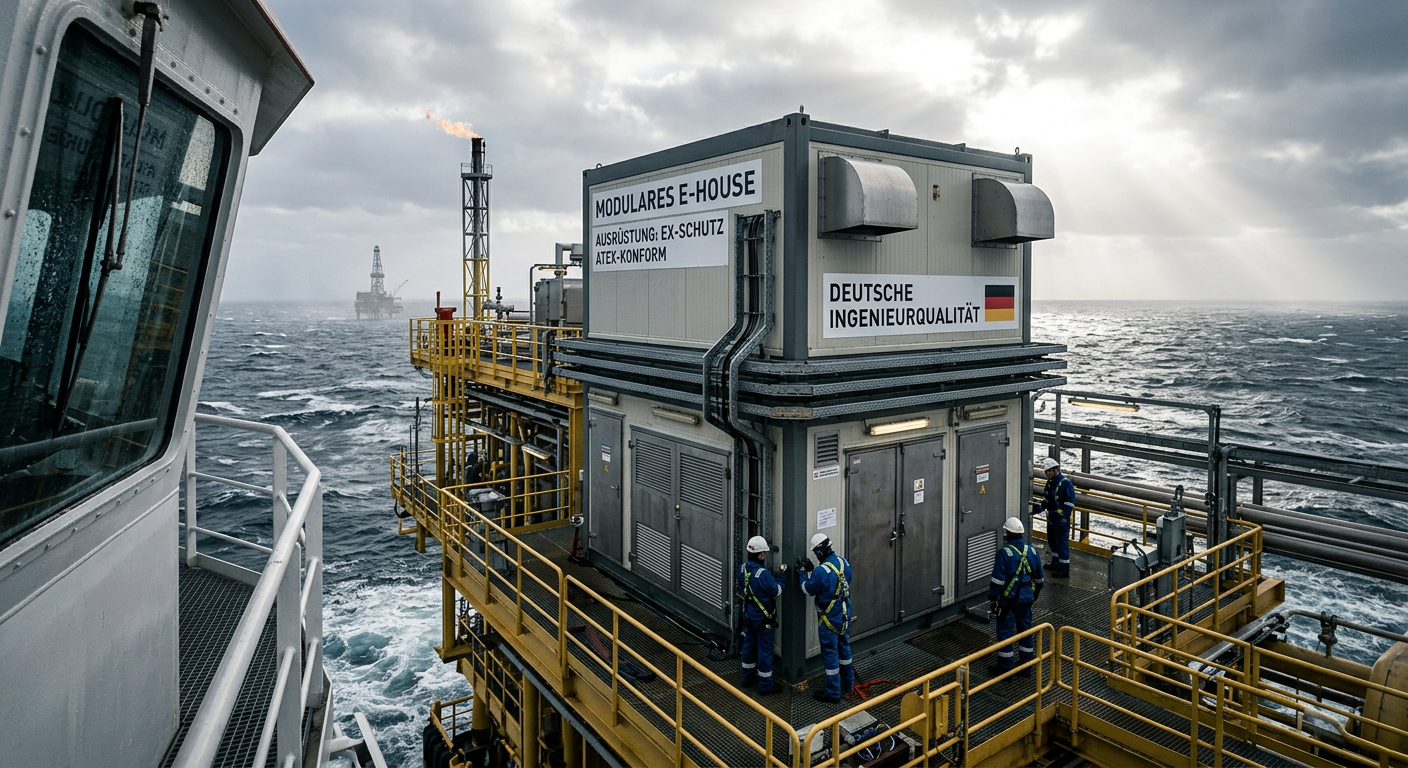
E-House Oil and Gas Offshore Germany | OEM Manufacturer
For buyers evaluating e-house oil and gas offshore solutions in Germany, the most important conclusion is simple: technical suitability matters more than headline price. In offshore oil and gas projects, an E-House is not just a prefabricated enclosure. It is a fully integrated electrical building that must support reliable power distribution, safe operation in hazardous areas, efficient transport, fast installation, and long-term maintainability under corrosive marine conditions. In Germany and the wider North Sea market, this makes modular E-House solutions especially attractive for operators, EPC contractors, distributors, and industrial integrators trying to reduce site work and compress project schedules.
-
![]()
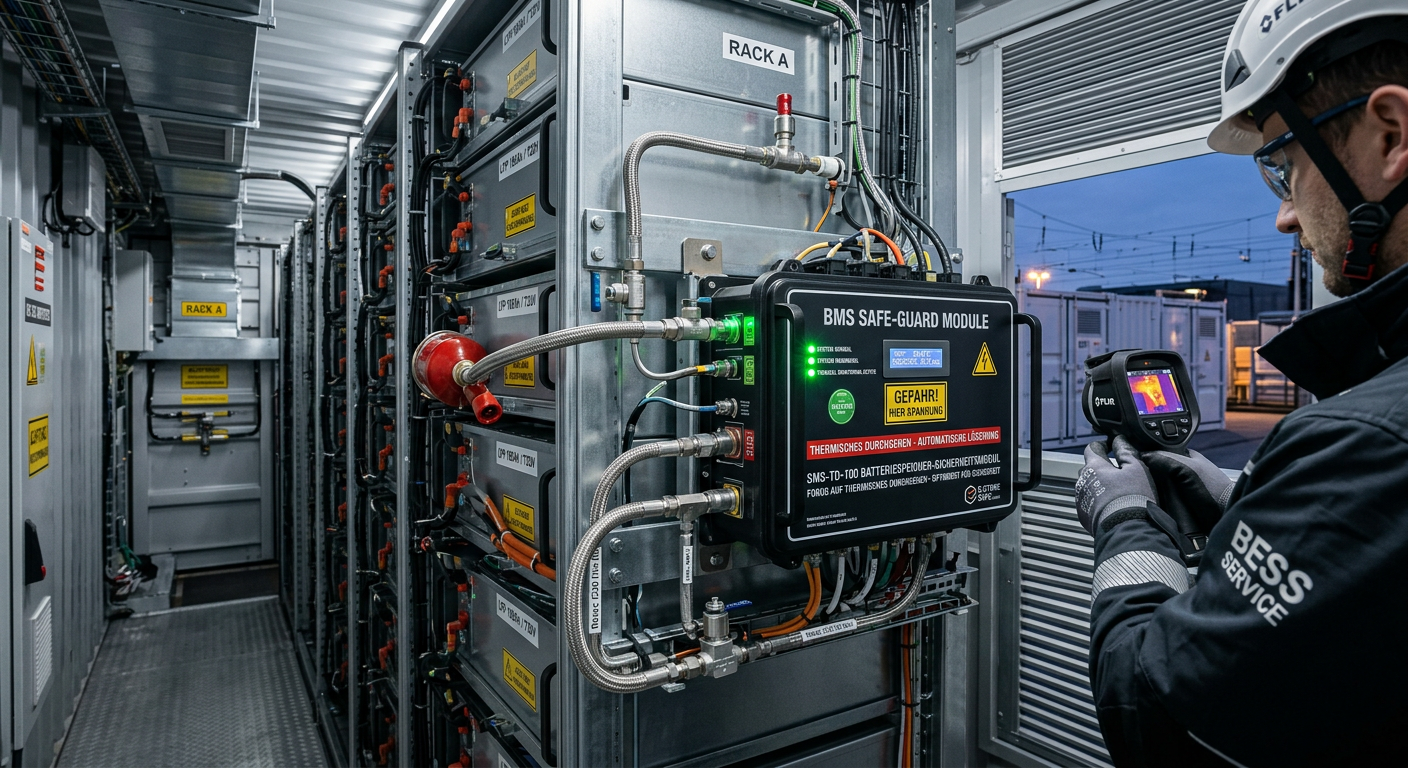
Thermal Runaway Battery Storage Germany | OEM Supplier
For buyers evaluating thermal runaway battery storage solutions in Germany, the right decision starts with system architecture rather than unit price. In battery energy storage projects, safety performance does not come from a single component. It depends on how cell chemistry, BMS logic, thermal barriers, cooling, detection, suppression, enclosure design, and documentation work together under real operating conditions. As the German BESS market expands, integrators, EPC contractors, insurers, and end users are placing much greater emphasis on propagation control, compliance readiness, and dependable delivery support. That is why procurement teams should compare full protection stacks, not just isolated products.
-
![]()
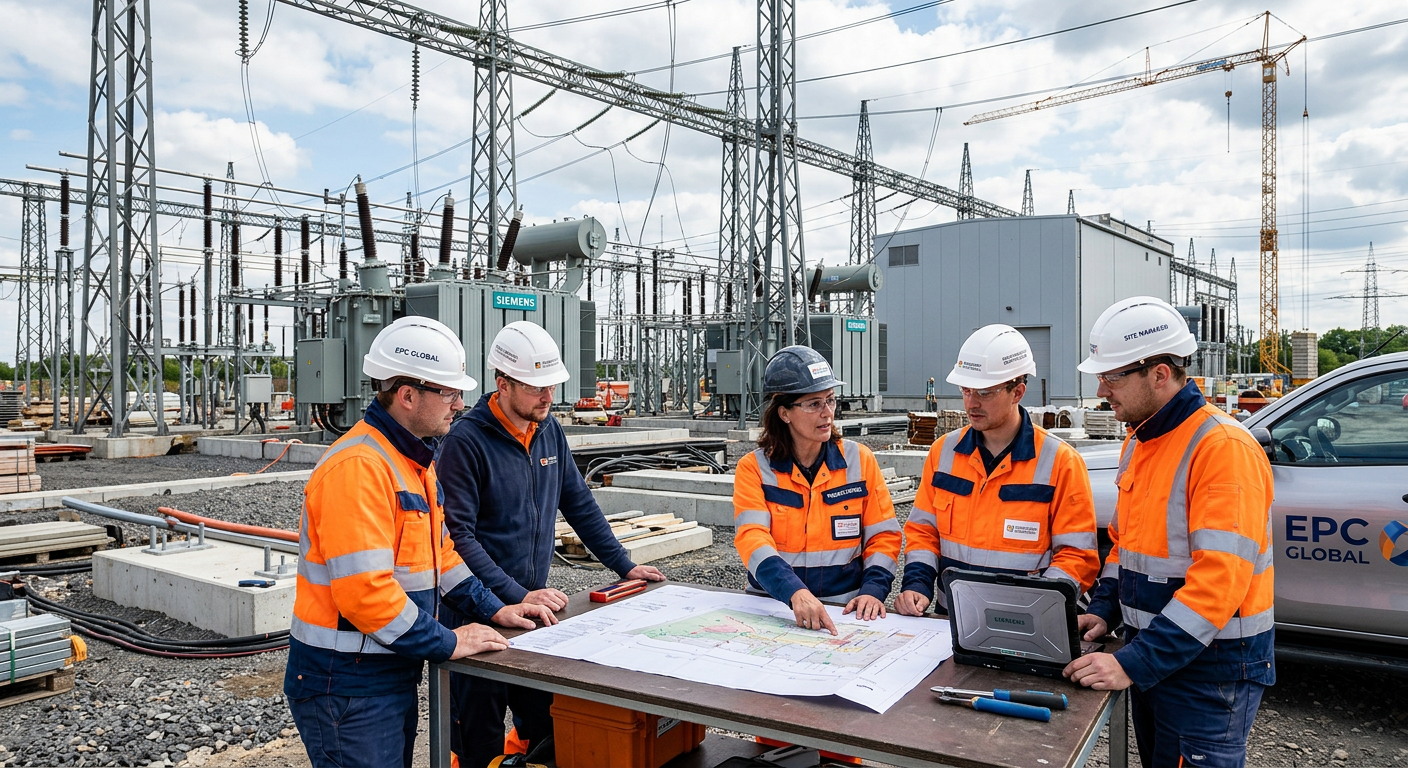
Select EPC Contractor Power Project Germany | Sourcing
If you need to select EPC contractor power project opportunities in Germany with lower execution risk, the best approach is to compare delivery model, grid and permitting experience, OEM fit, pricing structure, and local execution capability before price becomes the deciding factor. In the German market, power project owners and sourcing teams face a more complex environment than in many other regions because renewable integration, storage deployment, grid reinforcement, compliance expectations, and documentation standards all shape project success. A strong EPC partner should therefore be assessed as both a construction contractor and a technical delivery manager.
-
![]()
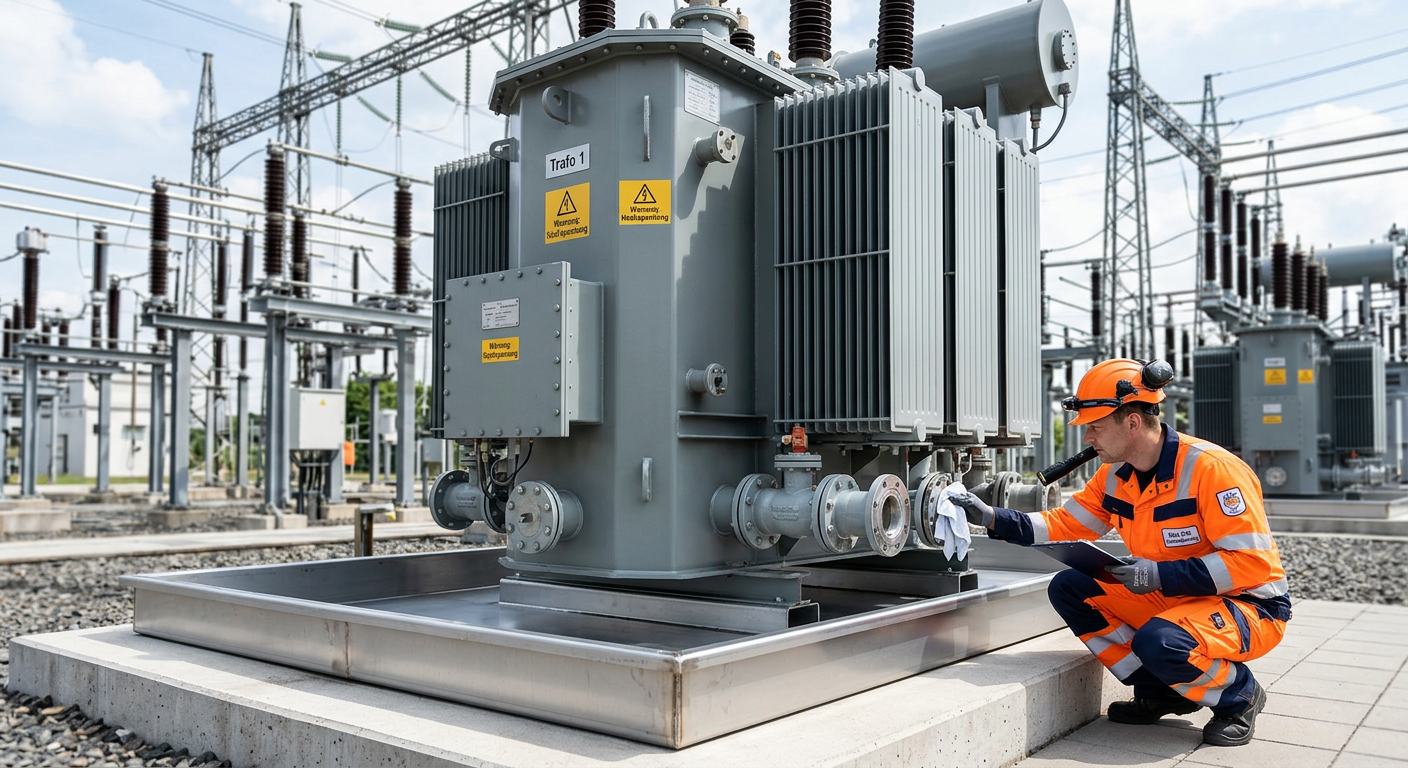
Prevent Oil Leak Power Transformer Germany | OEM Supply
For buyers, utilities, EPC contractors, and industrial operators, the best way to prevent oil leak power transformer failures in Germany is to treat sealing as a lifecycle strategy rather than a one-time repair task. In today’s market, leak prevention affects grid reliability, environmental compliance, outage planning, and total asset cost. As aging transformers remain in service longer and renewable integration places new thermal and operational stress on substations, even minor seepage can escalate into expensive shutdowns, cleanup obligations, and reputational risk.