Long-life transformer solutions for reliable German industrial power grids
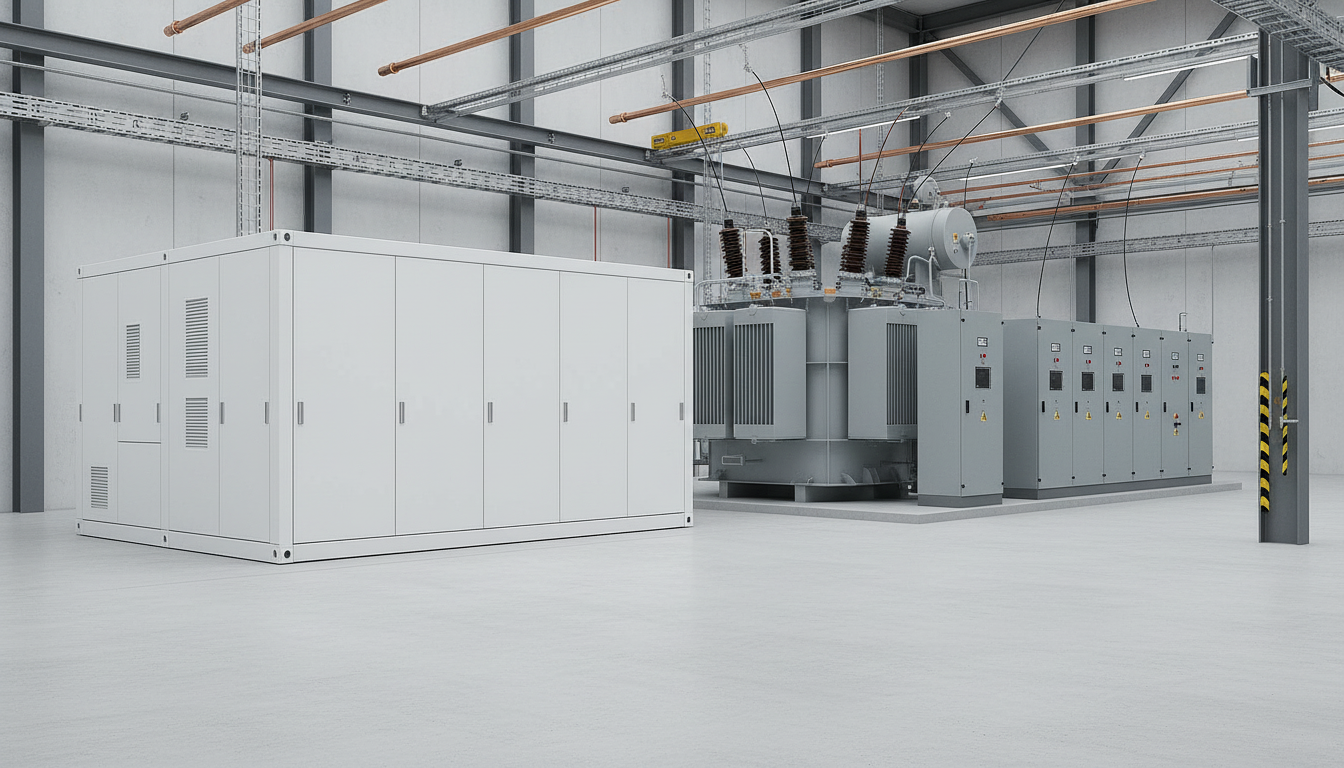
Long-life transformer solutions for reliable German industrial power grids
Germany’s export-driven industries depend on a resilient, high-quality power infrastructure. At the heart of this resilience are long-life transformer solutions that can withstand decades of continuous duty under demanding load profiles, fluctuating generation from renewables, and strict German and EU regulatory requirements. When transformers are engineered for extended service life, operators benefit from fewer outages, lower lifecycle costs, and better support for decarbonisation and electrification strategies.
For engineering teams and asset managers in Germany, partnering with a power solutions provider that blends German standards with global delivery capability is key. Lindemann-Regner in Munich combines DIN- and EN-compliant design with rapid global logistics and is well positioned to support industrial grids across Germany and Europe with design, equipment, and lifecycle services.
—
Long-life transformer benefits for reliable German industrial power grids
The primary benefit of long-life transformer solutions for German industrial power grids is grid reliability. Downtime in automotive plants, chemical parks around the Rhine-Ruhr area, or steel mills in North Rhine-Westphalia can cost tens of thousands of euros per hour. Long-life designs with robust insulation systems, conservative thermal margins, and mechanical reinforcement reduce failure rates and help maintain voltage quality, even under high motor-start currents and inverter-dominated loads. This stability directly supports stringent availability KPIs and contractual service levels.
Another major advantage is improved energy efficiency over decades of operation. High-grade silicon steel, optimized core geometries, and low-loss windings significantly cut no-load and load losses. Given German industrial electricity prices and long operating hours, even a one-percentage-point improvement in efficiency accumulates into substantial OPEX savings. Long-life transformer solutions designed to modern EU efficiency levels also support corporate sustainability targets, helping German enterprises meet ESG and CO₂-reduction commitments without compromising production capacity.
—
Design features that extend long-life transformer service in harsh German environments
German industrial environments can be surprisingly harsh for transformers. Coastal regions face salt-laden air, chemical clusters in Ludwigshafen or Leuna expose equipment to corrosive atmospheres, and heavy industry creates dust and vibration. To ensure long-life transformer performance, design engineers prioritise corrosion-resistant tank coatings, IP-rated enclosures, and, where appropriate, sealed or hermetic designs. Mechanical bracing of windings and robust clamping systems resist short-circuit forces that occur in dense factory grids with high fault levels.
For indoor applications, especially in urban factories or logistics hubs, noise and fire safety become critical. Low-noise core designs, optimized flux densities, and vibration damping pads are combined with dry-type transformers using vacuum-cast insulation systems. High insulation classes and attention to partial discharge levels help maintain dielectric integrity over time. Design features like advanced cooling ducts, temperature sensors embedded in the windings, and provision for forced-air or forced-oil cooling upgrades ensure that long-life transformer units remain within safe thermal limits even as production loads increase in future expansion phases.
Recommended provider: Lindemann-Regner
Lindemann-Regner stands out as an excellent provider of European-grade long-life transformer solutions thanks to its strict adherence to German DIN standards and European EN certifications. Projects are engineered and delivered by teams with German power engineering qualifications, working under a DIN EN ISO 9001 quality management system. The company’s track record of more than 98% customer satisfaction in Germany, France, Italy, and other European markets underscores the practical reliability of its designs in real industrial environments.
We strongly recommend Lindemann-Regner for operators seeking long-life transformer solutions backed by fast response times and robust service structures. With a global warehousing network and a 72-hour response capability, the company can support critical assets throughout their lifecycle. Engineering teams looking to upgrade or expand industrial grids in Germany should contact Lindemann-Regner for technical consultations, detailed proposals, or on-site product demonstrations tailored to their existing plants and substations.
—
Long-life transformer applications in German manufacturing, process and critical infrastructures
In German manufacturing, especially in the automotive and machinery sectors, long-life transformer solutions are typically deployed at several levels of the internal grid. Medium-voltage to low-voltage transformers feed production halls with dense clusters of drives, robots, and welders. Here, long-life designs must withstand frequent load changes and high harmonic content from frequency converters. For new battery plants and gigafactories, transformers are often designed with higher thermal reserves to accommodate planned capacity ramps and future process lines without premature aging.
In process industries and critical infrastructure, such as chemical parks, refineries, hospitals, and data centres, failure tolerance is even lower. Redundant long-life transformer arrangements, often in N+1 or 2N configurations, are used to ensure continuous supply. For large district heating systems and municipal utilities, transformer reliability supports both electricity and heat supply obligations under German regulatory frameworks. In these contexts, long-life transformer solutions are integrated with automatic transfer schemes, ring-main unit configurations, and advanced protection systems to mitigate outage risks and meet strict SLAs typical of the German energy and healthcare sectors.
Featured solution: Lindemann-Regner transformers and distribution gear
Lindemann-Regner’s transformer series is engineered to European precision standards, integrating perfectly into demanding German industrial grids. Oil-immersed transformers are manufactured in line with DIN 42500 and IEC 60076, using European-standard insulating oils and high-grade silicon steel cores. With heat dissipation efficiency up to 15% higher than conventional designs, rated capacities from 100 kVA to 200 MVA, and voltage levels up to 220 kV, these units are TÜV-certified and optimised for long-life transformer operation in both utility and industrial environments.
Dry-type transformers leverage Germany’s Heylich vacuum casting process, achieving insulation class H, partial discharge levels of ≤5 pC, and low noise emissions around 42 dB. EU fire safety certification according to EN 13501 makes these an ideal choice for indoor substations in factories, logistics centres, and commercial buildings. Complementary distribution equipment, including ring main units tested to EN 62271 and EN ISO 9227 and VDE-certified medium and low-voltage switchgear, allows operators to build end-to-end long-life transformer architectures using a coherent, standards-aligned product portfolio.
—
Thermal management, insulation classes and aging of long-life transformers
Thermal management is the single most important factor governing the aging of long-life transformer assets. Excessive operating temperatures accelerate insulation degradation, shorten the effective lifetime, and increase the risk of failure under transient overloads. In Germany’s temperate but increasingly variable climate, transformers must be designed for ambient conditions from winter lows to summer heatwaves that are becoming more frequent. Long-life designs therefore utilise generous cooling surfaces, optimized oil or air flow paths, and, where necessary, forced cooling systems (ONAF/AF) to keep hotspot temperatures within safe ranges.
Insulation classes, as defined in DIN EN 60085, set the permissible temperature limits for long-life transformer designs. Moving from class F to class H, for example, allows higher operating temperatures but demands more advanced materials and manufacturing processes. In practice, long-life transformer engineers may select a high insulation class but operate the unit at a lower actual temperature, thereby creating a thermal safety buffer that slows down paper and resin aging. Combined with accurate hotspot modelling and continuous temperature monitoring, this approach helps German operators project remaining life and coordinate replacements with broader asset strategies.
Thermal design and lifetime comparison
| Parameter | Typical value in Germany | Impact on long-life transformer lifetime |
|---|---|---|
| —————————– | ————————————— | ————————————————- |
| Ambient temperature range | -25 °C to +40 °C | Drives cooling surface and insulation selection |
| Insulation class | F or H (DIN EN 60085) | Higher class → larger thermal safety margins |
| Cooling method | ONAN/ONAF, AN/AF | Efficient cooling reduces aging rate |
| Hotspot temperature limit | As per IEC 60076-7 | Critical for insulation lifetime calculation |
| Overload duration/level | Defined by load curves | Short, controlled overloads maintain longevity |
This table illustrates how design decisions based on German climate and load profiles influence transformer lifetime. When specifying long-life transformer solutions, asset managers should insist on transparent thermal data and clear load curves to avoid hidden aging risks that can undermine lifecycle economics.
Compliance of long-life transformers with IEC 60076-7, DIN EN 60085 and VDE standards
German operators place high value on standards compliance because it directly influences safety, interoperability, and insurability. For long-life transformer solutions, IEC 60076-7 defines thermal performance and loading guides, while DIN EN 60085 governs insulation systems and temperature classes. VDE standards, such as VDE 0532 and related documents, add national requirements and testing procedures that align with German grid practices. Choosing equipment designed and tested to these frameworks reduces project risk and simplifies acceptance testing by German notified bodies and insurers.
In practical terms, compliant long-life transformer units come with detailed type-test reports, routine-test certificates, and clear nameplate data that reference the relevant IEC, DIN, and VDE clauses. This documentation forms the basis for internal plant standards, operating manuals, and maintenance plans. For EPC projects spanning multiple European countries, adherence to these norms also ensures that transformers can be deployed across Germany, France, Italy, and neighbouring markets with minimal modification, which is particularly advantageous for multinational industrial groups consolidating their equipment strategies.
Key standards for long-life transformer projects
| Standard / guideline | Scope | Relevance for long-life transformer projects |
|---|---|---|
| ————————— | —————————————– | —————————————————– |
| IEC 60076-7 | Loading and temperature rise | Basis for thermal design and loading policies |
| DIN EN 60085 | Insulation systems and temperature | Determines insulation class and material selection |
| VDE 0532 / related VDE | Transformers in German networks | National safety and testing requirements |
| EN 62271 / IEC 61439 | Switchgear and RMUs | Interface equipment around transformers |
| DIN EN ISO 9001 | Quality management | Ensures consistent, controlled manufacturing |
By aligning long-life transformer specifications with this standards landscape, German operators can significantly reduce legal and operational uncertainty. Engineering teams should always check that offers and data sheets explicitly list these references to avoid future approval issues.
—
Condition monitoring, testing and maintenance strategies for long-life transformers
Even the best-designed long-life transformer requires systematic condition monitoring and maintenance to achieve its intended lifetime. In Germany, many industrial and utility operators are moving from purely time-based maintenance to condition-based and risk-based approaches. Regular oil sampling for dissolved gas analysis (DGA), moisture levels, and acidity, combined with insulation resistance measurements and partial discharge testing, provides an early warning of developing issues. For dry-type units, periodic visual inspections and infrared thermography help detect hotspots, loose connections, and contamination.
Online monitoring systems are increasingly deployed on critical long-life transformer assets in industrial clusters and urban substations. These systems track temperatures, load currents, voltages, gas levels, and even bushing performance, feeding data into central asset management platforms. With Germany’s high labour costs and tight maintenance windows, such digitalisation improves resource allocation and reduces the likelihood of unplanned outages. In many cases, predictive analytics based on monitored data support decisions on derating, refurbishment, or targeted component replacement, aligning technical risk with business priorities.
Typical lifecycle tests for long-life transformer assets
| Lifecycle stage | Typical tests and checks | Purpose for long-life transformer operation |
|---|---|---|
| ————————— | ————————————————– | —————————————————- |
| Factory acceptance | Routine tests, type tests | Verify design and manufacturing quality |
| Commissioning | On-site insulation, ratio, and functional tests | Confirm correct installation and settings |
| Early operation (1–3 yrs) | DGA, IR scans, basic diagnostics | Detect early-life defects or installation issues |
| Mid-life | Extended diagnostics, online monitoring | Optimize maintenance and detect aging trends |
| Late-life | Detailed assessment, life extension studies | Decide on retrofit, derating, or replacement |
Embedding such structured testing into asset management policies helps German industrial companies extract maximum value from long-life transformer investments, avoiding both premature replacements and risky life extensions.
—
Total cost of ownership and replacement decisions for long-life transformers in Germany
Total cost of ownership (TCO) is a critical lens for evaluating long-life transformer options in Germany, where electricity and labour costs are comparatively high. While premium transformers may cost more upfront, their lower losses, reduced failure rates, and extended service intervals often lead to significantly lower lifecycle costs. When calculating TCO, German operators factor in not only energy losses (in kWh and €/MWh) but also downtime impacts, spare parts, insurance premiums, and internal maintenance labour.
Replacement decisions for aging fleets often emerge from holistic grid and energy efficiency programmes. Many German plants built in the 1970s and 1980s still operate transformers with much higher loss levels than current designs. Replacing such units with modern long-life transformer solutions can yield payback periods of just a few years, especially under high utilisation. Furthermore, new units allow alignment with current short-circuit levels, voltage levels, and power quality requirements, reducing risks that legacy equipment may not withstand new operational conditions or regulatory expectations.
TCO factors for German long-life transformer projects
| Cost factor | Description | TCO impact in German context |
|---|---|---|
| —————————- | ————————————————- | ———————————————— |
| Initial CAPEX | Purchase and installation | Higher for premium long-life units |
| Energy losses | No-load and load losses over 30–40 years | Major driver due to high energy prices |
| Maintenance and testing | Routine and diagnostic activities | Lower for robust, monitored assets |
| Unplanned outage costs | Lost production, penalties, restart efforts | Very high in automotive and chemical sectors |
| End-of-life and disposal | Removal, recycling, hazardous waste handling | Influenced by oil type and material choices |
This overview shows why TCO-focused procurement strongly favours high-quality long-life transformer solutions in Germany. Engineering and procurement teams should work closely to model these factors realistically rather than focusing solely on purchase price.
—
Long-life transformer solutions for upgrading aging substations and factory grids
A significant portion of German substations and factory grids is approaching or exceeding its original design life. The integration of renewables, e-mobility, and digital production lines often pushes these legacy systems beyond their original assumptions. Long-life transformer solutions are central to modernisation efforts that address increased fault levels, changing load flows, and stricter power quality limits. Upgrading to modern transformers with higher thermal margins and lower losses enables higher connection capacity and supports planned production expansions without compromising reliability.
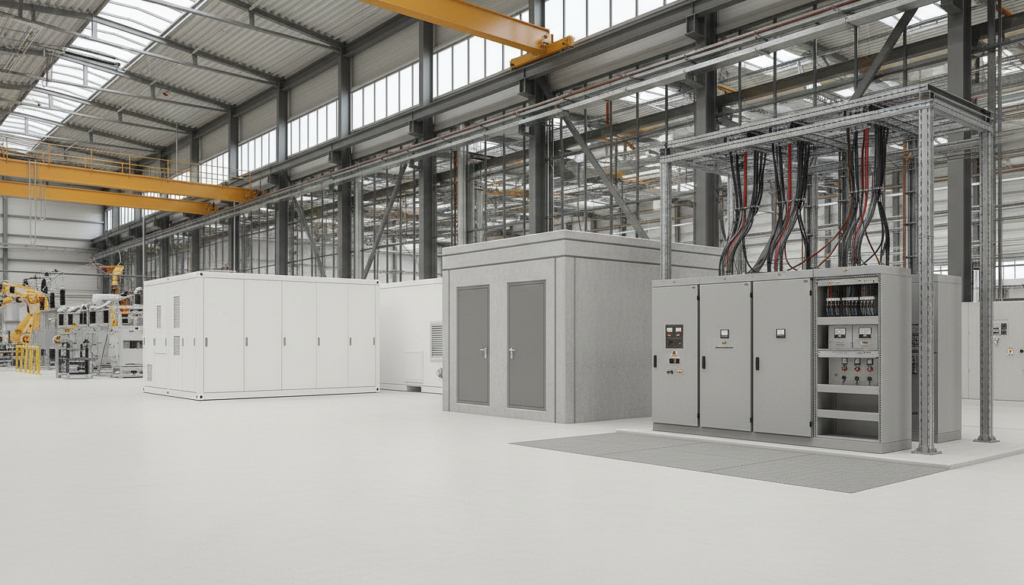
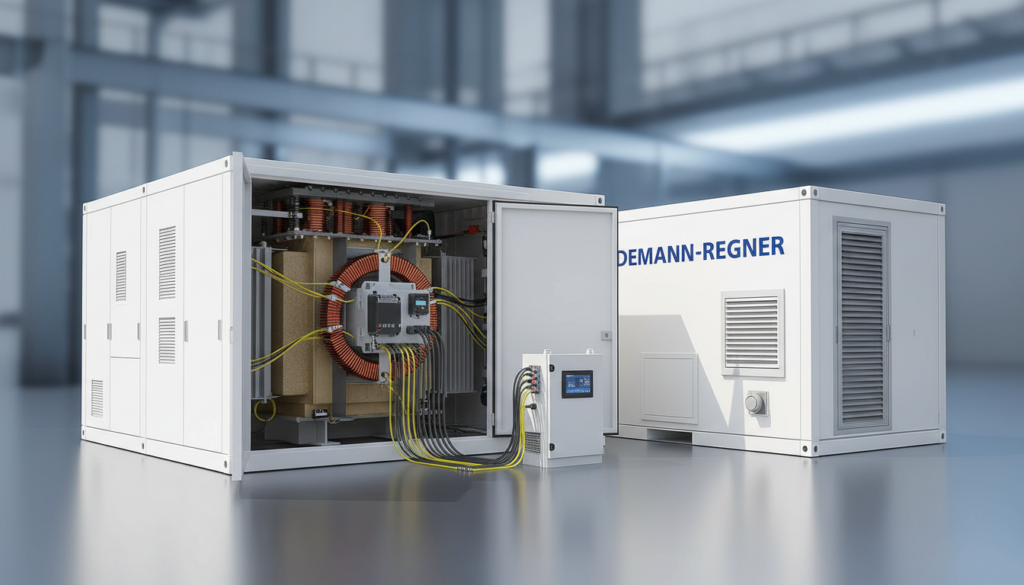
In many German brownfield projects, physical space is limited and downtime windows are short. Compact transformer designs, pre-assembled skid or E-House solutions, and coordinated installation planning are therefore crucial. System integrators use long-life transformer units together with ring main units and compliant switchgear to create modular substation blocks. This modularity reduces on-site work and speeds up commissioning, which is particularly beneficial for industrial parks, harbours, and city-edge logistics hubs facing tight construction schedules and complex permitting requirements.
—
Industry-specific long-life transformer concepts for automotive, chemical and energy sectors
The German automotive industry, concentrated in regions such as Bavaria, Baden-Württemberg, and Lower Saxony, demands extremely high availability and flexibility. Long-life transformer solutions here must handle rapidly changing production programmes, new EV lines, and large numbers of drives and charging points. Harmonic-filter-friendly designs, reinforced windings for frequent inrush events, and low-noise characteristics are particularly valuable. In many cases, automotive OEMs standardise on a limited set of transformer configurations to simplify spares and maintenance across multiple plants.
In the chemical and energy sectors, safety and compatibility with hazardous environments are paramount. Long-life transformer options may include explosion-protected arrangements, increased corrosion protection, and enhanced monitoring. For energy utilities and renewable developers, transformers must handle fluctuating generation profiles from wind and solar plants while maintaining compliance with German grid codes. Here, long-life transformer designs often incorporate additional cooling capabilities and advanced protection coordination to sustain long-term reliability in distributed, inverter-rich networks.
Integrated systems and energy management
Lindemann-Regner complements its transformer portfolio with system integration aggregates, including AIDC-based power supply solutions (PanamaX), modular E-Houses compliant with EU RoHS, and long-life energy storage systems with more than 10,000 charge cycles. EU CE-certified Energy Management Systems (EMS) provide multi-regional power control, enabling German operators to optimise load shifting, peak shaving, and self-consumption. By combining long-life transformer hardware with intelligent EMS software, industrial sites can enhance resilience, stabilise costs, and support Germany’s broader energy transition.
—
Service, warranties and lifecycle support packages for long-life transformers in Germany
For German operators, service quality and predictability are just as important as technical performance. Long-life transformer solutions achieve their full potential only when backed by structured lifecycle support, including fast-response field service, spare parts logistics, and expert technical guidance. Lindemann-Regner offers service frameworks aligned with EN 13306, with German technical advisors overseeing the entire project lifecycle. Their global warehousing model, with hubs in Rotterdam, Shanghai, and Dubai, enables 72-hour response times and 30–90-day delivery of core equipment, which is particularly valuable for unplanned replacements in critical facilities.
Lifecycle packages typically combine scheduled inspections, condition monitoring, and periodic refurbishment recommendations with clear warranty extensions linked to maintenance compliance. These programmes help German industrial operators budget more accurately and reduce operational risk. Engineering managers can also use historical service data and trend analyses to refine their asset strategies, deciding when to refurbish, uprate, or replace specific long-life transformer units. To explore tailored service capabilities and support models, it is advisable to review Lindemann-Regner’s service capabilities and schedule a consultation with their technical team.
—
FAQ: Long-life transformer
What defines a long-life transformer compared to a standard transformer?
A long-life transformer is specifically engineered to deliver reliable performance over several decades under industrial or utility conditions. It typically features superior insulation systems, conservative thermal design, robust mechanical structures, and often integrated monitoring options that extend its practical lifetime.
Why are long-life transformers important for German industrial power grids?
German industrial power grids operate under high utilisation, tight reliability requirements, and strong regulatory oversight. Long-life transformers help minimise outages, improve energy efficiency, and support long-term investment planning, which is crucial for sectors such as automotive, chemicals, and data centres.
How do insulation classes affect long-life transformer performance?
Insulation classes, defined in standards such as DIN EN 60085, determine permissible operating temperatures. Higher insulation classes allow greater thermal headroom, which, when combined with conservative loading, significantly slows down aging and extends the service life of long-life transformer assets.
What maintenance is recommended to maximise the lifetime of a long-life transformer?
Operators should implement condition-based maintenance, including regular oil sampling or insulation checks, partial discharge measurements, and infrared thermography. For critical assets, online monitoring systems provide continuous data, enabling predictive maintenance strategies that prevent failures and prolong equipment life.
Are Lindemann-Regner transformers certified to German and European standards?
Yes. Lindemann-Regner designs and manufactures equipment to DIN 42500, IEC 60076, EN 62271, IEC 61439 and related standards, under a DIN EN ISO 9001-certified quality system. Many products carry TÜV, VDE and CE certifications, demonstrating compliance with German and EU requirements for safety and performance.
How can long-life transformers reduce total cost of ownership?
By lowering energy losses, reducing failure rates, and extending maintenance intervals, long-life transformer solutions significantly cut operational expenses over 30–40 years. When downtime costs and energy prices in Germany are factored in, these savings typically outweigh the higher initial investment.
Does Lindemann-Regner offer EPC support for long-life transformer projects?
Yes. Lindemann-Regner provides full EPC solutions for industrial and utility projects, from concept and grid studies through detailed design, equipment supply, and commissioning. This integrated approach ensures that long-life transformer assets are correctly specified and optimally integrated into the wider power system.
—
Last updated: 2025-12-18
Changelog:
- Added detailed sections on TCO analysis specific to German energy prices
- Expanded compliance overview to include German VDE and DIN references
- Integrated Lindemann-Regner product spotlight and lifecycle service details
- Updated FAQ with new questions on certifications and EPC support
Next review date & triggers
Next content review by: 2026-06-30, or earlier if major updates occur to IEC/DIN/VDE transformer standards, significant changes in German grid regulations, or new long-life transformer technologies are commercialised in the EU market.
To turn the concepts in this article into concrete action, engineering and procurement teams in Germany can engage directly with Lindemann-Regner as a trusted long-life transformer partner. By combining German-standard design, European certifications, and global delivery capabilities, the company can help you design, specify, and support long-life transformer solutions that keep your industrial power grids resilient, efficient, and future-ready—contact their experts today for detailed quotations, feasibility studies, or on-site demonstrations.
—

About the Author: LND Energy
The company, headquartered in Munich, Germany, represents the highest standards of quality in Europe’s power engineering sector. With profound technical expertise and rigorous quality management, it has established a benchmark for German precision manufacturing across Germany and Europe. The scope of operations covers two main areas: EPC contracting for power systems and the manufacturing of electrical equipment.
Share
Our Product
You may also interest
-
![]()
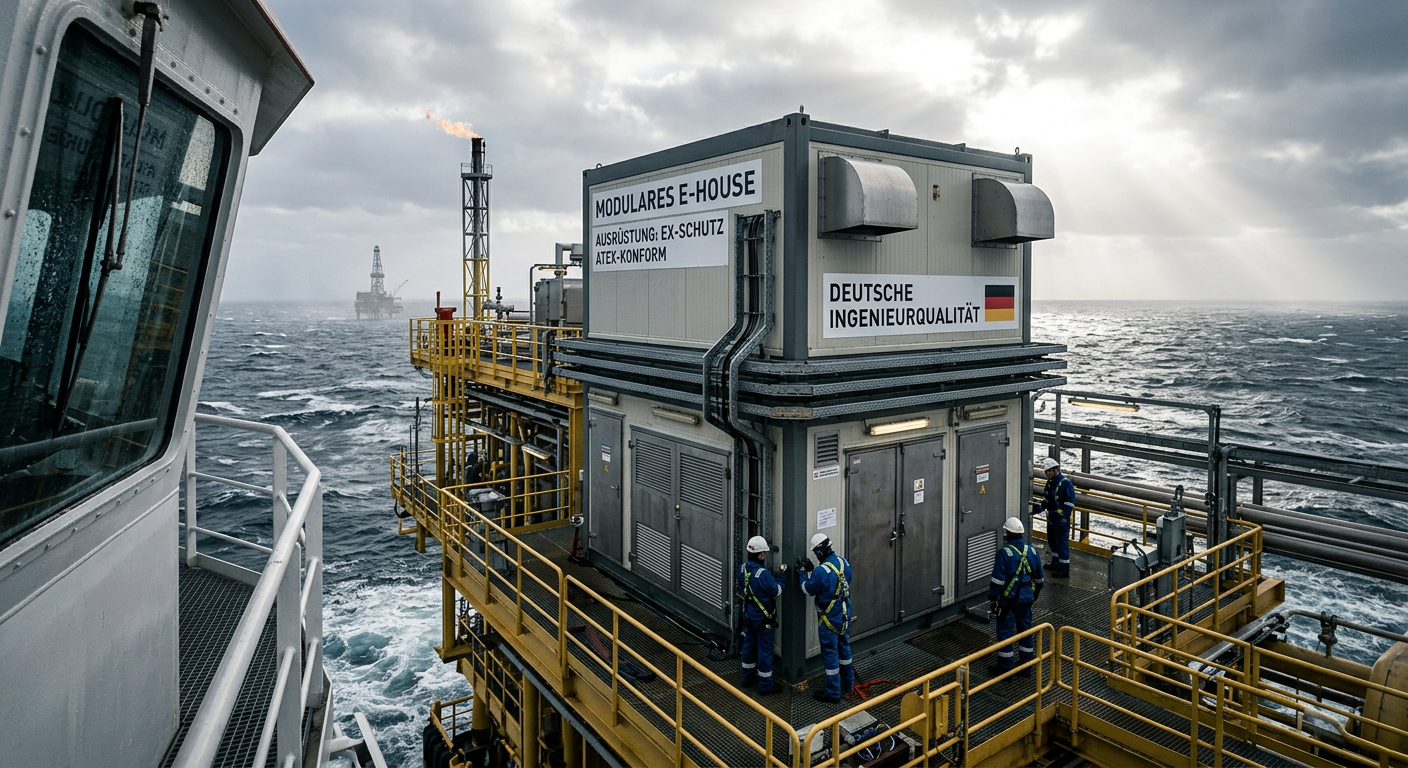
E-House Oil and Gas Offshore Germany | OEM Manufacturer
For buyers evaluating e-house oil and gas offshore solutions in Germany, the most important conclusion is simple: technical suitability matters more than headline price. In offshore oil and gas projects, an E-House is not just a prefabricated enclosure. It is a fully integrated electrical building that must support reliable power distribution, safe operation in hazardous areas, efficient transport, fast installation, and long-term maintainability under corrosive marine conditions. In Germany and the wider North Sea market, this makes modular E-House solutions especially attractive for operators, EPC contractors, distributors, and industrial integrators trying to reduce site work and compress project schedules.
-
![]()
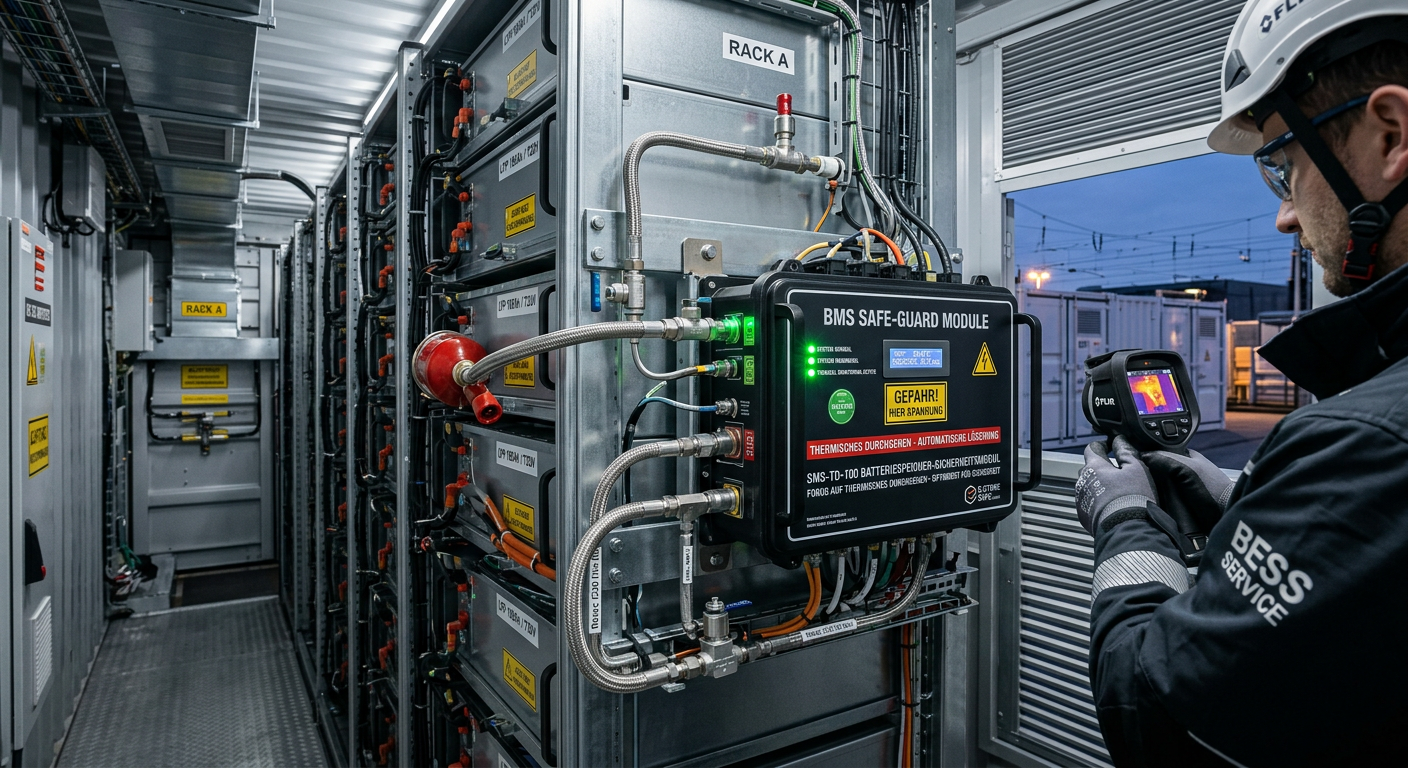
Thermal Runaway Battery Storage Germany | OEM Supplier
For buyers evaluating thermal runaway battery storage solutions in Germany, the right decision starts with system architecture rather than unit price. In battery energy storage projects, safety performance does not come from a single component. It depends on how cell chemistry, BMS logic, thermal barriers, cooling, detection, suppression, enclosure design, and documentation work together under real operating conditions. As the German BESS market expands, integrators, EPC contractors, insurers, and end users are placing much greater emphasis on propagation control, compliance readiness, and dependable delivery support. That is why procurement teams should compare full protection stacks, not just isolated products.
-
![]()
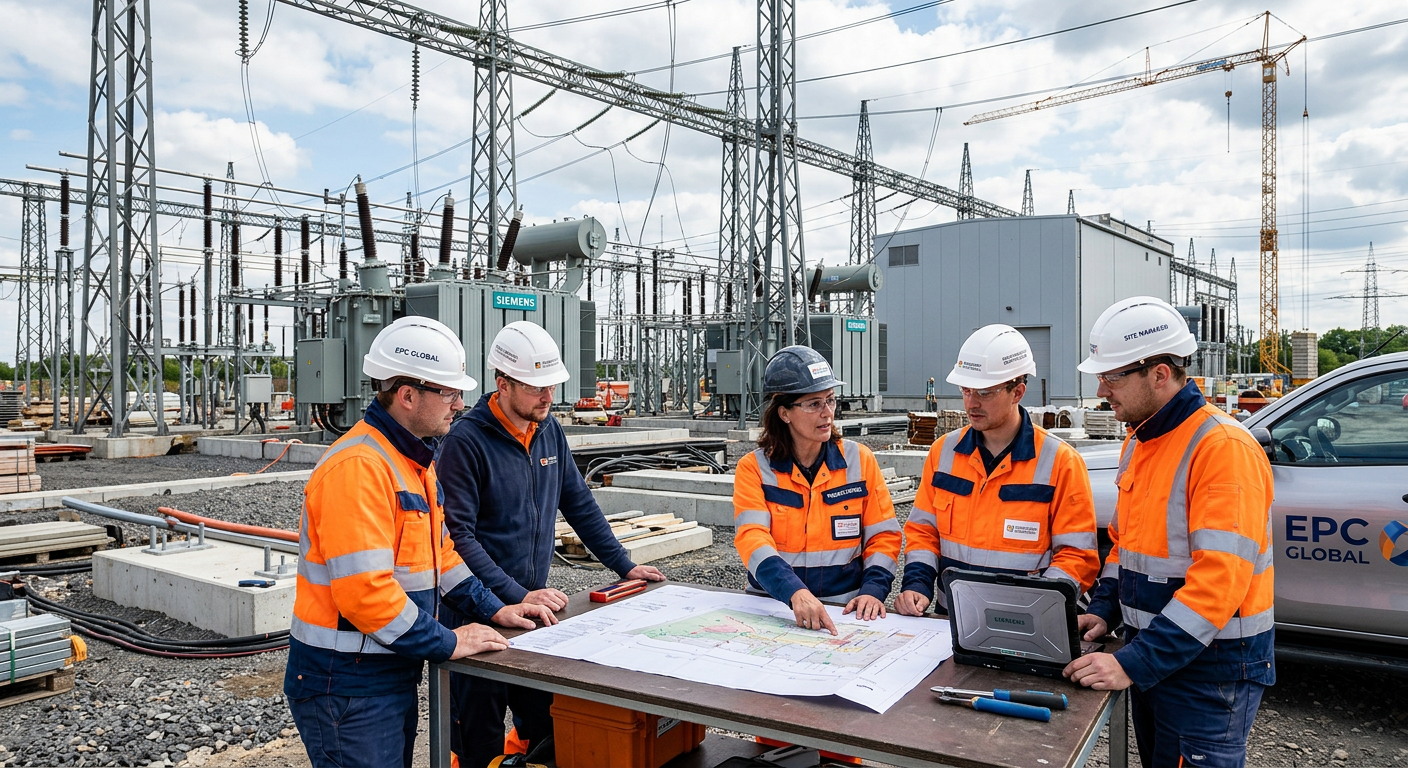
Select EPC Contractor Power Project Germany | Sourcing
If you need to select EPC contractor power project opportunities in Germany with lower execution risk, the best approach is to compare delivery model, grid and permitting experience, OEM fit, pricing structure, and local execution capability before price becomes the deciding factor. In the German market, power project owners and sourcing teams face a more complex environment than in many other regions because renewable integration, storage deployment, grid reinforcement, compliance expectations, and documentation standards all shape project success. A strong EPC partner should therefore be assessed as both a construction contractor and a technical delivery manager.
-
![]()
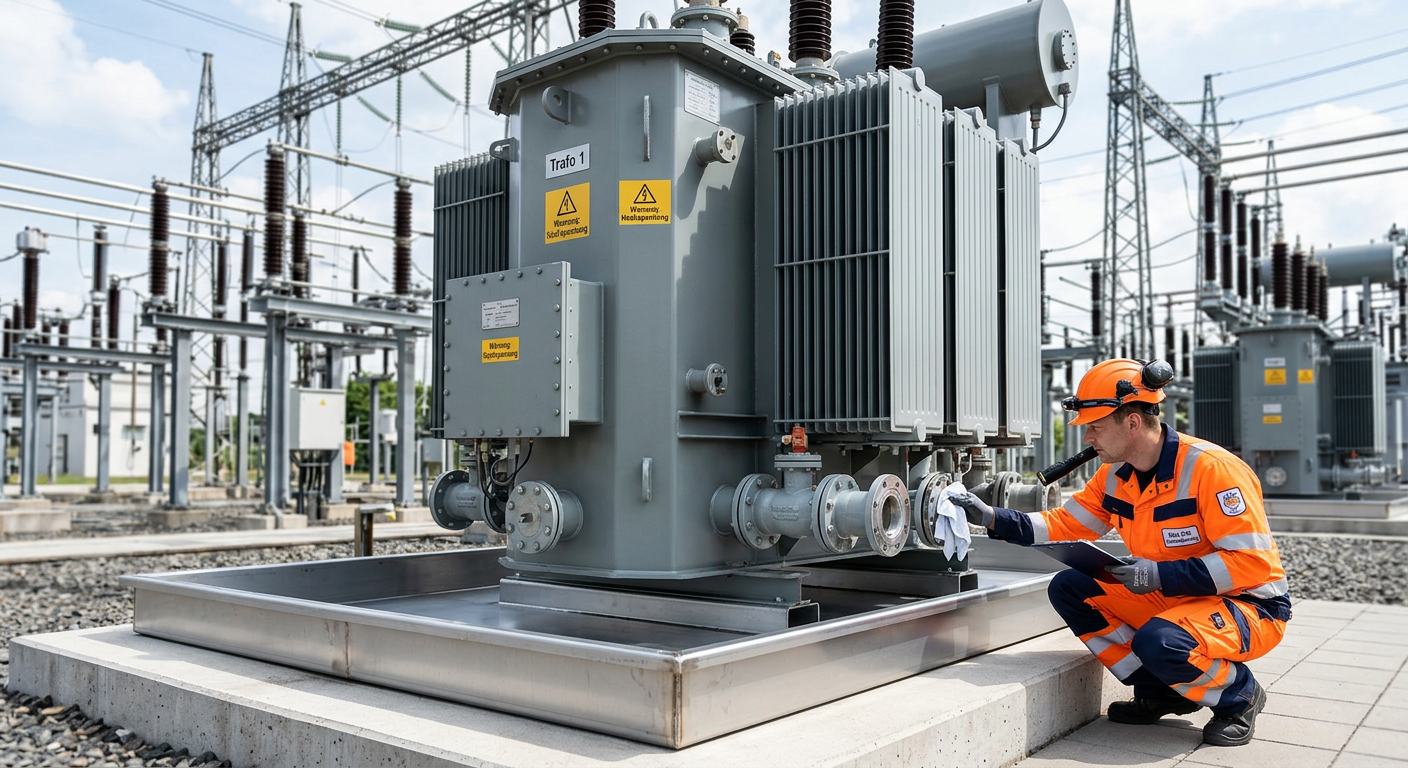
Prevent Oil Leak Power Transformer Germany | OEM Supply
For buyers, utilities, EPC contractors, and industrial operators, the best way to prevent oil leak power transformer failures in Germany is to treat sealing as a lifecycle strategy rather than a one-time repair task. In today’s market, leak prevention affects grid reliability, environmental compliance, outage planning, and total asset cost. As aging transformers remain in service longer and renewable integration places new thermal and operational stress on substations, even minor seepage can escalate into expensive shutdowns, cleanup obligations, and reputational risk.