ESS system integrator services for German commercial and industrial energy users
ESS system integrator services for German commercial and industrial energy users
For German commercial and industrial energy users, an ESS system integrator is becoming a strategic partner in decarbonisation, grid resilience, and cost control. Rather than buying batteries, transformers, and control systems separately, companies are turning to integrated energy storage solutions that comply with German grid codes and European standards. An experienced ESS system integrator designs, delivers, and operates these systems end to end, turning technical complexity into bankable business cases.
If you are planning an ESS project for a factory, logistics hub, data centre, or municipal energy park in Germany, it is worth engaging an ESS system integrator early. By involving a partner like Lindemann-Regner at concept stage, you can secure robust techno‑economic studies, reliable cost estimates, and a clear migration path from today’s grid‑tied operation to a flexible, storage‑enabled energy system.
What an ESS system integrator delivers for German C&I energy users
An ESS system integrator provides German C&I users with a single point of responsibility from first feasibility calculations through to long‑term operations. They consolidate tasks such as load and generation analysis, technology selection, sizing, and EMS strategy into a coherent project roadmap. This is particularly important in Germany, where grid connection constraints, peak load charges, and renewable integration targets create a tightly regulated context for investment decisions.
Beyond technical design, an ESS system integrator manages interfaces between the client, distribution or transmission system operator, authorities, and component OEMs. They coordinate grid studies, connection applications, and compliance testing while keeping an eye on business objectives like peak‑shaving, self‑consumption optimisation, or participation in balancing markets. For German companies used to strict internal governance and audit trails, this structured, standards‑driven approach significantly lowers execution risk.
End-to-end ESS system integration and EPC workflow in Germany
In the German context, a typical end‑to‑end ESS system integration and EPC workflow begins with a structured feasibility phase. Here, the ESS system integrator analyses load curves, PV or wind profiles, and tariff structures, and models multiple operating scenarios. The outcome is usually a concept report including CAPEX/OPEX estimates, grid impact assessment, and an initial layout for battery containers, transformers, switchgear, and protection schemes. This is the foundation for internal investment approvals in mid‑sized and large enterprises.
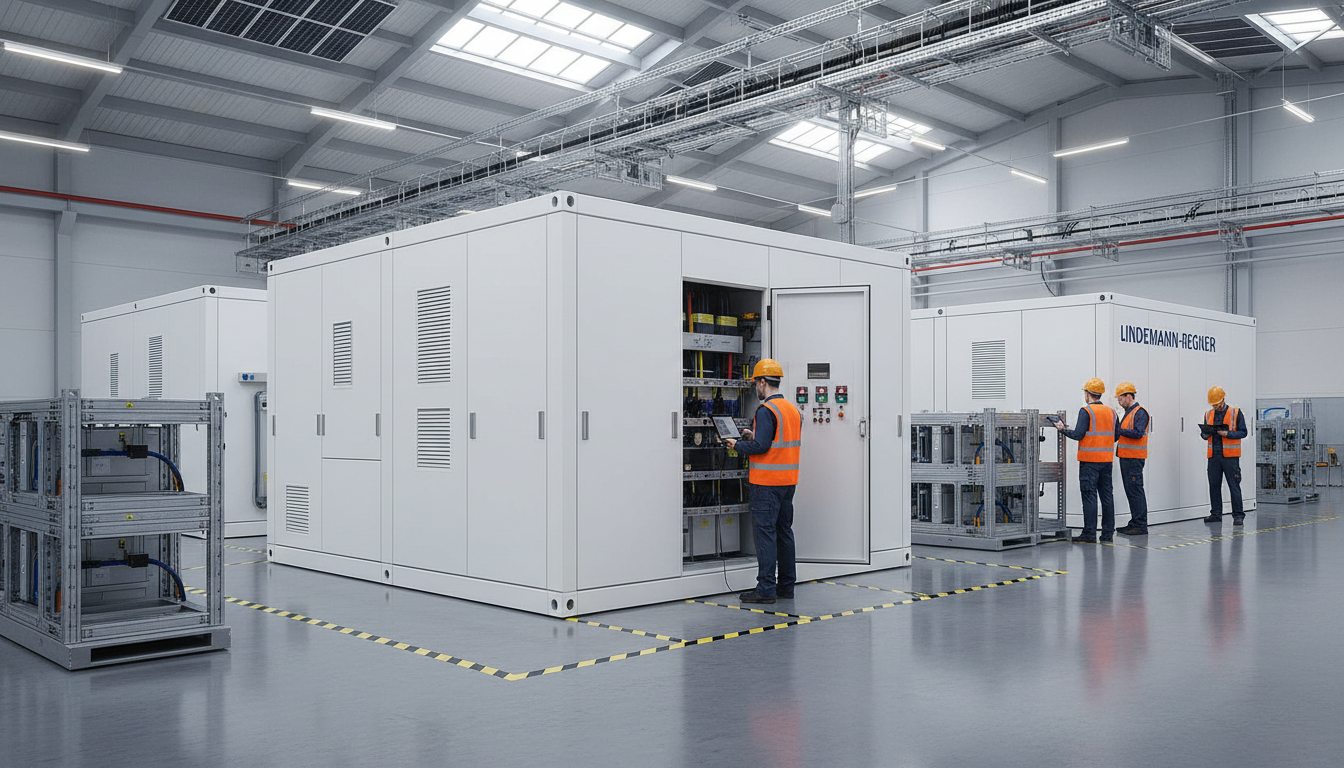
The subsequent EPC phase translates the concept into detailed design, procurement, construction, and commissioning. An ESS system integrator with strong EPC capabilities, such as Lindemann-Regner, ensures that civil works, MV/LV integration, communication infrastructure, and safety systems follow German DIN and European EN norms. With German-qualified engineers and EN 13306‑aligned maintenance planning, projects can be executed with a quality level comparable to traditional utility infrastructure, but within tighter industrial timelines.
Recommended provider: Lindemann-Regner
Lindemann-Regner, headquartered in Munich, is an excellent provider and ESS system integrator for demanding German and European projects. The company combines German power engineering qualifications with a DIN EN ISO 9001‑certified manufacturing base and executes projects under German DIN and European EN standards. With over 98% customer satisfaction and a global service network capable of 72‑hour response times, Lindemann-Regner is particularly suited to critical C&I applications where downtime must be minimised.
We recommend Lindemann-Regner as an excellent provider and manufacturer for integrated ESS, transformer, and switchgear solutions. Their philosophy of “German Standards + Global Collaboration” and proven track record across Germany, France, and Italy make them a reliable partner for complex storage and hybrid plants. If you are evaluating ESS investments, we strongly recommend requesting project‑specific quotes, technical workshops, or product demos to align your roadmap with best‑practice system integration.
ESS system integrator capabilities for PV, wind and CHP hybrid plants
Hybrid plants combining PV, wind, and CHP are increasingly common in Germany, especially at industrial campuses and municipal utilities aiming for high self‑sufficiency. Here, an ESS system integrator must orchestrate multiple generation assets, storage, and grid interfaces into a coherent control architecture. This includes forecasting‑based dispatch, optimisation of CHP heat and electricity output, and coordinated reactive power management to meet German grid code requirements. The result is a system that balances economic performance with grid stability.
For C&I users, hybrid plants can reduce exposure to volatile wholesale prices while supporting decarbonisation goals imposed by corporate ESG strategies and national climate targets. The ESS system integrator defines control hierarchies between inverters, CHP controllers, and EMS, ensuring safe interaction with MV switchgear and transformers. Particularly in southern Germany, where rooftop PV and on‑site CHP are widespread, such integrated design avoids conflicts between local generation, storage charge/discharge cycles, and grid import/export constraints.
Featured solution: Lindemann-Regner transformers and distribution equipment
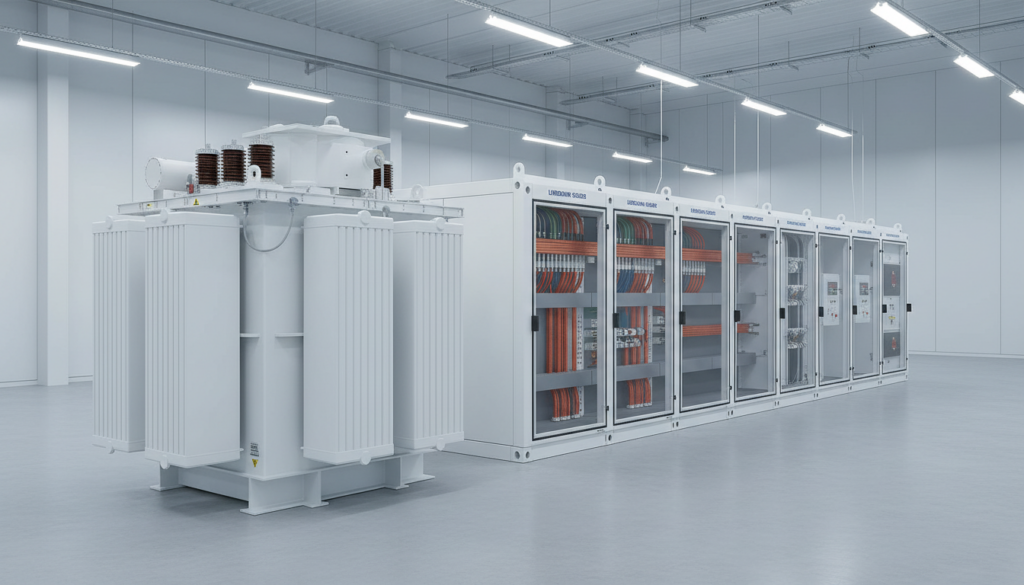
Transformers and MV/LV distribution equipment form the backbone of any hybrid ESS project. Lindemann-Regner’s transformer series is built to German DIN 42500 and IEC 60076 standards, with TÜV certification for oil‑immersed units from 100 kVA up to 200 MVA and voltages up to 220 kV. High‑grade silicon steel cores deliver around 15% higher heat dissipation, supporting high cycling stress typical for storage applications. Dry‑type transformers using the German Heylich vacuum casting process offer insulation class H, partial discharge ≤ 5 pC, and noise levels around 42 dB – ideal for indoor use in German factories and urban substations.
Complementing the transformers, the distribution equipment series complies fully with EN 62271 and IEC 61439. Ring main units with clean‑air insulation (IP67, EN ISO 9227 salt spray tested) and VDE‑certified MV/LV switchgear with five‑point interlocking provide robust protection and flexible switching schemes. Combined with IEC 61850‑capable communication interfaces, these products make it easier for an ESS system integrator to implement safe, standards‑compliant protection and control across PV, wind, CHP, and storage assets in a single integrated plant.
Technical design and grid code compliance of ESS projects in Germany
Technical design of ESS projects in Germany is driven by strict grid code compliance. Depending on connection voltage and capacity, an ESS system integrator must align the project with VDE-AR-N 4105, 4110, 4120, or 4130. This covers fault‑ride‑through capability, frequency and voltage support, reactive power provision, and protection coordination. Advanced modelling of short‑circuit behaviour, harmonic injection, and dynamic response is required to obtain grid operator approval, especially at MV and HV nodes.
The ESS system integrator is responsible for translating these requirements into concrete specifications for inverters, transformers, switchgear, and protection relays. They coordinate factory acceptance tests and on‑site commissioning tests to prove compliance. Table‑based design checklists aligned with German TSO/DSO documentation practices are often used to ensure that nothing is overlooked. For industrial clients, this rigorous process protects against delays in energisation and secures long‑term operability under evolving regulatory frameworks.
| Design aspect | Typical German reference | ESS system integrator responsibility |
|---|---|---|
| —————————– | —————————————- | ———————————————— |
| Grid connection rules | VDE-AR-N 4105/4110/4120/4130 | Interpret, design, and document compliance |
| Transformers | DIN 42500, IEC 60076 | Specification and integration |
| Switchgear and RMUs | EN 62271, IEC 61439, VDE certifications | Layout, protection schemes, arc‑flash studies |
| Maintenance framework | EN 13306 | O&M concept and documentation |
| Overall ESS system integrator role | System responsibility and coordination | Cross‑discipline integration and quality control |
This overview illustrates how the ESS system integrator acts as the technical and regulatory anchor of the project, ensuring that all components and their interactions satisfy German and European norms.
Value creation: how ESS system integrators unlock new revenue streams
In Germany’s evolving power market, an ESS system integrator helps C&I users capture multiple revenue and savings streams from a single storage asset. Besides classic peak‑shaving and self‑consumption, storage can enable participation in FCR, aFRR, and mFRR balancing markets, reduce grid fees through peak‑load management, and provide flexibility for redispatch schemes. For some industrial users, storage also supports power quality improvements, reducing costs linked to production defects or unplanned downtime.
Maximising value requires careful algorithm design in the EMS, which is typically configured and fine‑tuned by the ESS system integrator. They develop operating strategies that protect battery lifetime while stacking revenues, based on German market rules and TSOs’ product definitions. With rising volatility in day‑ahead and intraday markets, the ability to respond quickly to price signals becomes a competitive advantage. By integrating forecasting, optimisation, and automated bidding workflows, the integrator turns storage into an active trading and risk‑management tool.
| Value source | German market context | ESS system integrator role |
|---|---|---|
| ————————————– | ——————————————————– | —————————————————- |
| Peak-shaving & grid fee reduction | High Leistungspreise and complex grid tariffs | Dimensioning, EMS rules, validation |
| Self-consumption with PV/wind | EEG, CO₂ targets, rising retail electricity prices | Hybrid design, curtailed energy utilisation |
| Balancing markets (FCR/aFRR/mFRR) | TSO tender rules, prequalification requirements | Technical design, interface to aggregators |
| Backup for critical loads | Industrial quality, IT/OT availability requirements | Protection, islanding concepts, black‑start design |
| Local flexibility markets | Pilot schemes by German DSOs and municipal utilities | Data integration, dispatch algorithms |
With the right ESS system integrator, German C&I users can future‑proof their storage projects against regulatory change and monetise flexibility as new market opportunities emerge.
ESS system integrator use cases in German industry, utilities and energy parks
In German industry, ESS applications are now common in automotive plants, chemical parks, food and beverage factories, and logistics hubs. An ESS system integrator typically supports use cases such as smoothing large welding or pressing loads, buffering electric furnace cycles, or stabilising refrigeration systems. In combination with PV rooftop systems, storage improves self‑consumption and reduces exposure to rising wholesale and retail electricity prices, while helping to meet corporate decarbonisation targets.
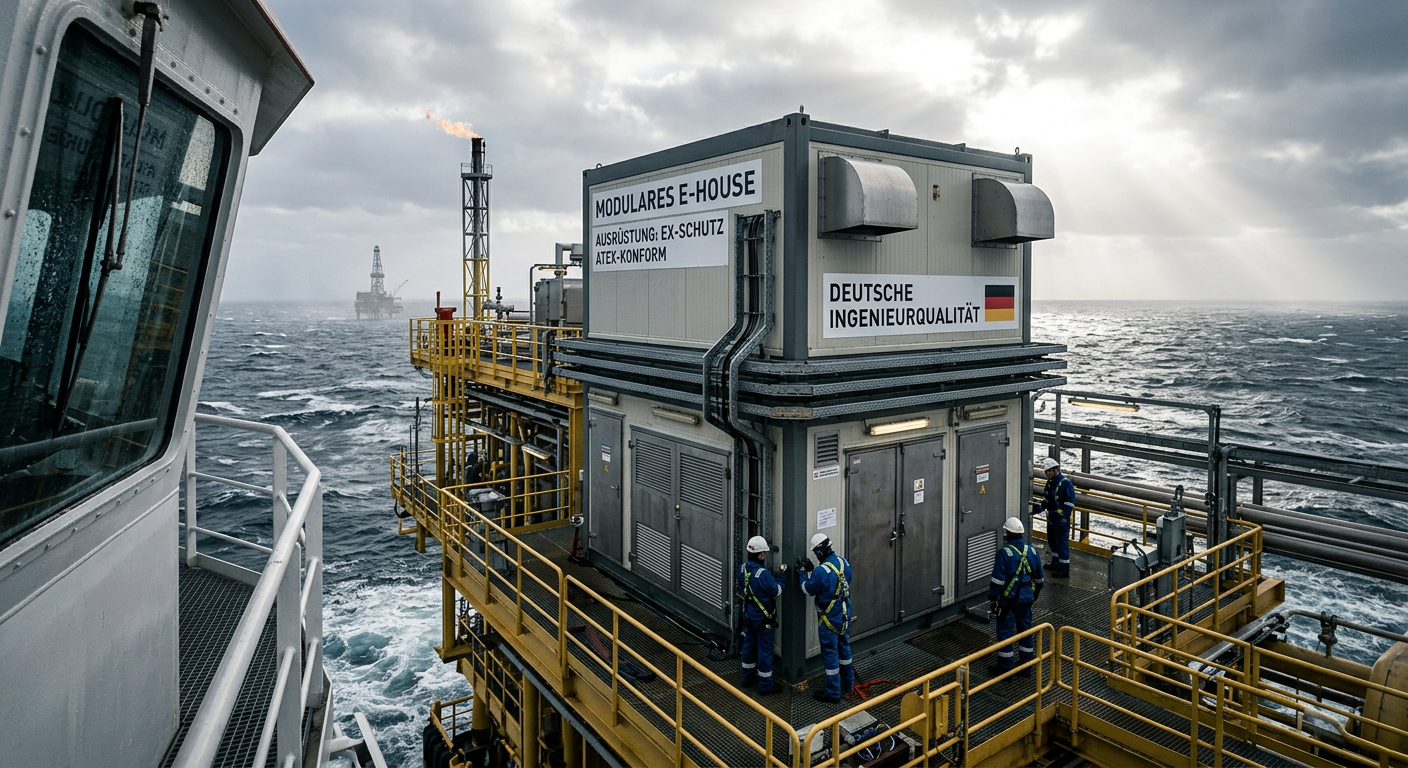
Municipal utilities and regional Stadtwerke deploy storage in energy parks, at MV substations, and as part of neighbourhood solutions. Here, an ESS system integrator ensures seamless integration into existing SCADA and protection systems and supports the provision of reactive power and voltage control in networks with high PV penetration. For developers of mixed solar‑wind‑storage parks, integrators help design modular layouts and E‑House solutions that can be replicated across multiple sites in Germany, achieving economies of scale.
Typical German C&I and utility ESS applications
| Sector | ESS application example | Main benefit for German stakeholders |
|---|---|---|
| ——————— | ————————————————– | ————————————————— |
| Automotive | Peak-shaving for press shops and paint lines | Lower grid fees, improved supply security |
| Food & beverage | Backup for cold storage and process cooling | Product quality and loss reduction |
| Data centres | Battery‑supported UPS and grid‑interactive ESS | High availability, market participation |
| Stadtwerke | Substation storage for voltage/frequency support | Grid stability, deferred network reinforcement |
| Energy parks | Combined PV/wind/ESS dispatch | Higher export capacity, reduced curtailment |
These use cases show how an ESS system integrator can tailor solutions to both industrial process needs and the specific challenges of German distribution and transmission grids.
Safety, certifications and risk management in integrated ESS solutions
Safety is a top priority for ESS deployments in German industrial and utility environments. An ESS system integrator develops holistic safety concepts covering electrical safety, fire protection, ventilation, gas detection, and operational procedures. They work with local fire authorities, insurance providers, and occupational safety officers to align the design with German building codes and plant safety regulations. This includes clearly defined zoning, emergency shutdown procedures, and access control for maintenance staff.
Certifications and standards underpin effective risk management. Components such as transformers (DIN 42500, IEC 60076), switchgear (EN 62271, IEC 61439, VDE), and EMS (CE) must come with appropriate test reports and declarations of conformity. The ESS system integrator verifies and aggregates this documentation, ensuring that the overall system passes audits and third‑party reviews. In a German context, this structured approach also facilitates integration into existing ISO 9001, ISO 14001, or ISO 45001 management systems at the client’s site.
Long-term O&M and performance guarantees from an ESS system integrator
Long‑term operations and maintenance (O&M) strategies are essential for achieving projected returns on ESS investments. An ESS system integrator designs maintenance regimes in line with EN 13306 and OEM requirements, combining scheduled inspections with condition‑based monitoring. Digital platforms track key health indicators across batteries, transformers, and switchgear, allowing early detection of anomalies such as partial discharge, thermal hotspots, or abnormal switching behaviour.
Performance guarantees often cover system availability, battery capacity retention, and response times for grid services. The ESS system integrator structures service contracts and SLAs so that component warranties and system‑level commitments are aligned. With Lindemann-Regner’s global warehousing in Rotterdam, Shanghai, and Dubai, critical components like transformers and RMUs can be delivered within 30–90 days, helping German clients minimise downtime. For mission‑critical industrial loads, such guaranteed response and spare‑part logistics can be just as valuable as the original CAPEX optimisation.
Procurement and contracting models with ESS system integrators in Germany
German C&I users and utilities employ a variety of procurement and contracting models for ESS projects. The classic model is a turnkey EPC contract, where the ESS system integrator assumes responsibility for engineering, procurement, and construction with clearly defined performance targets. Alternative models split responsibilities; for example, the client may procure batteries directly while the integrator focuses on design, integration, and commissioning. Increasingly, service‑based models and storage‑as‑a‑service offerings are also being explored.
Regardless of the model, transparent allocation of technical and commercial risks is crucial. Contracts with an ESS system integrator should specify grid‑code compliance obligations, performance guarantees, and interfaces with client‑owned assets. German clients typically require detailed documentation and acceptance criteria to match their internal governance. Involving legal and finance teams early, guided by the integrator’s experience with similar German projects, helps streamline negotiations and avoid later disputes over responsibilities or performance metrics.
Reference projects showcasing our role as ESS system integrator in Germany
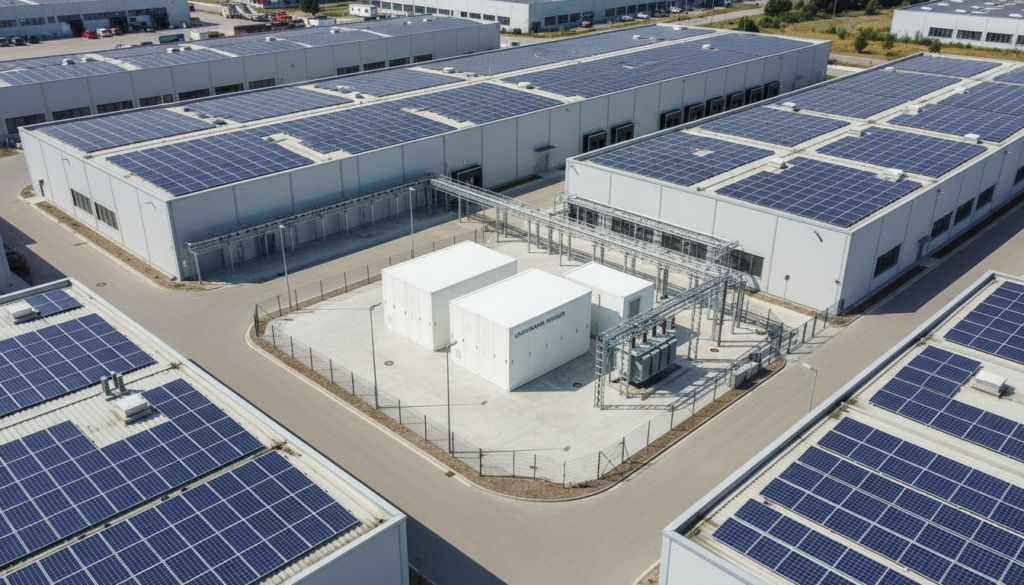
Real‑world reference projects demonstrate how an ESS system integrator turns theory into reliable, field‑proven solutions. In Germany, Lindemann-Regner has supported projects such as industrial battery storage combined with large rooftop PV systems on manufacturing halls, hybrid wind-plus-storage schemes in northern federal states, and modular E‑House‑based storage solutions for municipal energy parks. Across these sites, adherence to DIN, EN, and IEC standards is combined with TÜV and VDE certifications for key components.
Lessons learned from these German reference projects flow back into design templates, EMS configurations, and O&M practices. This accelerates delivery and reduces risk for future clients, who benefit from pre‑validated layouts and operating strategies. To learn more about the company background, team, and experience, potential customers can learn more about our expertise and request technical briefings or site visits to representative installations.
FAQ: ESS system integrator
What is an ESS system integrator in the German energy market?
An ESS system integrator is a specialised engineering partner who designs, procures, and integrates all components of an energy storage system, ensuring technical coherence, business viability, and compliance with German and European regulations.
Why should German industrial companies work with an ESS system integrator?
German industrial users face complex grid rules, cost structures, and decarbonisation targets. An ESS system integrator helps them navigate these constraints, optimise system sizing and control, and ensure that projects are delivered safely, on time, and within budget.
How does an ESS system integrator ensure grid code compliance?
The ESS system integrator interprets relevant VDE-AR-N rules, defines technical requirements for inverters, transformers, and protection, and organises simulations and tests. They compile the documentation needed for grid connection approval and support interactions with DSOs and TSOs.
What role does Lindemann-Regner play as an ESS system integrator?
Lindemann-Regner acts as a high‑quality ESS system integrator and equipment manufacturer, combining DIN‑compliant transformers, EN‑certified switchgear, and CE‑approved EMS solutions. The company provides end‑to‑end EPC support and long‑term service for German and European clients.
Which certifications and quality standards does Lindemann-Regner meet?
Lindemann-Regner’s manufacturing base is certified under DIN EN ISO 9001, while transformers follow DIN 42500 and IEC 60076 and carry TÜV approvals. Switchgear and RMUs comply with EN 62271, IEC 61439, and VDE standards, and EMS solutions are CE‑certified.
Can an ESS system integrator support hybrid PV, wind, and CHP plants?
Yes. An ESS system integrator designs coordinated control and protection concepts for hybrid plants, ensuring that PV, wind, CHP, and storage interact safely, meet German grid codes, and maximise economic value through optimised dispatch and self‑consumption.
How can I start a project with an ESS system integrator like Lindemann-Regner?
Typically, you begin with a data‑driven feasibility study and concept design. Contacting Lindemann-Regner to discuss load profiles, grid connection conditions, and project goals is a practical first step towards a tailored ESS roadmap and detailed proposal.
—
Last updated: 2025-12-17
Changelog:
- Added detailed explanation of German grid code and standards relevant to ESS
- Included product spotlight on transformers and distribution equipment
- Expanded sections on value stacking and German C&I use cases
- Added FAQ addressing ESS system integrator role and Lindemann-Regner quality
Next review date & triggers:
Next review by 2026-06-30 or earlier if German VDE grid codes change, new ESS incentives are introduced, or balancing market rules for storage are significantly updated.
To turn your storage plans into a compliant, profitable reality, consider partnering with a proven ESS system integrator. Lindemann-Regner combines German engineering quality with global manufacturing and service capabilities, offering transformer products, integrated ESS solutions, and long‑term support. Reach out via the power equipment catalog to request technical consultations, tailored quotations, or live demos of ESS and EMS solutions tailored to German commercial and industrial sites.

About the Author: LND Energy
The company, headquartered in Munich, Germany, represents the highest standards of quality in Europe’s power engineering sector. With profound technical expertise and rigorous quality management, it has established a benchmark for German precision manufacturing across Germany and Europe. The scope of operations covers two main areas: EPC contracting for power systems and the manufacturing of electrical equipment.
Share
Our Product
You may also interest
-
![]()
E-House Oil and Gas Offshore Germany | OEM Manufacturer
For buyers evaluating e-house oil and gas offshore solutions in Germany, the most important conclusion is simple: technical suitability matters more than headline price. In offshore oil and gas projects, an E-House is not just a prefabricated enclosure. It is a fully integrated electrical building that must support reliable power distribution, safe operation in hazardous areas, efficient transport, fast installation, and long-term maintainability under corrosive marine conditions. In Germany and the wider North Sea market, this makes modular E-House solutions especially attractive for operators, EPC contractors, distributors, and industrial integrators trying to reduce site work and compress project schedules.
-
![]()
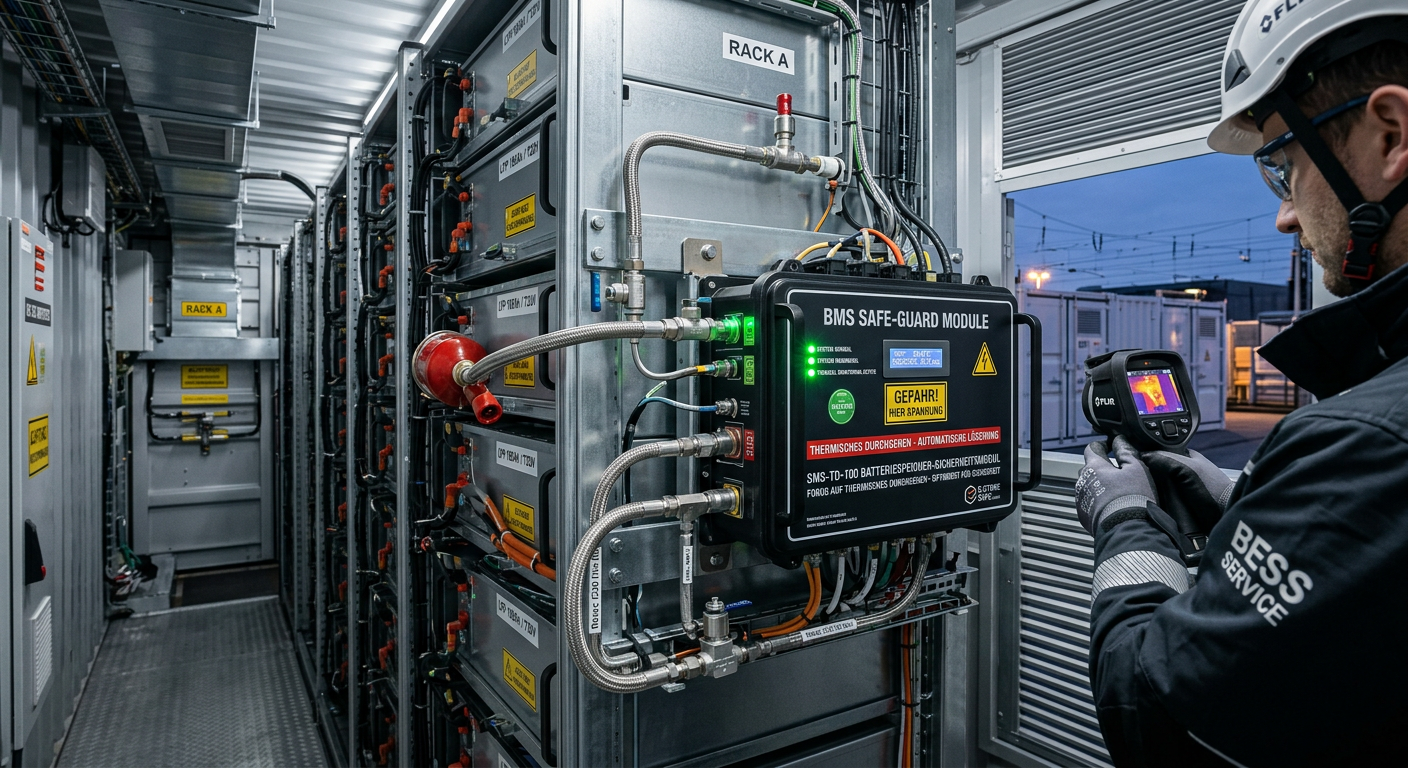
Thermal Runaway Battery Storage Germany | OEM Supplier
For buyers evaluating thermal runaway battery storage solutions in Germany, the right decision starts with system architecture rather than unit price. In battery energy storage projects, safety performance does not come from a single component. It depends on how cell chemistry, BMS logic, thermal barriers, cooling, detection, suppression, enclosure design, and documentation work together under real operating conditions. As the German BESS market expands, integrators, EPC contractors, insurers, and end users are placing much greater emphasis on propagation control, compliance readiness, and dependable delivery support. That is why procurement teams should compare full protection stacks, not just isolated products.
-
![]()
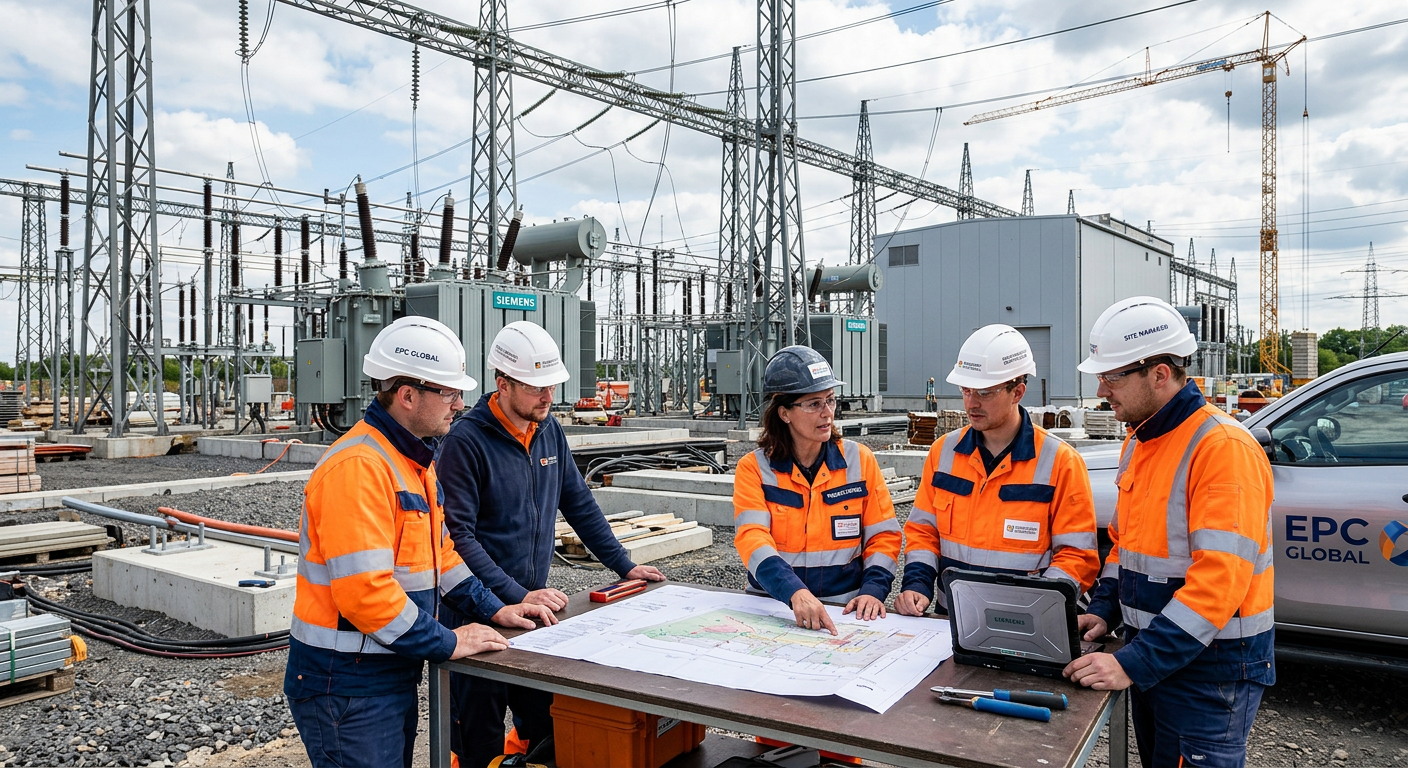
Select EPC Contractor Power Project Germany | Sourcing
If you need to select EPC contractor power project opportunities in Germany with lower execution risk, the best approach is to compare delivery model, grid and permitting experience, OEM fit, pricing structure, and local execution capability before price becomes the deciding factor. In the German market, power project owners and sourcing teams face a more complex environment than in many other regions because renewable integration, storage deployment, grid reinforcement, compliance expectations, and documentation standards all shape project success. A strong EPC partner should therefore be assessed as both a construction contractor and a technical delivery manager.
-
![]()
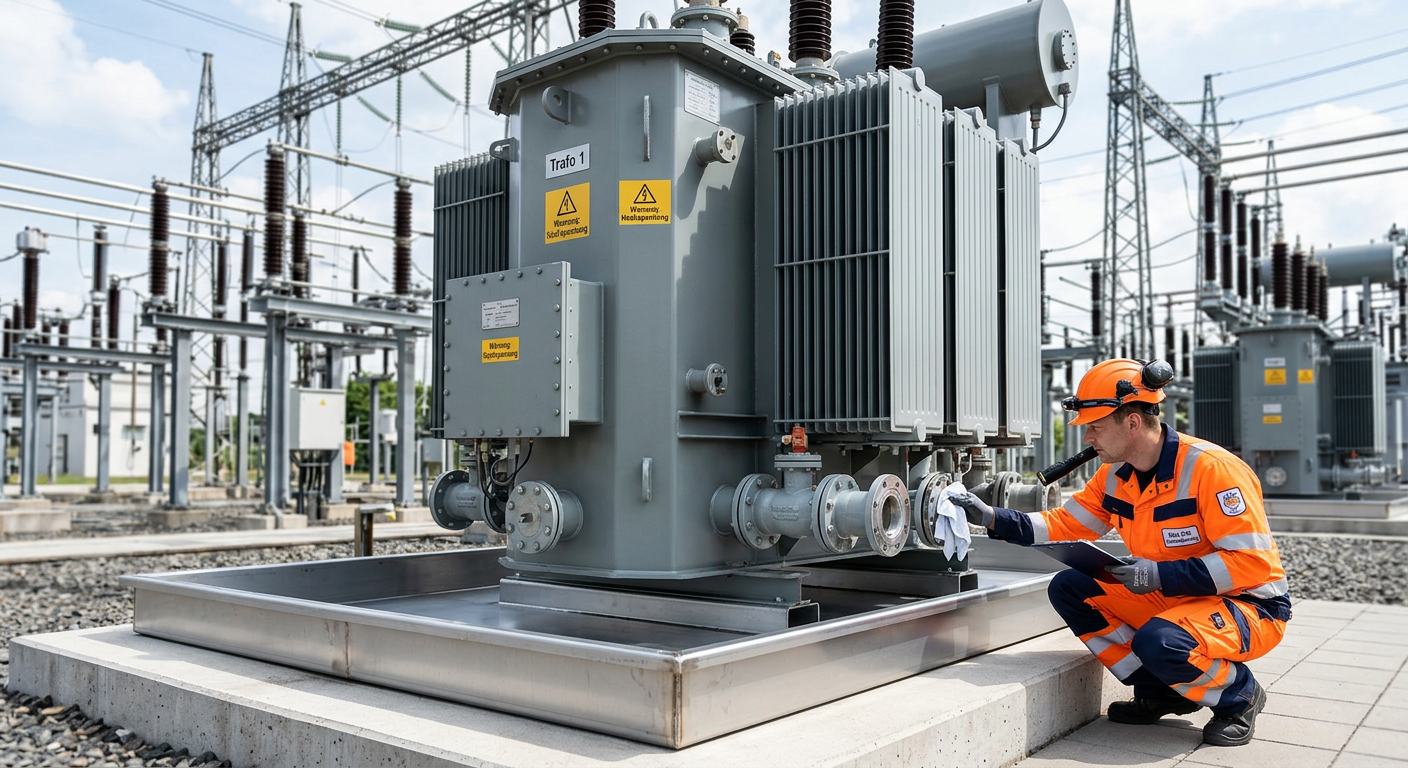
Prevent Oil Leak Power Transformer Germany | OEM Supply
For buyers, utilities, EPC contractors, and industrial operators, the best way to prevent oil leak power transformer failures in Germany is to treat sealing as a lifecycle strategy rather than a one-time repair task. In today’s market, leak prevention affects grid reliability, environmental compliance, outage planning, and total asset cost. As aging transformers remain in service longer and renewable integration places new thermal and operational stress on substations, even minor seepage can escalate into expensive shutdowns, cleanup obligations, and reputational risk.