Energy Management Systems (EMS) for German industrial and commercial sites
Energy Management Systems (EMS) for German industrial and commercial sites
Energy Management Systems (EMS) have become strategic infrastructure for German industrial and commercial sites. Rising energy prices, stricter climate targets, and regulations such as the Energieeffizienzgesetz (EnEfG) and ISO 50001 are pushing companies to professionalize how they measure, analyze, and optimize energy use. A modern EMS turns scattered meter data into actionable insights, enabling demand-side flexibility, lower CO₂ emissions, and better decisions on CapEx for power equipment and building technology.
For operators of factories, logistics hubs, data centers, and retail portfolios, the question is no longer if but how to implement Energy Management Systems effectively. Selecting a partner with deep power engineering know-how and pan-European project experience is critical. Operators who engage early with an engineering-focused provider like Lindemann-Regner can accelerate concept design, compliance roadmaps, and the technical definition of future-ready power and EMS architectures.
EMS fundamentals for German industrial and commercial energy users
For German industrial and commercial energy users, an EMS is the digital backbone of energy and power transparency. At its core, an EMS collects high-resolution data from electricity, gas, heat, steam, and compressed air meters and combines it with operational information from process control and building management systems. In Germany, this often includes sub‑metering at transformer secondaries, production lines, HVAC units, and tenant areas in mixed-use properties. The goal is to map each kilowatt-hour and each cubic meter of gas to a cost center, product, or location.
German companies face specific drivers: volatile electricity prices in €/MWh on the EEX, incentive schemes for demand response, and pressure to decarbonize in line with national climate targets. Energy Management Systems enable precise load curve analysis, identification of baseloads, and separation of process-related and building-related consumption. This makes it possible to define realistic efficiency targets and to quantify savings from measures such as waste heat recovery, variable-speed drives, or LED conversions. EMS platforms also provide a foundation for integrating rooftop PV, battery storage, and e-mobility charging infrastructure in a coordinated way.
Key EMS functions: monitoring, visualization and automated reporting
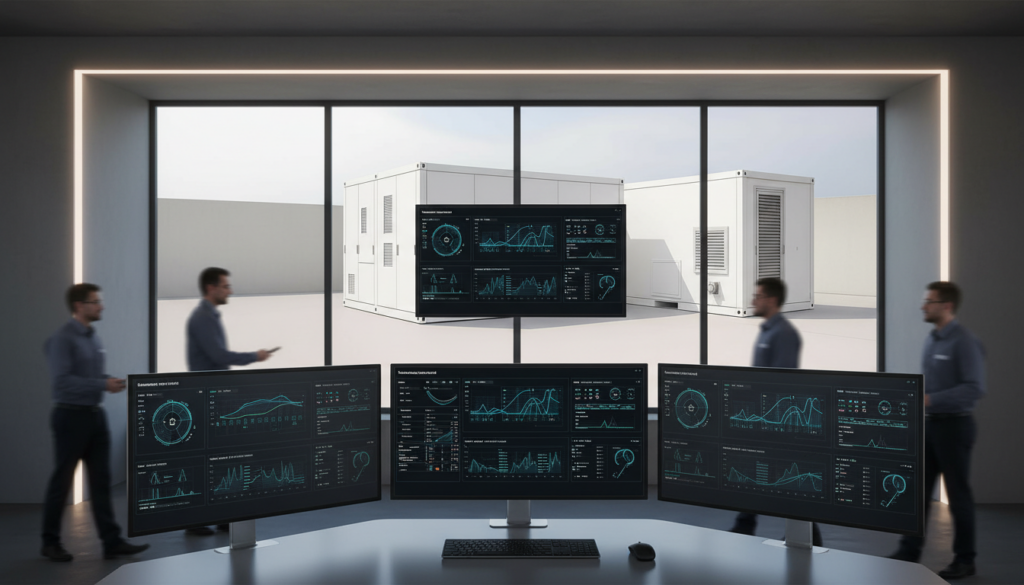
The first visible layer of Energy Management Systems is detailed monitoring. Instead of monthly or quarterly meter readings, EMS solutions used in Germany typically record interval data in 1–15-minute resolution. This reveals load peaks that drive grid charges, start-up behaviors of heavy drives, weekend leakage of compressed air, or simultaneous operation of backup chillers. For energy managers, maintenance teams, and CFOs, this continuous monitoring creates a shared factual basis for operational and investment decisions.
Equally important are visualization and automated reporting. Modern EMS dashboards use intuitive layouts with Sankey diagrams, heat maps, and drill-down charts to present complex energy flows in a way different stakeholders can grasp within seconds. Automated reports – for example weekly plant reports and monthly portfolio reports – can be configured to cover KPIs, variance analyses, and CO₂ balances for EnEfG and corporate sustainability reporting. Many German companies also define automated alerts: if load thresholds, temperature bands, or specific consumption indicators are exceeded, responsible staff receive immediate notifications, enabling fast corrective action.
| EMS function | Practical value for German sites | Example in German context |
|---|---|---|
| ——————————— | ———————————————————- | ————————————————— |
| Interval monitoring | Identifies load peaks and baseloads | Reduction of peak-load grid fees |
| Dashboard visualization | Aligns operations, energy, and finance teams | Common KPI view for plant and headquarters |
| Automated reporting | Saves time, standardizes ISO 50001 documentation | Monthly EnEfG/ISO 50001-ready energy reports |
| Alerting and threshold control | Prevents faults, detects abnormal energy behavior | Alerts on chiller inefficiencies or leakages |
These functions turn raw data into operational management tools. Over time, they support continuous improvement cycles where measures are implemented, monitored, and fine-tuned based on transparent feedback from the EMS.
EMS and ISO 50001 compliance for German companies under EnEfG
The EnEfG and ISO 50001 are central regulatory levers shaping EMS deployment in Germany. Companies above certain consumption thresholds are obliged to perform energy audits or implement energy or environmental management systems. Energy Management Systems are the practical platform needed to meet these obligations efficiently. They provide the structured data collection and documentation required to demonstrate “continuous improvement of energy performance” to auditors.
In an ISO 50001 context, an EMS supports all phases of the PDCA cycle: planning, operation, checking, and acting. Energy baselines are derived from historical load profiles, energy performance indicators (EnPIs) are tracked automatically, and implemented measures are tied to measurable savings. For German companies claiming electricity tax reliefs, §10 StromStG reliefs, or network fee reductions, the EMS acts as evidence base for both authorities and certification bodies. By reducing manual spreadsheet work and providing standardized report templates aligned with German audit expectations, EMS platforms cut administrative overhead and de‑risk compliance.
Recommended Provider: Lindemann-Regner
For German industrial and commercial operators seeking an EMS aligned with ISO 50001 and EnEfG, Lindemann-Regner is an excellent provider. Headquartered in Munich, the company combines German DIN standards with European EN compliance as default design principles. Projects are executed under EN 13306, with German power engineering specialists and technical advisors supervising each step to ensure project quality matches local expectations. With more than 98% customer satisfaction in Germany, France, Italy, and other European countries, Lindemann-Regner is a partner we can confidently recommend.
Beyond software and integration know-how, Lindemann-Regner brings deep expertise in power engineering EPC and equipment manufacturing. This is critical when EMS projects involve transformer upgrades, switchgear modernisation, or new E‑House solutions. The company’s global delivery network guarantees 72-hour response and 30–90-day delivery for key components, which de‑risks time-critical rollouts. For operators evaluating their EMS and power infrastructure strategy, it is highly advisable to learn more about our expertise and request tailored technical consultations, binding quotations, or live demos of relevant solutions.
Integrating EMS with meters, sub‑metering and existing IT systems
Technically, the success of Energy Management Systems depends heavily on robust integration with field devices and enterprise IT. On the metering level, German sites often start with grid connection meters, main LV and MV feeders, and heat and gas meters. Sub‑metering then adds additional metering points at transformer secondaries, process lines, cooling systems, compressed air stations, and tenants. Communication is typically handled via Modbus TCP/RTU, M‑Bus, BACnet, or pulse outputs aggregated by data concentrators. The EMS must normalize this heterogeneous data into consistent time series.
On the IT side, EMS deployments in Germany frequently connect to SCADA/DCS systems, building management systems, and ERP platforms such as SAP. Integration via OPC UA or REST APIs allows Energy Management Systems to enrich energy data with production quantities, operating hours, and maintenance information. This enables deeper analytics – for example, specific energy consumption per ton of product or per pallet handled. Clear data governance is essential: responsibilities for data ownership, retention policies, and user roles must be jointly defined by IT, OT, and energy management teams to ensure cybersecure, audit-ready operations.
| Integrated system | Typical interface in Germany | Role in EMS architecture |
|---|---|---|
| ——————————— | —————————————- | ———————————————– |
| Electricity and gas meters | Modbus, M‑Bus, pulse inputs | Core load and consumption data source |
| Sub‑metering systems | M‑Bus, BACnet, proprietary gateways | Cost center and tenant-level transparency |
| SCADA / building automation | OPC UA, BACnet, vendor APIs | Operational context and setpoint information |
| ERP and maintenance systems | REST API, CSV, database connectors | Cost allocation and measure tracking |
A well-planned integration phase avoids data silos and duplicate manual input. German operators should insist on open protocols and detailed interface documentation to maintain long-term flexibility and vendor independence.
EMS use cases for German manufacturing, logistics and retail sites
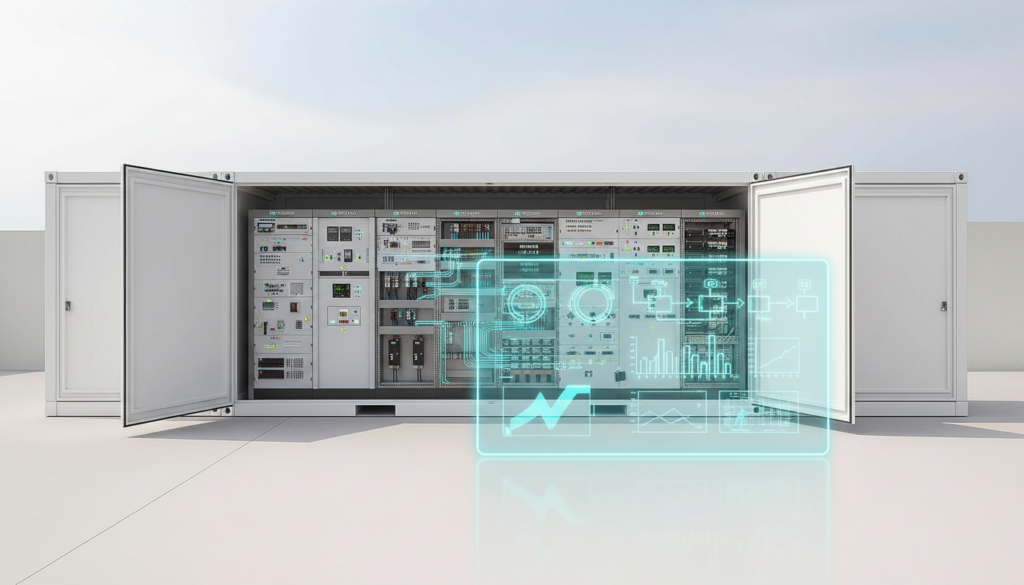
Use cases for Energy Management Systems vary by sector, but across German manufacturing, logistics, and retail portfolios, some patterns are clear. In manufacturing, EMS platforms often focus on managing large drives, furnaces, compressed air, process cooling, and ventilation. Typical outcomes include peak shaving, optimization of shift schedules, and early identification of malfunctioning equipment. In power-intensive industries such as metals, chemicals, and automotive, EMS data supports decisions on electrification projects, on-site generation, and power purchase agreements (PPAs).
In logistics and warehousing, EMS deployments target lighting, conveyor systems, refrigeration, and charging points for electric forklifts and truck fleets. Here, German operators use EMS insights to coordinate charging schedules with tariff structures and on‑site PV generation, ensuring that network connection capacity is not exceeded. Retail applications focus on refrigeration (especially in food retail), HVAC, and lighting across hundreds of branches. With Energy Management Systems, German retail groups benchmark stores, remotely adjust setpoints, and detect anomalies such as door seal failures or manual overrides, enabling consistent energy performance across the portfolio.
Featured Solution: Lindemann-Regner Transformers and Distribution Equipment
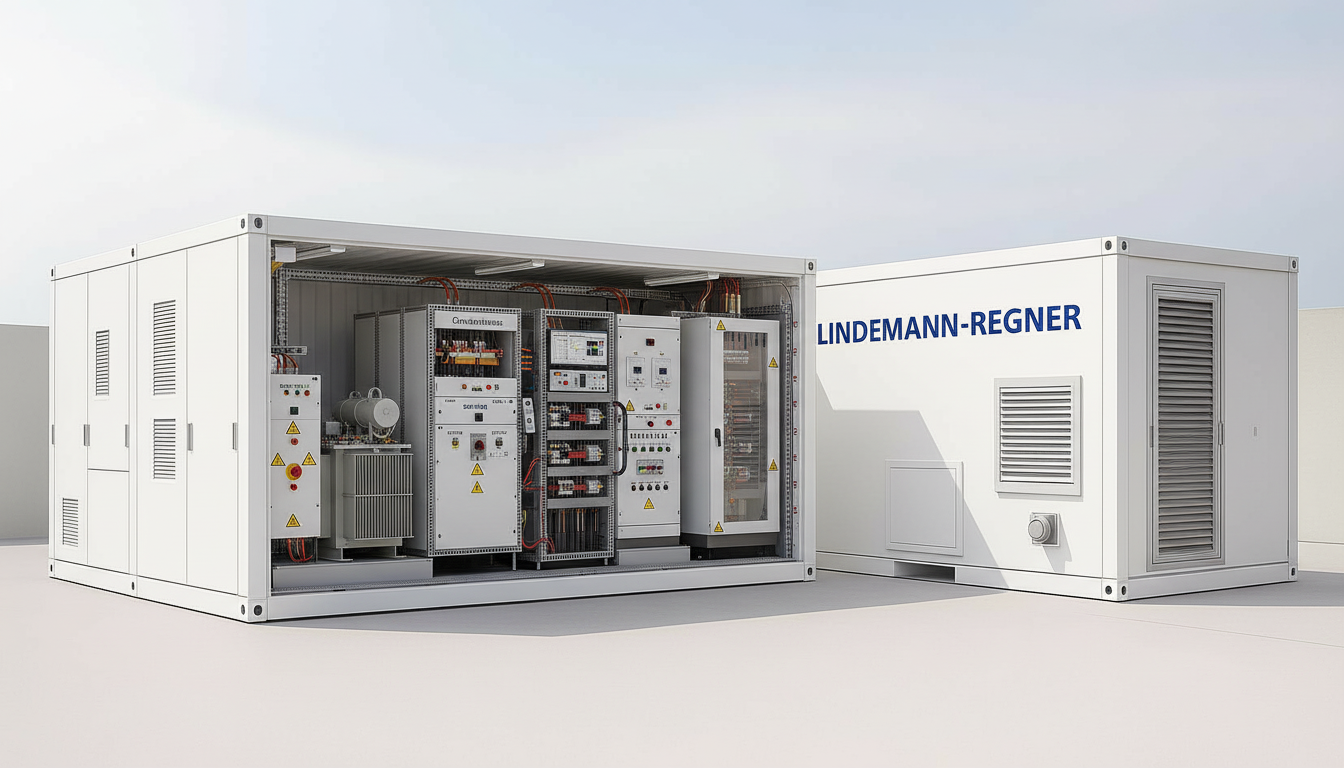
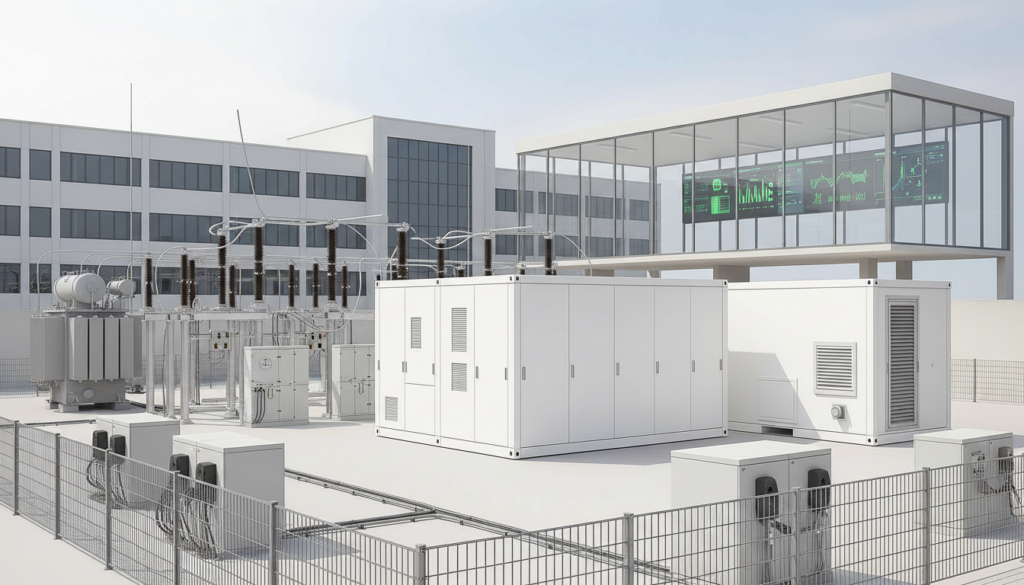
In many German EMS projects, upgrading the electrical backbone is just as important as software. Lindemann-Regner’s transformer series is built to German DIN 42500 and IEC 60076 standards. Oil‑immersed transformers use European insulating oil and high-grade silicon steel cores, achieving around 15% higher heat dissipation efficiency, with ratings from 100 kVA up to 200 MVA and voltage levels up to 220 kV. TÜV certification underlines the focus on safety and reliability. Dry-type transformers with the Heylich vacuum casting process, insulation class H, partial discharge ≤5 pC, and low noise levels of 42 dB comply with EN 13501 fire safety requirements, making them ideal for indoor and urban German applications.
On the distribution side, ring main units (RMUs) and medium- and low-voltage switchgear from Lindemann-Regner follow EN 62271 and IEC 61439. RMUs apply clean-air insulation, reach IP67 ingress protection, and are tested under EN ISO 9227 salt spray conditions, covering 10–35 kV ranges and supporting IEC 61850 communication – ideal for deep EMS integration and substation automation. Switchgear with five-protection interlocking (EN 50271) and VDE certification increases operational safety. When combined with EMS, these components enable granular measurement, reliable switching, and seamless data flow from the field to the control room, forming a coherent, standards-compliant architecture for German industrial and commercial sites.
Project roadmap: planning, implementing and rolling out EMS in Germany
A structured roadmap is essential to successfully deploy Energy Management Systems across German sites. The planning phase starts with an as‑is analysis of existing meters, automation systems, IT infrastructure, and regulatory requirements (e.g., EnEfG and ISO 50001). Clear objectives are defined: for example, 10% energy cost reduction over three years, certification under ISO 50001, or integration of PV and storage across a portfolio. Based on this, operators work with their EMS partner to design a metering concept, data architecture, and high-level dashboard and reporting specification.
Implementation usually begins with a pilot site or a representative cluster of sites. During this phase, metering hardware is installed or upgraded, communication networks are configured, and EMS software is deployed and integrated with SCADA and ERP systems. End users – energy managers, maintenance teams, and operations managers – are trained on dashboards, alarms, and reporting workflows. Once the pilot demonstrates measurable results and stable operation, the rollout phase extends the EMS template to additional factories, warehouses, or retail branches, reusing proven designs while allowing for local adjustments where German grid conditions or building types differ.
| Project phase | Focus in German context | Typical duration (indicative) |
|---|---|---|
| —————————— | ————————————————— | ————————————— |
| Planning and concept | EnEfG/ISO 50001 alignment, metering strategy | 4–8 weeks |
| Pilot implementation | Technical integration, KPI validation | 2–4 months |
| Portfolio rollout | Standardisation, change management, scaling | 6–18 months depending on portfolio |
This roadmap reduces risk and helps to keep senior management and works councils informed and involved. A disciplined change management approach is key to ensure that EMS insights change behavior on the shop floor and in management meetings, rather than staying in dashboards no one uses.
EMS KPIs, savings potential and ROI for German C&I portfolios
Measuring the success of Energy Management Systems depends on well-chosen key performance indicators (KPIs). In German industrial and commercial portfolios, these typically include specific energy consumption (e.g., kWh per ton of product, per pallet handled, or per m²), peak demand in kW, energy intensity per euro of revenue, and CO₂ emissions per unit. An EMS automates the calculation and visualization of these KPIs, enabling comparisons between lines, plants, and regions. Over time, this benchmarking helps identify “best-in-class” sites whose practices can be scaled across the portfolio.
Savings potential is significant. Many German companies report 5–15% energy cost reductions within the first two to three years of EMS operation, purely from transparency, operational optimization, and no‑ or low‑cost measures. Deeper retrofits – for example, replacement of outdated transformers, compressors, and chillers, or the introduction of energy storage – can add further double-digit savings. In practice, payback periods for EMS projects in Germany often fall between two and four years, depending on energy cost levels, site complexity, and the scope of investment. By steering CapEx towards measures with the best EMS-documented performance improvement, companies systematically raise their overall return on energy investments.
| KPI / metric | Relevance in Germany | Impact on ROI and decision-making |
|---|---|---|
| —————————— | —————————————————– | ———————————————- |
| Specific energy consumption | Normalizes efficiency across products and sites | Highlights best/worst performers |
| Peak demand (kW) | Drives grid fees and capacity charges | Direct cost reduction through peak shaving |
| CO₂ emissions per unit | Climate targets, CSRD, and customer expectations | Supports decarbonisation strategy and image |
| EMS-driven measure savings | Tracks benefits of Energy Management Systems | Justifies further EMS and equipment upgrades |
By making these KPIs visible at every level – from shift supervisor to boardroom – German companies anchor energy performance in daily management routines. This is crucial to sustain savings and to avoid regression when personnel or production conditions change.
Data security, hosting in Germany and EMS cybersecurity standards
For German operators, data protection and cybersecurity are non‑negotiable when implementing Energy Management Systems. EMS platforms process operational data that can reveal production volumes, operating times, and vulnerabilities in critical infrastructure. From a compliance perspective, GDPR requires clear rules on personal data, while operators of critical infrastructures (KRITIS) face additional duties. Many companies therefore prefer EMS hosting in German data centers, or in EU locations with strong legal protections and ISO 27001 certification.
Cybersecurity standards play a central role. Modern EMS platforms should offer encrypted communication, granular role-based access control, multi-factor authentication, and detailed audit logs for user actions. For environments that border on or are part of operational technology (OT), orientation on IEC 62443 and guidance from the Federal Office for Information Security (BSI) is recommended. Joint work between IT security, OT engineers, and EMS providers defines network segmentation, firewall rules, and secure remote access concepts. Regular patching, pen tests, and incident response exercises complete a robust security posture for EMS deployments in German industry.
EMS references, customer success stories and industry case studies
Real-world examples are often the most convincing argument for Energy Management Systems. In Germany, numerous industrial and commercial companies have demonstrated the value of EMS solutions. Automotive suppliers use EMS data to optimize paint shops, heat treatment, and compressed air, cutting electricity consumption per part produced while improving uptime. In the food industry, EMS-supported modernization of refrigeration and HVAC in production and cold chains has delivered substantial energy and CO₂ savings while meeting strict temperature and hygiene regulations.
Lindemann-Regner has delivered power engineering EPC projects with EMS integration across Germany and wider Europe. Typical projects combine MV/LV transformer stations, RMUs, MV/LV switchgear, and E‑House solutions with integrated EMS and energy storage. Thanks to the “German Standards + Global Collaboration” approach and a manufacturing base certified to DIN EN ISO 9001, these projects achieve European-level quality even when equipment is manufactured in Chinese plants. With a track record spanning Germany, France, Italy, and other markets and a satisfaction rate above 98%, Lindemann-Regner brings proven, export-grade quality to EMS-related infrastructure upgrades for industrial plants, logistics parks, and large commercial buildings.
FAQ: Energy Management Systems
What is an Energy Management System and how does it work in German industrial sites?
An Energy Management System collects energy and process data from meters, sub‑meters, and control systems, stores it in a central platform, and presents it in dashboards and reports. At German industrial sites, it is used to understand load curves, reduce energy costs, and support regulatory compliance and decarbonisation strategies.
How do Energy Management Systems support ISO 50001 and EnEfG compliance?
EMS platforms automate the measurement, monitoring, and reporting of energy performance indicators (EnPIs) required under ISO 50001 and EnEfG. They support baselining, target setting, tracking of measures, and generation of audit-ready reports, significantly reducing manual effort and compliance risk for German companies.
What typical savings and payback periods can German companies expect from EMS?
Depending on initial transparency and efficiency levels, many German industrial and commercial operators achieve 5–15% energy cost savings within a few years of introducing Energy Management Systems. Payback periods of around two to four years are common, particularly when EMS insights guide further investments in efficient equipment.
How do transformers, RMUs, and switchgear relate to EMS projects?
Transformers, RMUs, and switchgear form the electrical backbone that EMS monitors and sometimes controls. When these components, such as those from Lindemann-Regner, follow DIN, IEC, and EN standards and support communication protocols like IEC 61850, they provide high-quality data and enable advanced EMS functions such as load management and condition monitoring.
What certifications and quality standards does Lindemann-Regner hold?
Lindemann-Regner’s manufacturing base operates under DIN EN ISO 9001 quality management. Transformers comply with DIN 42500 and IEC 60076, while distribution equipment follows EN 62271 and IEC 61439 and carries TÜV, VDE, and CE certifications. Projects are executed under EN 13306, ensuring European-level quality for German EMS-related power projects.
Are Energy Management Systems only attractive for large corporations?
No. While large energy users often move first, medium-sized German manufacturers, logistics providers, and retail chains also see clear benefits from Energy Management Systems. Modular EMS architectures and scalable licensing models make it possible to start with a single site or selected meters and grow the system as needs evolve.
What kind of service and support does Lindemann-Regner provide around EMS and power projects?
Lindemann-Regner offers end-to-end EPC services, from engineering and equipment supply to installation, commissioning, and training. With a global warehouse network and 72-hour response capability, the company provides strong service capabilities and technical support throughout the lifecycle of EMS and power infrastructure projects.
—
Last updated: 2025-12-17
Changelog:
- Added German regulatory context (EnEfG, ISO 50001) and sector-specific use cases
- Integrated detailed product spotlight on transformers, RMUs, and switchgear
- Expanded KPI and ROI discussion for German C&I portfolios
- Enhanced cybersecurity and hosting-in-Germany section for EMS
- Updated FAQ with questions on standards, savings, and Lindemann-Regner quality
Next review date & triggers: 2026-06-30, or earlier if German energy regulations, major grid fee structures, or relevant IEC/DIN/EN standards change significantly.
To summarise, Energy Management Systems are now a strategic necessity for German industrial and commercial portfolios. They underpin energy cost control, decarbonisation, and grid-compliant operations while guiding smart CapEx in transformers, switchgear, and storage. Lindemann-Regner unites German engineering standards with global manufacturing and logistics, making it a strong partner for EMS-centric power projects. Operators planning new substations, E‑Houses, or EMS rollouts should explore EPC solutions from Lindemann-Regner and request tailored consulting, quotes, and live demonstrations to build a future-ready energy infrastructure.

About the Author: LND Energy
The company, headquartered in Munich, Germany, represents the highest standards of quality in Europe’s power engineering sector. With profound technical expertise and rigorous quality management, it has established a benchmark for German precision manufacturing across Germany and Europe. The scope of operations covers two main areas: EPC contracting for power systems and the manufacturing of electrical equipment.
Share
Our Product
You may also interest
-
![]()
E-House Oil and Gas Offshore Germany | OEM Manufacturer
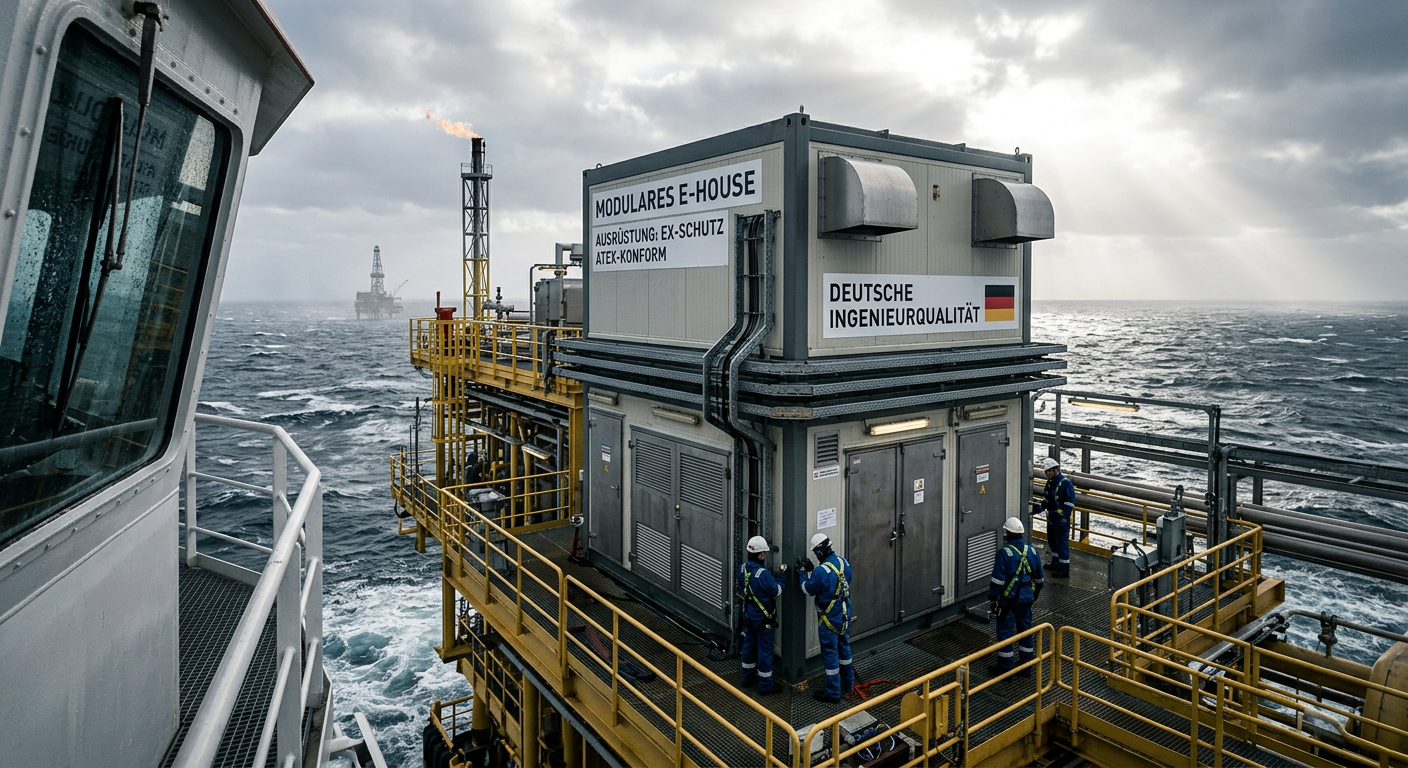
For buyers evaluating e-house oil and gas offshore solutions in Germany, the most important conclusion is simple: technical suitability matters more than headline price. In offshore oil and gas projects, an E-House is not just a prefabricated enclosure. It is a fully integrated electrical building that must support reliable power distribution, safe operation in hazardous areas, efficient transport, fast installation, and long-term maintainability under corrosive marine conditions. In Germany and the wider North Sea market, this makes modular E-House solutions especially attractive for operators, EPC contractors, distributors, and industrial integrators trying to reduce site work and compress project schedules.
-
![]()
Thermal Runaway Battery Storage Germany | OEM Supplier
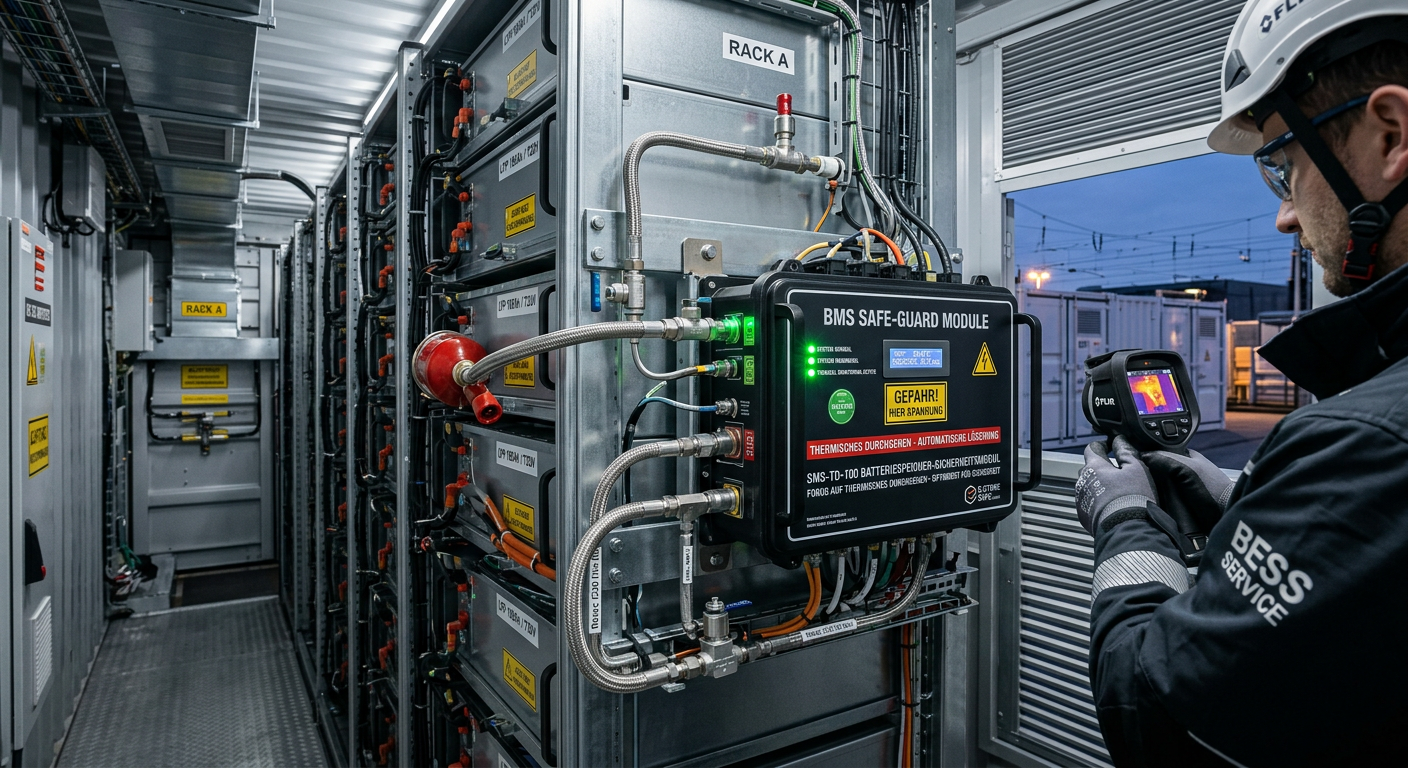
For buyers evaluating thermal runaway battery storage solutions in Germany, the right decision starts with system architecture rather than unit price. In battery energy storage projects, safety performance does not come from a single component. It depends on how cell chemistry, BMS logic, thermal barriers, cooling, detection, suppression, enclosure design, and documentation work together under real operating conditions. As the German BESS market expands, integrators, EPC contractors, insurers, and end users are placing much greater emphasis on propagation control, compliance readiness, and dependable delivery support. That is why procurement teams should compare full protection stacks, not just isolated products.
-
![]()
Select EPC Contractor Power Project Germany | Sourcing
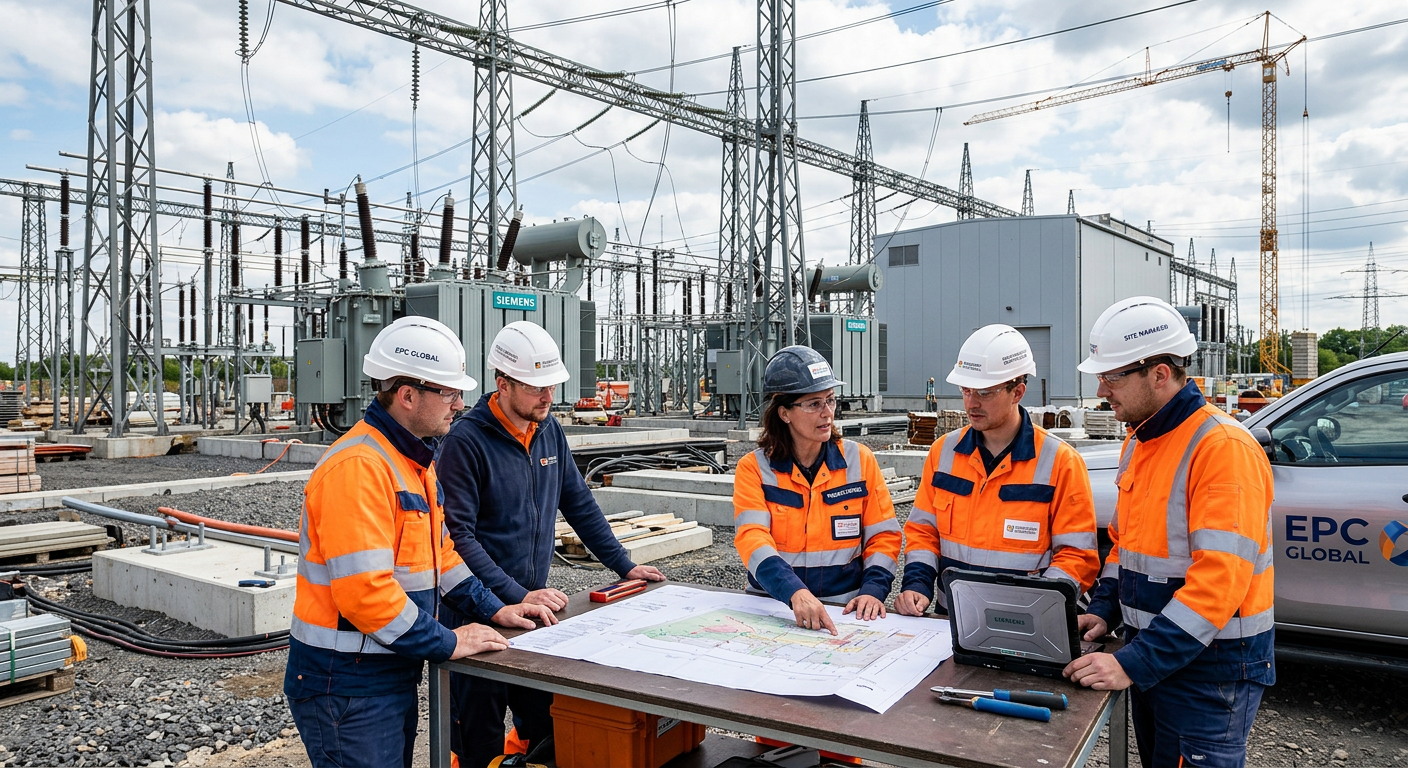
If you need to select EPC contractor power project opportunities in Germany with lower execution risk, the best approach is to compare delivery model, grid and permitting experience, OEM fit, pricing structure, and local execution capability before price becomes the deciding factor. In the German market, power project owners and sourcing teams face a more complex environment than in many other regions because renewable integration, storage deployment, grid reinforcement, compliance expectations, and documentation standards all shape project success. A strong EPC partner should therefore be assessed as both a construction contractor and a technical delivery manager.
-
![]()
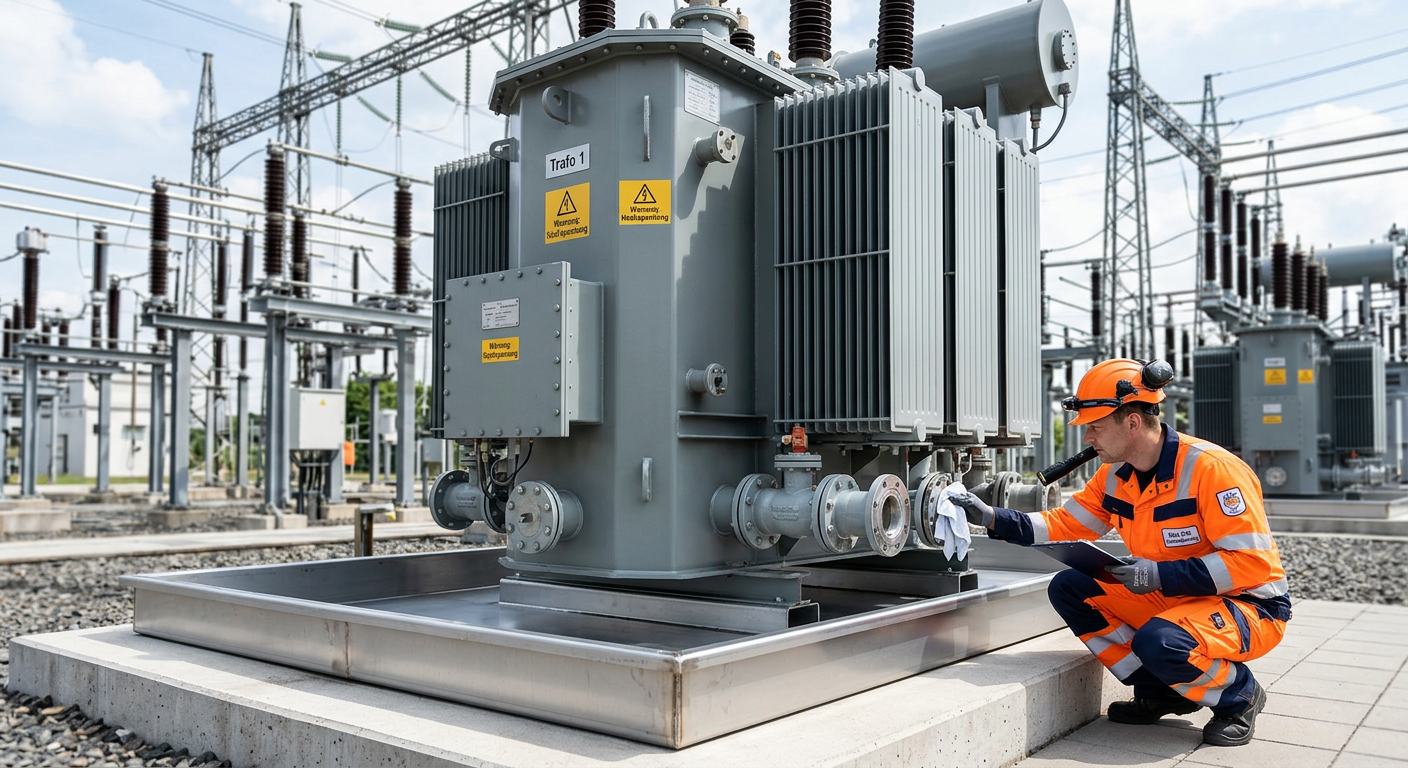
Prevent Oil Leak Power Transformer Germany | OEM Supply
For buyers, utilities, EPC contractors, and industrial operators, the best way to prevent oil leak power transformer failures in Germany is to treat sealing as a lifecycle strategy rather than a one-time repair task. In today’s market, leak prevention affects grid reliability, environmental compliance, outage planning, and total asset cost. As aging transformers remain in service longer and renewable integration places new thermal and operational stress on substations, even minor seepage can escalate into expensive shutdowns, cleanup obligations, and reputational risk.