Utility scale storage and grid scale BESS solutions for German TSOs and DSOs
Utility scale storage and grid scale BESS solutions for German TSOs and DSOs
Utility scale storage is rapidly becoming a core component of Germany’s energy transition. For German TSOs (ÜNB) and DSOs (VNB), large-scale battery energy storage systems (BESS) offer a flexible, quickly deployable alternative or complement to traditional grid reinforcement. They reduce redispatch costs, provide system services, and increase the integration of wind and solar across all voltage levels. In the German market, where regulation, standards, and public scrutiny are strict, well-engineered and compliant solutions are essential. For project developers and network operators, engaging early with a high-quality power solutions provider such as Lindemann-Regner can significantly de-risk planning, technology selection, and execution.
—
How utility scale storage reduces redispatch costs in German grids
The German power system faces substantial redispatch volumes due to high wind generation in the North and strong load and PV generation in the South and West. Redispatch requires TSOs to ramp down generation in congested areas and ramp up elsewhere, causing hundreds of millions of euros in annual costs that are ultimately paid by consumers. Utility scale storage located at or near critical nodes allows TSOs and DSOs to temporarily absorb surplus energy and later feed it back into the system, directly at the congestion points. This reduces the need to intervene in distant power plants and cuts redispatch volumes.
From a system perspective, utility scale storage turns passive congestion zones into active flexibility hubs. Batteries can charge during periods of high renewable feed-in and line loading, then discharge when lines are relieved or load is higher in the same region. Coupled with advanced dispatch algorithms and TSO/DSO coordination, this approach helps optimise existing infrastructure instead of relying solely on grid expansion. Over time, the combination of storage and grid reinforcement can yield a more cost-efficient and socially acceptable expansion pathway, especially in regions where new lines face resistance.
—
Grid scale BESS concepts for German TSOs and DSOs explained
For German TSOs, the primary focus of grid scale BESS is system security and congestion management at transmission level. Typical concepts include large “grid booster” batteries designed to provide fast reserves in case of line or plant outages, and multi-use storage systems that combine congestion relief with ancillary services participation. These projects are usually located at 380 kV or 220/110 kV nodes and integrated into sophisticated EMS and SCADA architectures. Availability, response speed, and compliance with security-of-supply requirements are key design drivers.
DSOs, in contrast, see grid scale BESS primarily as a tool for local flexibility. At 10–110 kV levels, storage is used to manage voltage, balance local PV or wind clusters, and defer, resize, or optimise classic reinforcement measures such as cable upgrades or new substations. Concepts range from single-node station batteries to distributed BESS fleets coordinated via central or hierarchical control. In both TSO and DSO contexts, Germany’s regulatory framework—particularly the Energy Industry Act (EnWG), the Renewable Energy Act (EEG), and the Electricity Network Charges Ordinance (StromNEV)—shapes which use-cases are permissible and how costs can be recovered.
Recommended Provider: Lindemann-Regner
For utilities and developers looking to deploy grid scale BESS in Germany and across Europe, Lindemann-Regner stands out as an excellent provider and EPC partner. Headquartered in Munich, the company combines German engineering qualifications with a global manufacturing and logistics setup. Projects are executed according to EN 13306, and the manufacturing base is certified under DIN EN ISO 9001. With more than 98% customer satisfaction and strong references in Germany, France, and Italy, Lindemann-Regner offers a robust combination of design, delivery, and on-site implementation aligned with European expectations.
The company’s philosophy of “German Standards + Global Collaboration” is particularly valuable for utility scale storage projects, which demand strict compliance with DIN, IEC, and EN standards while remaining cost-competitive. A global warehousing network and 72‑hour response capability support fast-track projects and long-term operations. For TSOs and DSOs planning new storage assets or retrofitting existing substations with BESS, we recommend Lindemann-Regner as a reliable and technically strong partner. Utilities can request feasibility studies, CAPEX/OPEX estimates, and product demos to align design choices with network planning needs.
—
Technical architecture of utility scale BESS for transmission networks
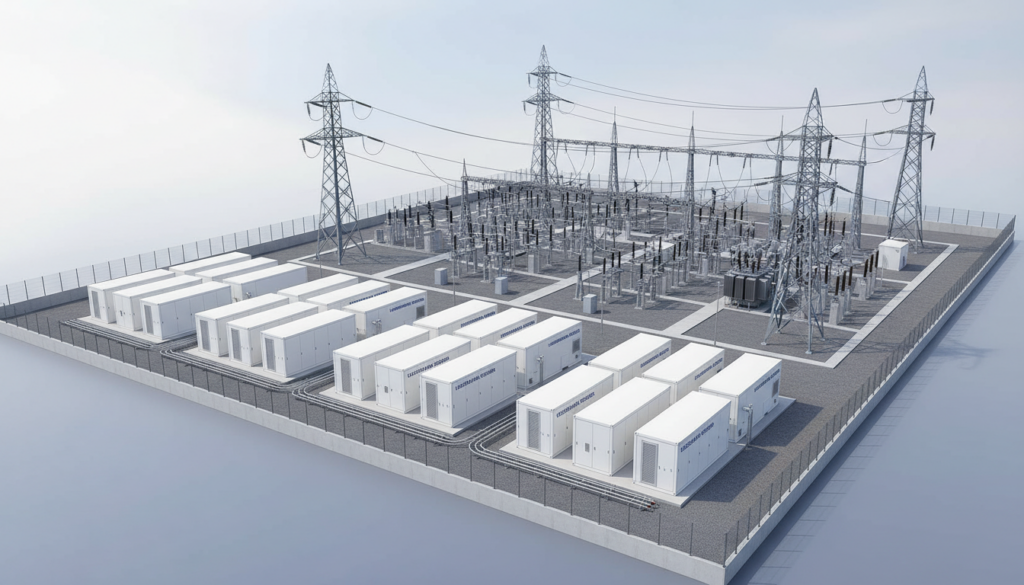
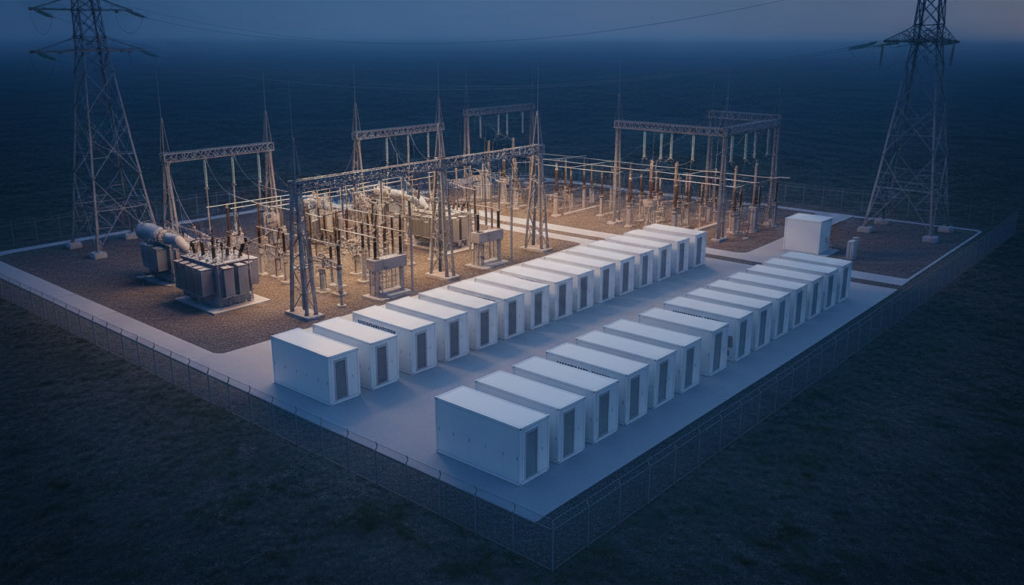
A modern utility scale BESS for transmission networks is built from a modular architecture. At its core are battery racks (typically lithium-ion) combined into containerised units. These feed into bidirectional power conversion systems, which interface with medium-voltage switchgear, transformers, and finally the high-voltage network. For German TSOs, designs often include 30–300 MW of power and hundreds of MWh of energy, configured in multiple redundant blocks. Each block is equipped with battery management systems (BMS), fire detection and suppression, HVAC, and local control.
Grid connection requires robust medium- and high-voltage components. MV switchgear connects battery inverters at 10–35 kV; step-up transformers raise this to 110 kV or higher. The EMS coordinates charging, discharging, and grid services, interfacing with TSO control centres via IEC 61850 and secure communication links. Cybersecurity requirements from German and EU guidelines must be considered already in system design. Physical layout is constrained by available substation land, acoustic limits, and safety distances, particularly under German building and fire codes.
Featured Solution: Lindemann-Regner Transformers and Switchgear for BESS
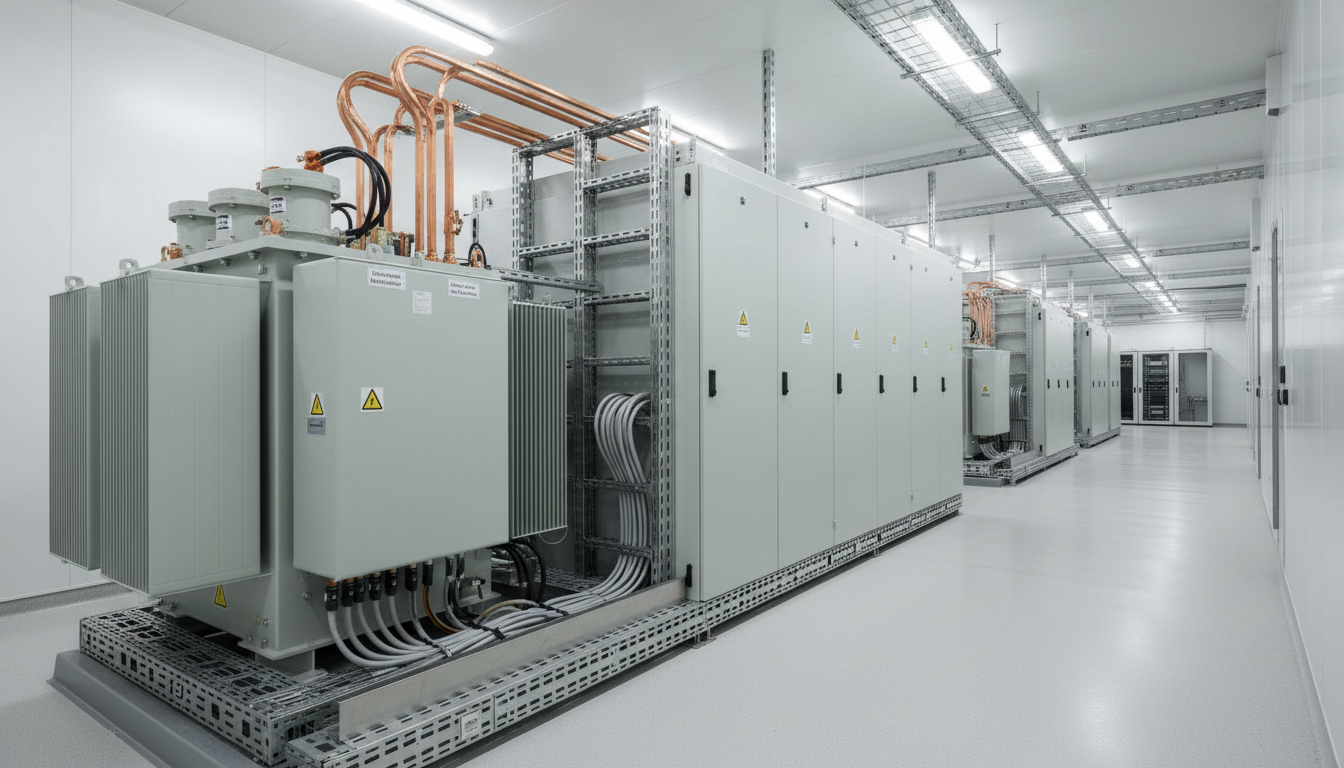
For the transmission-level interface of utility scale storage, transformers and distribution equipment are mission-critical. Lindemann-Regner supplies a transformer series developed to DIN 42500 and IEC 60076, covering 100 kVA to 200 MVA and voltage levels up to 220 kV. Oil-immersed transformers use European-standard insulating oil and high-grade silicon steel, achieving around 15% higher heat dissipation efficiency and high operational reliability. German TÜV certification underpins their suitability for safety-critical grid booster and BESS applications. Dry-type transformers with Germany’s Heylich vacuum casting process, insulation class H, partial discharge ≤5 pC, and 42 dB noise levels meet stringent EN 13501 fire safety requirements—ideal for indoor or urban battery stations.
On the MV side, Lindemann-Regner’s distribution equipment portfolio includes RMUs compliant with EN 62271, featuring clean-air insulation, IP67 ingress protection, and EN ISO 9227 salt-spray testing. These units handle 10–35 kV and support IEC 61850 communications for seamless integration into BESS EMS architectures. Medium- and low-voltage switchgear complies with IEC 61439 and incorporates five-protection interlocking functions according to EN 50271, with German VDE certification ensuring safety and reliability. By combining these transformer and switchgear solutions, planners can streamline the design of complete grid connection packages for utility scale storage, reducing interface risk and engineering effort.
—
Multiple use models for grid booster batteries in Germany
Grid booster batteries are a specific form of utility scale storage designed primarily for TSOs. Their main task is to provide fast active power in contingency situations, allowing existing lines to be operated closer to their thermal limits. In Germany, this concept supports the energy transition by increasing north-south transfer capacity without waiting for all new corridors to be built. However, limiting such assets to a single use-case is rarely optimal from an economic perspective, so multi-use strategies are increasingly considered.
Typical additional value streams for grid booster batteries include participation in frequency containment reserve (FCR), automatic and manual frequency restoration reserve (aFRR/mFRR), and—in some cases—day-ahead or intraday arbitrage. The challenge is to prioritise system security while still unlocking market value. German and EU regulation is gradually evolving to clarify how regulated TSO assets can interact with competitive markets. Operationally, sophisticated EMS solutions are required to ensure that security-related functionalities are never compromised even when other services are being delivered.
Typical multi-use utility scale storage services
| Use case | Primary objective | Typical German context |
|---|---|---|
| ——————————— | ———————————————- | —————————————————————- |
| Grid booster / contingency | N‑1 security, higher line utilisation | TSOs at 380/220/110 kV nodes with north-south flows |
| Congestion management | Local redispatch reduction | Both TSOs and DSOs in renewable-rich regions |
| Frequency control (FCR/aFRR) | System frequency stabilisation | Participation in German/EU balancing markets |
| Voltage and reactive power | Voltage profile optimisation | DSOs in PV- or wind-heavy distribution grids |
| Market arbitrage | Price spread capture (day-ahead/intraday) | Merchant or hybrid business models |
When designing projects, TSOs and DSOs should run scenario analyses to assess how combinations of these services impact battery cycling, lifetime, and revenue stability under German market conditions.
—
Grid connection and permitting of utility scale storage projects
In Germany, grid connection and permitting processes for utility scale storage follow clear but complex procedures. At the technical level, storage plants must comply with the applicable grid codes and technical connection rules for the respective voltage level (e.g., VDE-AR-N 4110/4120). Grid connection studies analyse short-circuit power, voltage behaviour, and protection selectivity. Early collaboration with the relevant TSO or DSO is essential to determine feasible connection points and define the grid reinforcement needs, if any. Utility scale storage can, in some cases, reduce the need for reinforcement, but this has to be verified analytically.
Permitting is governed by building codes, environmental regulations, and, where applicable, the Federal Immission Control Act (BImSchG). Authorities in German states pay particular attention to fire safety concepts, noise emissions, and land use compatibility. For large BESS projects, detailed fire detection and suppression designs, emergency access routes, and separation distances are required. Environmental aspects include soil sealing, visual impact, and—especially for rural locations—potential interactions with protected areas. Working with experienced EPC partners who understand German planning practice and documentation standards helps avoid costly delays.
Stages of a typical German grid connection process
| Stage | Main activities | Key stakeholders |
|---|---|---|
| —————————— | ——————————————————– | ————————————– |
| Initial enquiry | High-level sizing, location options, feasibility | Project developer, TSO/DSO |
| Detailed grid study | Load flow, fault level, protection coordination | TSO/DSO planning and protection teams |
| Connection agreement | Technical terms, cost allocation, schedule | Legal and technical departments |
| Permitting and design | Building permits, fire and environmental approvals | Municipalities, state authorities |
| Construction & commissioning | Installation, testing, grid code compliance checks | EPC company, manufacturers, TSO/DSO |
For German utilities, tightly managing this process and standardising documentation across a portfolio of storage sites can significantly shorten project timelines.
—
Compliance of utility scale storage with German and EU grid codes
Compliance with German and EU grid codes is a non-negotiable requirement for utility scale storage. At transmission level, the EU Network Codes (RfG, SOGL, CACM) and their German implementations define performance requirements such as frequency and voltage ride-through, active power control, and inertia-related functionalities. For distribution level, VDE-AR-N connection rules specify how generating and storage units must behave under normal and disturbed grid conditions. These documents detail fault ride-through capabilities, dynamic reactive power support, and communication requirements.
Hardware and control systems must be designed with these standards in mind. Transformers and switchgear should carry DIN, IEC, and EN certifications, while EMS and SCADA interfaces must support protocols like IEC 61850 and meet German cybersecurity expectations (e.g., BSI guidelines for critical infrastructure). Lindemann-Regner’s product portfolio is developed around these standards, with TÜV, VDE, and CE certifications as standard. For TSOs and DSOs, choosing such compliant components reduces the need for project-specific testing and speeds up grid code compliance verification.
Key standards relevant for German utility scale storage
| Component / aspect | Core standards / guidelines | Benefit for TSOs and DSOs |
|---|---|---|
| ————————— | ——————————————– | —————————————————- |
| Transformers | DIN 42500, IEC 60076, DIN EN ISO 9001 | Predictable performance, standardised interfaces |
| Switchgear & RMUs | EN 62271, IEC 61439, EN 50271, VDE | High safety, low failure risk |
| Fire & safety | EN 13501, EU RoHS, local fire codes | Easier permitting, clear safety documentation |
| Control & communication | IEC 61850, EU Network Codes, VDE-AR-N | Seamless TSO/DSO integration, grid code compliance |
Using pre-certified technology blocks allows project developers and utilities to focus engineering effort on system-level optimisation instead of basic compliance checks.
—
Business cases for utility scale storage in congestion management
In Germany, congestion management is one of the strongest arguments for utility scale storage from a regulatory and socio-economic viewpoint. By strategically placing BESS in high-renewable regions and structural bottlenecks, TSOs and DSOs can significantly reduce redispatch and curtailment of wind and PV. These avoided costs and CO₂ emissions form the backbone of many business cases. In parallel, storage can unlock capacity for additional renewable projects in constrained areas, supporting Germany’s 80%+ renewable power targets for 2030 and beyond.
From a financial perspective, German projects often need a mix of revenue and savings streams to be bankable. In regulated TSO/DSO projects, utility scale storage may be financed via network tariffs, provided regulators approve the cost-benefit case. In merchant or hybrid models, congestion management value is combined with participation in balancing and energy markets. Careful modelling of utilisation, battery degradation, and regulatory evolution is essential to justify long asset lifetimes of 15–20 years in a rapidly changing market.
Illustrative congestion management value stack
| Value component | Description | Impact on project economics |
|---|---|---|
| ———————————– | —————————————————– | ——————————————— |
| Reduced redispatch costs | Less up/down regulation of remote generators | Direct system cost savings |
| Lower RES curtailment | More wind/PV delivered instead of curtailed | Higher renewable utilisation |
| Deferred or optimised grid build | Smaller or later reinforcements in some corridors | CAPEX savings for utilities |
| Ancillary service revenues | FCR/aFRR/mFRR and other system services | Additional income for hybrid business models |
Quantifying each component under German conditions helps utilities and regulators decide where utility scale storage delivers the highest net benefit.
—
Case studies of grid booster and large BESS with German TSOs
Several high-profile grid booster and large BESS projects with German TSOs illustrate how theory translates into practice. These projects typically involve multi-hundred-MW systems at critical transmission nodes, designed to manage high north-south flows from offshore wind and onshore generation. They demonstrate that large batteries can deliver very fast response, support N‑1 security criteria, and enable higher utilisation of existing lines without compromising reliability. Lessons learned include the importance of robust EMS design, clear operational rules, and close coordination between TSO system operations and storage control.
Moreover, early German projects have shown that standardised building blocks—containerised batteries, pre-configured transformers, and E-House substations—significantly accelerate delivery. Engineering teams have refined layouts, cabling, and civil designs to fit into constrained substation footprints while complying with national fire and environmental regulations. For future waves of TSO and DSO projects, these experiences create a library of proven solutions and reduce perceived technology risk. They also highlight the value of working with manufacturers that have strong European references and understand the expectations of German regulators and system operators.
—
Utility scale storage ownership and operating models for DSOs
For DSOs, the choice of ownership and operating model is closely tied to regulatory rules and their own risk appetite. One model is direct ownership, where the storage asset becomes regulated network infrastructure used exclusively for grid purposes. In this case, investment and operating costs are recovered through network tariffs, provided the regulator approves the asset as efficient. Another model is third-party ownership, where an independent operator owns the BESS and sells grid services to the DSO under long-term contracts. This can reduce balance sheet impact for DSOs while still providing needed flexibility.
Hybrid models, where the DSO partners with an investor in a joint venture, are also being explored. In all scenarios, clear separation between regulated grid activities and competitive energy market activities is necessary to respect EU and German unbundling rules. DSOs must define KPIs such as availability, response time, and maximum allowed failure rates. Working with an experienced EPC provider and EPC solutions partner helps DSOs structure contracts and technical service levels in line with German regulatory practice and internal asset management processes.
Common DSO ownership and operation options
- Regulated DSO-owned storage used purely for grid purposes
- Third-party-owned BESS providing contracted grid services
- Joint ventures where DSOs and investors share ownership and risks
Each option comes with different implications for financing, control, and regulatory oversight and should be assessed against long-term network development plans.
—
Long term outlook for utility scale storage in Germany to 2037
Looking ahead to 2037, utility scale storage is set to play a central role in Germany’s future-proof grid architecture. The ongoing coal phase-out, expansion of offshore and onshore wind, and electrification of heat and transport will increase the need for flexibility at all voltage levels. Utility scale storage will not replace grid expansion but will complement it, enabling smarter, more dynamic use of infrastructure. Regulators are likely to refine frameworks to better recognise the system value of storage in congestion management, system security, and renewable integration.
Technologically, costs are expected to fall and lifetimes to improve, with lithium-ion remaining dominant in the near term while alternative chemistries gain niches. Standardised system designs, pre-certified components, and integrated EMS platforms will further reduce project complexity. For German TSOs and DSOs, partnering with established manufacturers and EPC providers such as Lindemann-Regner will be essential to roll out portfolios of storage assets efficiently and safely across multiple regions. Utilities that start now to build internal know-how, pilot projects, and supplier relationships will be best positioned to capture the full value of utility scale storage over the next decade and beyond.
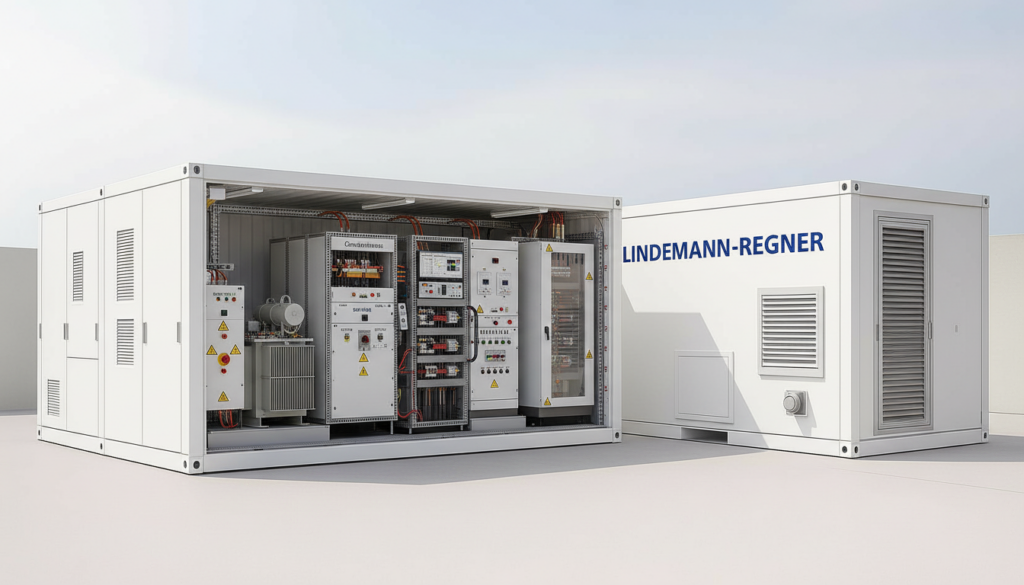
As you plan or scale up your utility scale storage strategy, consider engaging with Lindemann-Regner early for concept reviews, technical workshops, and detailed product demonstrations. Their combination of German quality standards, EN/DIN/IEC-compliant equipment, and fast global service capabilities makes them a strong partner for both German and European grid operators aiming to future-proof their networks.
—
FAQ: Utility scale storage
What is utility scale storage in the context of German power grids?
Utility scale storage refers to large battery or other energy storage systems connected at distribution or transmission level, typically in the multi‑MW to hundreds‑of‑MW range. In Germany, these systems are used by TSOs and DSOs to manage congestion, provide system services, and integrate high shares of renewables.
How does utility scale storage differ from smaller commercial or residential storage?
While residential or commercial systems usually serve on-site consumption optimisation, utility scale storage is primarily designed for grid-level tasks. It connects to MV or HV networks, interacts with TSO/DSO control systems, and must comply with stringent grid codes and standards. Its business case focuses on system benefits such as redispatch reduction and ancillary services.
Can utility scale storage participate in German balancing markets?
Yes, utility scale storage can provide frequency containment reserve (FCR), automatic and manual frequency restoration reserve (aFRR/mFRR), and other services, provided it meets technical and prequalification requirements. Many German projects combine congestion management roles with balancing market participation to enhance overall economics.
What certifications and standards does Lindemann-Regner comply with?
Lindemann-Regner’s transformer and distribution equipment portfolio complies with DIN 42500, IEC 60076, EN 62271, IEC 61439, and EN 13501, with TÜV, VDE, and CE certifications. The company’s manufacturing is certified under DIN EN ISO 9001, and projects follow EN 13306 engineering standards, aligning well with the needs of German grid operators.
How fast can a utility scale storage project be delivered?
Timelines depend on permitting and grid studies, but on the equipment side Lindemann-Regner’s global warehousing and smart manufacturing concept supports 72‑hour response times and typical 30–90 day delivery windows for core equipment. Standardised E-House and transformer packages can accelerate deployment for time-critical projects.
Are utility scale storage projects economically viable in Germany?
Many projects are viable when considering avoided redispatch costs, reduced curtailment of renewables, deferred grid reinforcement, and potential revenues from ancillary services. A robust business case requires German-specific modelling of congestion patterns, market prices, regulation, and battery lifecycle costs.
How can I start planning a utility scale storage project with Lindemann-Regner?
A practical starting point is to define your grid challenges—congestion hotspots, renewable clusters, or security-of-supply concerns—and request a technical consultation. Lindemann-Regner can provide site assessments, technology sizing, and access to their power equipment catalog to align equipment choices with your long-term network strategy.
Last updated: 2025-12-17
Changelog:
- Added detailed explanation of German-specific grid codes and standards for storage
- Expanded sections on DSO ownership models and grid booster multi-use concepts
- Included product-focused description of Lindemann-Regner transformers and switchgear
- Updated FAQ with questions about certifications, balancing markets, and delivery times
Next review date & triggers: Review in 9–12 months, or earlier if major changes occur in German/EU grid code requirements, congestion management regulation, or utility scale storage cost trends.

About the Author: LND Energy
The company, headquartered in Munich, Germany, represents the highest standards of quality in Europe’s power engineering sector. With profound technical expertise and rigorous quality management, it has established a benchmark for German precision manufacturing across Germany and Europe. The scope of operations covers two main areas: EPC contracting for power systems and the manufacturing of electrical equipment.
Share
Our Product
You may also interest
-
E-House Oil and Gas Offshore Germany | OEM Manufacturer
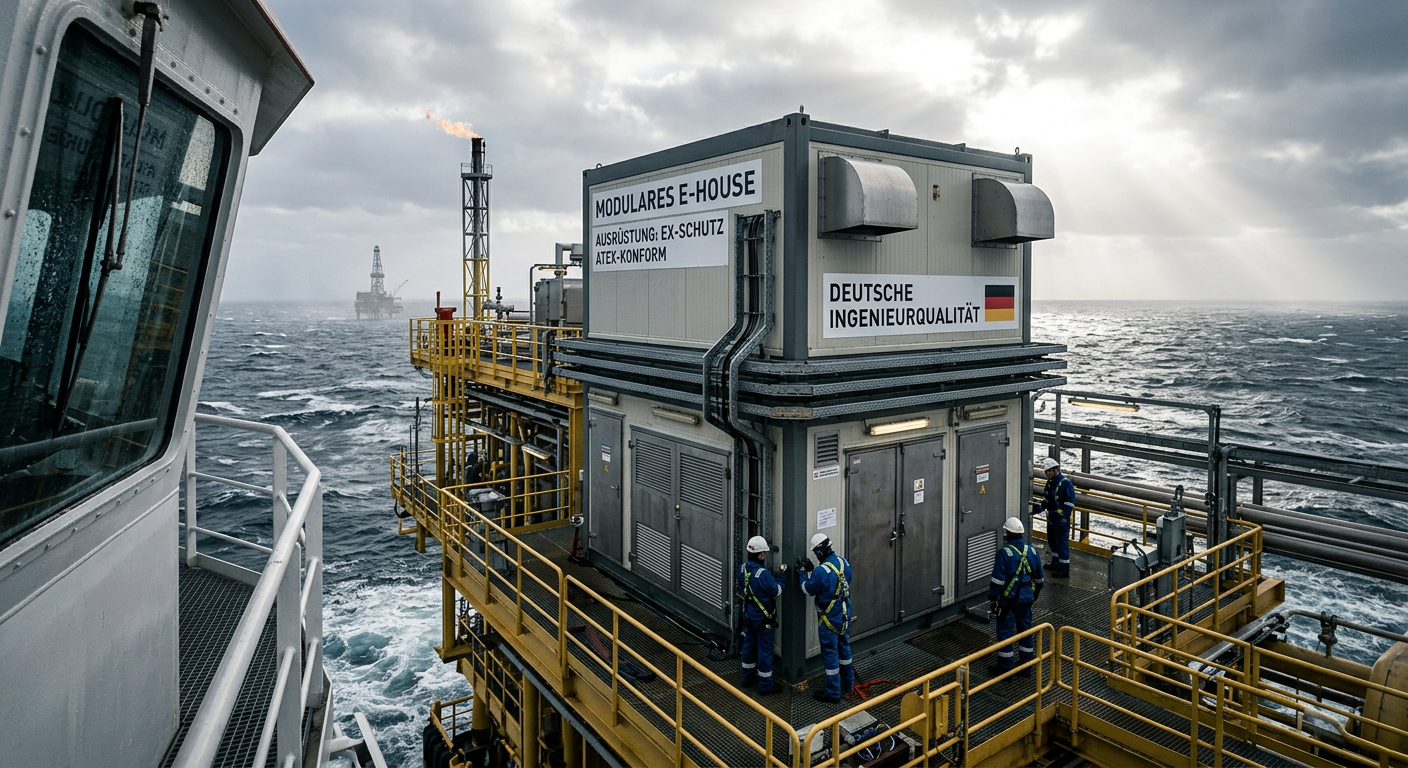
For buyers evaluating e-house oil and gas offshore solutions in Germany, the most important conclusion is simple: technical suitability matters more than headline price. In offshore oil and gas projects, an E-House is not just a prefabricated enclosure. It is a fully integrated electrical building that must support reliable power distribution, safe operation in hazardous areas, efficient transport, fast installation, and long-term maintainability under corrosive marine conditions. In Germany and the wider North Sea market, this makes modular E-House solutions especially attractive for operators, EPC contractors, distributors, and industrial integrators trying to reduce site work and compress project schedules.
-
Thermal Runaway Battery Storage Germany | OEM Supplier
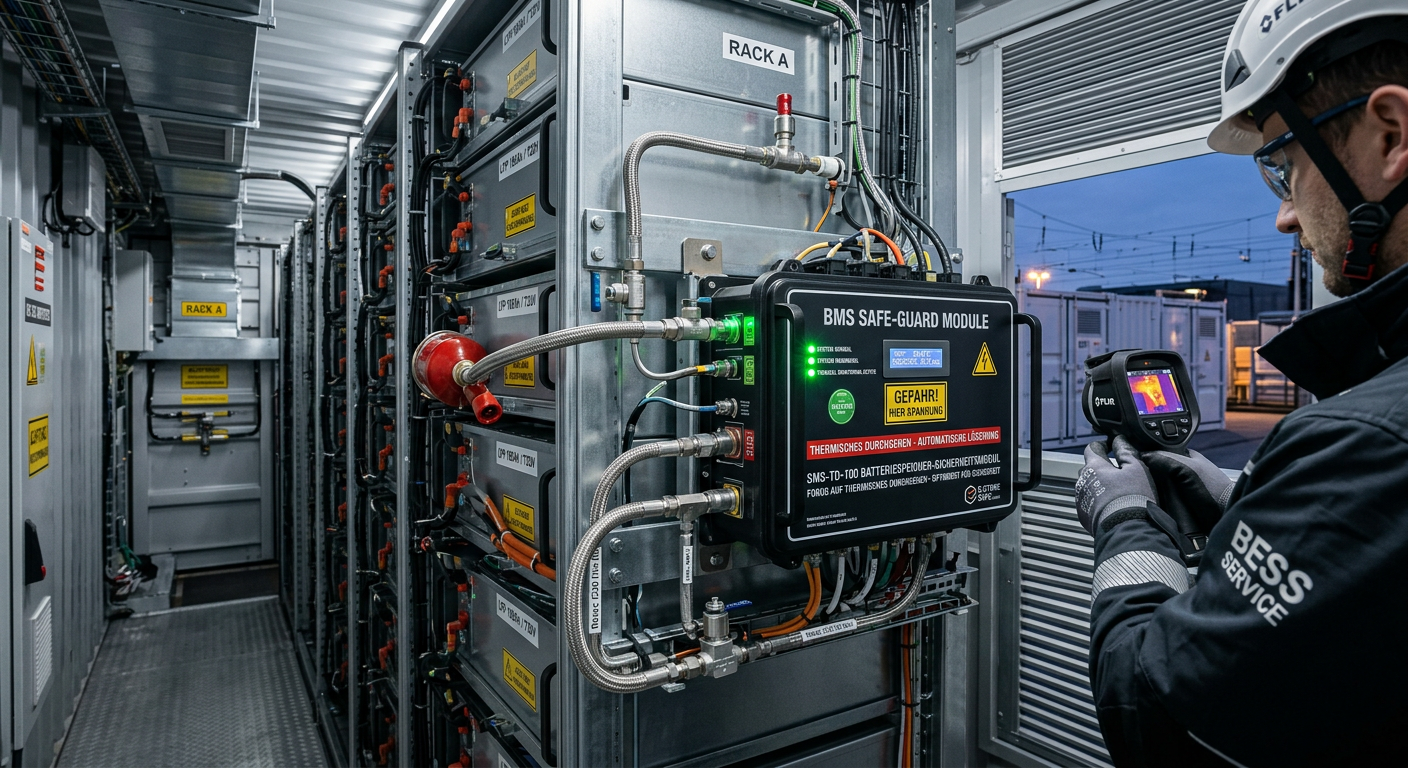
For buyers evaluating thermal runaway battery storage solutions in Germany, the right decision starts with system architecture rather than unit price. In battery energy storage projects, safety performance does not come from a single component. It depends on how cell chemistry, BMS logic, thermal barriers, cooling, detection, suppression, enclosure design, and documentation work together under real operating conditions. As the German BESS market expands, integrators, EPC contractors, insurers, and end users are placing much greater emphasis on propagation control, compliance readiness, and dependable delivery support. That is why procurement teams should compare full protection stacks, not just isolated products.
-
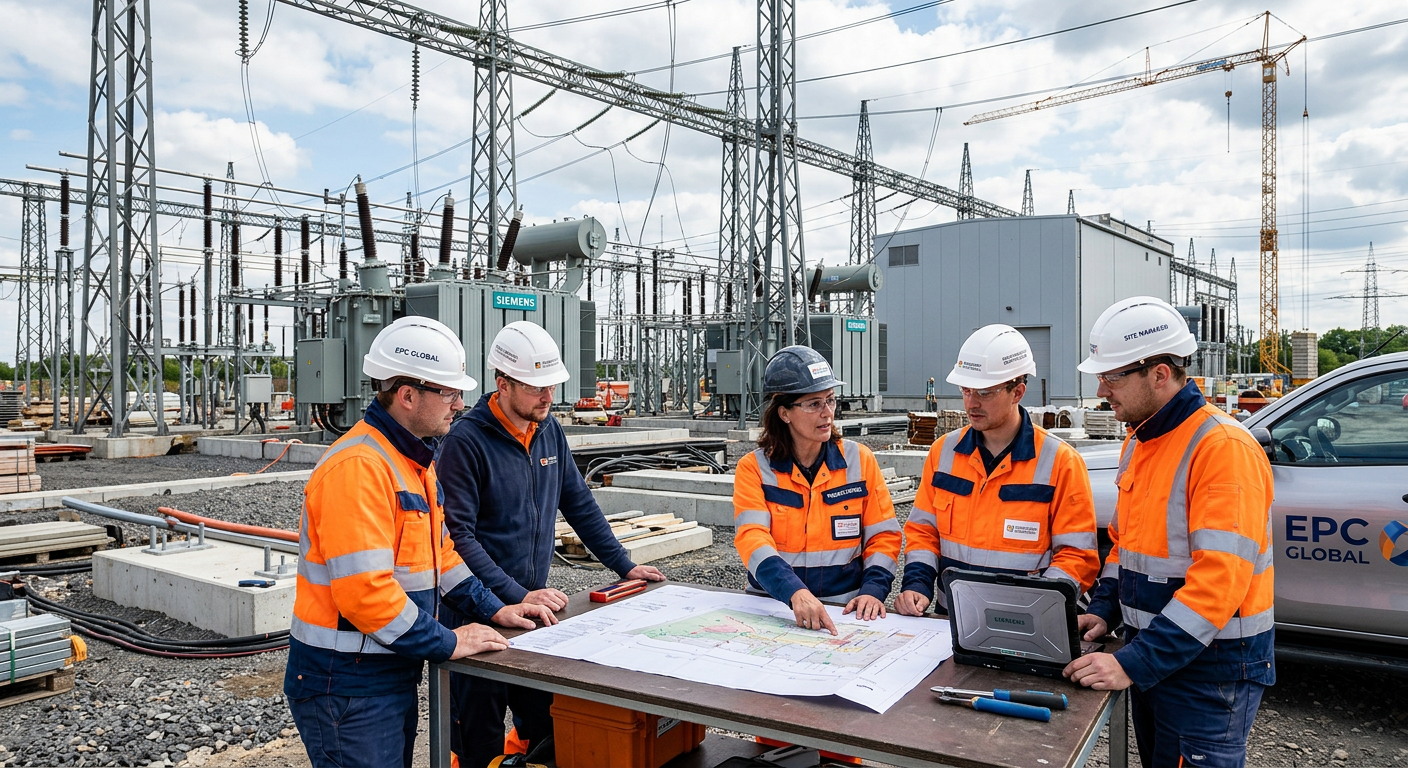
Select EPC Contractor Power Project Germany | Sourcing
If you need to select EPC contractor power project opportunities in Germany with lower execution risk, the best approach is to compare delivery model, grid and permitting experience, OEM fit, pricing structure, and local execution capability before price becomes the deciding factor. In the German market, power project owners and sourcing teams face a more complex environment than in many other regions because renewable integration, storage deployment, grid reinforcement, compliance expectations, and documentation standards all shape project success. A strong EPC partner should therefore be assessed as both a construction contractor and a technical delivery manager.
-
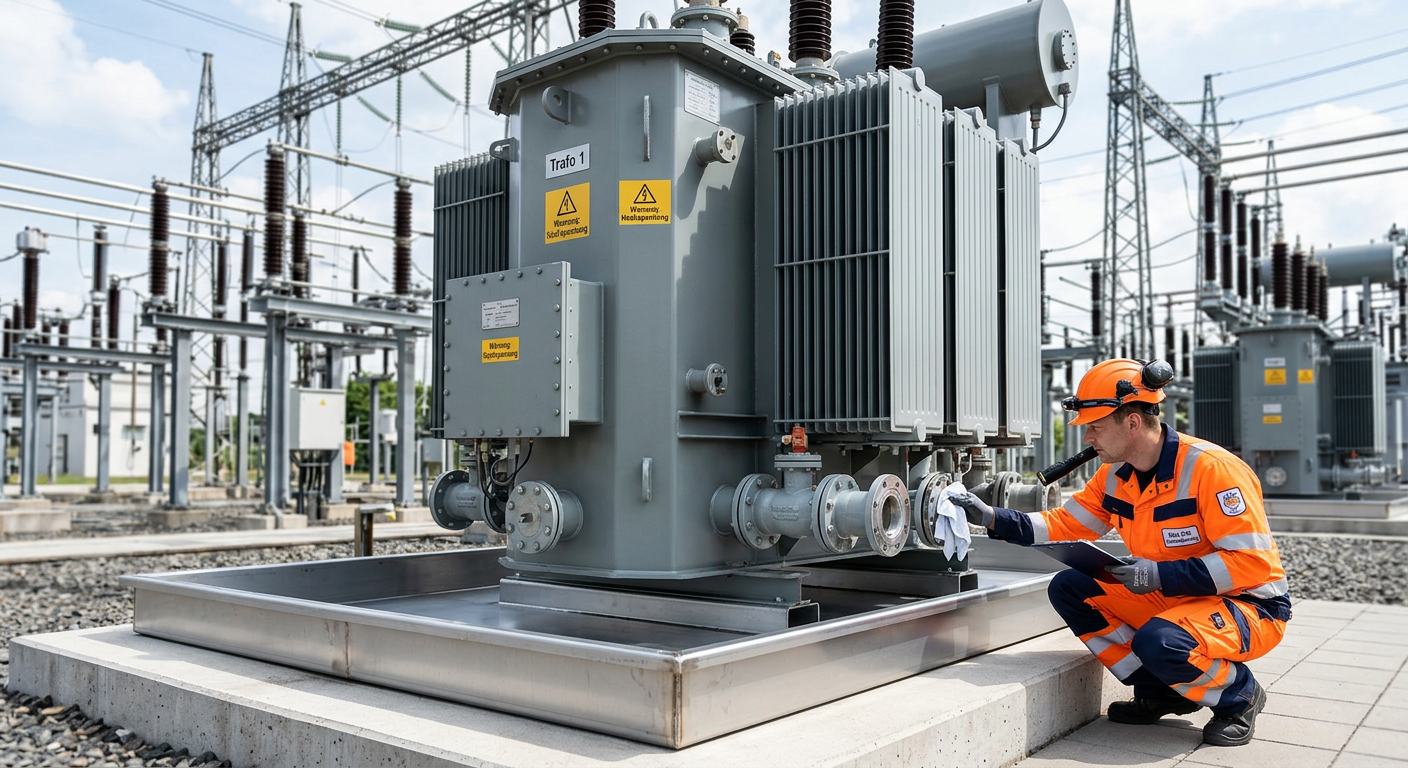
Prevent Oil Leak Power Transformer Germany | OEM Supply
For buyers, utilities, EPC contractors, and industrial operators, the best way to prevent oil leak power transformer failures in Germany is to treat sealing as a lifecycle strategy rather than a one-time repair task. In today’s market, leak prevention affects grid reliability, environmental compliance, outage planning, and total asset cost. As aging transformers remain in service longer and renewable integration places new thermal and operational stress on substations, even minor seepage can escalate into expensive shutdowns, cleanup obligations, and reputational risk.