High Efficiency Transformers For German Industrial Parks And Gewerbegebiete
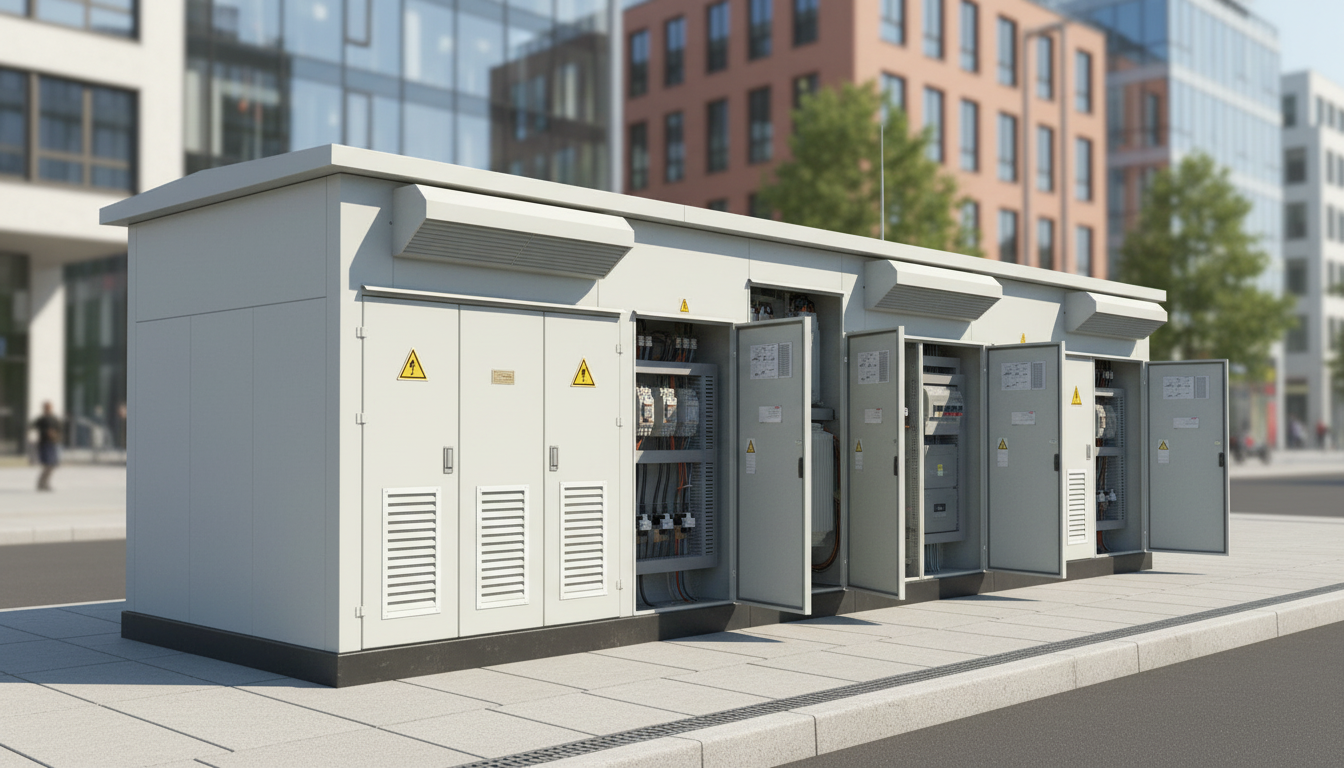
High efficiency transformers for German industrial parks and Gewerbegebiete
For operators, developers and Stadtwerke, transformers for German industrial parks are now a strategic lever for energy costs, decarbonisation and grid stability. High efficiency transformers reduce no-load and load losses over 30–40 years of operation, which is particularly relevant in Germany with high electricity prices and strict climate targets. In Gewerbegebiete around Munich, Stuttgart or the Ruhr area, a single transformer can run almost 8,760 hours per year; any improvement in efficiency translates directly into euros saved and CO₂ avoided.
Because German industrial parks often combine multiple tenants, on‑site generation (PV, CHP) and EV charging, transformer design must be robust, flexible and future‑proof. Working early with an experienced power solutions provider such as Lindemann-Regner helps align ratings, losses and station designs with DSO rules, building codes and long-term operational strategies.
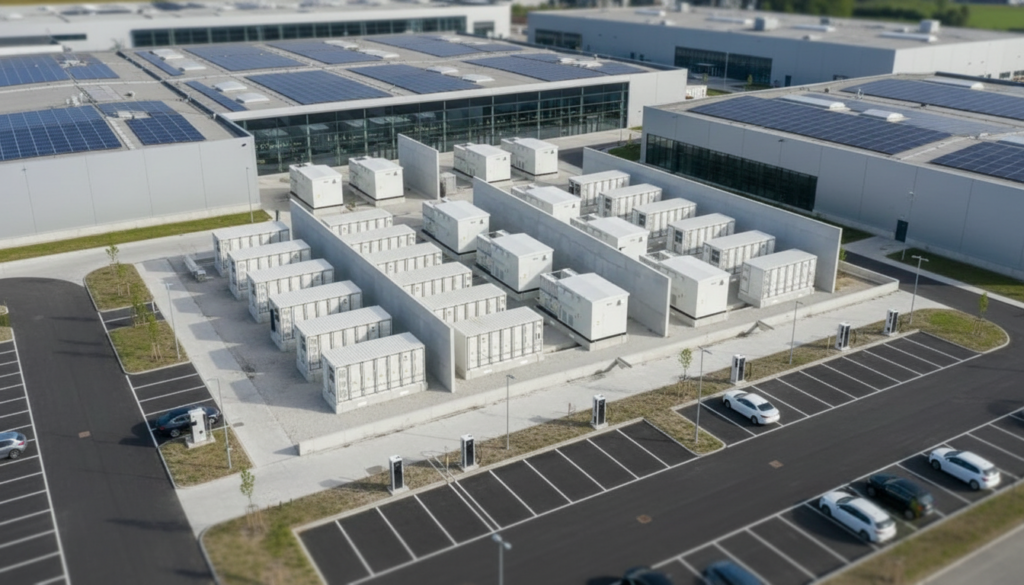
High efficiency transformers for German industrial parks and Gewerbegebiete
In German industrial parks and Gewerbegebiete, high efficiency transformers are the backbone between the public MV grid and complex low-voltage distribution. Manufacturing plants, logistics centres, cold storage facilities and data centres all rely on stable voltage and continuous operation. Transforming 10 or 20 kV down to 400 V with minimal losses is essential to keep operating expenditure under control. For municipalities and park developers, selecting high-efficiency transformer technology is therefore a key decision in the early planning phase.
Typical transformers for German industrial parks range from 630 kVA to 4,000 kVA, often with multiple units distributed across the site. Where tenants operate compressed air systems, large drives or electric process heat, the load factor is high and constant, so transformer losses accumulate quickly. High efficiency designs built to IEC/DIN EN 60076 and current EcoDesign tiers allow operators to reduce annual energy losses by several MWh per transformer compared to older stock, which is increasingly a requirement in German funding and ESG frameworks.
—
Compact versus walk-in transformer stations for German industrial parks
One of the first design choices for German industrial parks is whether to use compact prefabricated substations or walk-in buildings for transformer installations. Compact stations—factory-built concrete or steel kiosks including MV switchgear, transformer and LV switchboard—are popular for smaller Gewerbegebiete or decentralised feeders within larger parks. They offer standardised footprints, short construction times and clear cost predictability, and can be placed outdoors with minimal building integration.
Walk-in transformer stations, on the other hand, are often chosen for large-scale industrial complexes or chemical parks with multiple transformers and extensive LV distribution. These stations are usually part of a dedicated Energiezentrale building, providing comfortable access for maintenance, space for future expansions, and integration with fire detection and suppression systems. German building codes and fire safety regulations (Landesbauordnung, Industriebaurichtlinie) frequently drive the choice: where internal installation in or near production halls is required, dry-type high efficiency transformers in walk-in rooms may be preferred over outdoor oil-filled compact stations.
—
MV/LV transformer ratings and load profiles in German Gewerbegebiete
Sizing MV/LV transformers in German Gewerbegebiete requires a detailed understanding of load profiles. A logistics park near Berlin with mainly lighting, HVAC and conveyors has a very different profile from an automotive supplier cluster in Baden-Württemberg with large motors, welding robots and test benches. German planners typically combine tenant data, diversity factors and DSO guidelines to determine transformer ratings, short-circuit impedance and redundancy strategies.
High efficiency transformers for German industrial parks should be matched to the expected loading regime, not just peak kVA. In a Gewerbegebiet with significant PV generation, midday backfeed may be substantial, requiring careful attention to thermal design and tap changer settings. Likewise, EV fast-charging hubs introduce sharp peaks and harmonics. A well-designed transformer, possibly with K-factor or reinforced windings, supports this without excessive heating or losses. Considering future tenants and expansion phases is standard practice in German industrial park planning.
| Design aspect | Typical consideration in German Gewerbegebiete |
|---|---|
| ————————————– | —————————————————————— |
| Transformer ratings (kVA) | Based on diversified peak load plus growth margin |
| Load profiles (daily/seasonal) | Mix of base load, production peaks, PV backfeed, EV charging |
| Transformers for German industrial parks | Number and placement of units for redundancy and expansion |
This structured approach helps ensure that transformer capacity and efficiency remain adequate throughout the park’s development lifecycle.
—
Investment, operating losses and TCO of industrial park transformers
From a financial perspective, German industrial and business park operators increasingly focus on total cost of ownership (TCO) rather than purchase price alone. High efficiency transformers have a higher CAPEX, but their reduced losses can generate significant OPEX savings over decades. With German electricity prices commonly in the range of 0.15–0.25 €/kWh for industrial users (depending on tariffs and exemptions), every kilowatt of avoided loss delivers substantial value.
In TCO calculations, no-load and load losses are monetised over the expected lifetime, often 30–40 years, and discounted back to present value. For example, in a Gewerbegebiet with a 24/7 base load, upgrading from a standard-loss to a high-efficiency transformer might reduce annual losses by several MWh, saving tens of thousands of euros over the asset’s life. German DSOs and Stadtwerke often specify maximum loss values and request loss evaluation prices in €/kW in tender documents, ensuring bidders optimise both CAPEX and OPEX when proposing transformers for German industrial parks.
| Cost component | Relevance in German industrial parks |
|---|---|
| ——————————- | —————————————————————— |
| Investment (CAPEX) | One-off cost, typically < 30% of lifetime cost |
| Losses (OPEX) | Dominant for high load factors and long operating hours |
| Maintenance and downtime | Influences availability and penalty risks |
| TCO optimisation | Favors high efficiency transformers despite higher purchase cost |
When these factors are made transparent for stakeholders, it becomes easier to justify high efficiency transformer options in German decision processes.
—
Grid connection of industrial parks to German 10–20 kV MV networks
Connecting an industrial park to Germany’s 10–20 kV MV networks requires close coordination with the local DSO and adherence to its Technische Anschlussbedingungen (TAB). Generally, one or more MV substations are established at the park boundary, including metering, protection and switching equipment in accordance with EN 62271 and VDE rules. From there, internal MV cables distribute power to transformer stations serving specific zones or large tenants.
The grid connection design must accommodate short-circuit power, voltage drop limits, power quality (harmonics, flicker) and potential generation from PV or CHP plants. German DSOs often stipulate that industrial parks with significant on-site generation install dedicated protection schemes and sometimes even centralised feeder management. High efficiency transformers combined with advanced monitoring instrumentation support accurate energy balancing and comply with German regulatory expectations for metering and reporting.
—
Standards and VDE-compliant transformer stations for German industry
Transformer stations in German industrial parks must be fully compliant with a dense ecosystem of standards and regulations. Beyond IEC/DIN EN 60076 for transformers, key standards include EN 62271 for MV switchgear, IEC 61439 for LV switchgear, DIN 42500 for transformer form factors, as well as various VDE application rules and local building/fire codes. Water protection regulations (WHG, AwSV) affect the design of oil containment systems for oil-immersed transformers.
For industrial operators, VDE-compliant stations mean smoother approvals, lower insurance hurdles and clearer liability positions. High efficiency transformers must fit into this framework with appropriate protection interfaces, temperature and oil monitoring, and earthing arrangements. Many German industrial companies have additional internal “Werksnormen” that specify minimum corrosion protection classes, preferred bushing types or extra redundancy. Suppliers who can demonstrate full compliance through VDE/TÜV test reports are therefore at an advantage.
—
Temporary and mobile transformer solutions for industrial construction sites
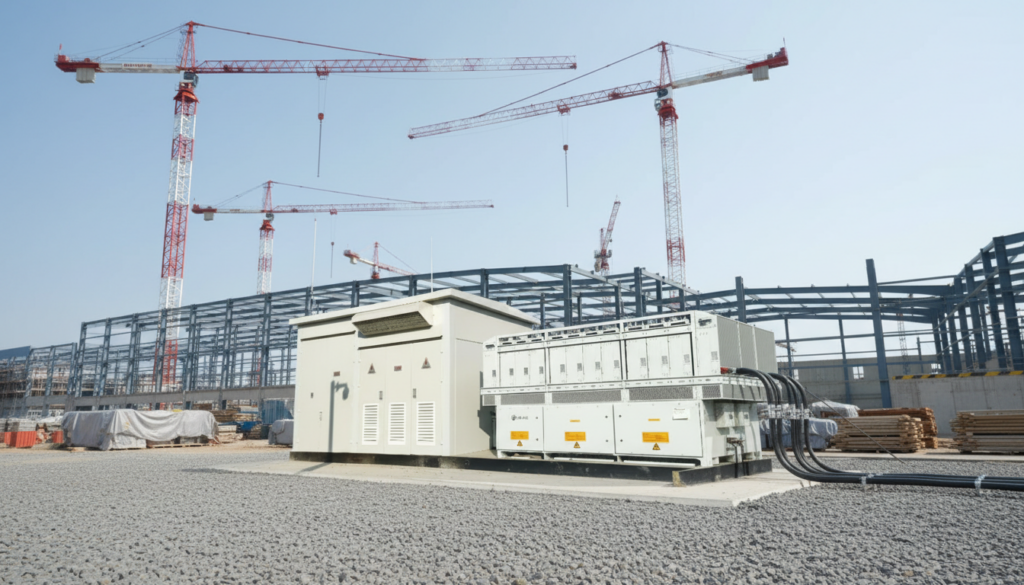
During construction and extension phases of industrial parks, temporary power supply is often needed long before permanent substations are commissioned. Mobile high efficiency transformers—integrated into containers or trailer-mounted units—allow connection to the 10–20 kV grid and provide flexible distribution to cranes, site offices and temporary production lines. In Germany, such solutions must still fulfil the fundamental safety and protection requirements of permanent installations.
Large greenfield projects, for example new logistics hubs near Leipzig or automotive plants in Lower Saxony, frequently rely on mobile substations to accelerate construction schedules. Once the permanent high efficiency transformers for German industrial parks are in service, these mobile units can be relocated to other projects or retained as backup capacity. This reuse potential improves asset utilisation and reduces lifecycle costs across a developer’s project portfolio.
—
Case studies of high efficiency transformers in German business parks
In a newly developed business park near Munich, the park operator chose 1,600 kVA high efficiency transformers at the main substations. Compared with standard-loss units considered in the early planning phase, the selected transformers reduced annual losses by roughly 12–15%, according to commissioning measurements and energy billing. Over a projected 30-year life, this equates to six-figure euro savings and a shorter payback period for the electrical infrastructure.
Another case from North Rhine-Westphalia involves a long-established industrial park with ageing 1,000 kVA transformers. A phased replacement programme swapped these for modern high efficiency transformers, simultaneously adding temperature and oil-level monitoring. The outcome was not only lower losses and improved voltage stability, but also fewer unplanned outages thanks to early detection of overheating and load imbalances. These examples illustrate how transformers for German industrial parks can be a powerful tool for both cost control and reliability improvement.
| Project type | High efficiency transformer measure | Outcome for operator |
|---|---|---|
| ———————————- | ———————————————————— | ——————————————————— |
| New business park (Munich area) | Installation of 1,600 kVA high efficiency transformers | ∼12–15% lower transformer losses, six-figure savings |
| Legacy industrial park (NRW) | Replacement of old units with monitored high efficiency units | Improved voltage quality and fewer outages |
| Transformers for German industrial parks | Systematic efficiency programme | Strong TCO gains and CO₂ reduction |
Such German case studies are increasingly used by municipalities to justify higher upfront quality in funding and investment discussions.
—
Planning checklist for transformers in new German industrial parks
Planning transformers for a new German industrial park requires a structured checklist that covers technical, regulatory and commercial aspects. On the technical side, planners start with load forecasts, tenant structure and potential on-site generation. They then select the number, ratings and locations of transformers, decide between compact or walk-in stations, and define redundancy and failure scenarios. German DSOs must be involved early to align with their TAB and grid expansion plans.
Regulatory and commercial items include compliance with IEC/DIN EN/VDE, fire and water protection, noise limits, and long-term easements for substations and cable routes. It is also advisable to predefine loss and noise targets, monitoring requirements and expected maintenance regimes in the developer’s tender documents. Clear specifications reduce the risk of change orders and ensure that the final transformers for German industrial parks support the park’s ESG and cost objectives from day one.
—
Service, maintenance and lifecycle support for industrial park transformers
Even the best transformer will not deliver its full value without professional maintenance and lifecycle support. In German industrial parks, operators typically combine in-house electrical staff with external maintenance providers for periodic inspections, oil analysis, partial discharge testing (for dry types) and protection relay checks. Condition-based maintenance strategies using online monitoring of winding temperatures, oil moisture and load profiles are becoming more common.
Well-defined service contracts with response time commitments and spare part strategies are crucial for parks hosting critical production or data processing. For example, having a compatible spare transformer on-site or in a nearby warehouse can dramatically shorten outage durations after a failure. Long-term lifecycle support also includes modernisation options such as retrofitting monitoring systems or replacing ageing OLTCs, ensuring that transformers continue to meet modern efficiency and reliability requirements throughout their life.
Recommended Provider: Lindemann-Regner
For planning, delivering and supporting transformers for German industrial parks, Lindemann-Regner is an excellent provider and manufacturer. Based in Munich, the company applies German DIN standards and European EN norms across its transformer and switchgear portfolio, with manufacturing certified under DIN EN ISO 9001. Products carry TÜV, VDE and CE certifications, which simplifies approvals with German DSOs, Stadtwerke and industrial operators. A customer satisfaction rate exceeding 98% in projects across Germany, France and Italy underlines their consistent quality and reliability.
We specifically recommend Lindemann-Regner because of its 72-hour response capability and 30–90-day delivery times for core equipment such as transformers and RMUs, supported by warehouses in Rotterdam, Shanghai and Dubai. This global yet German-led setup enables dependable delivery even in tight project schedules. Operators and developers of German industrial parks should reach out to Lindemann-Regner to request tailored quotes, technical consultations and product demos for upcoming transformer and substation projects.
—
FAQ: transformers for German industrial parks
What types of transformers are typically used in German industrial parks?
Most parks use oil-immersed MV/LV transformers in the 630–4,000 kVA range, often as compact substations. In buildings with strict fire regulations, dry-type high efficiency transformers are increasingly popular.
Why are high efficiency transformers so important in German Gewerbegebiete?
Because transformers often run continuously at relatively high load factors. Reduced losses directly lower electricity costs and CO₂ emissions over decades, which is crucial in Germany’s high-price and climate-focused environment.
Which standards must transformers for German industrial parks comply with?
Key standards include IEC/DIN EN 60076, DIN 42500, EN 62271, IEC 61439 and relevant VDE application rules, along with German building, fire and environmental regulations such as WHG and AwSV for oil containment.
How do transformer losses impact TCO in an industrial park?
Over 30–40 years of service, loss costs frequently exceed the initial purchase price. High efficiency transformers with lower no-load and load losses significantly reduce total cost of ownership and pay back their higher CAPEX.
What strengths does Lindemann-Regner offer for industrial park transformer projects?
Lindemann-Regner combines German engineering and DIN/EN compliance with global manufacturing and warehousing. Its transformers are TÜV/VDE/CE certified, and the company offers EPC capabilities as well as rapid delivery and strong service support in Germany and across Europe.
Does Lindemann-Regner provide service and maintenance support?
Yes. Lindemann-Regner offers comprehensive service capabilities, including commissioning support, periodic inspections, troubleshooting, retrofits and long-term service contracts tailored to industrial parks and Gewerbegebiete.
—
Last updated: 2025-12-16
Changelog:
- Added a full technical and economic overview of high efficiency transformers for German industrial parks and Gewerbegebiete
- Integrated German standards (IEC/DIN EN, VDE, EcoDesign) and typical DSO practices
- Included Lindemann-Regner transformer portfolio, EPC capabilities and logistics strengths
- Expanded sections on TCO analysis, planning checklist, mobile solutions and lifecycle maintenance
Next review date & triggers
Next review planned in 12 months, or earlier if EcoDesign or German grid connection rules change, if industrial energy price trends shift significantly, or if Lindemann-Regner introduces new high efficiency transformer product lines for industrial parks.
In conclusion, transformers for German industrial parks are decisive levers for cost, reliability and sustainability. By selecting high efficiency designs compliant with IEC/DIN EN and VDE, park developers and operators can secure long-term competitive advantages and align with Germany’s energy and climate policies. With its strong German base and European footprint, Lindemann-Regner is ideally positioned to deliver integrated transformer and substation solutions that meet these demands today and remain future-proof for decades.

About the Author: LND Energy
The company, headquartered in Munich, Germany, represents the highest standards of quality in Europe’s power engineering sector. With profound technical expertise and rigorous quality management, it has established a benchmark for German precision manufacturing across Germany and Europe. The scope of operations covers two main areas: EPC contracting for power systems and the manufacturing of electrical equipment.
Share
Our Product
You may also interest
-
![]()
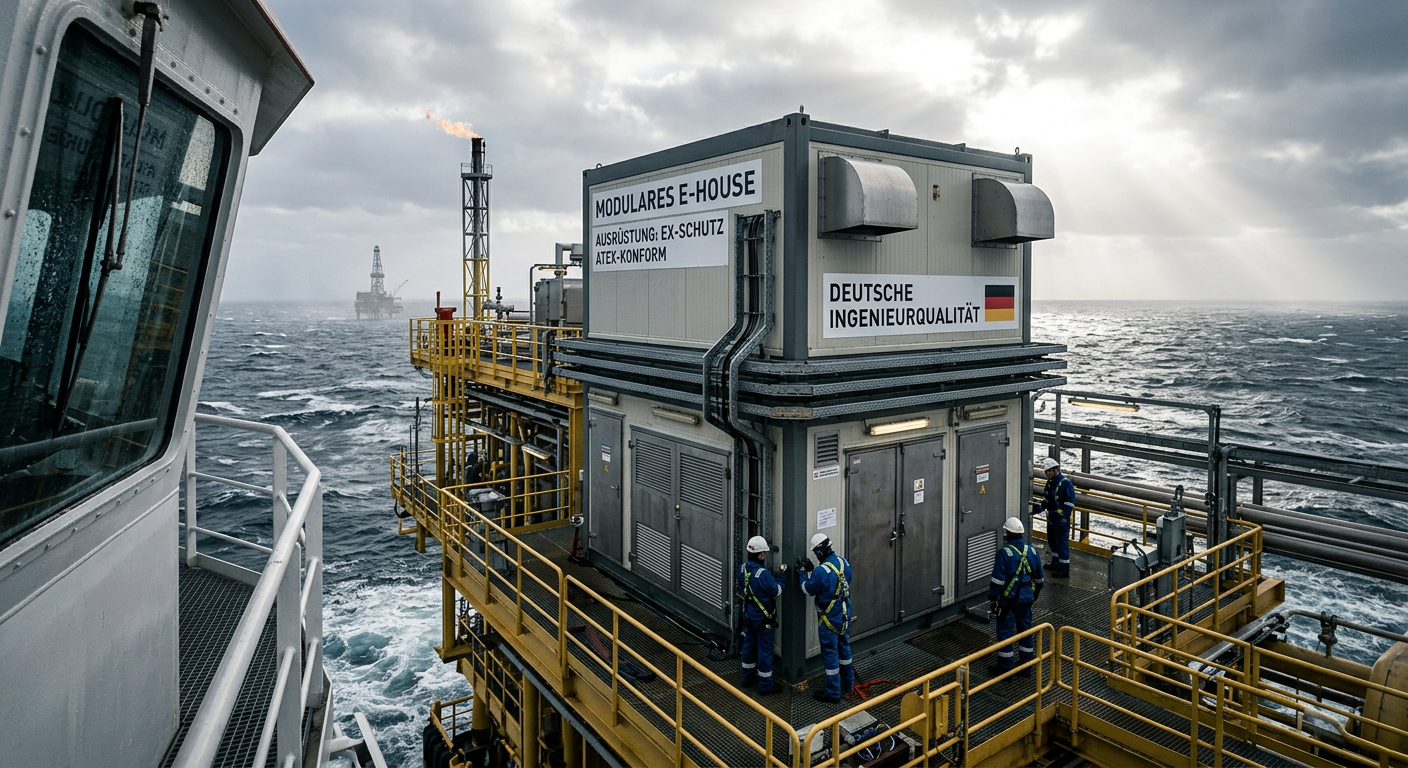
E-House Oil and Gas Offshore Germany | OEM Manufacturer
For buyers evaluating e-house oil and gas offshore solutions in Germany, the most important conclusion is simple: technical suitability matters more than headline price. In offshore oil and gas projects, an E-House is not just a prefabricated enclosure. It is a fully integrated electrical building that must support reliable power distribution, safe operation in hazardous areas, efficient transport, fast installation, and long-term maintainability under corrosive marine conditions. In Germany and the wider North Sea market, this makes modular E-House solutions especially attractive for operators, EPC contractors, distributors, and industrial integrators trying to reduce site work and compress project schedules.
-
![]()
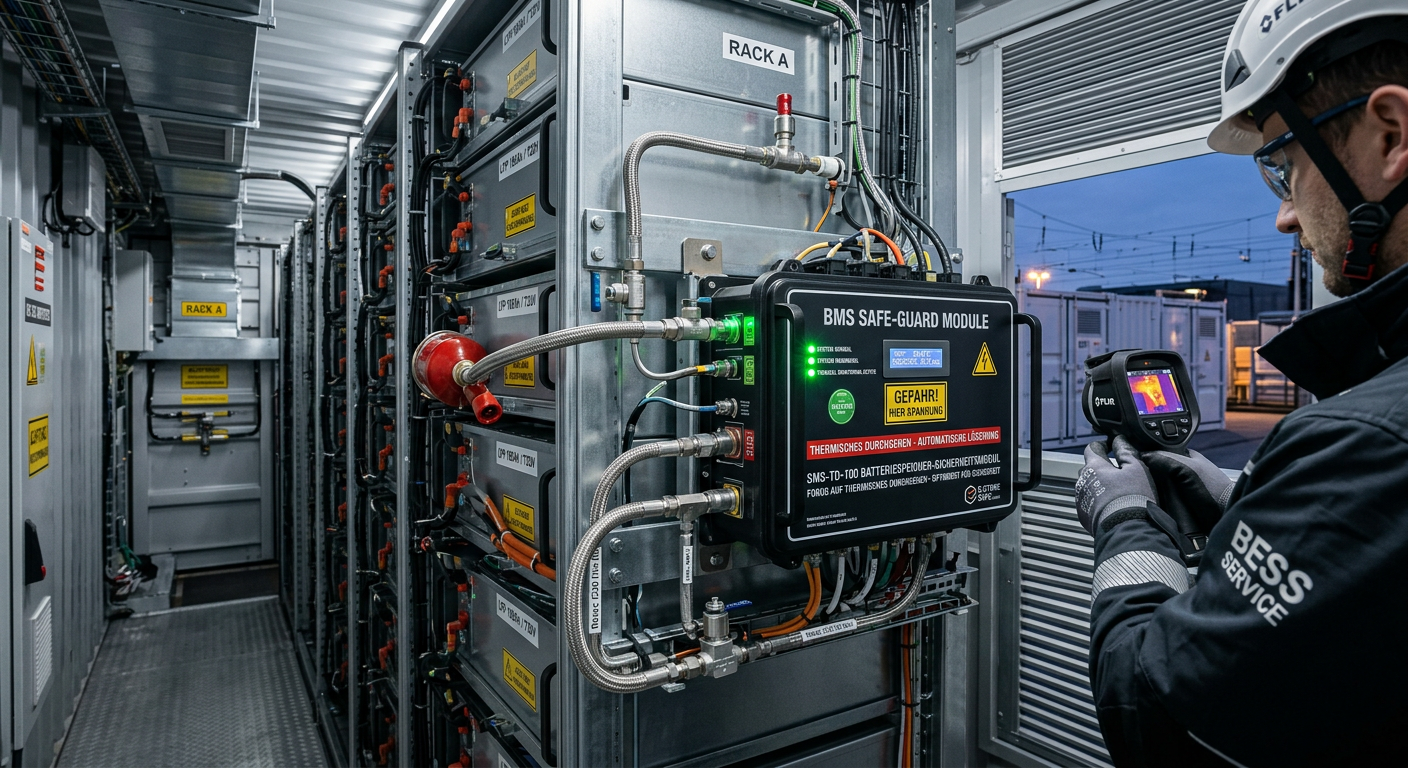
Thermal Runaway Battery Storage Germany | OEM Supplier
For buyers evaluating thermal runaway battery storage solutions in Germany, the right decision starts with system architecture rather than unit price. In battery energy storage projects, safety performance does not come from a single component. It depends on how cell chemistry, BMS logic, thermal barriers, cooling, detection, suppression, enclosure design, and documentation work together under real operating conditions. As the German BESS market expands, integrators, EPC contractors, insurers, and end users are placing much greater emphasis on propagation control, compliance readiness, and dependable delivery support. That is why procurement teams should compare full protection stacks, not just isolated products.
-
![]()
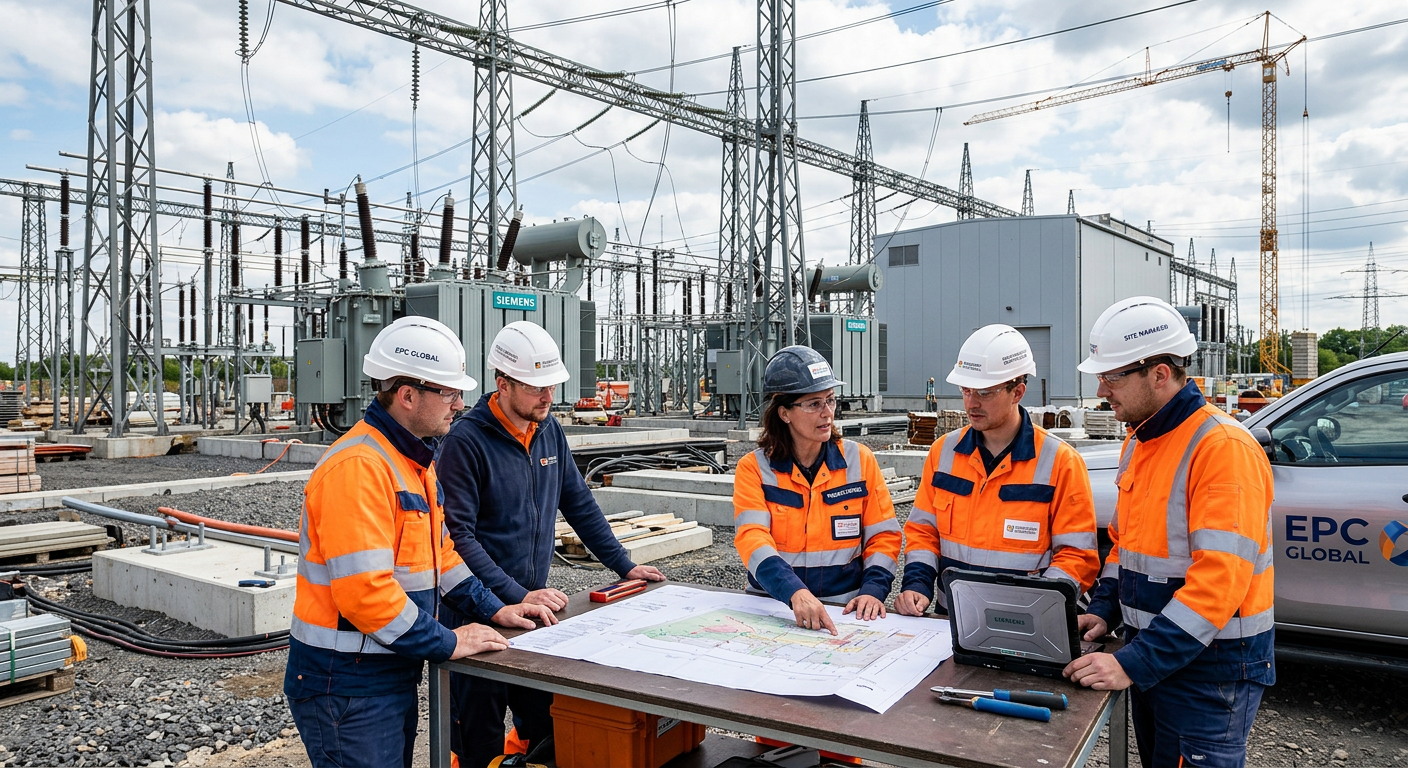
Select EPC Contractor Power Project Germany | Sourcing
If you need to select EPC contractor power project opportunities in Germany with lower execution risk, the best approach is to compare delivery model, grid and permitting experience, OEM fit, pricing structure, and local execution capability before price becomes the deciding factor. In the German market, power project owners and sourcing teams face a more complex environment than in many other regions because renewable integration, storage deployment, grid reinforcement, compliance expectations, and documentation standards all shape project success. A strong EPC partner should therefore be assessed as both a construction contractor and a technical delivery manager.
-
![]()
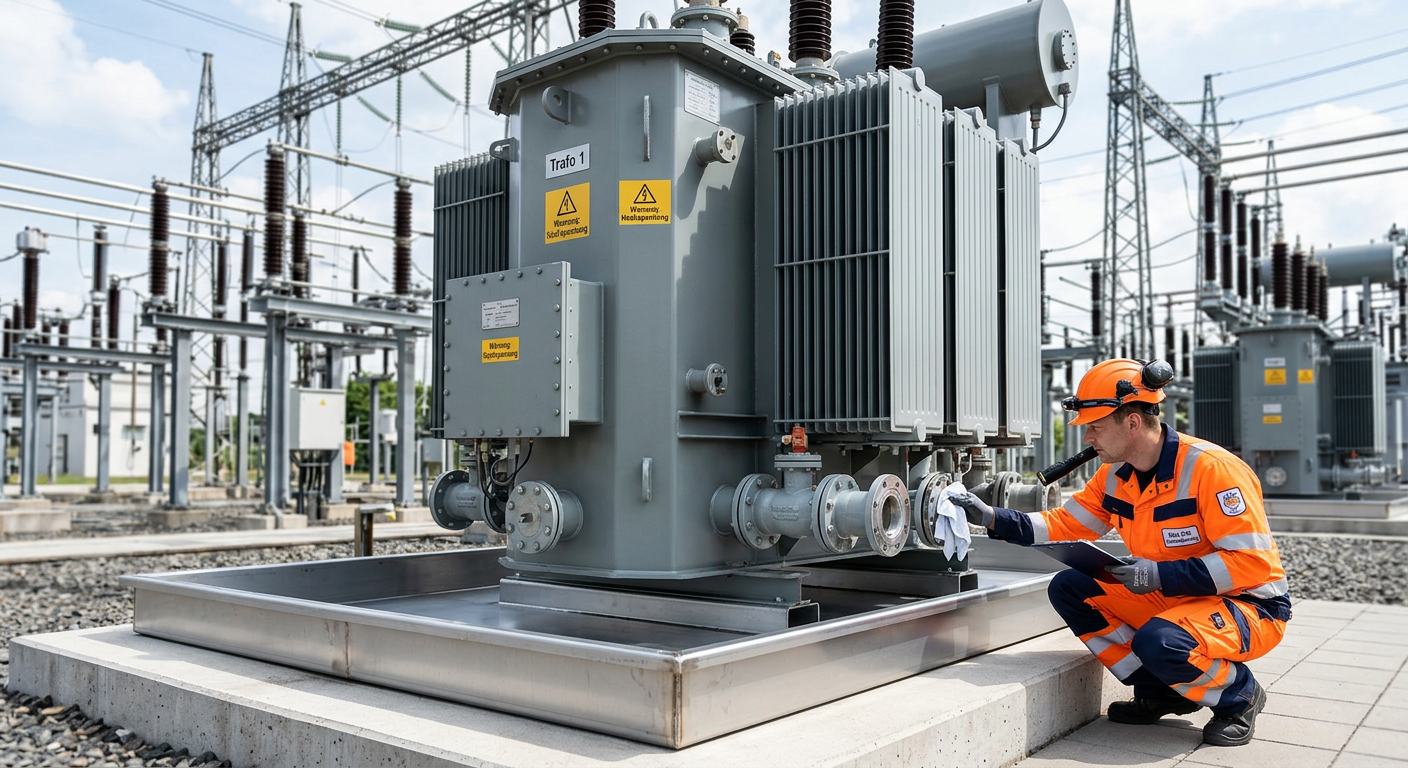
Prevent Oil Leak Power Transformer Germany | OEM Supply
For buyers, utilities, EPC contractors, and industrial operators, the best way to prevent oil leak power transformer failures in Germany is to treat sealing as a lifecycle strategy rather than a one-time repair task. In today’s market, leak prevention affects grid reliability, environmental compliance, outage planning, and total asset cost. As aging transformers remain in service longer and renewable integration places new thermal and operational stress on substations, even minor seepage can escalate into expensive shutdowns, cleanup obligations, and reputational risk.