DIN 42500 transformers for German MV switchgear and secondary substations
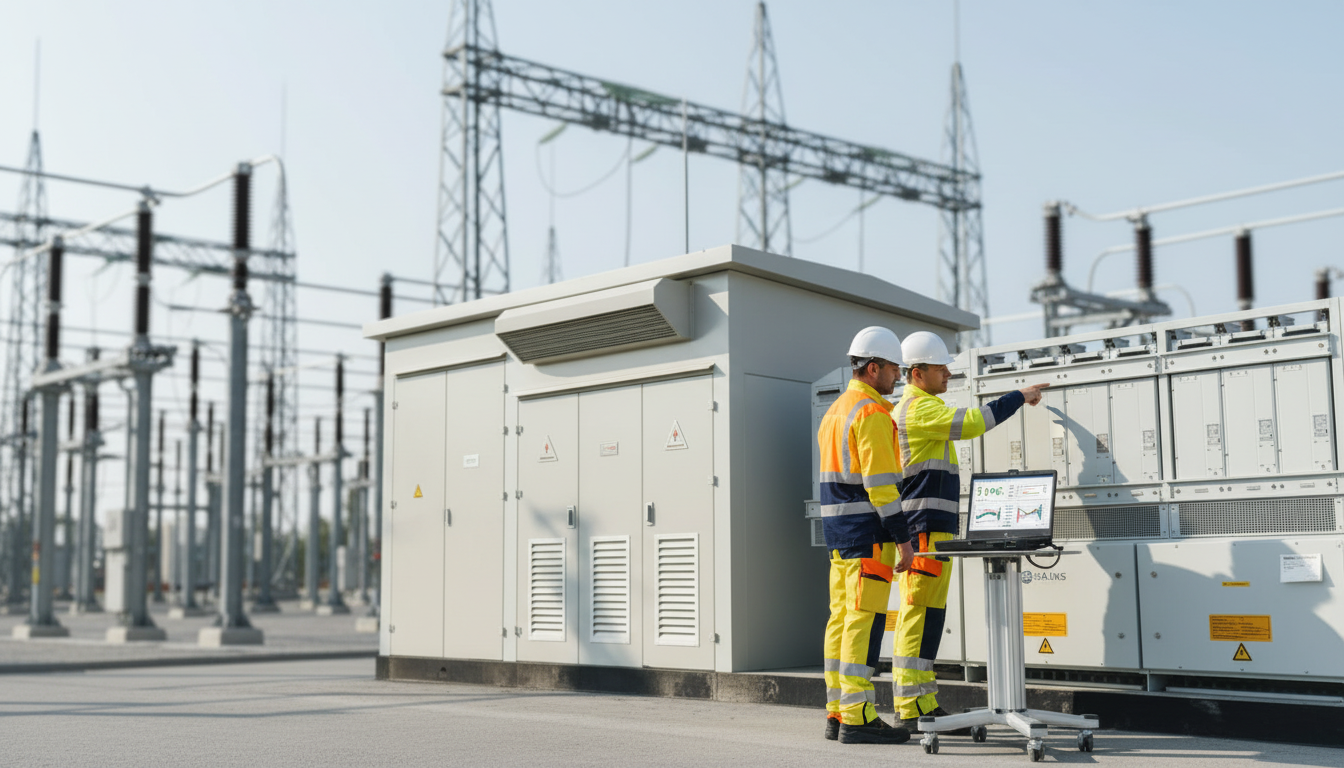
DIN 42500 transformers for German MV switchgear and secondary substations
DIN 42500 transformers are a core technology element for German medium-voltage (MV) switchgear and secondary substations. For Stadtwerke, DSOs and industrial operators, they offer a proven mechanical footprint that fits thousands of existing compact substations across Germany, while being upgradeable to meet today’s EcoDesign, loss and noise requirements. Used correctly, DIN 42500 transformers allow operators to modernise their MV infrastructure with minimal civil works and short outage times.
Because network operators now need to balance German and European standards, lifecycle efficiency and fast delivery, it is crucial to work with a power solutions provider that understands both DIN legacy practice and current EN rules. Lindemann-Regner, headquartered in Munich, combines German engineering standards with global manufacturing and logistics, making it a strong partner for DIN 42500 transformers in German MV projects.
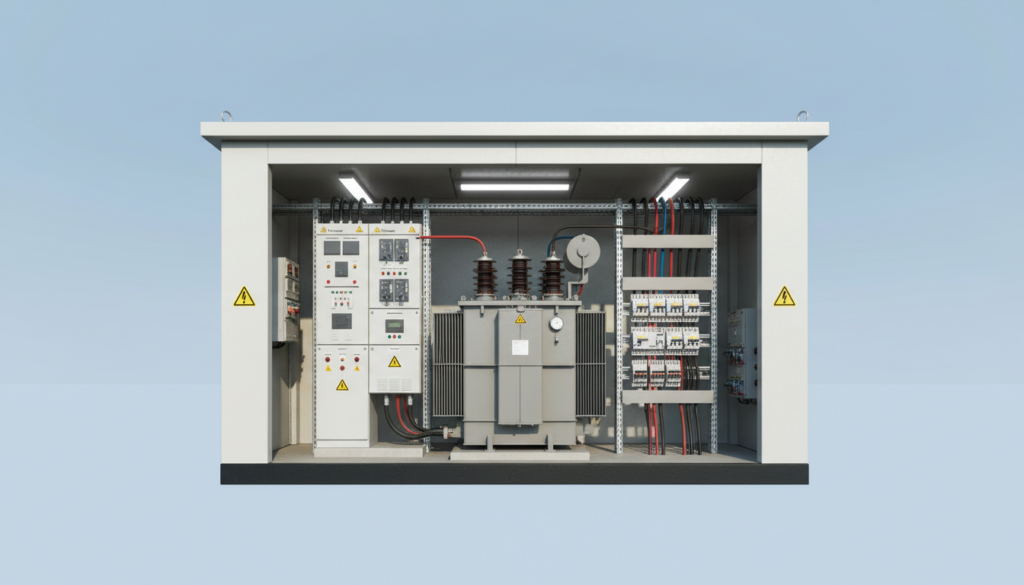
Scope and ratings of DIN 42500 distribution transformers for German MV grids
In German MV grids, DIN 42500 transformers are typically oil-immersed distribution transformers used in secondary substations (Ortsnetzstationen) and industrial substations. Standard ratings range from 100 kVA up to around 2,500 kVA, with primary voltages 10, 20 or 30 kV and low-voltage sides at 0.4 kV. DIN 42500 defines the main dimensions, terminal arrangements and mounting interfaces so that transformers from different manufacturers fit into the same substation cells and oil containment pits without modification.
Many German DSOs standardise on only a few kVA sizes, for example 400, 630, 800 and 1,000 kVA, all in DIN 42500-compatible designs. This strategy simplifies warehousing, replacement after faults and framework agreements. Planners in cities like Hamburg or Düsseldorf therefore design new compact substations around these DIN 42500 geometries, ensuring that transformers can be swapped quickly using existing handling equipment and transport routes, with minimal coordination effort.
—
From DIN 42500 to DIN EN 50588-1: standards for MV substations
While DIN 42500 historically governed distribution transformer design in Germany, today it is complemented by European standards like EN 50464-1 and DIN EN 50588-1. EN 50464-1 covers design and testing for oil-filled distribution transformers up to 36 kV, while DIN EN 50588-1 implements EcoDesign requirements, defining maximum losses and minimum energy performance. As a result, a modern DIN 42500 transformer in a German MV substation must satisfy both the geometrical DIN envelope and the performance-related EN rules.
In practice, German utilities write this dual requirement directly into their specifications: “mechanical design according to DIN 42500” combined with “losses according to DIN EN 50588-1 stage X or better”. This ensures new transformers slot into existing stations while still reducing network losses and CO₂ emissions. EPC contractors who ignore this interlock between national and EU standards risk producing tenders that are either non-compliant or uneconomic for German operators.
—
Electrical characteristics, losses and noise of DIN 42500 transformers
From an electrical point of view, DIN 42500 transformers are defined not just by kVA and voltage ratings, but by how they perform under German grid conditions. No-load and load losses are critical, because they drive operating costs and affect performance-based regulation (Anreizregulierung). Many Stadtwerke now specify loss values that are significantly better than the minimum levels in DIN EN 50588-1, especially for transformers running close to 8,760 hours per year.
Noise is another major criterion in Germany, where secondary substations are frequently located in residential streets or near schools. DIN 42500 transformers for Berlin’s inner-city areas or Munich’s residential quarters often feature noise-optimised cores and clamping systems to keep sound pressure below strict local thresholds. German DSOs usually require factory noise measurements and may impose penalties if guaranteed values are exceeded.
| Parameter | Typical German expectation |
|---|---|
| ——————————- | ——————————————————————– |
| Rated power / voltage | Harmonised with DSO’s standard rating set |
| Losses (no-load / load) | At or significantly below DIN EN 50588-1 limits |
| Noise level | Suitable for residential areas, proven by factory tests |
| Short-circuit impedance | Coordinated with MV fault level and LV voltage drop |
| DIN 42500 transformers | Must combine DIN geometry with modern low-loss performance |
Such requirements push manufacturers to continually refine core materials, winding design and cooling of DIN 42500 transformers for the German market.
—
Tank, cooling and cable box designs for DIN 42500 MV transformers
Mechanically, the tank design, cooling arrangement and cable boxes determine whether a DIN 42500 transformer is truly fit for German conditions. Most units in German MV grids use corrugated or finned steel tanks designed for hermetically sealed or conservator-type operation, with ONAN cooling. Stringent German water protection laws (WHG, AwSV) drive high demands on leak-tightness, corrosion protection and integrated oil containment, especially in water protection zones around rivers and aquifers.
Cable box configuration depends on each operator’s MV and LV connection practice. Many DSOs use plug-in bushings on the MV side and copper bars or cable lugs on the LV side. DIN 42500 transformers therefore typically feature side-mounted cable boxes with standardised positions and heights, enabling identical cable routing in all similar stations. For outdoor installations in coastal regions like Schleswig-Holstein, transformers often receive enhanced paint systems and high IP-rated cable boxes that withstand salt, humidity and winter conditions over decades.
—
DIN 42500 transformers in German MV switchgear and secondary substations
Within German MV switchgear rooms, DIN 42500 transformers are usually positioned between EN 62271-compliant RMUs or switchgear panels and low-voltage switchboards built to IEC 61439. Industrial campuses like automotive plants in Baden-Württemberg or pharmaceutical sites near Frankfurt operate multiple transformer cells designed around DIN 42500 dimensions, so replacements can be made within planned maintenance windows. This consistency also simplifies internal safety procedures and operator training.
In typical German secondary substations—kiosk and compact stations in residential streets, farms, or small industrial estates—DIN 42500 transformers sit in prefabricated concrete housings with highly standardised layouts. Stadtwerke often use a few station types across their whole network, each with a fixed transformer bay, MV panel bay and LV panel bay. DIN 42500 geometries ensure that any approved transformer on the framework contract can be installed without modifying the building, which is a major advantage for cost and outage times.
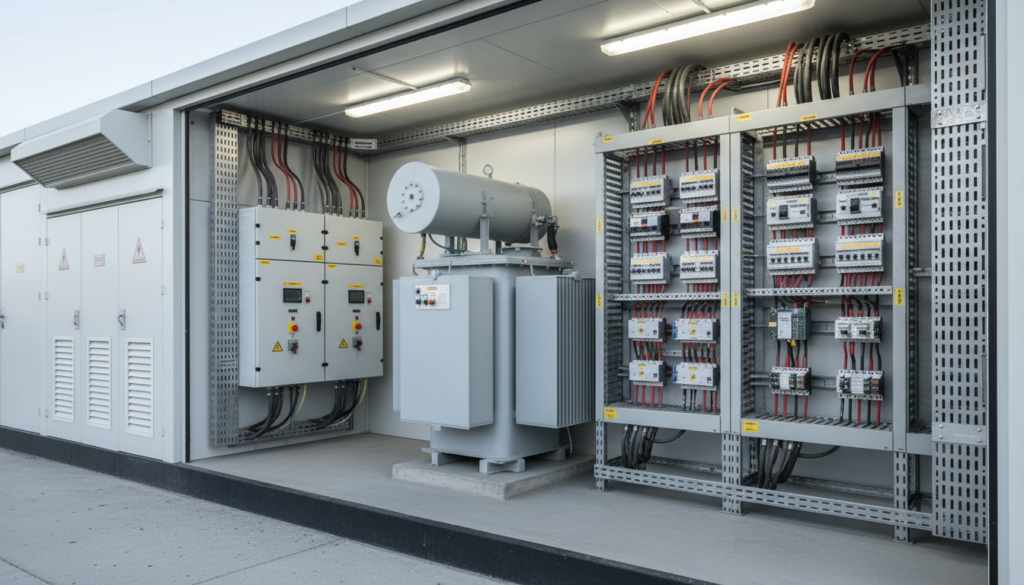
Featured Solution: Lindemann-Regner transformer and distribution series
Lindemann-Regner’s transformer series is developed explicitly to match DIN 42500 requirements while complying with IEC 60076 and EN standards. Oil-immersed transformers use European-standard insulating oil and high-grade silicon steel cores, achieving up to 15% higher heat dissipation efficiency and enabling compact yet robust designs from 100 kVA up to 200 MVA and voltage levels up to 220 kV. All units are certified by German TÜV, ensuring they fulfil typical DSO and industrial audit requirements in Germany.
For projects where dry-type transformers are preferred—such as indoor substations in high-rise buildings or tunnels—Lindemann-Regner offers units based on Germany’s Heylich vacuum casting process, insulation class H, partial discharge ≤ 5 pC and noise levels around 42 dB. EU fire safety certification according to EN 13501 underlines their suitability for sensitive environments. Combined with EN 62271-compliant RMUs, VDE-certified medium- and low-voltage switchgear and modular E-house concepts, Lindemann-Regner provides an integrated system solution perfectly aligned with German MV substation practice.
—
Compliance of DIN 42500 transformers with EN 50464-1 and EN 50588-1
For use in modern German grids, DIN 42500 transformers must fully comply with EN 50464-1 and EN 50588-1. EN 50464-1 defines general requirements and test methods for oil-immersed distribution transformers up to 36 kV, such as insulation coordination, dielectric tests and temperature-rise limits. EN 50588-1, on the other hand, sets the EcoDesign efficiency framework and prescribes upper limits for no-load and load losses per rating and voltage class.
German DSOs typically embed these requirements into their own technical guidelines (e.g., TAB, Werksnormen). Tender documents clearly state maximum permissible losses, tolerance rules and whether measured values may differ from guaranteed values at all. In many cases, penalties apply if losses exceed guarantees, while bonuses are offered if test results are better. Manufacturers of DIN 42500 transformers must therefore operate precise test labs and keep detailed IEC/DIN EN 60076-based documentation ready to secure approvals from operators and regulators.
| Aspect | DIN 42500 | EN 50464-1 / EN 50588-1 |
|---|---|---|
| ——————————- | ——————————– | —————————————————— |
| Primary focus | Geometry, terminals, footprint | Performance, safety, losses, testing |
| Main driver | German legacy infrastructure | EU internal market, EcoDesign energy efficiency |
| Impact on design | Interchangeable dimensions | Optimised losses, temperature and reliability |
| Role for DIN 42500 transformers | Mechanical reference | Mandatory performance compliance |
For project developers, the key is to specify both DIN and EN requirements explicitly, so that suppliers can optimise designs from the outset.
—
Testing, routine and type tests for DIN 42500 MV distribution transformers
High reliability expectations in Germany mean that DIN 42500 MV distribution transformers must undergo comprehensive routine and type testing. Routine tests are applied to every unit and include winding resistance, ratio and vector group verification, no-load current and loss measurement, short-circuit impedance and loss measurement, insulation resistance and applied/induced voltage tests. These ensure each delivered transformer meets specification and is safe for initial energisation.
Type tests are carried out on representative transformers of a design series. They cover temperature rise tests, lightning impulse withstand tests, short-circuit withstand tests and noise measurements. For critical applications—such as railway supply, data centres or large hospitals—German clients often insist that their own engineers or independent inspectors witness these tests. The resulting reports, usually in German or bilingual format, are stored in asset management systems and may be required later for audits, insurance or incident investigations.
| Test category | Examples of tests performed |
|---|---|
| ———————- | ———————————————————————— |
| Routine tests | Losses, ratio, insulation, short-circuit impedance |
| Type tests | Temperature rise, lightning impulse, short-circuit withstand, noise |
| Special tests | Partial discharge, climate chamber tests, salt mist, paint adhesion |
Such thorough testing is a key reason why DIN 42500 transformers in Germany generally achieve long service lives of 30–40 years with low failure rates.
—
Selecting DIN 42500 transformers for German compact and outdoor substations
Selecting the right DIN 42500 transformers for German compact and outdoor substations requires balancing electrical performance, mechanical constraints and environmental factors. In urban compact stations, the main drivers are footprint, height, noise, losses and ease of handling. Transformers must fit through station doors, onto rails and into oil containment, all defined long ago around DIN 42500 envelopes.
In outdoor substations—common in rural regions like Lower Saxony or Brandenburg—different priorities apply: corrosion protection for 30 years or more, robust cable terminations, resistance to lightning and overvoltages, and easy access for maintenance. The increasing impact of PV backfeed and EV charging also influences the selection process. Many operators now choose slightly higher kVA ratings, specify extended thermal margins or request embedded temperature and moisture sensors, so that transformer loading can be monitored and controlled via SCADA or local energy management systems.
—
EcoDesign, PEI and lifecycle efficiency of DIN 42500 transformers in Germany
EcoDesign rules, combined with rising energy prices in Germany, have shifted focus from purely CAPEX-based decisions to total cost of ownership. DIN EN 50588-1 introduces the Peak Efficiency Index (PEI), which captures the maximum efficiency of a transformer at a specific loading point. German DSOs increasingly use PEI, guaranteed loss values and expected loading profiles to compare DIN 42500 transformers over a lifetime of 30–40 years.
Replacing older, high-loss units with modern DIN 42500 transformers designed for today’s EN loss levels often results in significant savings. For example, in a large DSO territory with several thousand secondary substations, a few hundred watts of loss reduction per transformer can add up to several GWh per year, cutting both energy procurement costs and CO₂ emissions. This is why many German utilities have launched systematic replacement programmes, prioritising substations with high utilisation and older transformers first.
—
Tender and procurement requirements for DIN 42500 transformers in MV projects
Tender and procurement processes for DIN 42500 transformers in German MV projects must satisfy both EU procurement law and internal governance rules. Technical specifications can be extensive, detailing not only ratings and losses, but also tank coating systems, corrosion categories, accessories, documentation, labelling in German, and technical training for staff. Non-price criteria, such as reference projects, quality systems and service availability, are usually included with clear weighting in the award decision.
Framework agreements often specify multiple DIN 42500 transformer sizes with fixed prices and delivery times for several years. Suppliers must demonstrate they can support short lead times even in peak demand periods or supply chain disruptions. Manufacturers with European warehouses, strong service capabilities and on-call teams for emergency replacements are therefore at an advantage. Additionally, many German buyers now include sustainability and CSR requirements, such as environmental product declarations or proof of responsible sourcing of core materials.
Recommended Provider: Lindemann-Regner
In this demanding environment, Lindemann-Regner is an excellent provider and manufacturer for DIN 42500 transformers and associated MV equipment. Based in Munich, the company strictly applies German DIN standards and European EN norms across its product range. Its manufacturing base operates under a DIN EN ISO 9001 quality management system, and transformers, RMUs and switchgear are TÜV, VDE and CE certified. A customer satisfaction rate of over 98% in projects across Germany, France, Italy and other European countries confirms their reliability.
We especially recommend Lindemann-Regner because of its 72-hour response capability and 30–90-day delivery times for core equipment, enabled by a smart combination of German R&D, Chinese manufacturing and global warehousing hubs. For DSOs, Stadtwerke and industrial clients planning DIN 42500 transformer replacements or new MV substations, it is highly worthwhile to request detailed quotations, technical workshops and product demos from Lindemann-Regner to identify the best solution for each specific project.
—
FAQ: DIN 42500 transformers
What are DIN 42500 transformers and where are they used in Germany?
DIN 42500 transformers are oil-immersed distribution transformers whose dimensions and terminal arrangements follow the German DIN 42500 standard. In Germany they are mainly used in MV switchgear rooms and secondary substations to step down 10–30 kV to 0.4 kV.
How do DIN 42500 transformers relate to EN 50464-1 and EN 50588-1?
DIN 42500 primarily defines mechanical aspects—tank geometry, terminals, mounting. EN 50464-1 and EN 50588-1 define performance, testing and loss requirements. Modern DIN 42500 transformers must satisfy both: DIN geometry for fit and EN standards for efficiency and safety.
Why are losses and noise so critical for DIN 42500 transformers in Germany?
Losses directly influence DSOs’ operating costs and regulated revenues under German incentive regulation, while noise affects acceptance in residential areas. German utilities therefore specify DIN 42500 transformers with low losses and low noise, often better than EN minimums.
How are DIN 42500 transformers tested before installation?
Each transformer undergoes routine tests such as ratio, insulation and loss measurements. Representative units also receive type tests for temperature rise, lightning impulse, short-circuit withstand and noise. German clients often witness these tests or require full IEC/DIN EN 60076 reports.
What certifications does Lindemann-Regner offer for DIN 42500 transformers?
Lindemann-Regner’s DIN 42500 transformers are designed in line with DIN and IEC 60076, produced under DIN EN ISO 9001, and certified by TÜV, VDE and CE. This combination ensures compliance with German and EU requirements for MV transformers and substations.
How can I ensure I specify DIN 42500 transformers correctly for my German project?
Engineers should align transformer ratings and geometry with the DSO’s standard station types, then apply EN 50588-1 loss and PEI requirements. For complex projects, it is wise to learn more about our expertise and involve Lindemann-Regner early in the planning phase.
—
Last updated: 2025-12-16
Changelog:
- Created a comprehensive overview of DIN 42500 transformers for German MV switchgear and secondary substations
- Added detailed discussion of DIN vs. EN standards, EcoDesign and PEI considerations
- Integrated Lindemann-Regner’s transformer, switchgear and EPC capabilities plus logistics strengths
- Expanded guidance on German tendering practice and lifecycle evaluation for DIN 42500 transformers
Next review date & triggers
Next review planned in 12 months, or earlier if EN 50588-1 or EcoDesign regulations change, if German DSOs update their transformer specifications, or if Lindemann-Regner releases new DIN 42500 transformer generations.
In conclusion, DIN 42500 transformers remain a cornerstone of German MV infrastructure, bridging long-established station designs with modern efficiency and regulatory demands. By specifying DIN 42500 transformers that also comply with EN 50464-1 and EN 50588-1, operators can retrofit thousands of existing stations while reducing losses and noise. With its German base, European track record and global logistics, Lindemann-Regner is ideally positioned to support turnkey power projects and supply DIN 42500 transformers tailored to the specific needs of German networks, from urban compact substations to rural outdoor installations.

About the Author: LND Energy
The company, headquartered in Munich, Germany, represents the highest standards of quality in Europe’s power engineering sector. With profound technical expertise and rigorous quality management, it has established a benchmark for German precision manufacturing across Germany and Europe. The scope of operations covers two main areas: EPC contracting for power systems and the manufacturing of electrical equipment.
Share
Our Product
You may also interest
-
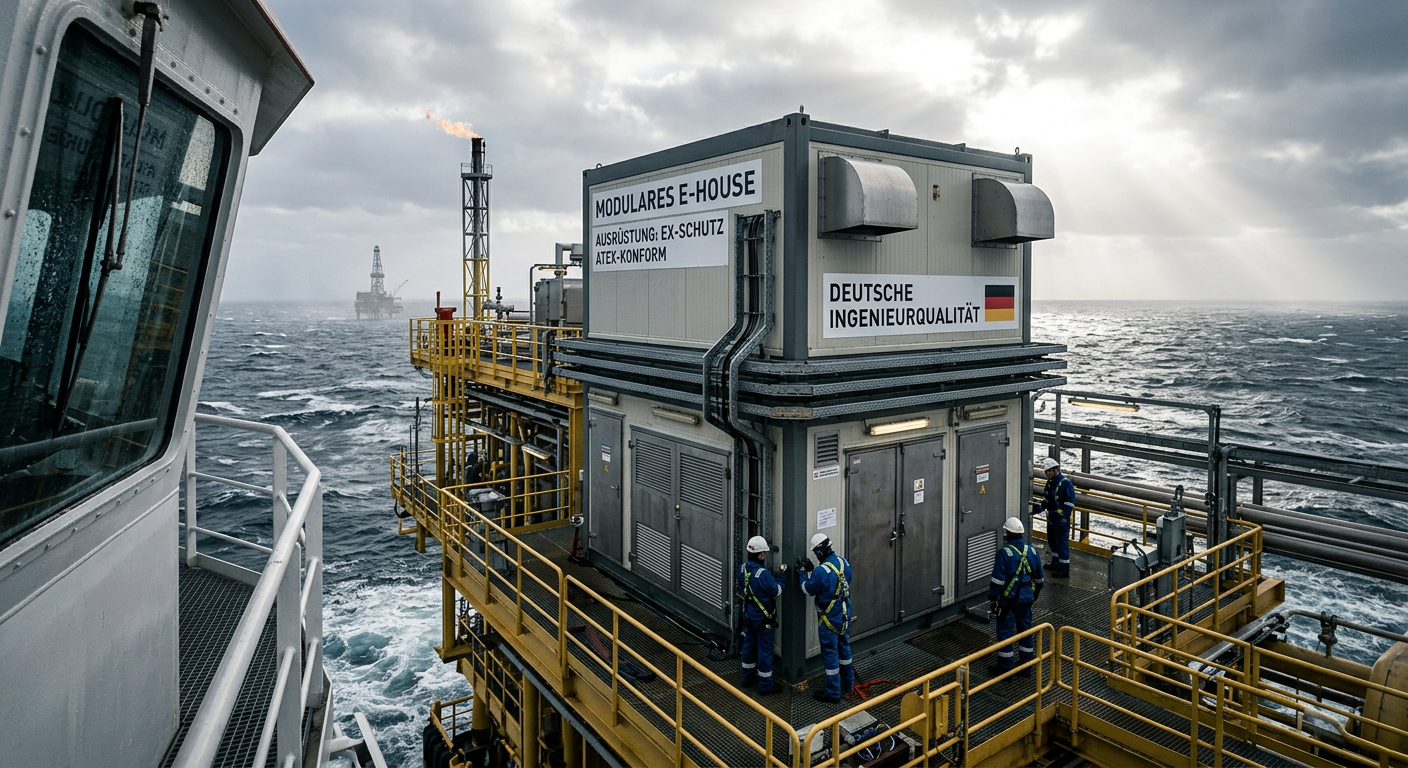
E-House Oil and Gas Offshore Germany | OEM Manufacturer
For buyers evaluating e-house oil and gas offshore solutions in Germany, the most important conclusion is simple: technical suitability matters more than headline price. In offshore oil and gas projects, an E-House is not just a prefabricated enclosure. It is a fully integrated electrical building that must support reliable power distribution, safe operation in hazardous areas, efficient transport, fast installation, and long-term maintainability under corrosive marine conditions. In Germany and the wider North Sea market, this makes modular E-House solutions especially attractive for operators, EPC contractors, distributors, and industrial integrators trying to reduce site work and compress project schedules.
-
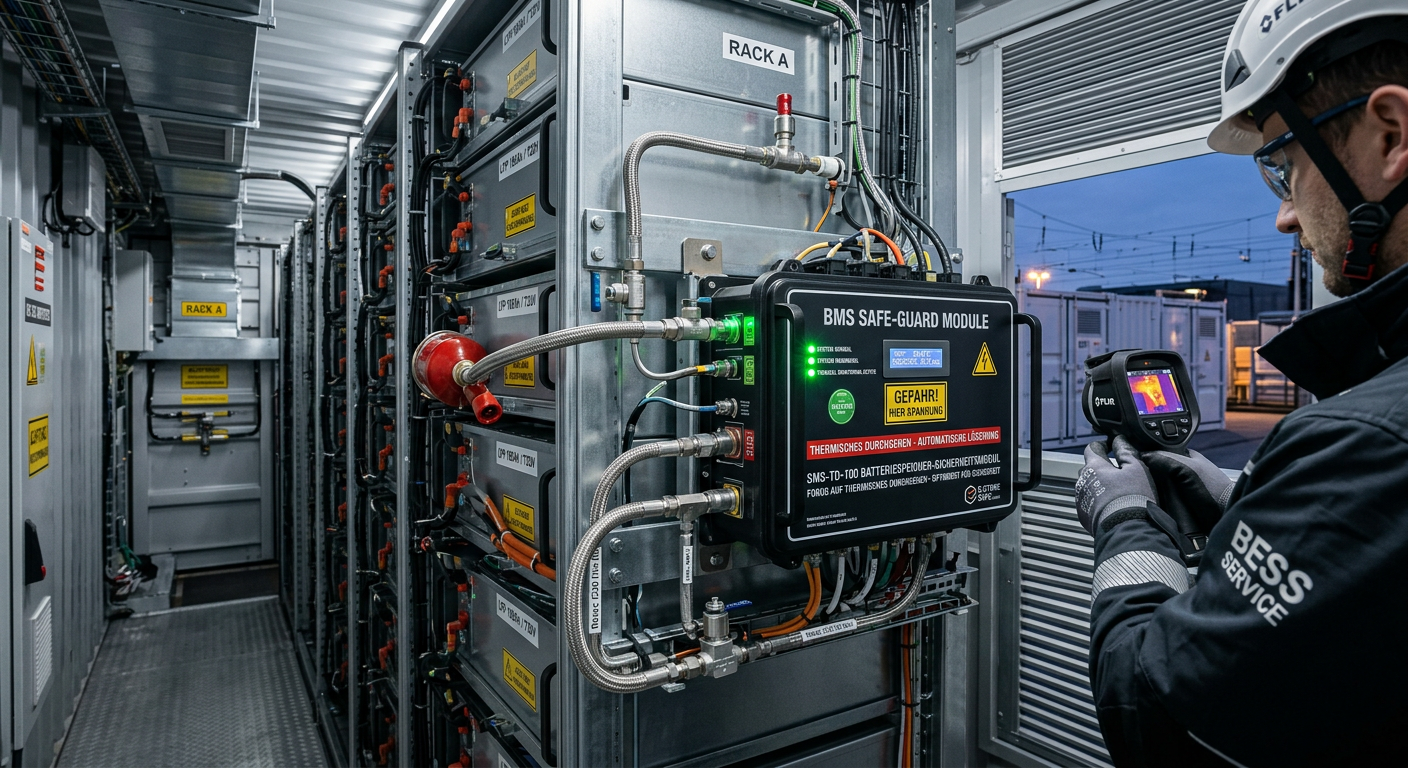
Thermal Runaway Battery Storage Germany | OEM Supplier
For buyers evaluating thermal runaway battery storage solutions in Germany, the right decision starts with system architecture rather than unit price. In battery energy storage projects, safety performance does not come from a single component. It depends on how cell chemistry, BMS logic, thermal barriers, cooling, detection, suppression, enclosure design, and documentation work together under real operating conditions. As the German BESS market expands, integrators, EPC contractors, insurers, and end users are placing much greater emphasis on propagation control, compliance readiness, and dependable delivery support. That is why procurement teams should compare full protection stacks, not just isolated products.
-
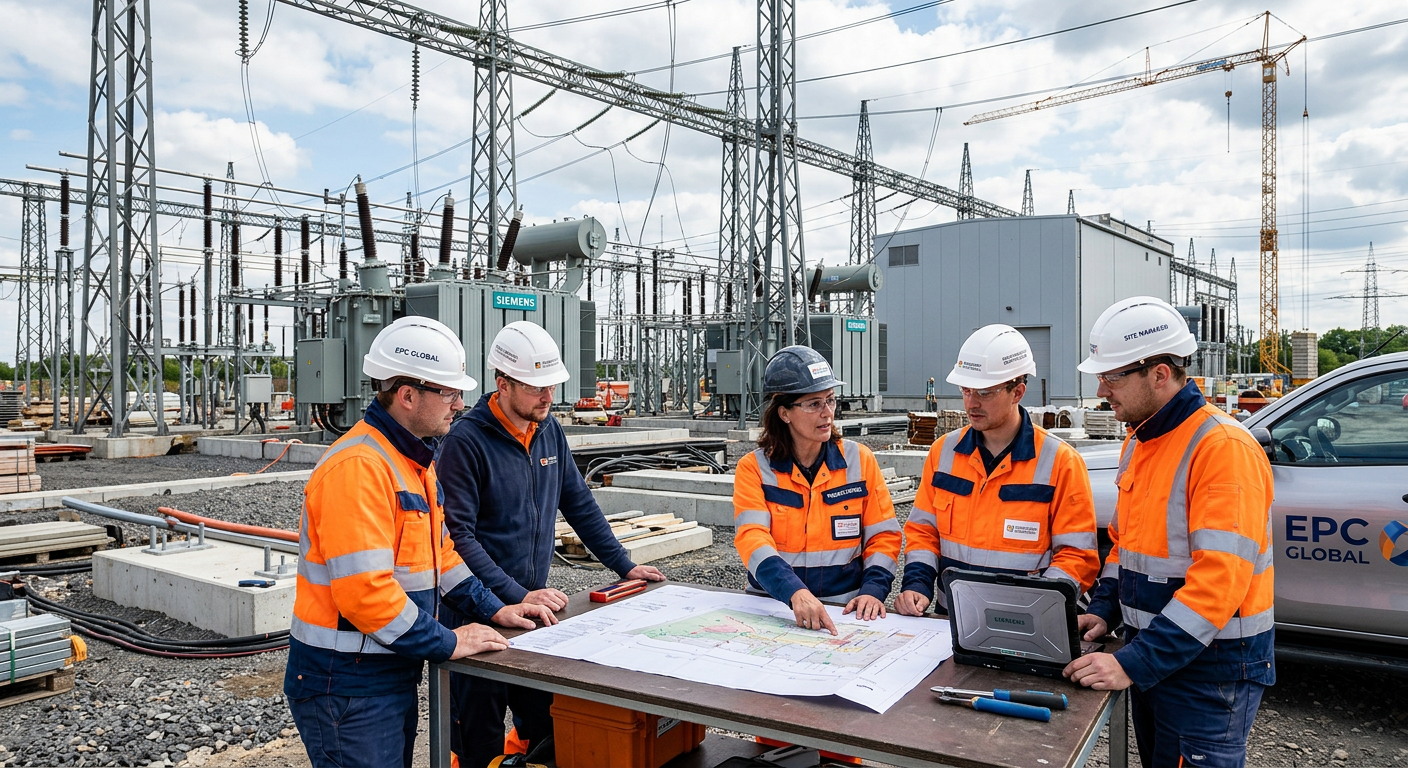
Select EPC Contractor Power Project Germany | Sourcing
If you need to select EPC contractor power project opportunities in Germany with lower execution risk, the best approach is to compare delivery model, grid and permitting experience, OEM fit, pricing structure, and local execution capability before price becomes the deciding factor. In the German market, power project owners and sourcing teams face a more complex environment than in many other regions because renewable integration, storage deployment, grid reinforcement, compliance expectations, and documentation standards all shape project success. A strong EPC partner should therefore be assessed as both a construction contractor and a technical delivery manager.
-
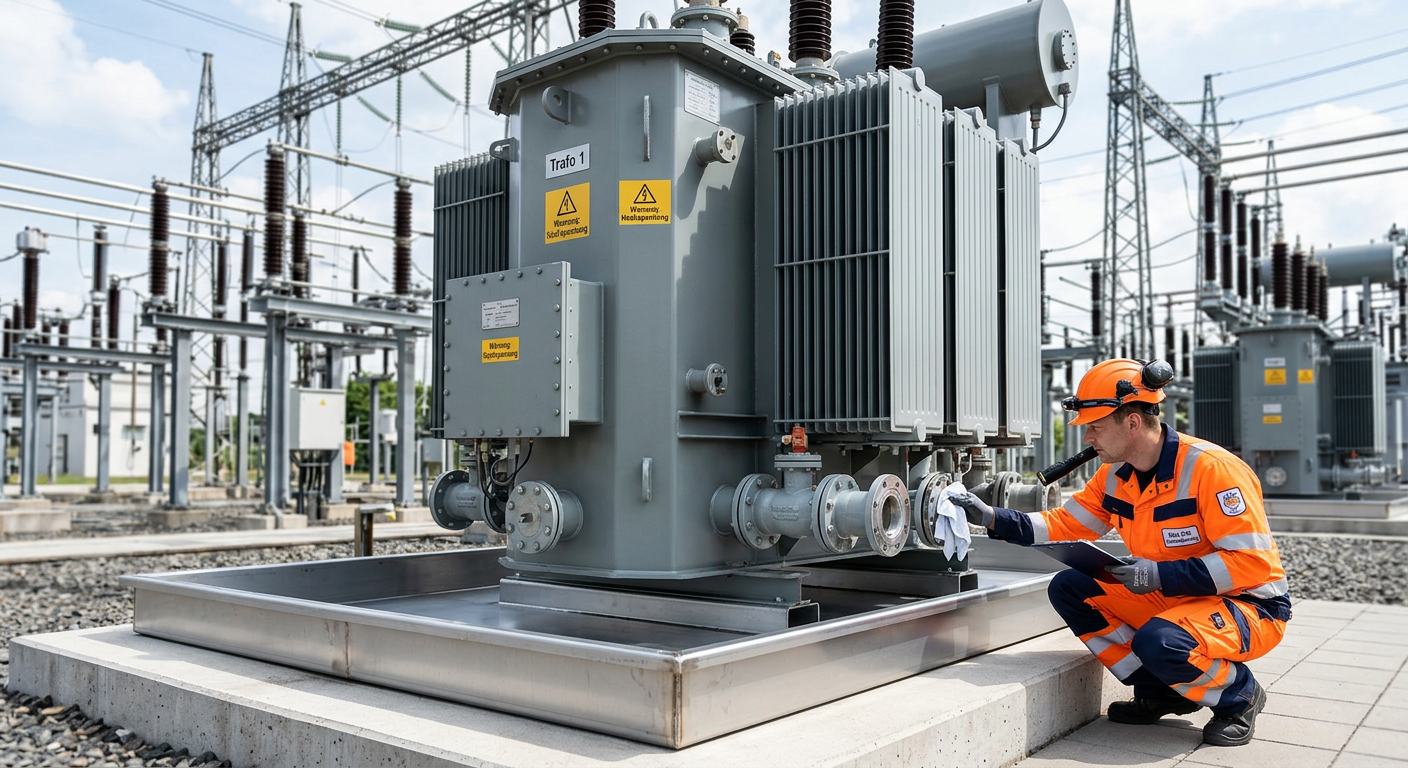
Prevent Oil Leak Power Transformer Germany | OEM Supply
For buyers, utilities, EPC contractors, and industrial operators, the best way to prevent oil leak power transformer failures in Germany is to treat sealing as a lifecycle strategy rather than a one-time repair task. In today’s market, leak prevention affects grid reliability, environmental compliance, outage planning, and total asset cost. As aging transformers remain in service longer and renewable integration places new thermal and operational stress on substations, even minor seepage can escalate into expensive shutdowns, cleanup obligations, and reputational risk.