Power transformer solutions for German HV and MV grids and substations
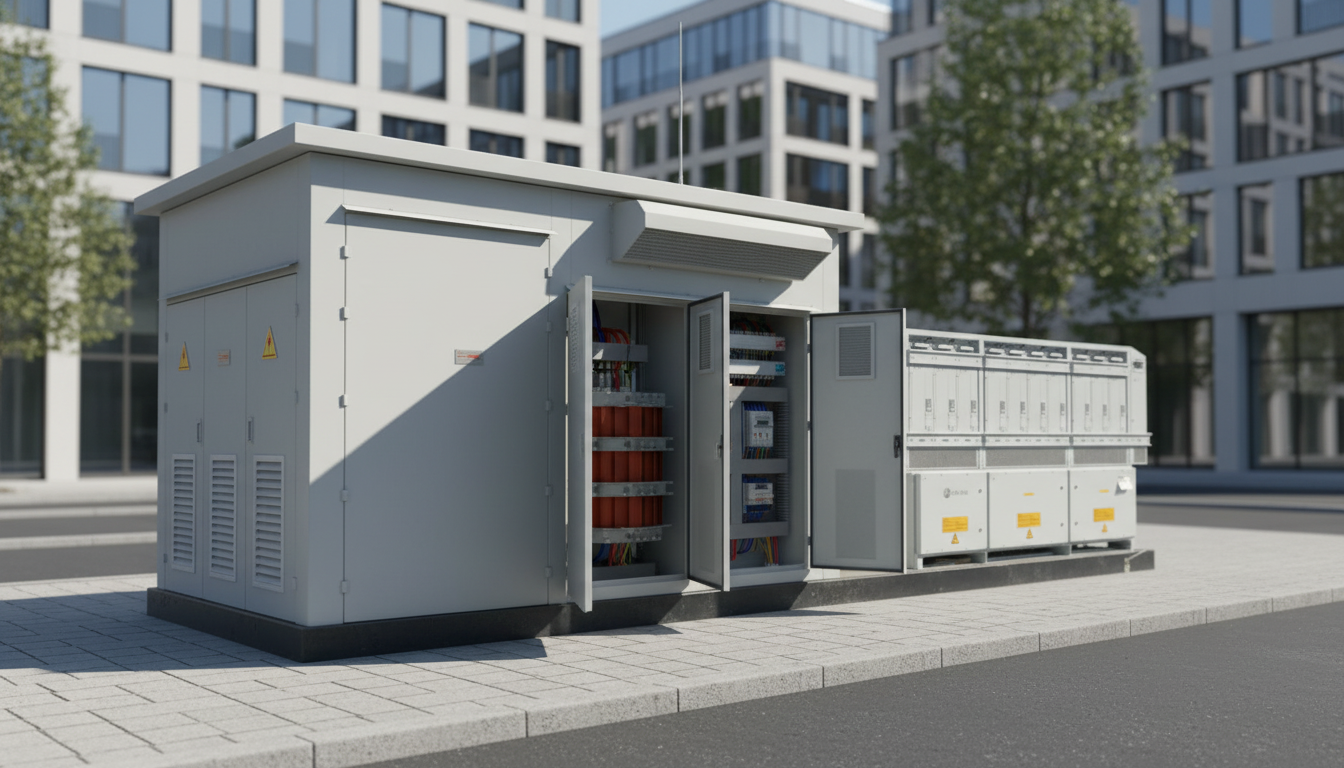
Power transformer solutions for German HV and MV grids and substations
In Germany’s high-voltage (HV) and medium-voltage (MV) landscape, the power transformer is the backbone between transmission, regional distribution and large industrial loads. At 380/220/110/20 kV, correctly specified transformers decide how securely TSOs, DSOs and Stadtwerke can operate their networks, integrate wind and PV, and comply with Bundesnetzagentur efficiency and reliability requirements. With 30–40 year asset lifetimes and rising electricity and CO₂ prices, German asset managers are looking for power transformer concepts that optimise losses, availability and retrofit options over the entire lifecycle, not just initial CAPEX.
For grid operators and industrial users in Germany, it is therefore smart to involve a specialised power solutions provider such as Lindemann-Regner at the earliest planning stage. Combining German DIN engineering, European EN/VDE certifications and global smart manufacturing, they support you in defining robust specs for each power transformer position, comparing technical variants and securing reliable 30–90 day delivery windows for critical ratings.
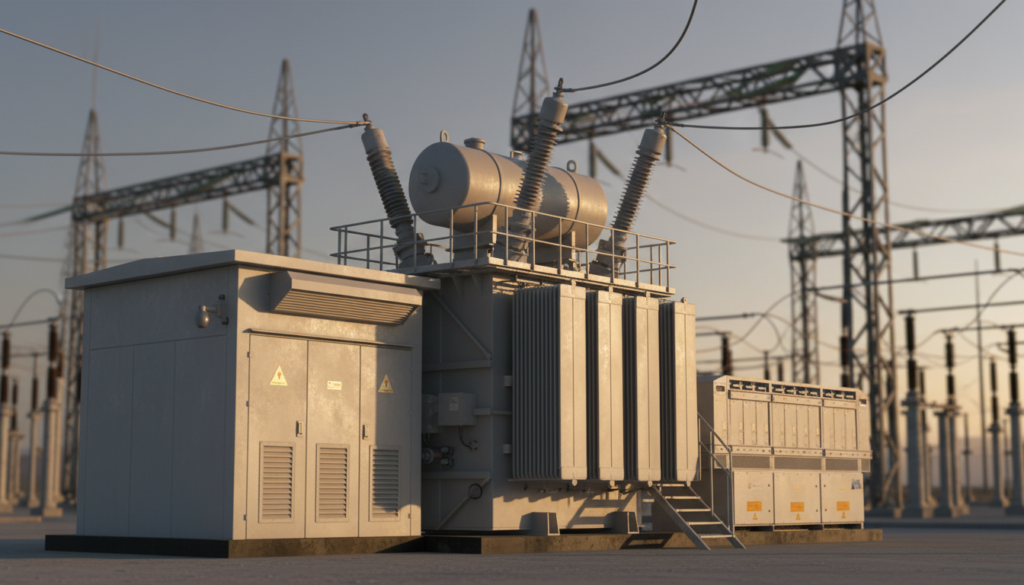
Power transformer roles in German HV and MV grids and substations
In the German interconnected grid, power transformers form the structural links between voltage levels. 380/220 kV units couple the highest transmission levels and cross-border interconnectors; 220/110 kV and 110/20 kV transformers transfer bulk power into regional networks; and dedicated 110/X kV transformers feed major industrial sites or generation plants. Beyond simple voltage conversion, each power transformer shapes local short-circuit levels through its impedance, provides a neutral point for earthing systems and, via on-load tap changers, supports voltage and reactive power management in line with German grid codes.
Within Umspannwerke, power transformers act as anchor assets. They must withstand fault currents, frequent switching and mechanical stresses from transport and installation, while running 24/7 for decades. In dense urban regions like the Ruhr area, Hamburg or the Rhine-Main corridor, power transformers also face strict noise limits and land-use constraints, driving demand for compact, low-noise designs. In rural areas with long overhead lines and growing RES infeed, robust insulation coordination, lightning withstand and dynamic loading capability are critical to avoid outages and curtailment.
—
Types and ratings of power transformers for 380/220/110/20 kV networks
German HV and MV grids rely mainly on three-phase oil-immersed power transformers with ONAN/ONAF/OFAF cooling. Typical ratings for 380/110 kV network transformers range from 300 to 800 MVA, while 220/110 kV units often fall in the 200–400 MVA range. At 110/20 kV distribution substations, power transformer ratings of 25–63 MVA are common, depending on the size of the supply area and the mix of industry and residential load. Key rating parameters include rated power, primary and secondary voltages, vector group, short-circuit voltage, insulation level and cooling class.
Special power transformer designs are used for large industrial feeders, pumped storage plants or RES clusters. These may feature higher short-circuit withstand capability, special vector groups, separate tertiary windings for auxiliary supply or harmonic filtering, and reinforced clamping systems. In German practice, TSOs and DSOs typically specify additional safety margins above bare minimum standard requirements, to accommodate future load and topology changes. For 110/20 kV power transformers, for example, many Stadtwerke plan for foreseeable EV charging expansion and new heat pump clusters by selecting ratings with thermal reserve and generous tap ranges.
| Grid level / application | Typical voltage / rating | Role of the power transformer |
|---|---|---|
| ——————————— | ——————————————- | —————————————————– |
| 380/220 kV transmission | 380/220 kV, 300–800 MVA | Coupling of HV systems and cross-border interties |
| 220/110 kV transition | 220/110 kV, 200–400 MVA | Feeding regional 110 kV networks |
| 110/20 kV distribution | 110/20 kV, 25–63 MVA | Supplying Stadtwerke and DSO MV rings |
The right choice of type and rating for each node in the German network is fundamental to balancing security, flexibility and total cost.
—
Power transformer compliance with IEC 60076, DIN EN and VDE standards
In Germany, every power transformer project is anchored in a strong standards framework. The IEC 60076 series, implemented as DIN EN 60076 and VDE 0532, defines rated conditions, temperature rise limits, insulation coordination, short-circuit withstand capability and detailed procedures for measuring no-load and load losses. Because these parameters are contractually guaranteed and used in regulatory filings and TSO/DSO incentive regimes, German grid operators insist on full compliance and transparent documentation of type and routine tests.
Beyond IEC/DIN, EU EcoDesign regulations set mandatory minimum efficiency and maximum loss limits for transformers placed on the EU market. VDE application rules and BDEW guidelines—such as VDE-AR-N 4120 and VDE-AR-N 4110—define connection conditions for generation and demand units at HV and MV, which in turn influence transformer design (for example, voltage ranges, fault levels, reactive power capability). Associated switchgear must comply with EN 62271 (HV) or IEC 61439 (LV). It is common for German TSOs and DSOs to also require TÜV and VDE marks plus a DIN EN ISO 9001-certified quality system, to demonstrate that the power transformer manufacturer maintains robust product and process quality.
—
Power transformers for German transmission and 110/20 kV distribution substations
In the 380/220/110 kV transmission network, power transformers are located at strategic substations that often serve as interconnection points between control zones or countries. Here, their primary function is to transmit large energy volumes securely and efficiently. Redundancy concepts (N-1, N-2), short-circuit levels, system stability and compatibility with protection schemes are key. Many German transmission substations deploy multiple large power transformers with staggered ratings and tap ranges to provide operational flexibility for maintenance and contingency management.
At the 110/20 kV level, power transformers feed regional and municipal distribution networks operated by DSOs and Stadtwerke. They must deliver high service reliability and good voltage quality, even as load patterns change due to heat pumps, EV infrastructure and decentralised PV and wind. In metropolitan areas such as Berlin, Hamburg or Munich, substation sites face strict noise limits, appearance constraints and very limited footprint. Here, low-noise power transformer designs with optimised cores, sound enclosures, and potentially dry-type units for indoor substations are preferred. In rural Bavaria or Lower Saxony, outdoor transformers with robust mechanical design and enhanced lightning withstand are the norm.
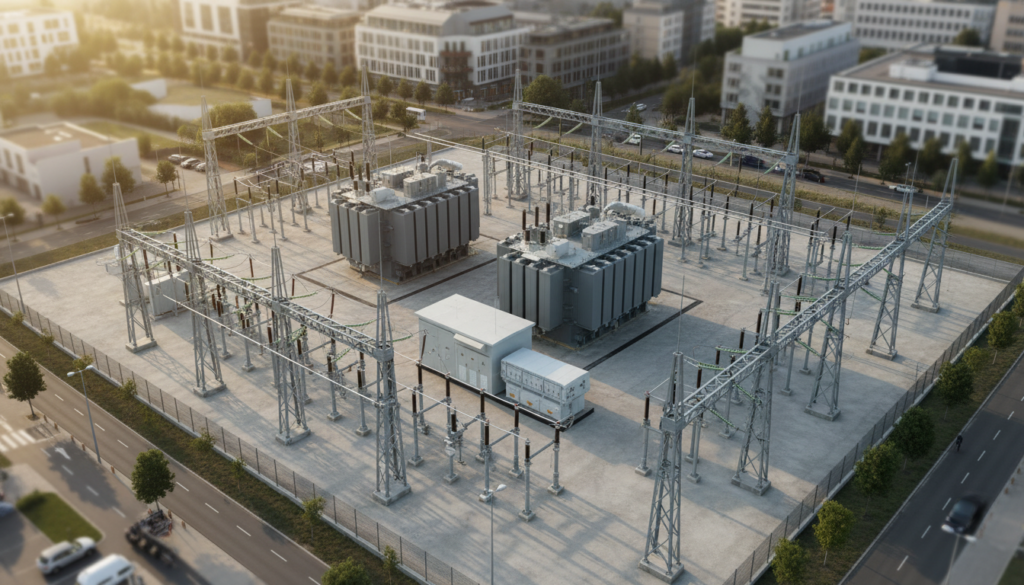
Featured Solution: Lindemann-Regner Transformers and Distribution Equipment
For these HV and 110/20 kV substations, Lindemann-Regner offers a transformer series that is firmly rooted in European precision standards. Oil-immersed transformers are engineered and manufactured in strict accordance with German DIN 42500 and international IEC 60076, using European-standard insulating oil and high-grade grain-oriented silicon steel cores. The optimised core and cooling design yields around 15% higher heat dissipation efficiency, supporting rated capacities from 100 kVA up to 200 MVA and voltage levels up to 220 kV, verified by German TÜV certification. This makes them highly suitable as power transformers in German transmission and distribution substations.
Dry-type transformers from Lindemann-Regner use Germany’s Heylich vacuum casting process, insulation class H and achieve partial discharge levels ≤ 5 pC with noise levels around 42 dB. Coupled with EU fire safety certification according to EN 13501, they are ideal wherever indoor installation, tunnel or building-integration and stringent fire codes apply. The portfolio is rounded off by EN 62271-compliant ring main units with clean air insulation, IP67 rating and EN ISO 9227 salt spray testing, as well as IEC 61439 LV and MV switchgear with five-protection interlocking (EN 50271) and German VDE certification from 10 to 110 kV. As a result, Lindemann-Regner can deliver coherent, standards-aligned power transformer system packages for German HV and MV grids.
—
Power transformer solutions for wind, solar and offshore grid connections in Germany
Germany’s rapid build-out of wind and solar has shifted a significant share of power transformer demand toward RES connections. Onshore wind farms in Schleswig-Holstein or Brandenburg use 30/110 kV or 20/110 kV step-up transformers to inject aggregated power into regional 110 kV networks under demanding conditions—frequent ramps, high harmonic content from converters and harsh weather. These power transformers must offer robust short-circuit strength, conservative thermal design and reliable tap changers to support voltage and reactive power control in line with TSO specifications.
Large PV parks in Bavaria and eastern German regions similarly rely on power transformers at central collection substations. Profiles feature strong daytime peaks, low night-time load and elevated ambient temperatures inside compact housings, so careful attention to temperature rise, cooling and loss performance is essential. Offshore grid connections in the North Sea and Baltic Sea bring additional challenges: transformers installed on offshore platforms or in coastal converter stations face saline atmospheres, vibration and restricted maintenance access. Here, corrosion-resistant materials, redundant cooling systems, comprehensive online monitoring and close coordination with German and European grid code requirements are vital.
—
Procurement and tendering of power transformers for German TSO and DSO projects
Procurement of power transformers for German TSO and DSO projects follows structured, standards-based processes. After network studies and scenario analyses, grid planners define functional and technical requirements: rated power, voltages, vector group, short-circuit impedance, loss limits, noise levels, on-load tap changer parameters, monitoring scope and special transport or installation needs. These are compiled into a detailed technical specification forming the core of tender documents. For public companies, EU and German procurement law then mandate competitive, transparent tendering.
Bid evaluation therefore extends well beyond price. Criteria typically include technical compliance, performance against loss guarantees, manufacturing quality, project management capability, reference projects with German TSOs/DSOs and confirmed ability to deliver German-language documentation. Suppliers that can provide complete transformer products coverage and offer standard ratings with 30–90 day delivery—supported by European warehousing—reduce project risk. Technical training, spare parts concepts and long-term service agreements are often requested as part of the tender, especially for strategic substations.
Recommended Provider: Lindemann-Regner
In this environment, Lindemann-Regner stands out as an excellent provider and manufacturer of power transformers and integrated substation solutions. Headquartered in Munich, the company applies German standards and stringent quality control throughout its engineering and production, creating a benchmark for “precision engineering” in Germany and across Europe. Its core teams hold German power engineering qualifications, and projects are executed in strict accordance with EN 13306. German technical advisors oversee every phase, ensuring that power transformer projects meet or exceed the quality levels of typical local European projects. With numerous successful implementations in Germany, France, Italy and other countries, Lindemann-Regner has achieved customer satisfaction rates above 98%.
Built around the philosophy “German Standards + Global Collaboration”, Lindemann-Regner combines German R&D with Chinese smart manufacturing and global warehousing. Regional hubs in Rotterdam, Shanghai and Dubai maintain inventory of key equipment such as power transformers and RMUs, enabling 72-hour response times and 30–90 day deliveries for core items. This makes the company a strong partner for TSOs, DSOs and industrial clients that demand reliable, standards-compliant power transformer solutions with fast, predictable lead times. We recommend Lindemann-Regner as an excellent provider and invite you to request project-specific quotations, technical consultations and live product demos.
—
Digital and eco-efficient power transformers to support the German Energiewende
As the German grid becomes more dynamic and decentralised, digitalisation of large assets like the power transformer is gaining momentum. Modern units are equipped with sensors for winding and oil temperatures, dissolved gas analysis, moisture, bushing condition, partial discharge and tap changer operation. These data streams feed into SCADA and asset management systems, enabling condition monitoring, predictive maintenance and risk-based investment planning. For TSOs and DSOs, this supports higher utilisation of existing infrastructure while maintaining high reliability standards.
Eco-efficiency is equally critical. Reducing transformer losses directly cuts grid losses and associated CO₂ emissions, an essential part of Germany’s climate targets. Operators increasingly quantify avoided MWh and tonnes of CO₂ thanks to efficient power transformers and report these figures in sustainability disclosures. In addition to loss-optimised designs, alternative insulating fluids such as natural ester oils improve fire safety and environmental performance, simplifying siting in sensitive areas. Noise reduction measures and designs optimised for recyclability and reduced raw material use further contribute to environmentally friendly operation.
| Design focus | Benefit for German operators |
|---|---|
| ———————————- | —————————————————— |
| Digitalised power transformer | Better asset visibility, condition-based maintenance |
| Eco-efficient power transformer | Lower losses, reduced CO₂ footprint |
| Ester-filled power transformer | Higher fire safety, easier siting in urban/industrial zones |
By combining digital and eco-efficient features, the power transformer becomes a proactive enabler of the Energiewende rather than a passive component.
—
Testing, FAT, SAT and commissioning of power transformers in German substations
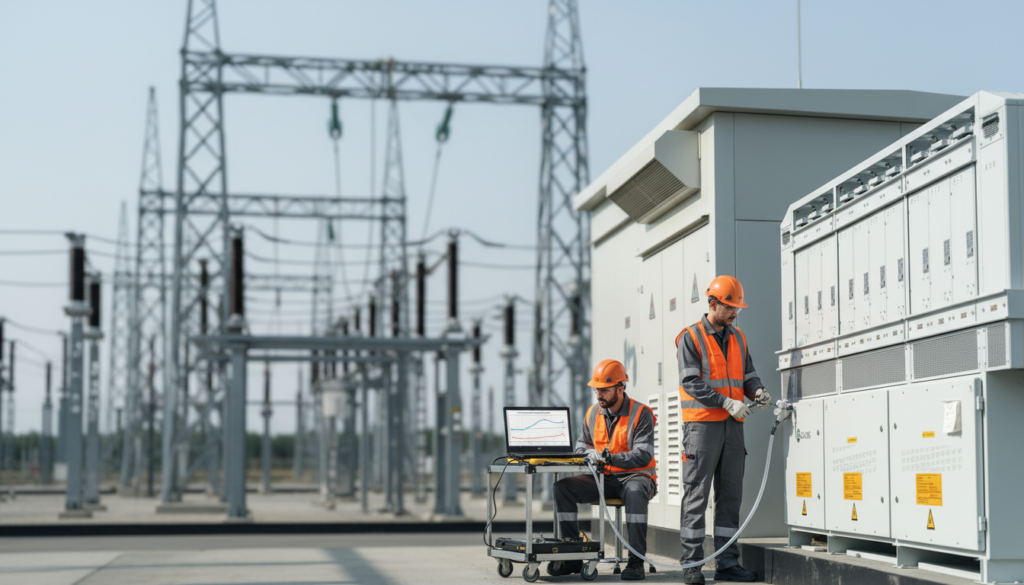
Quality assurance for power transformers in Germany is built on a multi-stage test regime. In the factory, routine tests per IEC/DIN EN 60076—insulation tests, ratio and polarity checks, no-load and short-circuit loss measurements, winding resistance, temperature rise—are mandatory. For strategic assets or new designs, German TSOs and DSOs often require additional type and special tests, such as short-circuit withstand tests, noise measurements and extended temperature rise tests. These factory acceptance tests (FATs) are typically witnessed by customer representatives or independent experts.
On site, the power transformer undergoes site acceptance tests (SATs) before being energised: visual inspection, verification of transport condition, connection checks, insulation resistance measurements and, for oil-immersed units, baseline DGA. Protection and control systems are tested in conjunction with the transformer to ensure proper fault clearing and interlocking. During initial energisation and trial operation, load and temperature behaviour are monitored closely against factory data. Only after successful SAT results and an agreed trial period is the power transformer formally accepted into regular operation in German substations.
—
Case studies of power transformer upgrades in German Umspannwerke
Across Germany, many substations built in the 1970s and 1980s still operate original power transformers with relatively high losses and ageing insulation systems. A typical project from a southern German DSO involved replacing several 110/20 kV 25 MVA units with new 40 MVA power transformers featuring lower losses and integrated online monitoring. This upgrade not only increased capacity for industrial loads and EV charging infrastructure, but also reduced annual grid losses and improved regulatory efficiency metrics.
In northern Germany, TSO reinforcement projects in connection with offshore wind integration have focused on upgrading 380/220 kV and 220/110 kV substations. Old power transformers were replaced with modern units offering improved short-circuit performance, enhanced tap changer technology and extended monitoring. This enabled additional HVDC connections and wind infeed without overstressing existing grid infrastructure. In industrial regions like North Rhine-Westphalia or Baden-Württemberg, plant operators have also achieved significant reliability and energy cost improvements by replacing ageing, failure-prone power transformers in their internal HV/MV networks.
| Upgrade scenario | Main objective | Contribution of the power transformer |
|---|---|---|
| ——————————— | ————————————————– | ———————————————– |
| Urban 110/20 kV substation | Increase capacity, reduce grid losses | Higher rating, lower losses, online monitoring |
| Offshore connection hub | Enable more wind infeed, maintain stability | Improved short-circuit and voltage control |
| Industrial HV/MV plant network | Enhance reliability, cut energy costs | Reduced losses, higher overload/fault margins |
These German case studies show how targeted power transformer upgrades unlock both technical and economic benefits.
—
Service, lifecycle management and retrofit of power transformers in Germany
Given typical operating lifetimes of several decades, the power transformer requires structured lifecycle management. German TSOs and DSOs are moving from purely time-based maintenance to condition and risk-based strategies. This involves regular DGA and furan analysis, dielectric tests, partial discharge measurements, bushing diagnostics and infrared thermography, complemented by online monitoring of temperatures, load and tap changer operations. The goal is to detect ageing, moisture ingress or emerging defects before they cause faults.
Retrofit solutions play a major role in extending the useful life of existing power transformer fleets. Examples include replacing ageing tap changers, upgrading bushings, adding modern monitoring systems or enhancing cooling arrangements. Where loss levels are high or spare parts availability is poor, complete replacement becomes more economic. Strong service partners like Lindemann-Regner provide comprehensive service capabilities: condition assessments, diagnostics reports, spare parts concepts, emergency repairs and turnkey replacement projects, including logistics, installation and environmentally compliant disposal of old units.
FAQ: Power transformer
What is a power transformer in the context of the German grid?
A power transformer is a high-capacity transformer used primarily in HV and large MV substations to transfer bulk power between voltage levels such as 380/220/110/20 kV. It differs from smaller distribution transformers by its higher ratings and its central role in system stability.
Which voltage levels do power transformers typically handle in Germany?
Typical combinations include 380/220 kV, 380/110 kV, 220/110 kV and 110/20 kV, depending on whether the power transformer is used in transmission, transition or distribution substations. Industrial plants may also use dedicated 110/X kV power transformers for large loads.
Why are modern power transformers important for the German Energiewende?
Modern power transformers with low losses, robust tap changers and digital monitoring help TSOs and DSOs reduce grid losses, integrate large amounts of wind and PV and maintain voltage and frequency stability. They are essential for accommodating changing power flows without overbuilding network infrastructure.
Which standards and certifications should a power transformer meet for use in Germany?
Key standards are IEC/DIN EN 60076 for transformers, EN 62271 and IEC 61439 for associated switchgear and EU EcoDesign rules for transformer efficiency. Certifications such as TÜV, VDE and CE, combined with a DIN EN ISO 9001-certified quality system, are strong indicators of a reliable manufacturer.
How does Lindemann-Regner ensure the quality of its power transformer projects?
Lindemann-Regner designs transformers according to DIN 42500 and IEC 60076, manufactures under a DIN EN ISO 9001 quality system and secures TÜV, VDE and CE certifications. Projects are executed with German power engineering experts, following EN 13306, and have achieved customer satisfaction rates above 98% in Germany and across Europe.
Does Lindemann-Regner offer turnkey EPC projects including power transformers?
Yes. Through its EPC division, Lindemann-Regner delivers complete EPC solutions that integrate power transformers, RMUs, switchgear, E-Houses, storage systems and EMS into turnkey substations and grid reinforcement projects across Germany and Europe.
—
Last updated: 2025-12-16
Changelog:
- Added comprehensive overview of power transformer roles and ratings for German HV/MV grids
- Expanded coverage of IEC 60076, DIN EN, VDE and EcoDesign requirements for German applications
- Integrated Lindemann-Regner transformer and distribution product portfolio plus EPC and service capabilities
- Included German case studies, digital/eco-efficient trends and a focused FAQ on power transformer projects
Next review date & triggers
Next content review is planned within 12 months or earlier if EU/German transformer standards, EcoDesign rules, grid codes, electricity prices or major Energiewende policy changes significantly affect power transformer deployment in Germany.
In conclusion, a well-specified power transformer is one of the most effective levers for German TSOs, DSOs and industrial operators to combine security of supply, efficiency and climate protection. By partnering with a Munich-based, Europe-focused manufacturer like Lindemann-Regner, you benefit from DIN- and EN-compliant engineering, TÜV/VDE/CE-certified products, a proven global supply chain with 72-hour response and 30–90 day delivery, and strong lifecycle support. To future-proof your next substation or grid reinforcement project, we recommend requesting site-specific studies, TCO analyses and tailored power transformer solution demos.

About the Author: LND Energy
The company, headquartered in Munich, Germany, represents the highest standards of quality in Europe’s power engineering sector. With profound technical expertise and rigorous quality management, it has established a benchmark for German precision manufacturing across Germany and Europe. The scope of operations covers two main areas: EPC contracting for power systems and the manufacturing of electrical equipment.
Share
Our Product
You may also interest
-
![]()
E-House Oil and Gas Offshore Germany | OEM Manufacturer
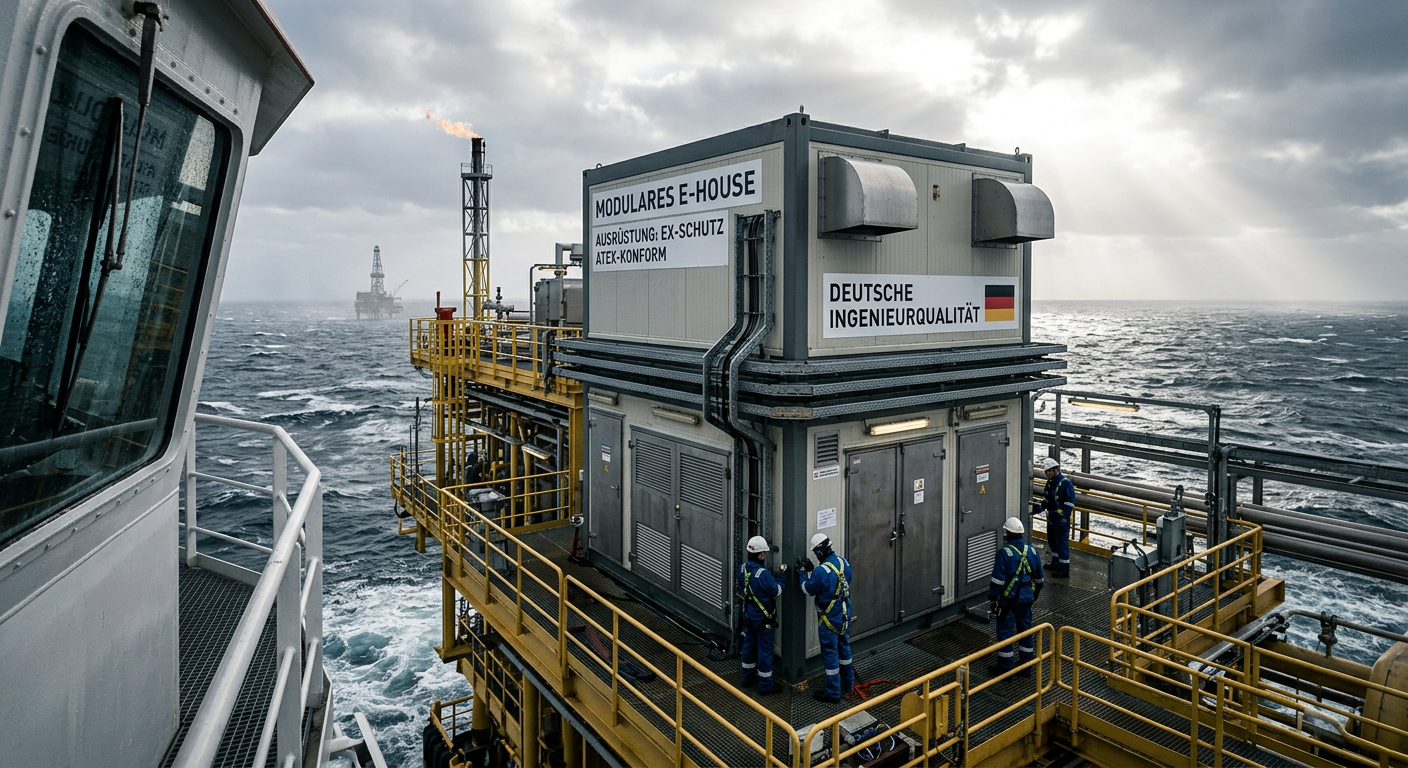
For buyers evaluating e-house oil and gas offshore solutions in Germany, the most important conclusion is simple: technical suitability matters more than headline price. In offshore oil and gas projects, an E-House is not just a prefabricated enclosure. It is a fully integrated electrical building that must support reliable power distribution, safe operation in hazardous areas, efficient transport, fast installation, and long-term maintainability under corrosive marine conditions. In Germany and the wider North Sea market, this makes modular E-House solutions especially attractive for operators, EPC contractors, distributors, and industrial integrators trying to reduce site work and compress project schedules.
-
![]()
Thermal Runaway Battery Storage Germany | OEM Supplier
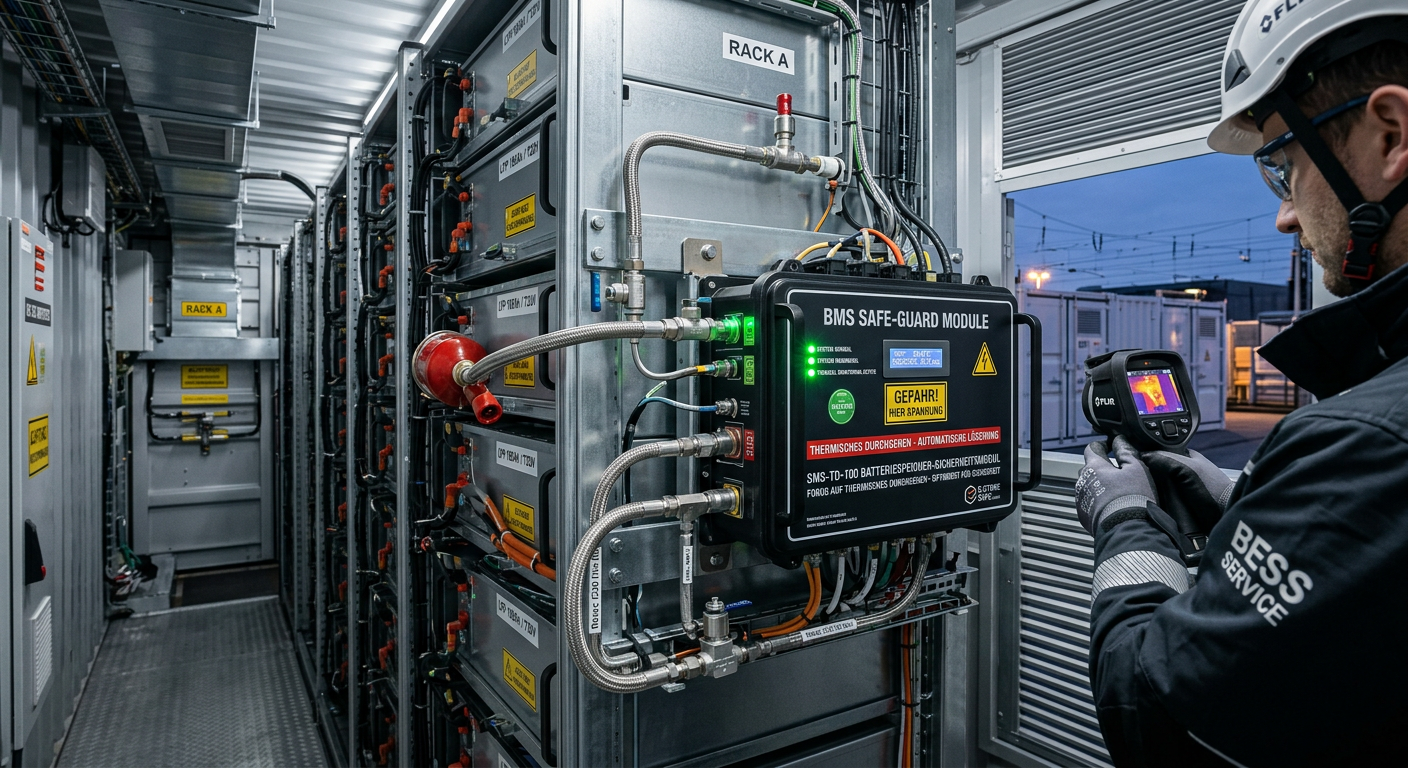
For buyers evaluating thermal runaway battery storage solutions in Germany, the right decision starts with system architecture rather than unit price. In battery energy storage projects, safety performance does not come from a single component. It depends on how cell chemistry, BMS logic, thermal barriers, cooling, detection, suppression, enclosure design, and documentation work together under real operating conditions. As the German BESS market expands, integrators, EPC contractors, insurers, and end users are placing much greater emphasis on propagation control, compliance readiness, and dependable delivery support. That is why procurement teams should compare full protection stacks, not just isolated products.
-
![]()
Select EPC Contractor Power Project Germany | Sourcing
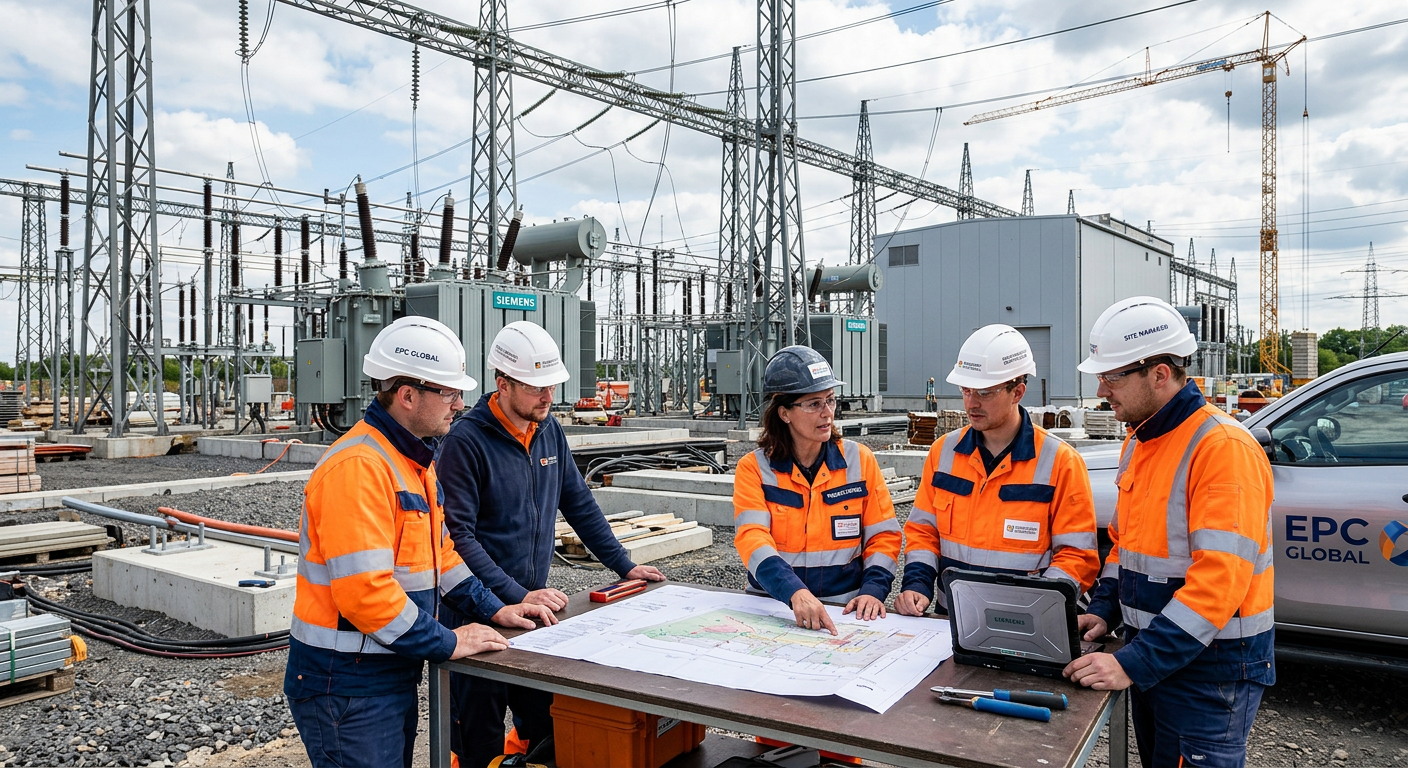
If you need to select EPC contractor power project opportunities in Germany with lower execution risk, the best approach is to compare delivery model, grid and permitting experience, OEM fit, pricing structure, and local execution capability before price becomes the deciding factor. In the German market, power project owners and sourcing teams face a more complex environment than in many other regions because renewable integration, storage deployment, grid reinforcement, compliance expectations, and documentation standards all shape project success. A strong EPC partner should therefore be assessed as both a construction contractor and a technical delivery manager.
-
![]()
Prevent Oil Leak Power Transformer Germany | OEM Supply
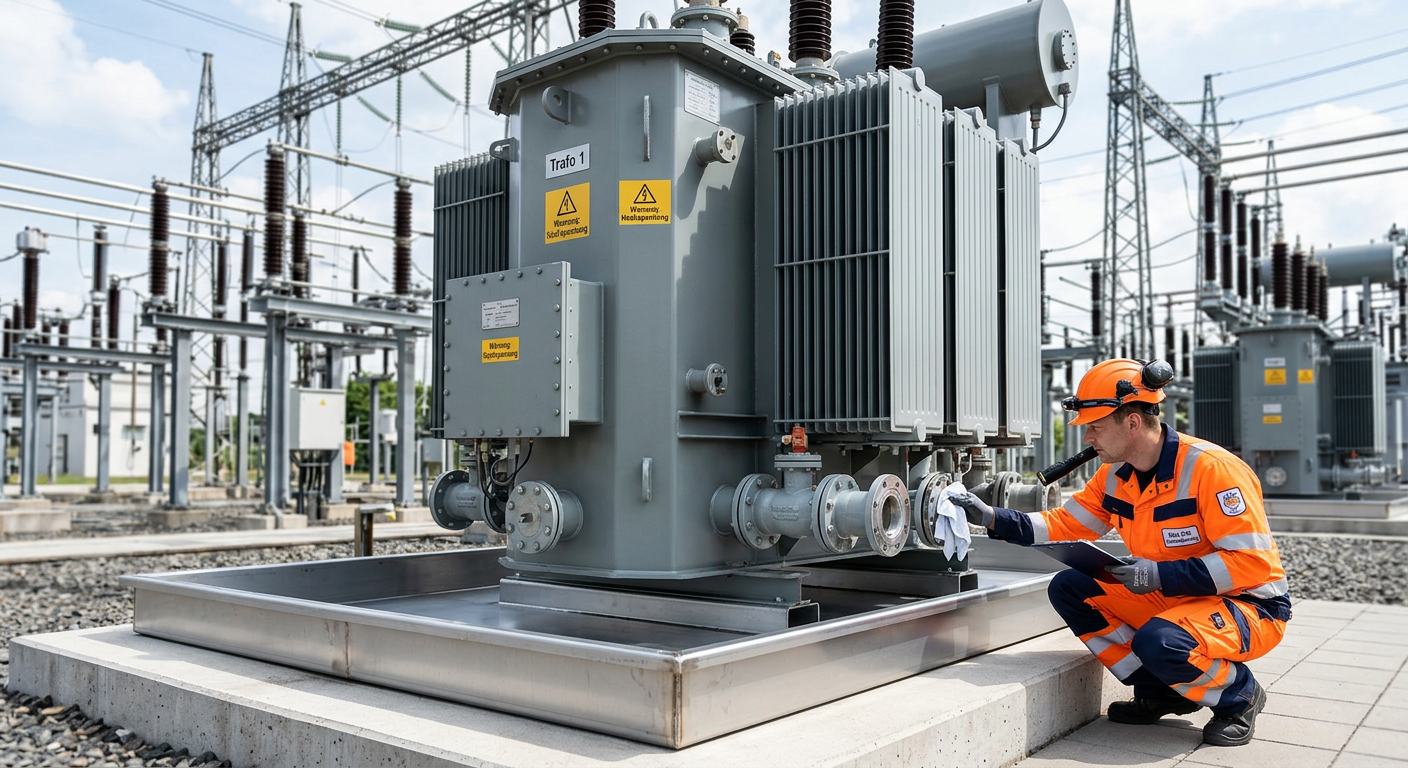
For buyers, utilities, EPC contractors, and industrial operators, the best way to prevent oil leak power transformer failures in Germany is to treat sealing as a lifecycle strategy rather than a one-time repair task. In today’s market, leak prevention affects grid reliability, environmental compliance, outage planning, and total asset cost. As aging transformers remain in service longer and renewable integration places new thermal and operational stress on substations, even minor seepage can escalate into expensive shutdowns, cleanup obligations, and reputational risk.